


Japanese Bird Motif Charger
These japanese bird motif charger plates and dishes bring exquisite craftsmanship and avian imagery into your home.
Japanese Bird Motif Charger
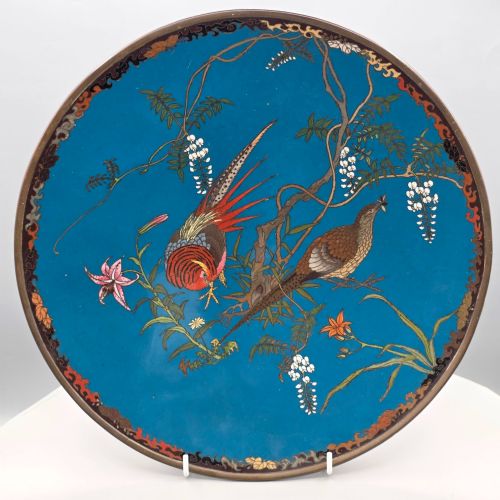
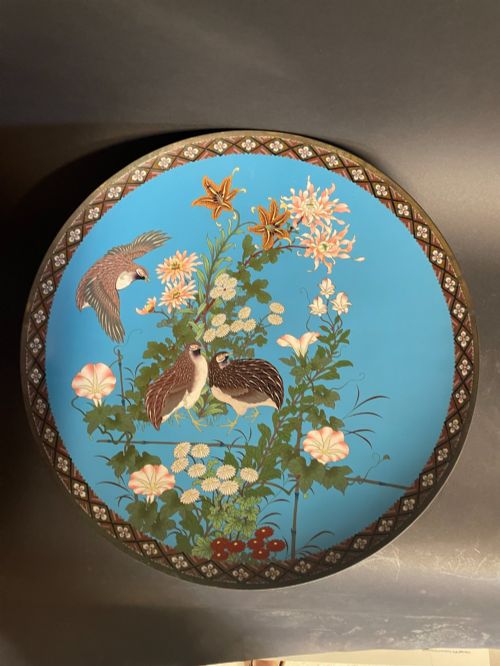
A Japanese bird motif charger represents a traditional form of decorative plate or large platter, often measuring over thirty centimetres across. These pieces showcase detailed depictions of birds such as ibises, house sparrows, and other avian subjects. You will encounter various forms on this page, including cloisonné enamelled dishes, blue and white Imari plates, hand-painted Kutani bowls, and lacquer plaques.
The objects span multiple historical eras, originating from the Edo period through the Meiji period and into the early twentieth century. Makers utilised distinct regional techniques to produce these decorative plaques, ranging from intricate wirework enamel to underglaze painted porcelain. Each piece serves as a striking display item designed to hang on a wall or rest on a surface.
Among the selection, cloisonné enamel chargers featuring birds and tendrils appear alongside nineteenth-century Kutani shallow bowls. Eighteenth-century Edo period Imari dishes also feature in the collection, offering traditional blue and white patterns. Buyers seeking these items will find both large display chargers and medium-sized plates.
Materials and Techniques
Cottage workshops and established kilns employed traditional materials such as porcelain, copper, brass, bronze, and wood. Artisans applied vitreous enamel, coloured glazes, and urushi lacquer to create durable and lustrous surfaces on the metal and ceramic bodies. Cloisonné pieces incorporated fine metal wires to outline the intricate bird motifs before enamel paste filled each individual cell.
Ceramic pieces relied on careful hand-painting techniques, utilising cobalt blue underglazes or polychrome overglaze pigments on porcelain bodies. Artisans fired these items in kilns to achieve permanent vitrification of the glazes and enamels. Lacquer plaques required the repeated application and polishing of natural tree sap to build up a deep, protective finish.
House sparrows captured on nineteenth-century plates remind us that Victorian artisans observed suburban garden birds with the same care as exotic waterfowl.
Factors That Determine Quality
The refinement of the decorative execution separates standard examples from superior ones. Finely worked cloisonné cell patterns and precise hand-painted brushwork on Kutani and Imari porcelain indicate higher artisanal skill. Pieces bearing signatures from recognised artists or workshops generally demonstrate greater attention to detail in the final composition.
The preservation of the original enamel, glaze, and lacquer surfaces dictates the overall integrity of the piece. Intact wirework without missing enamel fills and uncompromised ceramic bodies retain their visual impact. The complexity of the bird motif and the harmonious integration of background elements such as mon symbols and tendrils also influence the distinction of the work.
Shozo
The Japanese Bird Motif Charger Glossary
- Charger
- A large decorative plate or platter traditionally used for display rather than dining. These pieces command attention due to their substantial diameter.
- Cloisonné
- An enamelling technique where metal wire creates raised compartments on a metal base, which are then filled with coloured enamel paste and fired.
- Imari
- A style of Japanese porcelain originating from Arita, typically featuring deep blue and iron red decoration against a white porcelain background.
- Kutani
- A style of Japanese coloured porcelain known for bold pictorial designs and expressive hand-painted brushwork.
- Urushi
- A traditional natural lacquer derived from tree sap, applied in thin layers to wooden or metal objects to create a durable, glossy finish.
Japanese Bird Motif Charger: Frequently Asked Questions
How were Japanese chargers displayed?
These large plates and chargers were primarily intended for decorative display on walls or tabletops rather than everyday utility.
Craftsmen often incorporated hanging fixtures or paired the chargers with stands to showcase the detailed bird motifs in domestic interiors.
What is the Meiji period?
The Meiji period spans from eighteen sixty-eight to nineteen twelve, marking an era of significant cultural and artistic output in Japan.
Pieces from this time often exhibit advanced technical mastery in cloisonné enamel and intricate surface decoration.
How do I care for lacquer plaques?
Urushi lacquer surfaces require gentle handling and protection from direct sunlight to prevent fading or drying out.
Dusting with a soft, dry cloth is sufficient for routine maintenance without the need for chemical polishes.
What does a mon symbol mean?
A mon is a traditional Japanese emblem or badge used to identify families, clans, or individuals.
When incorporated into bird motifs on chargers, these crests add a layer of heraldic significance to the design.