




Meiji Period Japanese Ceramics
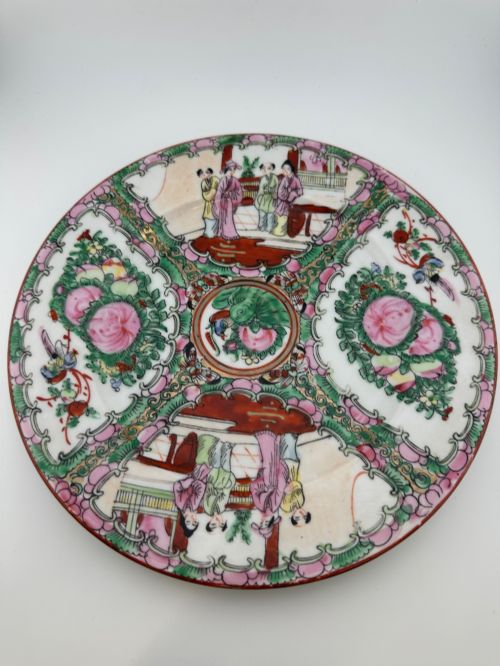
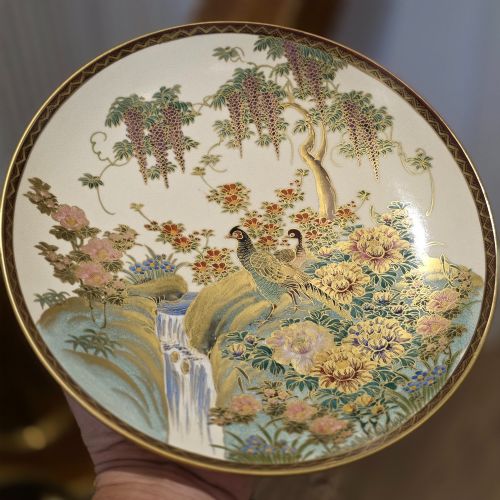
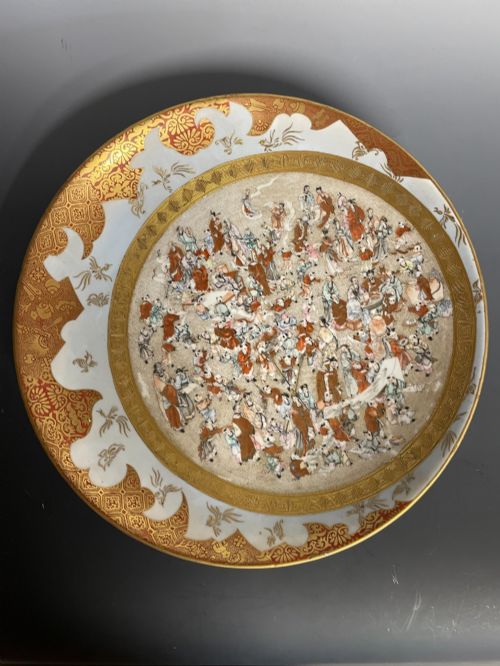
Meiji period japanese ceramics bring together intricate hand-painted motifs and skilled craftsmanship from late nineteenth and early twentieth century Japan.
Meiji Period Japanese Ceramics
When you examine meiji period japanese ceramics, you encounter a diverse range of objects created primarily during the late nineteenth and early twentieth centuries, spanning periods recorded from the eighteen eighties through the nineteen tens, alongside Victorian and Edwardian designations.
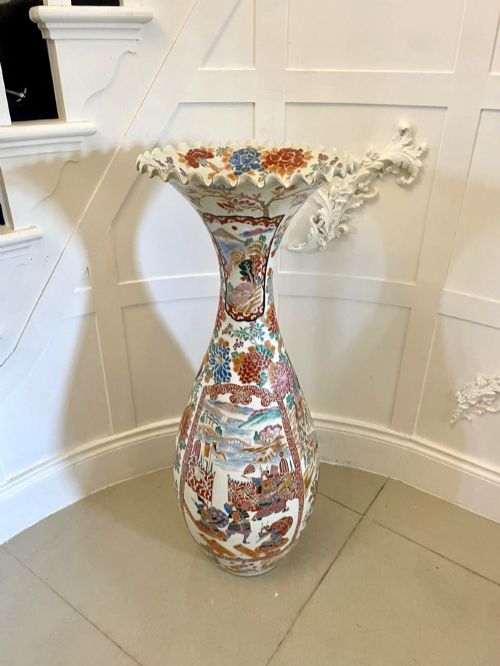
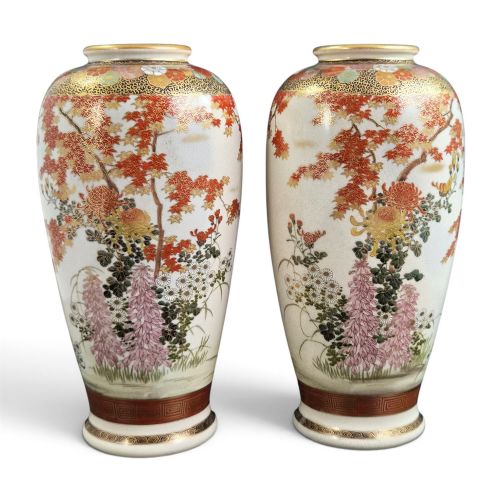
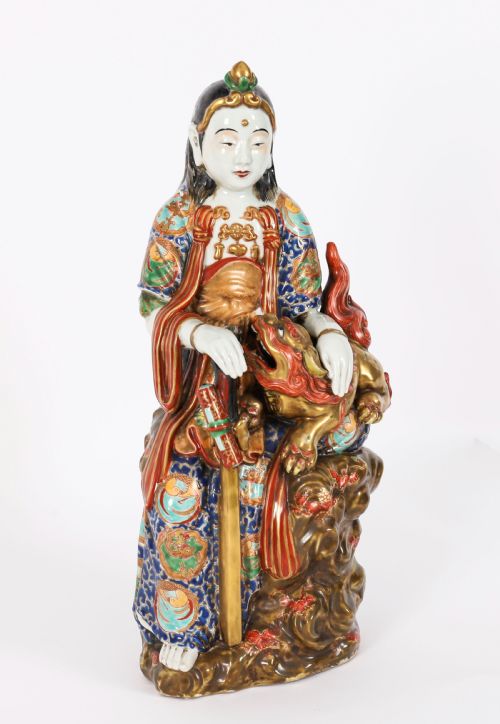
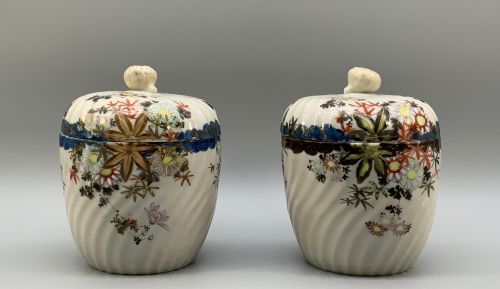
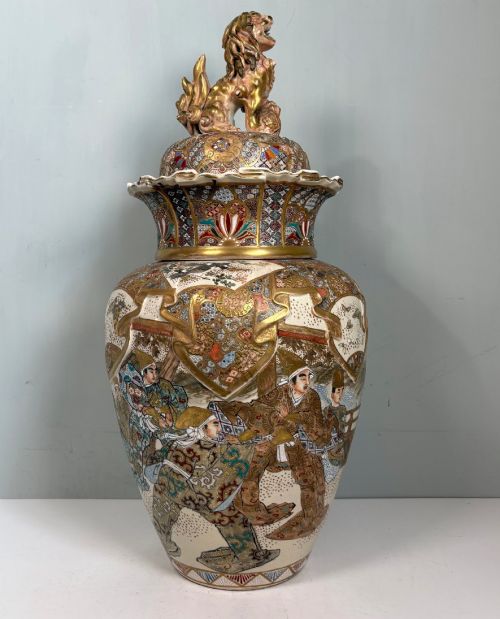
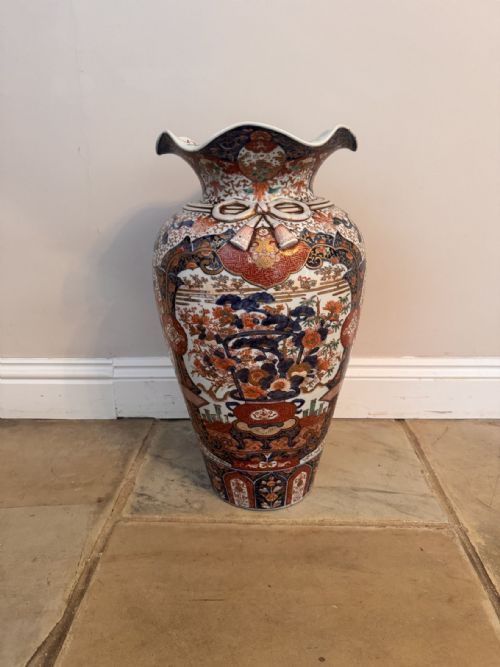
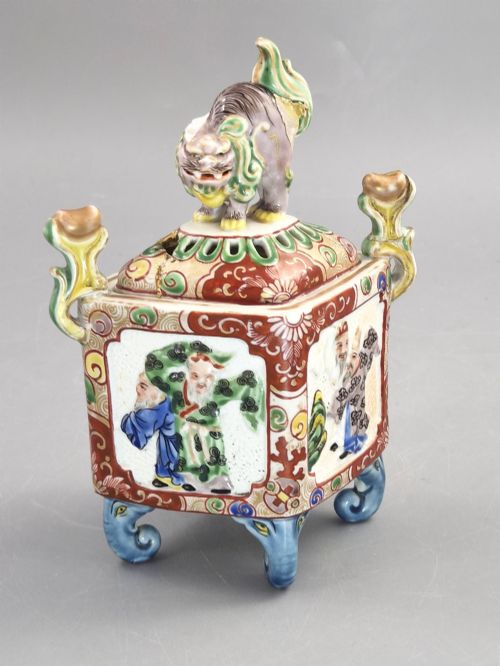
The selections on this page encompass functional and decorative forms, most frequently appearing as large floor-standing vases, chargers, plates, dishes, koro incense burners, lidded jars, and sculptural figures like Guanyin and Daruma.
Buyers seeking these works find distinct regional styles including Imari, Satsuma, Kutani, and Sumida Gawa wares, executed in porcelain, earthenware, and pottery with varied glaze effects.
How they were made
Potters and artisans utilised porcelain and earthenware bodies, shaping them into baluster vases, bowls, and plates before applying detailed decorative schemes.
Decoration relied heavily on intricate enamel painting, often enhanced by gold leaf and gilt highlights, alongside textured flambé glazes and applied figures in relief.
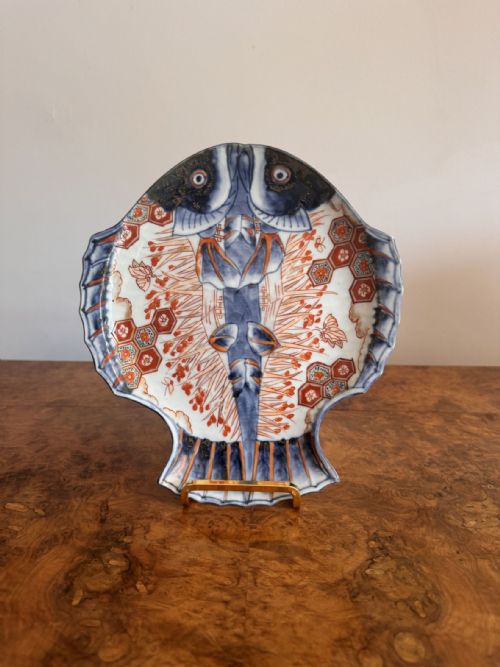
Certain plates appear entirely in the playful form of a fish, bringing a touch of coastal life to the dinner service.
What varies in quality
The refinement of the hand-painted brushwork and the complexity of the subject matter separate standard decorative items from exceptional examples.
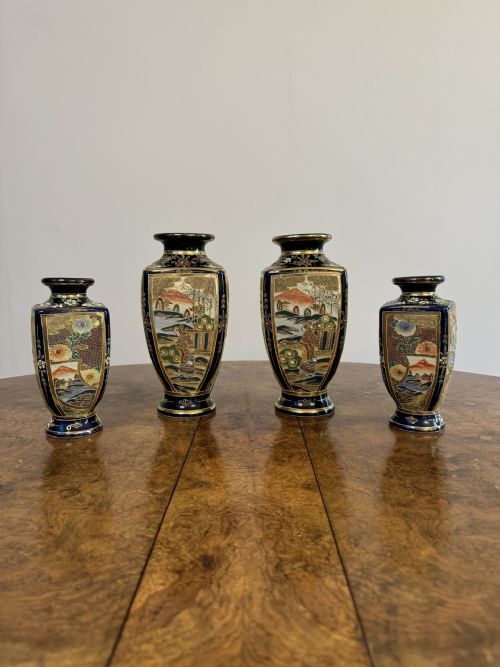
The ambition of the form, whether a simple dish or an elaborate garniture of four vases with specialised finials and elephant head feet, dictates the standing of the piece.
Maruni Kobe·Shozan·Inoue Ryosai·Ban-ni·Kizan·Kinkozan
The Meiji Period Japanese Ceramics Glossary
- Imari
- A style of Japanese porcelain featuring a distinct palette of underglaze blue and iron red, frequently enriched with gold.
- Satsuma
- A type of Japanese earthenware characterised by a crackled ivory glaze and elaborate polychrome and gilt decoration depicting figures or florals.
- Kutani
- A traditional style of Japanese porcelain known for bold colours and pictorial designs.
- Sumida Gawa
- An expressive pottery style featuring heavily modelled figures in relief against dramatic flambé glaze backgrounds.
- Koro
- An incense burner typically fitted with a pierced cover and supported on decorative feet.
Meiji Period Japanese Ceramics: Frequently Asked Questions
What defines meiji period japanese ceramics?
Meiji period japanese ceramics comprise decorative and functional wares produced during the Meiji era, spanning from eighteen sixty-eight to nineteen twelve, as well as adjacent transition periods.
These pieces reflect traditional Japanese artistry alongside influences from international trade and exhibition tastes of the late nineteenth and early twentieth centuries.
What are Sumida Gawa ceramics?
Sumida Gawa pieces are an expressive form of Japanese art pottery originating from workshops near Tokyo.
They are easily identified by their uneven flambé glazes and distinctly modelled three-dimensional figures climbing along the rims or sides of the vessels.
How should I display large floor standing vases?
Large floor-standing vases and heavy chargers require stable placement away from high-traffic areas to ensure their safety.
Because many of these items measure substantial heights, positioning them directly on the floor or on sturdy low stands allows their detailed painting to be viewed properly.