


Meiji Period Ginger Jar
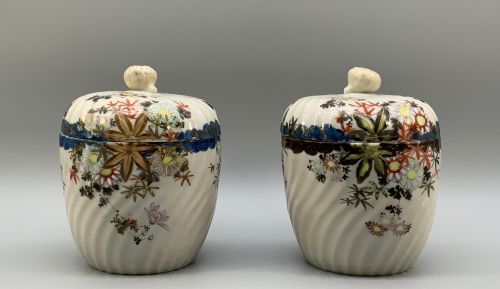
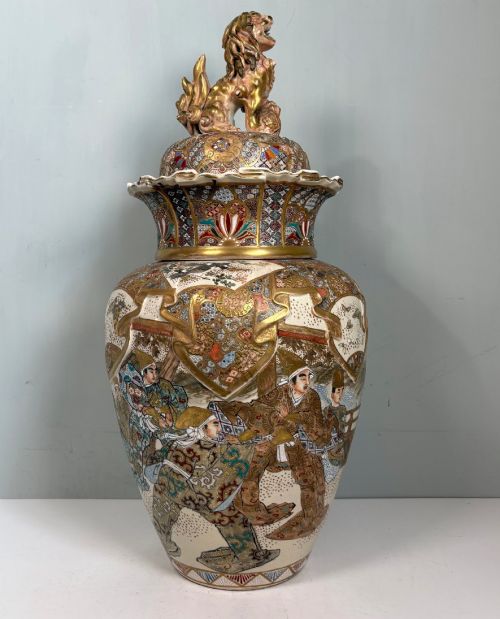
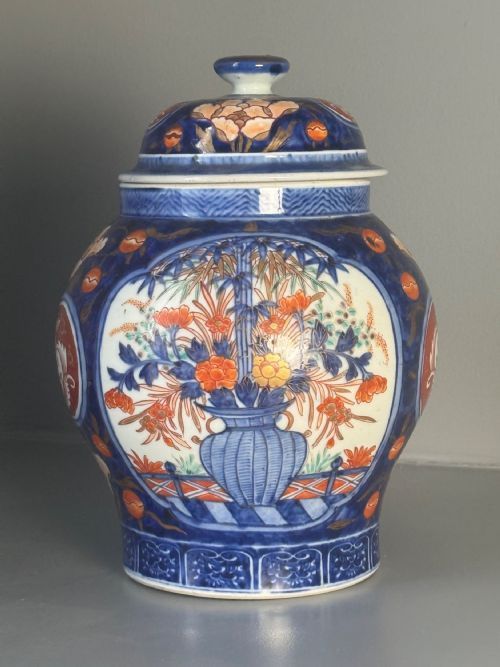
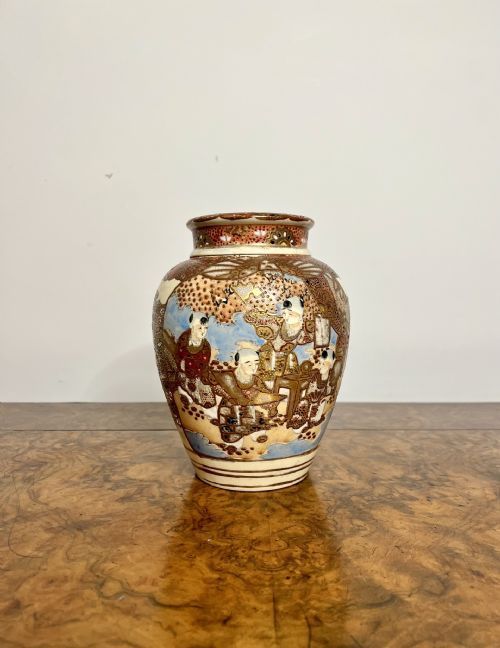
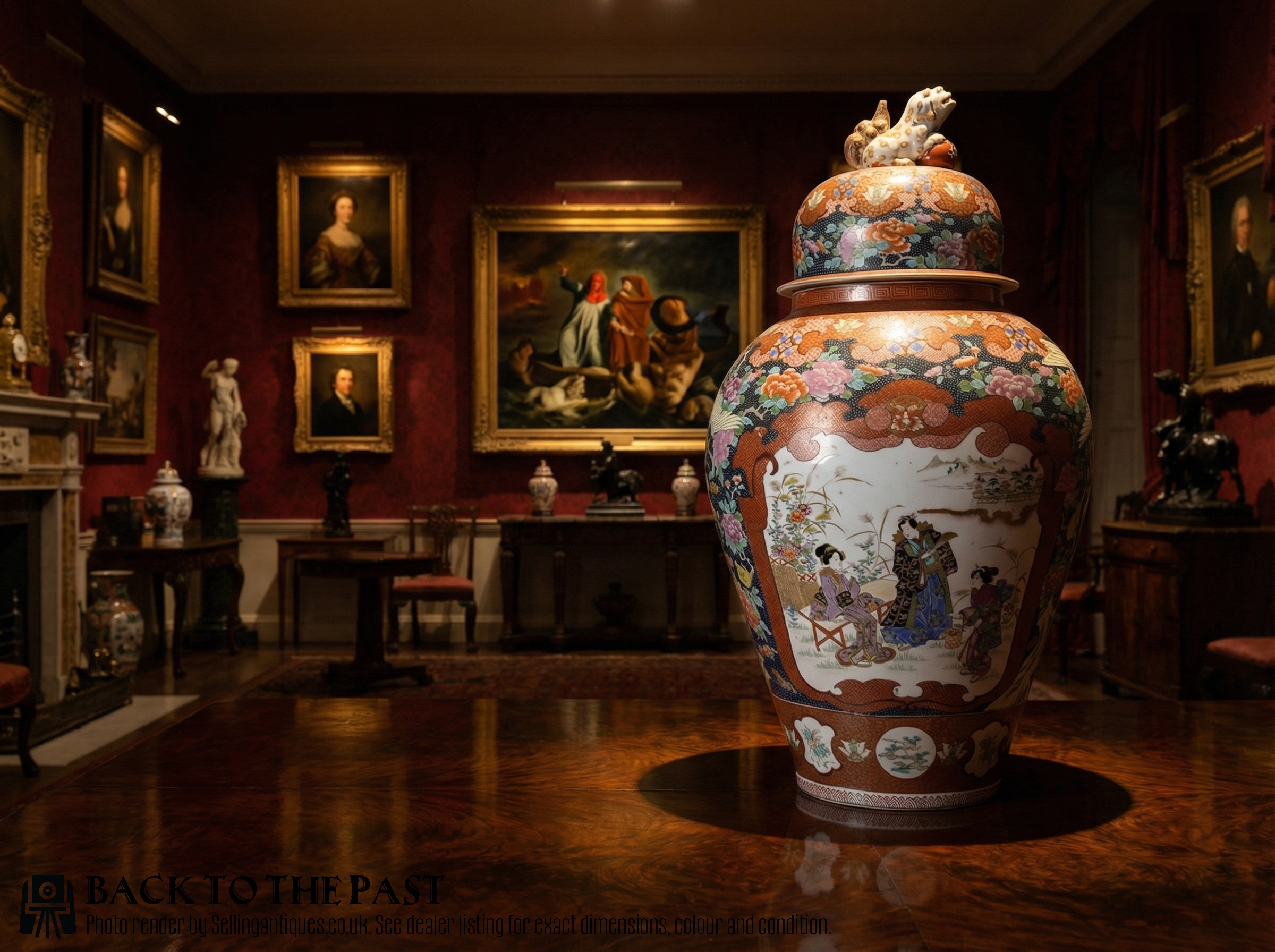
These Japanese vessels are meiji period ginger jar examples created in porcelain, earthenware and cloisonne.
Meiji Period Ginger Jar
A meiji period ginger jar is a lidded ceramic or metal vessel originating from late nineteenth and early twentieth century Japan. Buyers seeking this phrase encounter covered vases, tea caddies and lidded gourd pots decorated with floral motifs, landscapes and figures.
The pieces appearing on this page span the nineteenth century and the early twentieth century, including Victorian and Edwardian catalogued items. Imari palette porcelain, Satsuma earthenware and Kutani wares dominate the selections available to collectors.
What varies in quality
The fineness of the hand-painted brushwork distinguishes standard production items from exceptional workshop output. Precision in the application of gold leaf and the complexity of the landscape or figural composition elevate the standing of a piece.
The crispness of form in the moulding of baluster bodies, octagonal pots and matching covers indicates the skill invested during creation.
Object types span decorative vases, tea caddies, lidded gourd pots, and baluster jars decorated in the Imari palette.
Yamashu·Tokyo Taizan·Fukagawa
The Meiji Period Ginger Jar Glossary
- Imari
- A style of Japanese export porcelain decorated in underglaze blue, iron red, and gold. This palette appears frequently on lidded jars and vases.
- Satsuma
- An earthenware pottery type with a pale, crackle-glaze finish, typically decorated with polychrome enamels and gold leaf. These wares often depict figures such as Rakan.
- Kutani
- Japanese porcelain known for bold colours and intricate pictorial designs. Pieces from this tradition include jars and covered vases.
- Cloisonne
- A technique where enamel is applied to compartments created by soldered wire on a metal base. Gourd pots and jars utilise this method.
- Baluster
- A vase shape with a rounded body that tapers toward the base and swells near the middle. Octagonal variations appear among lidded jars.
Meiji Period Ginger Jar: Frequently Asked Questions
What were ginger jars used for?
These vessels originally stored and transported spices, salt and oil in East Asia. Later production focused on decorative export markets for European and British homes.
Over time, wealthy households utilised them as ornamental mantelpiece ornaments and lidded display pieces rather than kitchen containers.
How do I identify a Meiji period piece?
Items from this era date between eighteen sixty-eight and nineteen twelve during the reign of Emperor Meiji. Look for characteristic Japanese Imari palettes, Satsuma earthenware and detailed hand-painted scenes.
Many pieces carry specific studio signatures or workshop marks from centres like Arita, Tokyo and Kyoto.
Are all ginger jars made of porcelain?
While porcelain forms the majority of Imari and Kutani items, makers also employed earthenware for Satsuma wares. Artisans constructed other lidded jars using brass and copper with enamel.
Different materials require distinct care, particularly when dealing with crackle glazes on earthenware or delicate gold leaf details.
How do Imari and Kutani differ?
Imari wares rely on a distinct palette of underglaze blue, iron red and gold on a white porcelain body. The designs frequently feature floral and geometric panels.
Kutani porcelain showcases bolder pictorial scenes, often dominated by rich greens, reds and golds depicting figures and nature.
How should I display a lidded jar at home?
Place heavier baluster jars and covered vases on sturdy wooden furniture or dedicated stands where the hand-painted details are visible. Keep them away from direct sunlight to protect enamel colours and gold leaf.
Pairing matching pots from the same period creates a balanced display on sideboards or mantelpieces.