







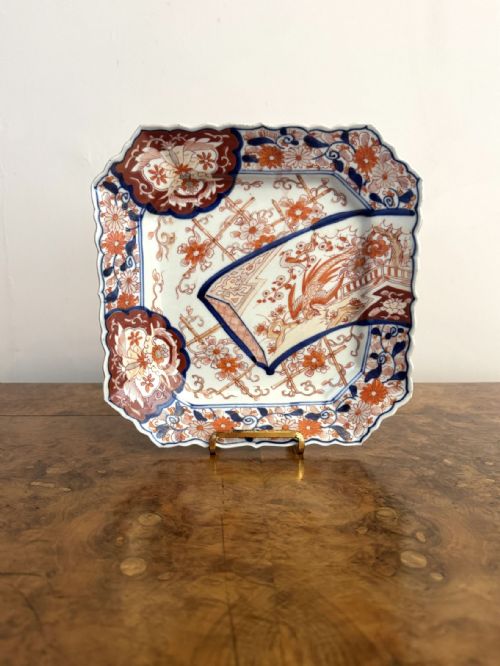
Meiji Period Ceramic Dishes
These meiji period ceramic dishes bring together intricate hand-painted palettes and varied forms from nineteenth-century Japanese kilns.

Meiji Period Ceramic Dishes
Meiji period ceramic dishes encompass decorative plates, chargers, bowls, and platters produced across Japan during the late nineteenth and early twentieth centuries. These vessels served both ornamental display purposes and traditional domestic functions within Japanese interiors.
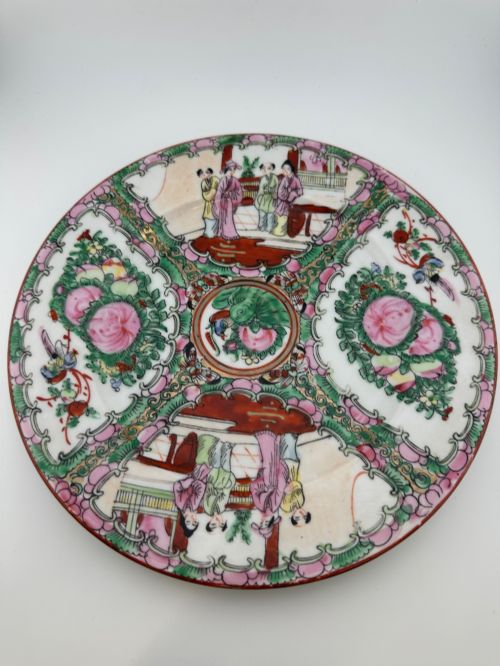
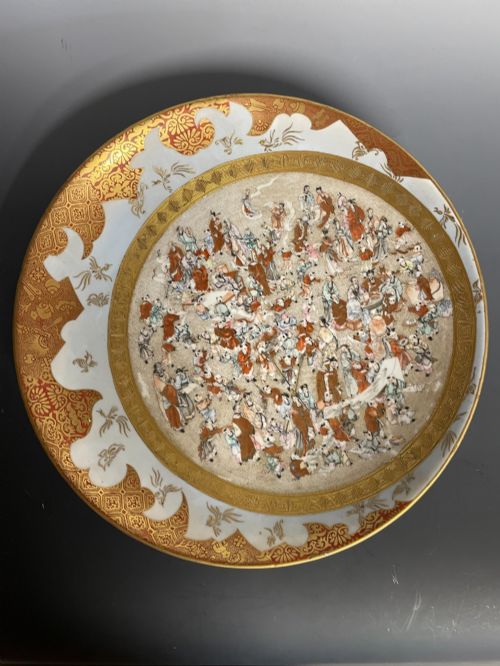
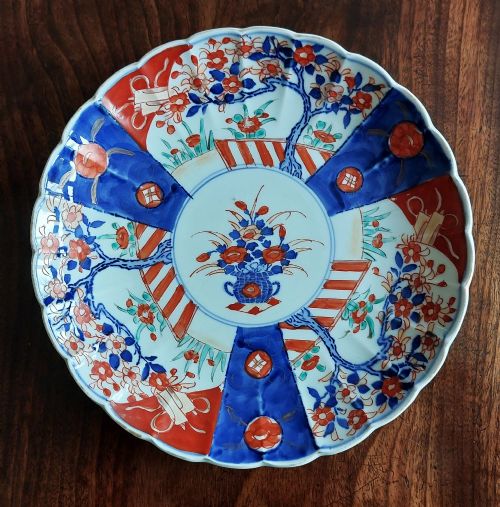
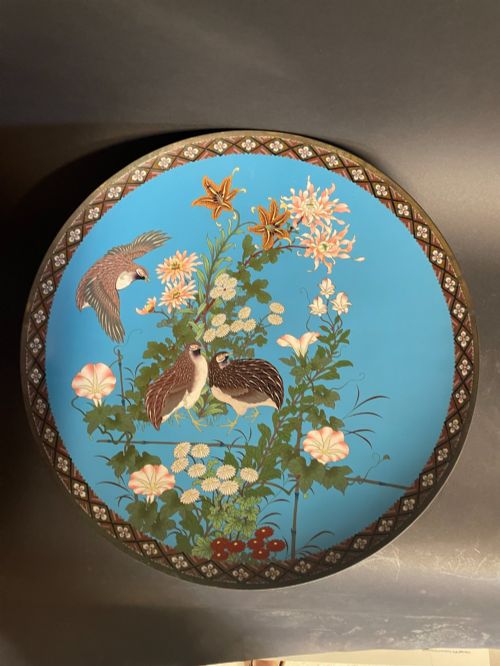
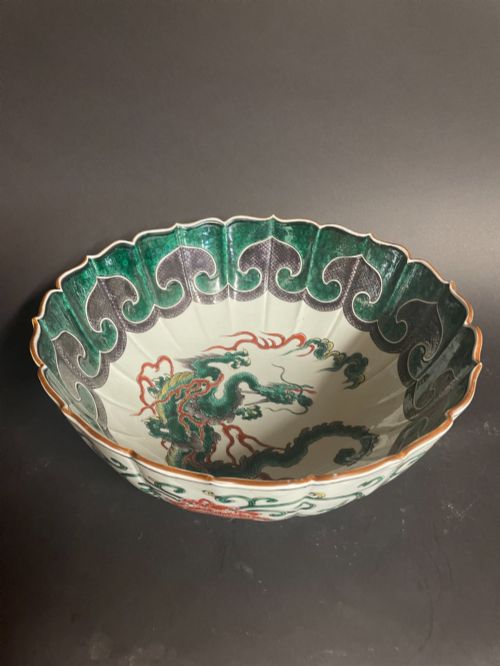
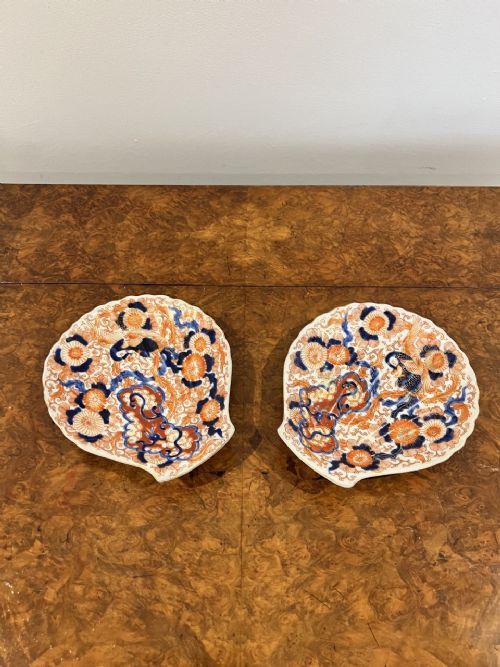
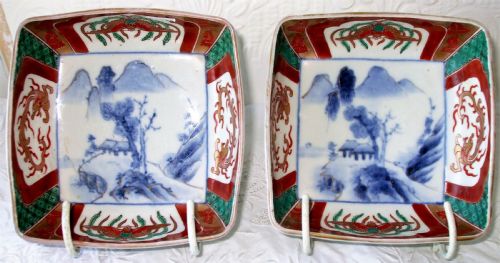
The selections encountered most frequently on this page feature Japanese Imari porcelain, typically rendered in deep cobalt blue and iron red with added gilding. Alongside these are Satsuma earthenware bowls and chargers decorated with detailed figural and floral motifs.
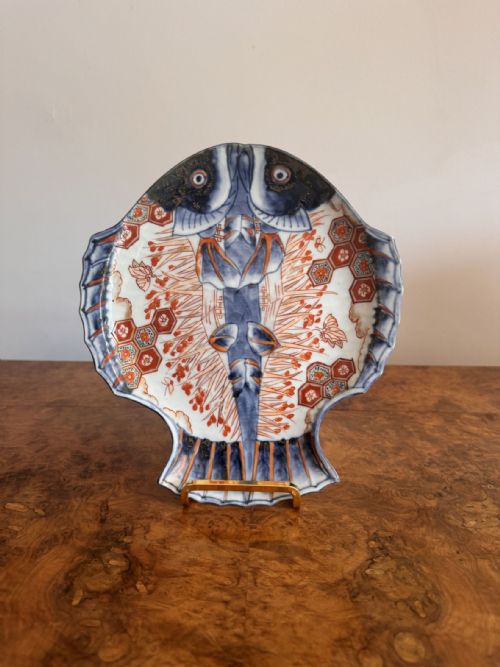
The forms vary widely from standard circular plates to scalloped edges, square profiles, fish shapes, and shell silhouettes. Dating spans the nineteenth century through the early twentieth century, incorporating Arita production and Kyoto workshops.
Materials and Technique
Potters shaped porcelain and earthenware bodies by hand or wheel before applying mineral glazes and underglaze pigments. Cobalt blue and iron red dominate the palette, fixed to the ceramic body through high-temperature firing.
Enamel colours, moriage relief details, and gold leaf additions were frequently layered over the initial glaze and fixed in a secondary muffle kiln. This multi-stage process allowed makers to combine durable underglaze blue with intricate overglaze polychrome decoration.
Some nineteenth-century potters shaped entire plates to resemble swimming fish and fluted seashells.
Assessing Quality
Quality rests in the precision of the brushwork and the clarity of the underlying glaze. Pieces executed with confident, fine-lined painting display a higher degree of artisan skill than those with hurried or repetitive patterns.
The weight of the porcelain, the crispness of moulded edges such as scalloping or shell contours, and the thoughtful placement of gilding and enamel distinguish finer examples from standard commercial output.
Koshida·Gyokkō·Kozan
The Meiji Period Ceramic Dishes Glossary
- Imari
- A style of Japanese porcelain featuring cobalt blue, iron red, and gilt ornamentation. It originated in the town of Arita and became immensely popular for export.
- Satsuma
- A type of Japanese earthenware characterised by a pale, ivory-coloured cracked glaze. It is typically decorated with elaborate enamel designs and raised moriage work.
- Arita
- The Japanese town central to porcelain production from the early modern period onwards. Kilns in this area supplied extensive quantities of high-fired wares.
- Charger
- A large decorative plate intended for display on a wall or sideboard rather than for dining use. These items provide expansive surfaces for complex pictorial designs.
- Moriage
- A decorative ceramic technique using piped clay to create raised, textured patterns beneath the enamel colours. It adds tangible relief to floral and bird motifs.
Meiji Period Ceramic Dishes: Frequently Asked Questions
What are meiji period ceramic dishes?
These pieces comprise decorative plates, bowls, and chargers made in Japan during the Meiji era. They reflect traditional craftsmanship adapted for both domestic use and international export.
Production centres such as Arita and Kyoto produced diverse styles, ranging from robust Imari porcelain to finely crackled Satsuma earthenware.
How were imari dishes decorated?
Imari pieces combine underglaze cobalt blue with overglaze iron red and gold leaf highlights. Artisans painted geometric borders, floral sprays, and exotic birds directly onto the white porcelain body.
Firing the ceramics multiple times ensured the mineral pigments and metallic gilding adhered securely to the finished glaze.
How do I display a charger plate?
Chargers are large decorative plates traditionally intended for ornamental presentation rather than serving food. Collectors often place them on dedicated stands or mount them securely on walls.
Their substantial size allows the intricate painted compositions and scalloped edges to serve as focal points in a room.
How do I distinguish Satsuma from Imari?
Satsuma ware utilises an earthenware body covered in an ivory glaze featuring fine crackles, finished with detailed enamel and gold painting. Imari is hard-paste porcelain defined by a brighter white ground and a palette centred on cobalt blue and iron red.
Examining the weight, paste texture, and underlying material helps clarify the specific kiln tradition.