





Meiji Japanese Decorative Dish
When a buyer searches for a meiji japanese decorative dish, they seek hand-painted porcelain or enamelled copper plates carrying the artistry of late nineteenth and early twentieth century Japan.
Meiji Japanese Decorative Dish
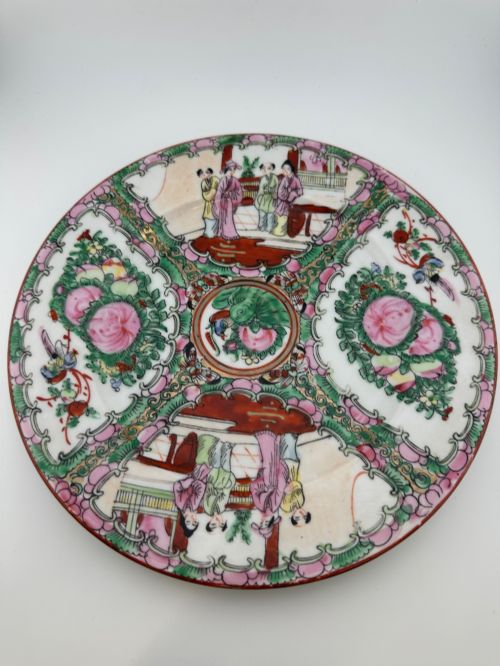
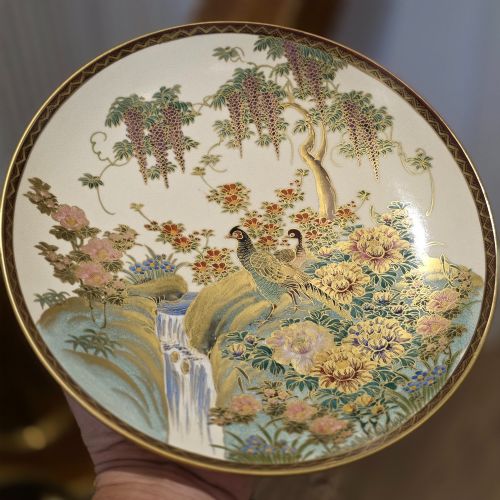
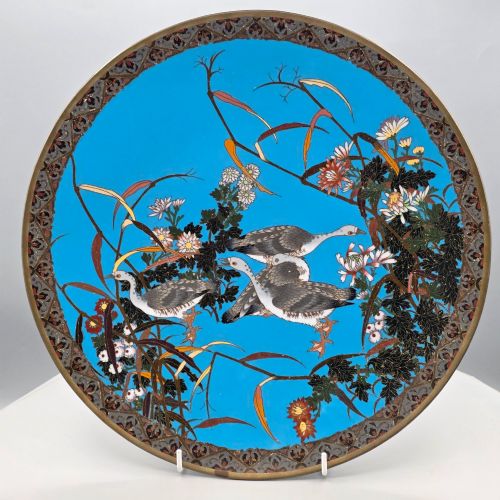
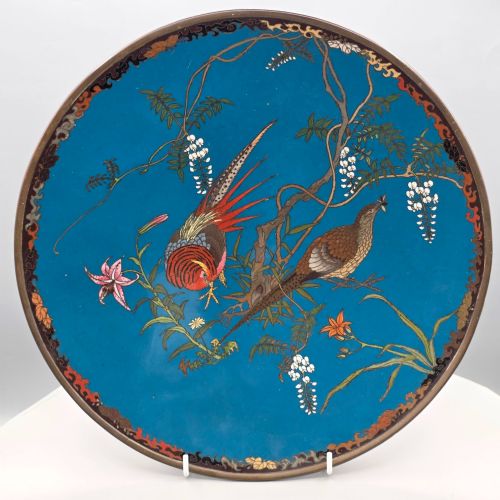
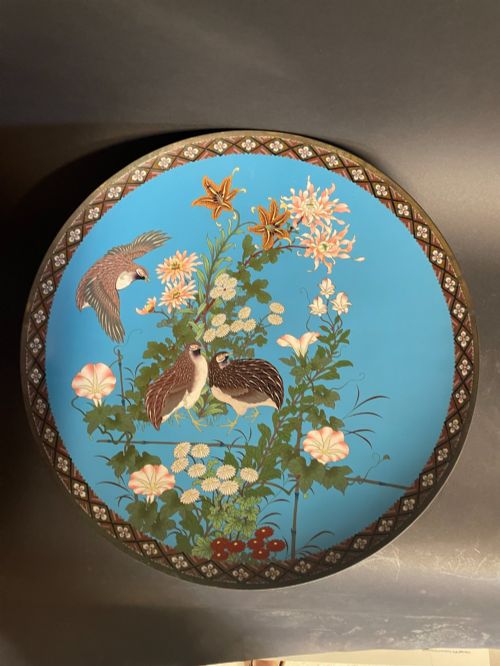
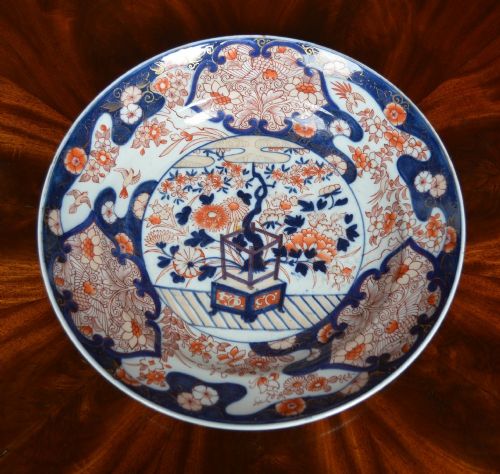
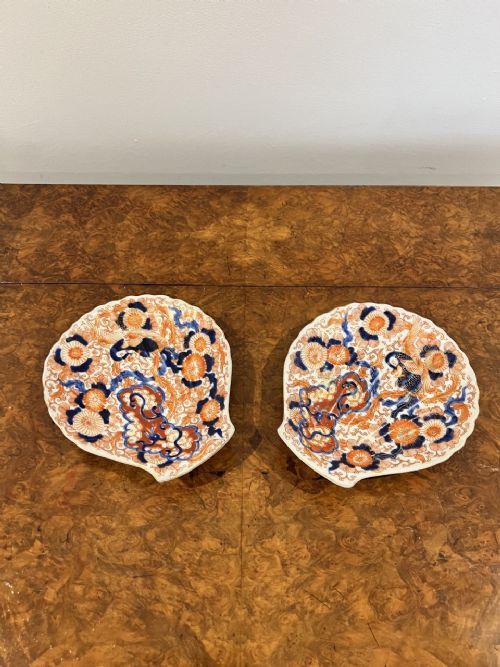
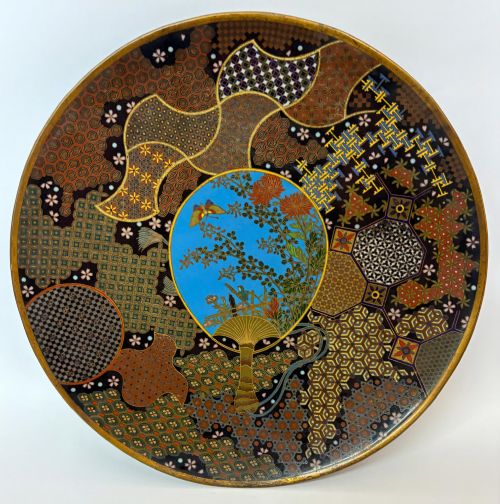
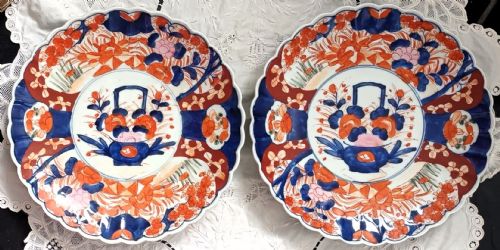
A meiji japanese decorative dish encompasses chargers, plates, bowls, and trays produced primarily during the Meiji period and extending slightly into the Taisho era. These items arrive in various forms, from large scallop-edged Imari porcelain chargers to detailed cloisonne enamel trays depicting birds, flowers, and landscapes.
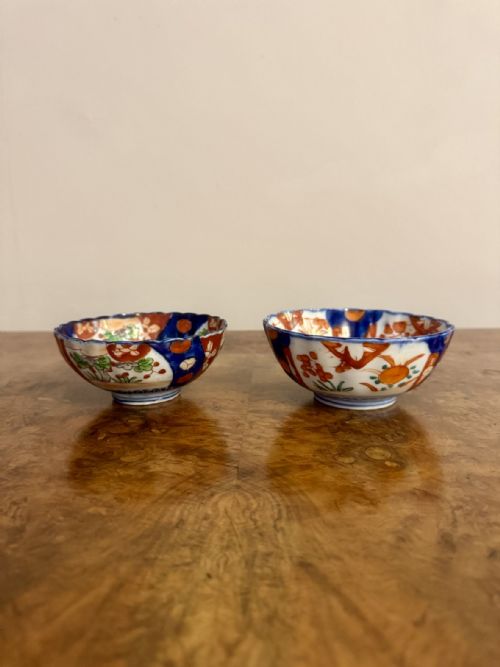
The objects on this page span several decades of production from the late nineteenth century through to the early twentieth century. Buyers encounter traditional blue and white Imari wares alongside complex Satsuma pottery and meticulously worked metalwork dishes.
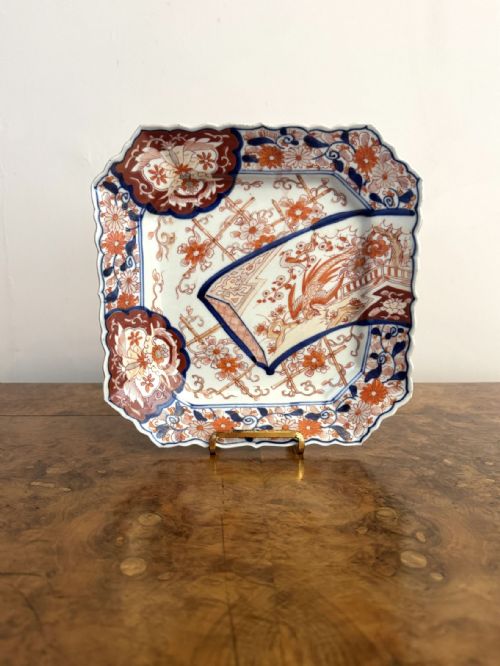
Forms range from intimate square plates and small bowls to substantial wall chargers measuring over thirty centimetres across. The selection reflects both everyday export porcelain and master-grade decorative items intended for display.
How they were made
Makers utilised porcelain and earthenware bodies, applying hand-painted glazes, gold leaf, and rich underglaze blue. Satsuma pieces often incorporate raised moriage paste to give texture to floral and avian subjects.
Cloisonne enamel dishes rely on fine copper or brass foundations decorated with soldered wire partitions. Artisans filled these cells with coloured enamel pastes before firing and polishing the surfaces to a smooth finish.
Listings feature porcelain, earthenware, copper, and brass across periods ranging from the 1870s to the 1920s.
What varies in quality
Quality rests in the precision of the hand-painted detail and the complexity of the composition. Superior examples display intricate control over brushwork, enamel layering, and wire placement, whereas simpler pieces show broader, more repetitive patterns.
Signature marks by known artists or specific workshops elevate certain bowls and chargers above standard export items. The crispness of the porcelain form and the absence of firing blemishes further distinguish the upper tier of the range.
Koshida·Kozan
The Meiji Japanese Decorative Dish Glossary
- Imari
- A style of Japanese porcelain featuring a palette of underglaze blue, iron red, and gilt. It originated in the town of Arita and was widely exported during the Meiji period.
- Cloisonne
- A metalwork technique where fine wire is soldered to a copper or brass base to create compartments filled with enamel paste. These pieces are then fired and polished.
- Satsuma
- A type of Japanese earthenware characterised by a ivory-coloured, crackled glaze. It is frequently decorated with elaborate polychrome enamels and gilding.
- Charger
- A large decorative plate intended for display on a wall or sideboard rather than for dining. They measure significantly larger than standard dinner plates.
- Moriage
- A decorative technique using slip applied in dots or lines to create raised relief patterns on ceramic surfaces. It appears frequently on Satsuma wares.
Meiji Japanese Decorative Dish: Frequently Asked Questions
How were these decorative dishes used originally?
Many of these items were created for the international export market, serving as ornamental display pieces in European and American homes. Large chargers were frequently hung on walls or set upon mantelpieces to showcase Japanese artistry.
Smaller trays and bowls held visiting cards or acted as centrepieces for formal tables. Their primary function was visual appreciation rather than utilitarian dining use.
How do I date a Meiji period dish?
Dating relies on stylistic shifts, material composition, and occasionally workshop signatures recorded in the titles. Pieces span from the late nineteenth century through to the early twentieth century, reflecting the transition of Japanese export manufacturing.
Examining the foot ring, glaze characteristics, and enamelling style helps narrow the decade of production. Earlier nineteenth-century examples often display heavier potting and deeper cobalt tones.
What is the difference between Imari and Satsuma?
Imari refers to hard-paste porcelain decorated with underglaze blue, iron red, and gilt highlights. These pieces feel vitreous and present crisp, geometric or floral motifs.
Satsuma consists of earthenware with a distinct crackled ivory glaze, painted with delicate polychrome figures and landscapes. Satsuma wares tend to feel softer and heavier than porcelain chargers.
How should I display a charger safely?
Large chargers require secure, coated wall hangers designed to distribute weight evenly across the rim. Ensure the mounting hardware anchors firmly into a wall stud rather than relying on plaster alone.
For surface display on sideboards or cabinets, utilise stable plate stands with adequate depth to prevent tipping. Keep them away from direct sunlight to protect fragile enamel and gilt details.