


Meiji Period Cloisonne Dish
When you handle a meiji period cloisonne dish, you hold a dense, meticulous piece of Japanese metalwork shaped by intense heat and patient hands.
Meiji Period Cloisonne Dish
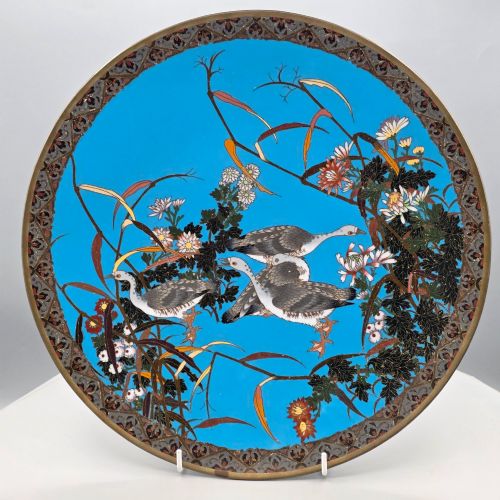
A meiji period cloisonne dish encompasses decorative chargers, plates, bowls, trays, and plaques produced in Japan during the late nineteenth and early twentieth centuries. These pieces display distinct forms ranging from small square trays to massive chargers measuring over forty centimetres across.
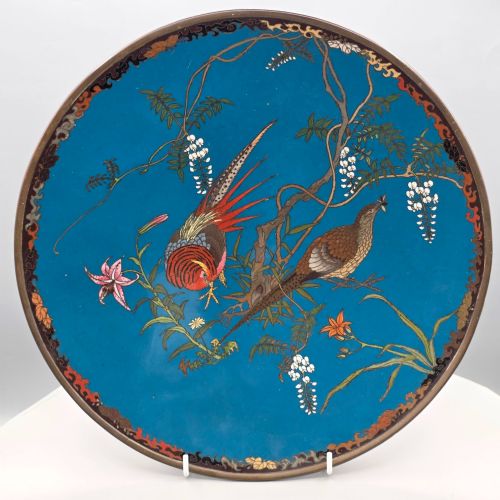
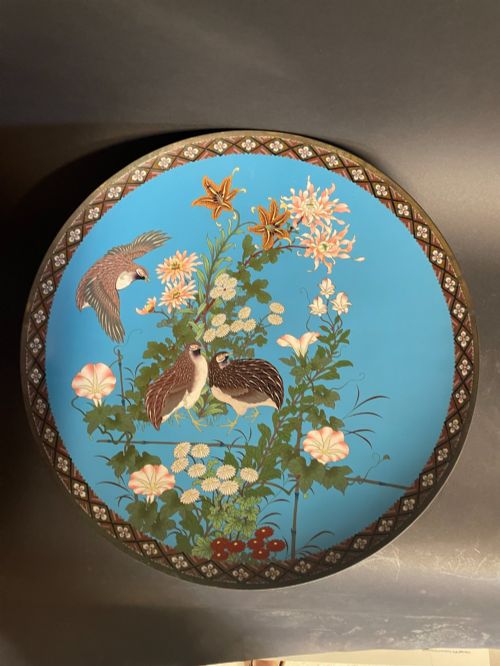
The objects frequently depict natural subjects such as geese, flowers, chrysanthemums, koi, ibises, owls, dragons, and phoenixes alongside human figures like Buddhas and samurai. They serve primarily as decorative works designed to showcase intricate surface patterns and pictorial scenes.
Most examples originate from the Meiji period spanning the 1860s through to 1900, with distinct variations appearing across decades such as the 1870s, 1880s, 1890s, and the turn of the century.
Materials and Construction Techniques
Craftsmen built these vessels using a foundation of copper, bronze, or porcelain, often reinforcing the metal base with brass wire to form the individual cells of the design. Certain specialised pieces utilise porcelain bodies wrapped in cloisonne tree bark effects known as totai shippo.
Coloured enamel paste was packed carefully into the wire cells before the object underwent multiple firings in a kiln to vitrify the glassy surface. Artisans then ground and polished the hardened face until the metal wires and coloured fields met in a smooth, continuous plane.
At least one ambitious artisan chose to render a leaping shrimp in permanent glass and wire.
Assessing Craftsmanship and Detail
Quality rests upon the fineness and regularity of the wirework, where thinner lines and more complex pictorial compositions require greater technical mastery. Pieces bearing signature marks from established workshops often demonstrate superior control over the enamel firing process.
The complexity of the subject matter, such as detailed rendering of feathers, scales, and landscape perspective like Mount Fuji, distinguishes standard production from exceptional masterworks. The absence of surface pitting and the uniform density of the polished glaze reveal the maker's discipline.
Kinkozan
The Meiji Period Cloisonne Dish Glossary
- Cloisonne Enamel
- A technique where thin metal wires are soldered to a metal base to create compartments which are filled with enamel paste and fired. This method allows artisans to draw complex multi-coloured pictures across plates and bowls.
- Charger
- A large decorative plate or platter intended for display on a wall or stand rather than for dining use. These large surfaces often carry the most ambitious pictorial designs.
- Totai Shippo
- A variation where enamel and wire are applied over a porcelain body rather than a traditional metal base. The resulting pieces often mimic the rough texture of tree bark beneath the smooth glaze.
- Ho-o Bird
- A mythical phoenix motif frequently depicted on Japanese decorative arts as a symbol of virtue and grace. It appears with elaborate feathered tails across chargers and plaques.
- Mon
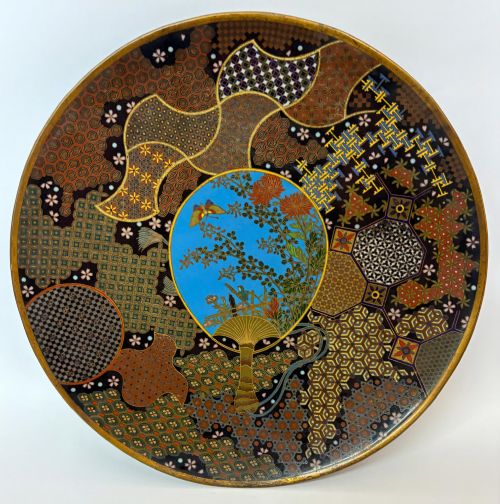
- A Japanese heraldic badge or crest used to identify families or clans. These circular emblems appear subtly within the background patterns of specific plates.
Meiji Period Cloisonne Dish: Frequently Asked Questions
How were these dishes displayed originally?
These pieces were created primarily as ornamental objects for display in domestic interiors or formal reception rooms. Owners placed large chargers on specialised stands or hung them directly on walls to showcase the pictorial enamel work.
Smaller trays and plates were often set on furniture surfaces to be examined closely by guests. Their durable construction allowed them to sit safely in public view without requiring protective casing.
What subjects appear most often on the enamel?
The decoration draws heavily from the natural world, featuring birds like cranes, geese, and phoenixes alongside aquatic life such as koi and shrimp. Floral arrangements including chrysanthemums, peonies, and irises are equally common across the surface of plates and bowls.
Figural scenes depicting samurai, demons, and religious figures appear less frequently but provide striking narrative detail. Landscapes incorporating Mount Fuji also anchor the composition of larger chargers from this era.
How do I distinguish earlier pieces from later ones?
Pieces produced in the 1870s often feature bolder wirework and distinct metallic tones within the copper or bronze body. The scale of the motifs tended to be larger and more direct on these earlier chargers.
By the 1890s and 1900s, the technique evolved toward hyper-detailed pictorial scenes with microscopic wire compartments. Signed examples and specialised techniques like totai shippo porcelain bases cluster more densely in the later decades of the period.
What is the difference between a charger and a plate?
A charger refers specifically to a very large decorative dish, often measuring thirty centimetres or more in diameter. These substantial pieces provided artisans with a wide canvas for complex scenes involving multiple birds, dragons, or expansive landscapes.
Plates and trays generally occupy smaller dimensions and focus on more intimate or concise subjects. Both forms utilised identical wirework and enamel techniques but served different spatial roles in a room.