







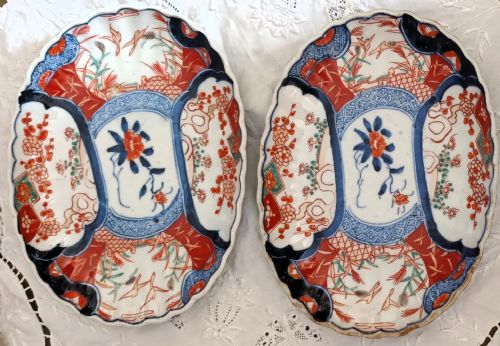
Meiji Imari Chargers
These meiji imari chargers bring rich palettes of cobalt underglaze, enamel and gold leaf to any room.
Meiji Imari Chargers
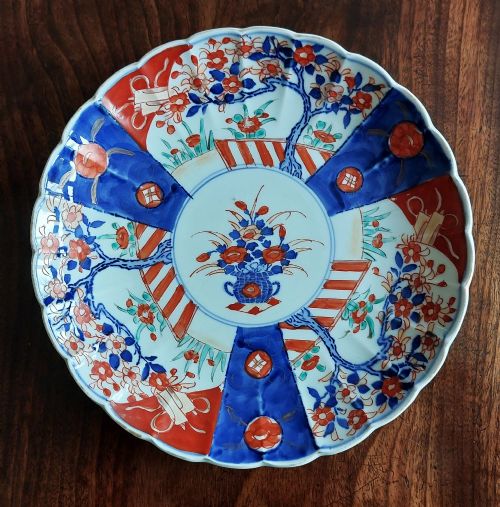
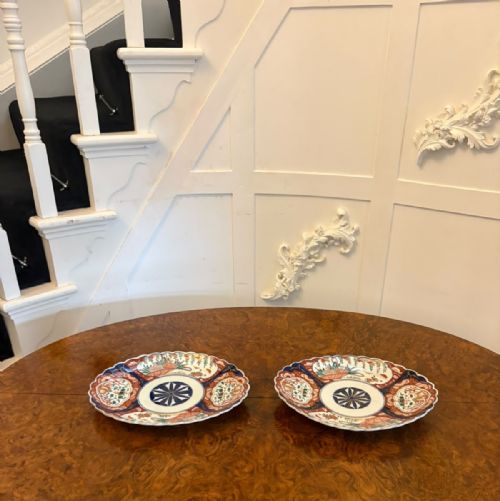
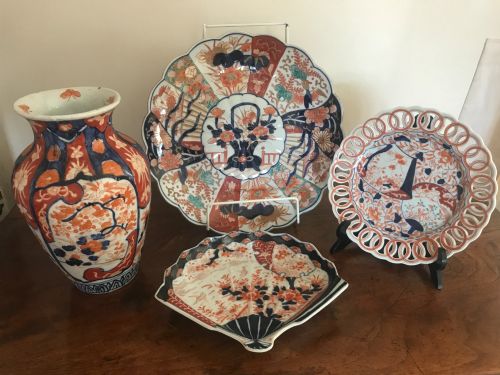
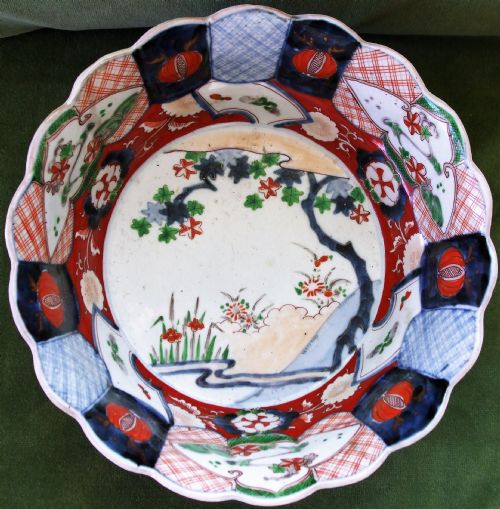
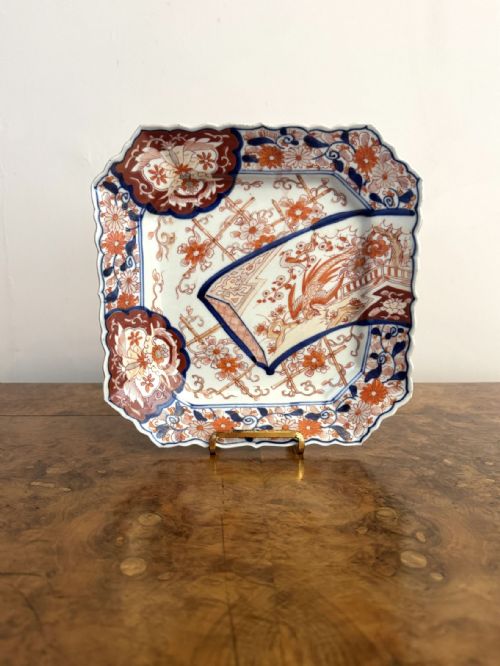
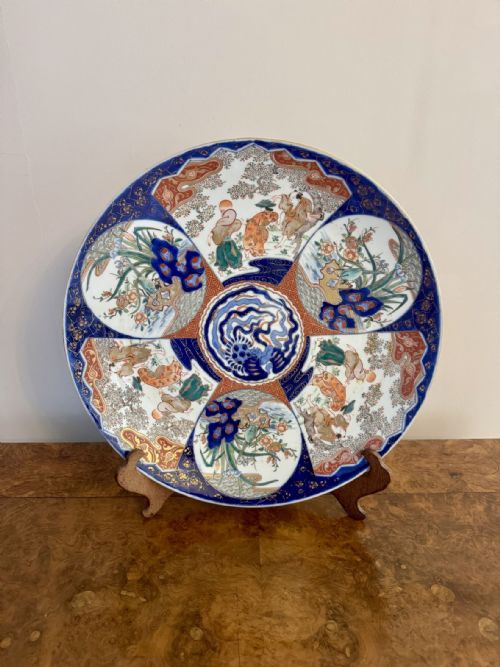
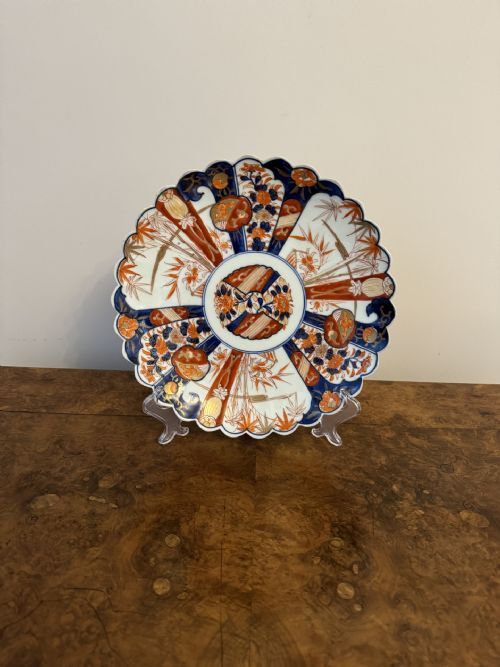
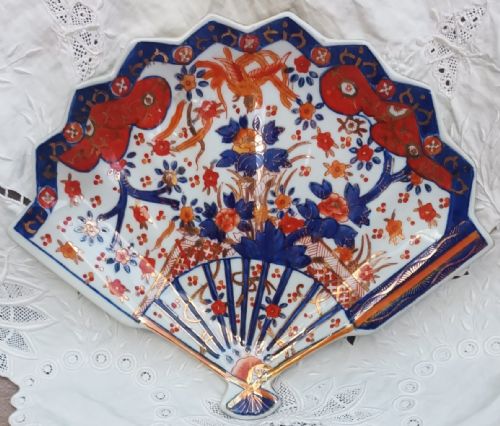
Meiji imari chargers are large decorative plates produced in Japan during the late nineteenth and early twentieth centuries, spanning the Meiji period and the Victorian era. The selection centres on large chargers and decorative dishes, alongside bowls and plates with scalloped edges or square shapes.
Most examples date from around eighteen eighty to nineteen twenty, reflecting the output of Japanese Arita kilns during this era. Buyers encounter individual chargers, pairs and collections featuring traditional hand-painted floral and bird designs, alongside figurative subjects such as the Seven Lucky Gods.
Materials and technique
These ceramics are formed from porcelain and decorated using cobalt underglaze, enamel, and gold leaf or gilding. Artisans paint intricate motifs by hand onto the porcelain body before firing, applying rich blue pigments and vibrant contrasting colours.
Many pieces incorporate gold leaf highlights overglaze, creating a layered texture. Edges are frequently moulded into scalloped shapes or square profiles, requiring precise manipulation of the porcelain before glazing.
Materials recorded on this page include cobalt underglaze, enamel, gold leaf and porcelain.
Judging quality
Quality rests in the precision of the hand-painted brushwork and the complexity of the palette. Superior pieces show crisp delineation of exotic birds, floral motifs and figures, with generous and carefully placed gold leaf.
The weight and purity of the porcelain body, alongside the depth of the cobalt underglaze and enamel colours, distinguish finer chargers from standard commercial output. Unusual shapes, such as square plates or deep scalloped edges, also indicate higher ambition in manufacture.
Fukugawa
The Meiji Imari Chargers Glossary
- Imari
- A style of Japanese porcelain named after the port from which it was shipped to Europe. It traditionally uses a palette of cobalt underglaze blue, iron red, and gold.
- Charger
- A large decorative plate intended for display rather than dining. These pieces often measure over forty centimetres across.
- Meiji Period
- The era in Japanese history spanning from eighteen sixty-eight to nineteen twelve, marked by extensive international trade and export ceramics. Pieces from this time show high technical skill.
- Arita
- The Japanese town and surrounding region where the porcelain industry developed. Kilns here produced the vast majority of Imari wares.
- Cobalt Underglaze
- A blue pigment applied to the raw porcelain body before glazing and firing. It produces a deep tone that remains permanent beneath the glassy surface.
Meiji Imari Chargers: Frequently Asked Questions
What are meiji imari chargers used for?
These large porcelain plates are intended for decorative display on walls, tables or cabinets rather than for practical dining use. Their robust size and colourful painted designs make them focal points in a room.
Historically, they were produced primarily for export to Western markets during the late nineteenth century, appealing to collectors who favoured Japanese aesthetics.
How do I display a charger safely?
Chargers require sturdy plate hangers designed for heavy porcelain, or dedicated stands that support the base securely. Ensure the wall fixing or surface is stable given the substantial weight of large ceramic pieces.
Keep them away from direct sunlight and areas of heavy household traffic to protect the delicate enamel and gold leaf decoration from accidental knocks.
How can I tell the period?
The period is indicated by the style of painting, the quality of the porcelain body and the specific tones of the cobalt underglaze and enamel colours. Pieces from the Meiji era often exhibit detailed hand-painted motifs like exotic birds or the Seven Lucky Gods.
Comparing the manufacturing traits with documented export wares helps narrow down the production date between eighteen eighty and nineteen twenty.
Are these pieces hand-painted?
Most antique chargers feature hand-painted decoration executed with fine brushes in cobalt underglaze, supplemented by enamels and gold leaf. Artisans applied each motif individually, resulting in subtle variations between items.
This manual execution separates nineteenth-century export pieces from later mass-produced ceramics that rely on transfer printing.