


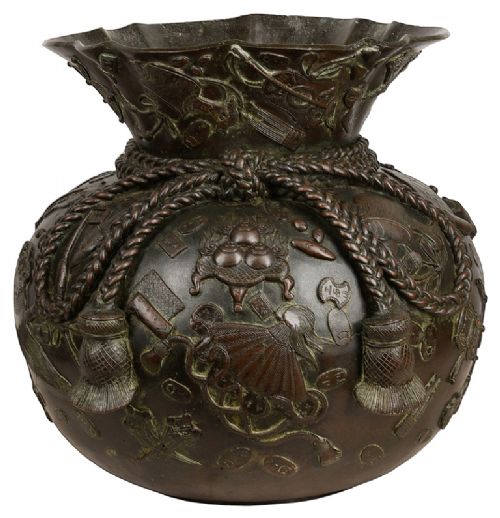


Meiji Bronze Plant Pot
These meiji bronze plant pot examples bring heavy cast metal and rich patination to interior displays.
Meiji Bronze Plant Pot
A meiji bronze plant pot sits as a sturdy vessel designed to house botanical displays within a room. Most specimens encountered here belong to the broader Meiji period and Victorian eras, often taking the form of heavy jardinieres and decorative bowls.
The objects frequently present as Japanese creations, sometimes intersecting with Edo periods or Chinoiserie styles in their decorative scheme. Buyers typically find substantial circular containers intended for floor or tabletop placement.
Materials and construction
The primary metal utilised is bronze, occasionally complemented by brass, gilt bronze, or integrated enamel work such as cloisonné and champlevé. Founders poured these metals into substantial moulds to achieve thick, resilient walls capable of holding damp earth and plants.
Surface finish relies on traditional metalworking techniques that produce deep patinas rather than modern uniform coatings. Enamel panels are fused directly into recessed metal channels to create coloured decorative motifs across the body.
Meiji Bronze Plant Pot Retail Price Guide 2026
Typical asking prices for meiji bronze plant pot among the pieces listed under this phrase on Sellingantiques today, from the lower quarter to the upper quarter. They describe what is for sale here now, not the wider market.
Listings feature 19th Century and Victorian periods alongside materials such as bronze, brass, and cloisonne enamel.
Distinctions in quality
Weight and thickness set superior vessels apart from lighter counterparts, with finer examples demonstrating substantial metal mass and rigid construction. The crispness of cast details and the precision of inlaid enamel work reveal the skill of the original workshop.
Surface preservation dictates the visual success of the piece, where stable, undisturbed patinas hold greater appeal than aggressive cleaning. The presence of signatures or maker marks further elevates certain specimens within the broader range.
The Meiji Bronze Plant Pot Glossary
- Jardiniere
- An ornamental pot or stand for holding plants or flowers. This term appears interchangeably with planter bowl across the listings.
- Cloisonne
- An enamelware technique where thin metal wire forms raised barriers to hold coloured pastes before firing. It creates distinct compartmentalised patterns on the vessel body.
- Patina
- The surface sheen and colour acquired by bronze over decades of handling and exposure to air. A rich patina indicates age and natural oxidation.
- Champleve
- A method of enamelling where troughs are carved directly into the thick bronze surface to receive coloured enamel. The surrounding metal forms the visible lines of the design.
- Edo
- A historical period of Japanese rule preceding the Meiji era. Objects occasionally bridge these transitional stylistic boundaries.
Meiji Bronze Plant Pot: Frequently Asked Questions
What is a meiji bronze plant pot?
It is a heavy metal vessel cast in Japan during the late nineteenth or early twentieth century to hold indoor plants.
These pieces function primarily as jardinieres or decorative bowls featuring traditional Asian motifs and patinated surfaces.
How were these planters used historically?
Households placed them in principal rooms to accommodate large potted ferns or decorative foliage.
They served both as functional waterproof containers and as prominent decorative statements within Victorian interiors.
How do I care for bronze and enamel?
Dust the surface gently with a soft cloth and avoid abrasive polishes that strip the historical patina.
Use a secondary inner plastic liner if placing live plants inside to protect the metal from moisture damage.
How do I identify a Meiji period piece?
Look for dense cast bronze construction combined with Japanese stylistic elements characteristic of the late nineteenth century.
Certain examples also feature recessed signature panels or characteristic cloisonne and champleve enamel decorations.