
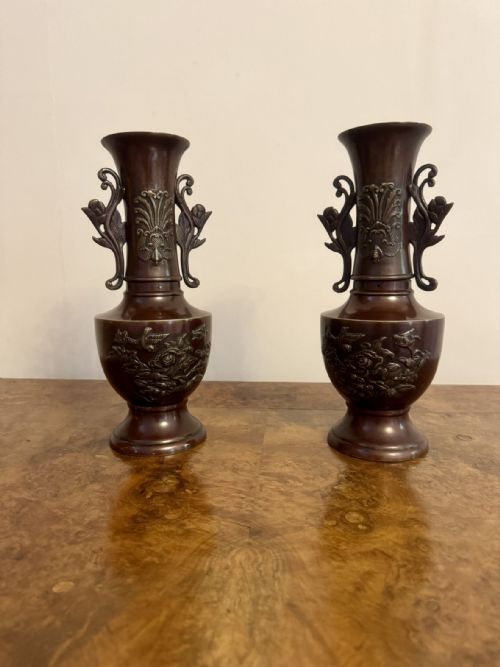


Japanese Bird Relief Urn
A Japanese bird relief urn brings sculptural metalwork and intricate avian detail into any interior.
Japanese Bird Relief Urn
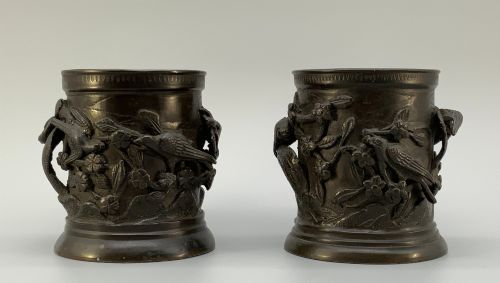
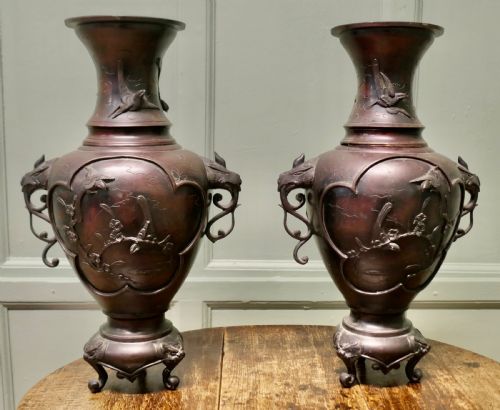
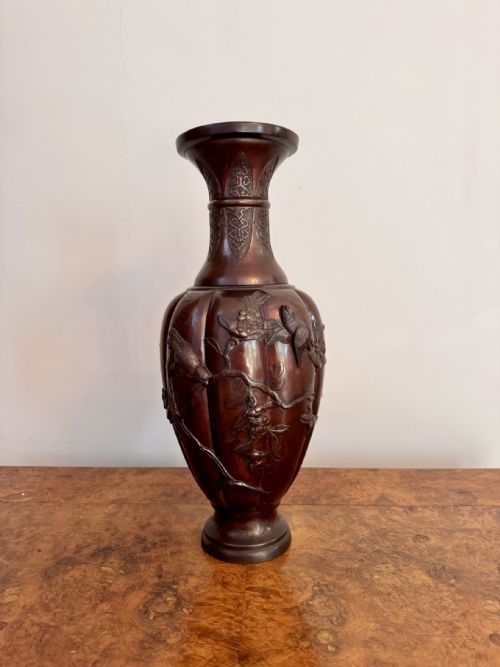
A japanese bird relief urn typically takes the form of a bronze vessel created during the Meiji period, spanning the late nineteenth and early twentieth centuries. These pieces appear as pairs of baluster vases, stem vases, or larger jardiniere planters shaped with raised surface ornament.
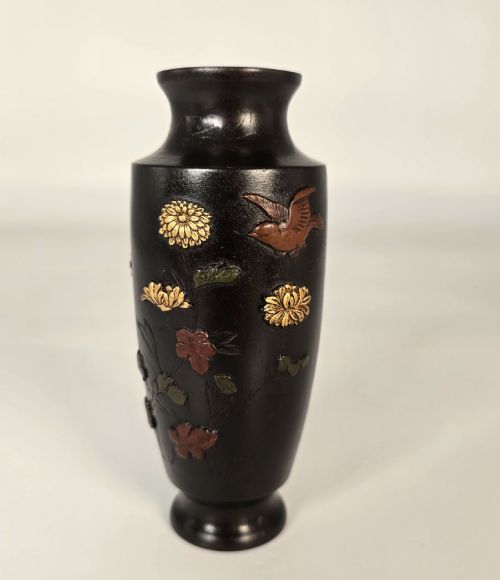
The objects showcase traditional Japanese metalworking aesthetics adapted for export and domestic markets during the Victorian era. Buyers encounter works featuring mixed metal applications, patinated surfaces, and motifs depicting birds alongside floral elements or blossom.
Vessels range from compact fifteen centimetre pieces up to large seventeen inch presentation urns. The predominant survival is the bronze vase or jardiniere displaying cast and applied relief work from the eighteen eighties onward.
How they were made
Metalworkers utilised bronze, patinated bronze, and copper as the primary foundation materials for casting these vessels. Artisans applied chemical treatments to achieve dark patinated finishes that contrast with lighter metallic elements.
Makers integrated gold inlay, gilt metal, gold, and silver to create mixed metal highlights on the raised bird and floral motifs. These decorative details are soldered or inlaid directly into the cast bronze body of the urn.
Current listings span the Victorian era, the Meiji period, and the early twentieth century up to 1910, executed entirely in bronze, copper, and precious metal alloys.
What varies in quality
The definition and depth of the raised metal relief separate standard production from finer examples. Superior pieces display crisp detailing in the feathers of birds and the contours of blossoms, whereas lesser items show softer, shallower casting.
The complexity of mixed metal applications influences the standard of a piece. Urns incorporating multiple metallic accents like gold inlay and silver demonstrate higher craftsmanship than plain patinated surfaces.
The Japanese Bird Relief Urn Glossary
- Meiji Period
- The era in Japanese history lasting from 1868 to 1912. Much of the metalwork seen in these collections originates from this time of artistic export.
- Patinated Bronze
- Bronze treated with chemical solutions to produce a specific surface colour. This process protects the metal and creates tonal contrast.
- Mixed Metal
- A technique combining disparate metals such as copper, silver, and gold on a single bronze base. Artisans use this method to add polychromatic detail to raised designs.
- Jardiniere
- A decorative ceramic or metal pot designed to hold plants or flowers. In these listings, large bronze versions serve as substantial interior planters.
Japanese Bird Relief Urn: Frequently Asked Questions
What is a Meiji period urn?
A Meiji period urn is a bronze decorative vessel produced in Japan between 1868 and 1912. These pieces often feature sculptural relief work depicting birds and floral scenes.
Craftsmen created them using traditional casting and metalworking techniques that gained popularity during the late nineteenth century.
How were bronze vases used?
These bronze vessels functioned primarily as decorative items within Victorian interiors. Owners displayed them on mantelpieces, tables, or pedestals as focal points.
Larger variations served as jardinieres and planters for substantial floral arrangements or indoor plants.
What is mixed metal inlay?
Mixed metal inlay involves embedding contrasting metals like gold and silver into a bronze surface. This technique highlights specific details within a raised design.
Artisans utilised this method to create colourful accents on bird and blossom motifs.
How do I style an urn?
Bronze urns and vases suit traditional and contemporary interiors as sculptural accent pieces. Placing a pair on a sideboard or console table balances the composition.
Their dark patinated surfaces complement wooden furniture and neutral architectural backdrops.