


Meiji Brass Enamel Charger
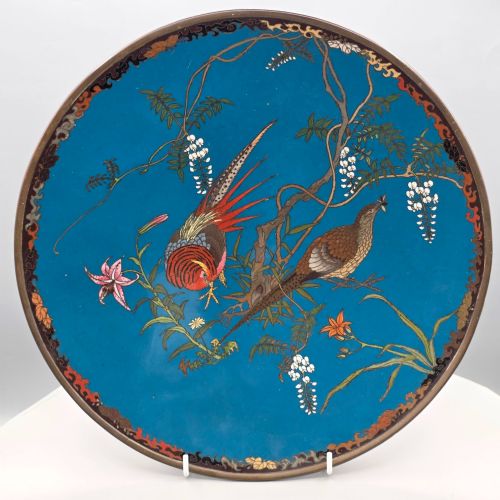
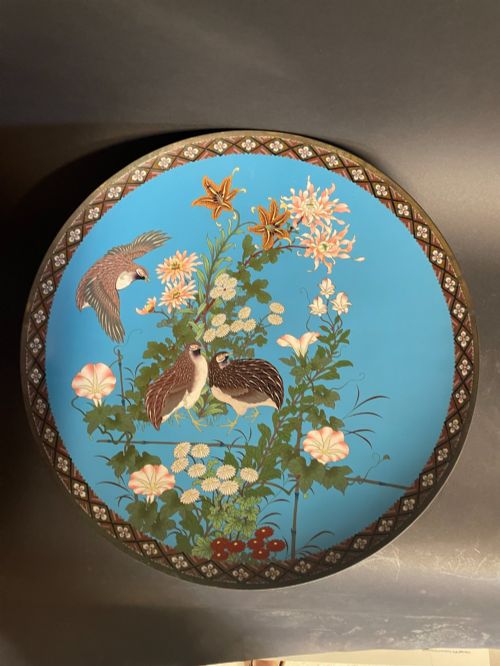
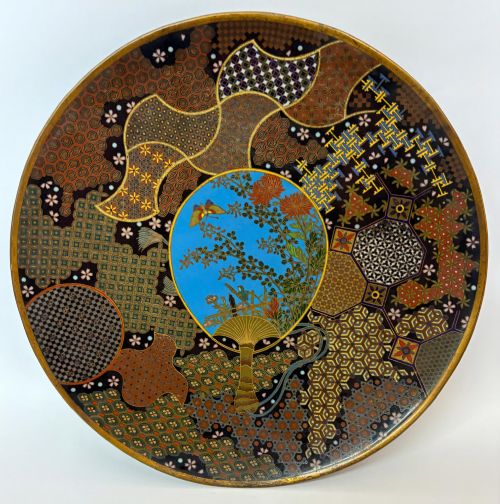
These meiji brass enamel charger plates bring striking Japanese artistry into a room through meticulous metalwork and coloured glass.

Meiji Brass Enamel Charger
A meiji brass enamel charger represents a distinct tradition of decorative metalwork originating during the late nineteenth century. These pieces take the form of large circular plates, dishes, and octagonal trays designed primarily for display rather than dining.
The objects available span from the 1870s through to 1900, capturing the height of Japanese meiji period craftsmanship. Common visual themes include natural subjects such as birds, owls, ibises, flowers, dragons, and landscapes like Mount Fuji.
Materials and construction methods
The foundation of each piece relies on hammered or cast base metals including brass, copper, and bronze. Artisans shaped these metal bases into large plates and trays before applying surface decoration.
Fine wire work known as cloisonne created compartments on the metal surface, which were then filled with coloured enamel pastes and fired. This technique allowed makers to build intricate pictorial scenes with sharp outlines and vibrant fields of colour.
Materials recorded across the selection include brass, copper, bronze, and cloisonne enamel.
Distinctions in craftsmanship
Quality in these decorative chargers depends heavily on the precision and complexity of the wirework. Tighter, more intricate wire patterns demand greater skill from the artisan and create finer detail in the finished pictorial subjects.
The clarity and depth of the enamel fields also separate standard production from superior examples. Better pieces display smooth, evenly polished surfaces with harmonious colour transitions across complex subjects like birds, flowers, and landscapes.
The Meiji Brass Enamel Charger Glossary
- Charger
- A large decorative plate or tray intended for display on a wall or surface rather than functional dining use. These substantial objects often measure over thirty centimetres across.
- Cloisonne
- A decorative metalwork technique where thin wires are soldered to a metal base to form cells that hold coloured enamel paste. The entire piece is then fired and polished to a smooth finish.
- Meiji Period
- The era in Japanese history spanning from 1868 to 1912, characterised by extensive international trade and the flourishing of decorative arts. Pieces from this time demonstrate exceptional technical mastery.
- Mon
- A Japanese heraldic badge or crest used to identify families or clans, frequently incorporated into the decorative schemes of metalwork and textiles. These formal emblems appear alongside natural motifs on select plates.
Meiji Brass Enamel Charger: Frequently Asked Questions
How do I display a large charger safely?
These decorative plates are traditionally mounted on sturdy wall brackets designed for heavy round objects, or supported securely on a dedicated display stand on a stable surface.
Because of their substantial weight and delicate enamel surfaces, placement should avoid areas prone to heavy vibrations or accidental knocks.
What subjects appear on these pieces?
The decorative repertoire focuses heavily on the natural world, including birds such as owls, ibises, and phoenixes, alongside botanical themes like chrysanthemums, irises, and tendrils.
Other frequent motifs include landscapes featuring Mount Fuji, animals like shrimp and frogs, and mythical creatures such as dragons.
How do I date an antique charger?
Dating relies on stylistic markers, construction techniques, and period attributions spanning the late nineteenth century from the 1870s to 1900.
Changes in wire fineness, enamel palettes, and subject matter help identify the specific decade within the meiji period during which the object was produced.
Are these items meant for daily use?
These pieces were created as decorative works of art rather than functional tableware for serving food.
Displaying them safely preserves the intricate enamel work and the underlying metal structure from potential surface damage or staining.