



Japanese Cloisonne Wall Plaque
A japanese cloisonne wall plaque brings striking metalwork and vibrant enamel into a room, capturing the meticulous skill of Meiji artisans.

Japanese Cloisonne Wall Plaque
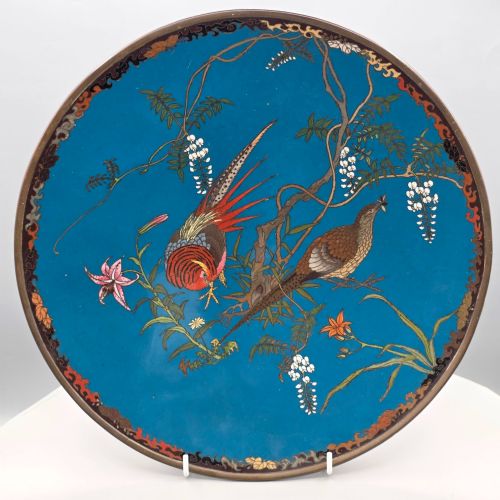
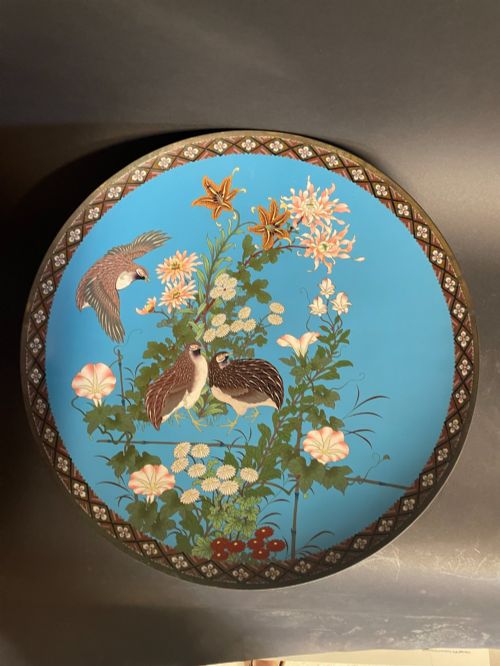
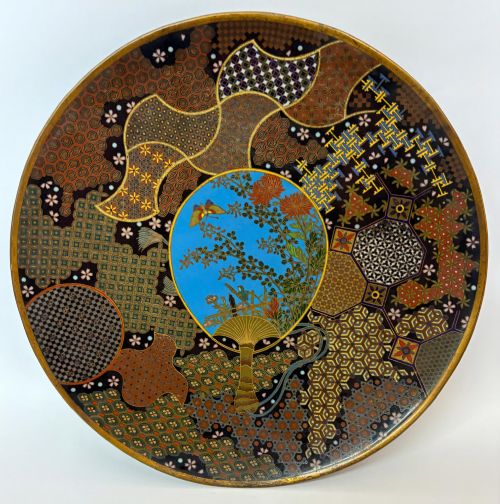
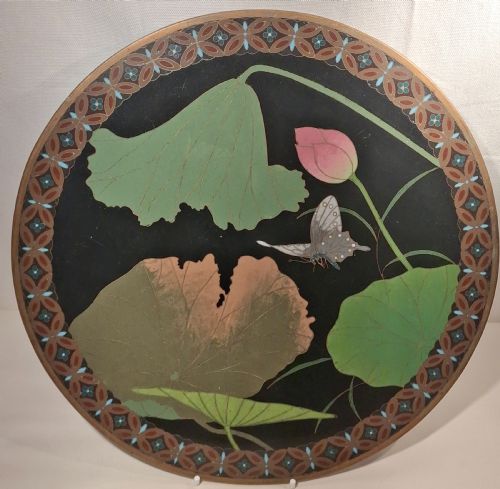
A japanese cloisonne wall plaque typically manifests as a large decorative charger, plate, or tray designed for display rather than dining. These objects originate mainly from the nineteenth century, spanning the Edo and Meiji periods.
The selections available here emphasise expansive charger plates and dishes featuring detailed natural motifs, mythological creatures, and symbolic subjects like birds, koi, dragons, and samurai.
How they were made
Artisans constructed these works using copper, brass, bronze, and occasionally porcelain as a base body, sometimes applying innovative techniques such as totai shippo over tree bark effects.
Fine wire compartments were soldered onto the metal surface to form intricate cellular designs, which were then filled with coloured enamel and fired before polishing.
Listings feature items spanning the 1860s through 1900, incorporating copper, brass, bronze, porcelain, and fine wire.
What varies in quality
The distinction between standard production and exceptional work lies in the fineness of the wirework and the complexity of the enamel palette. Pieces bearing signatures often demonstrate a higher degree of execution by master workshops.
Scale and ambition also dictate standing, with monumental chargers showing intricate pictorial subjects representing the pinnacle of period craftsmanship.
The Japanese Cloisonne Wall Plaque Glossary
- Cloisonne Enamel
- A technique where thin metal wires are soldered to a metal base to create cells filled with vitreous enamel paste. This method allows for intricate and colourful pictorial designs.
- Charger
- A large ornamental plate or dish intended for display on a wall or sideboard rather than practical table service. These form the primary canvas for Meiji period metalwork.
- Totai Shippo
- A variation of cloisonne where enamel is applied over a porcelain body rather than metal. This technique creates distinct textural effects such as simulated tree bark.
- Meiji Period
- The era in Japanese history spanning from 1868 to 1912, noted for a massive output of high-quality decorative arts destined for international export.
- Ho-o Bird
- A mythical Chinese phoenix symbol often depicted in Japanese art representing virtue, grace, and auspiciousness.
Japanese Cloisonne Wall Plaque: Frequently Asked Questions
How do I hang a heavy charger?
Large chargers require robust wall-mounting systems designed specifically for heavy plates to distribute weight evenly without straining the rim.
Use professional-grade brass wire display hangers secured firmly into wall studs to ensure safe and stable exhibition.
What subjects appear most often?
Common motifs include natural scenes featuring birds, koi fish, and chrysanthemums alongside mythological creatures like dragons and samurai.
These subjects reflect traditional symbolism valued heavily by late nineteenth-century makers.
How do I clean enamel surfaces?
Dust enamel pieces gently with a soft, dry microfibre cloth to remove surface particles without scratching the polished metal wires.
Avoid liquid cleaners and chemical solvents entirely, as moisture can penetrate hairline fractures in the old enamel.
Are these pieces signed?
Certain plates and chargers bear artist or workshop signatures inscribed on the reverse or integrated into the enamel design.
Signed examples indicate higher ambition by the maker, though many fine period works remain unsigned.