
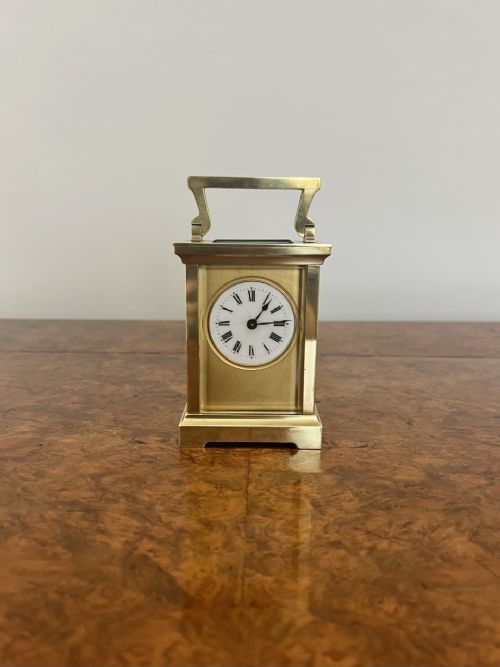


Mechanical Brass Carriage Clock
A mechanical brass carriage clock is a portable timepiece housed in glass and metal, prized for both precision engineering and traditional desk display.

Mechanical Brass Carriage Clock
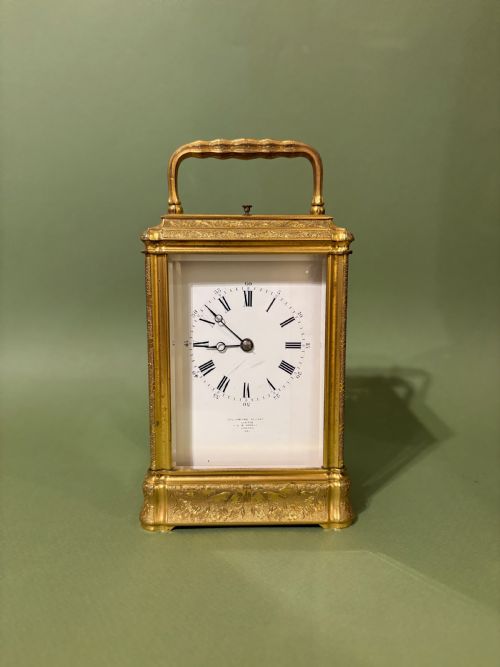
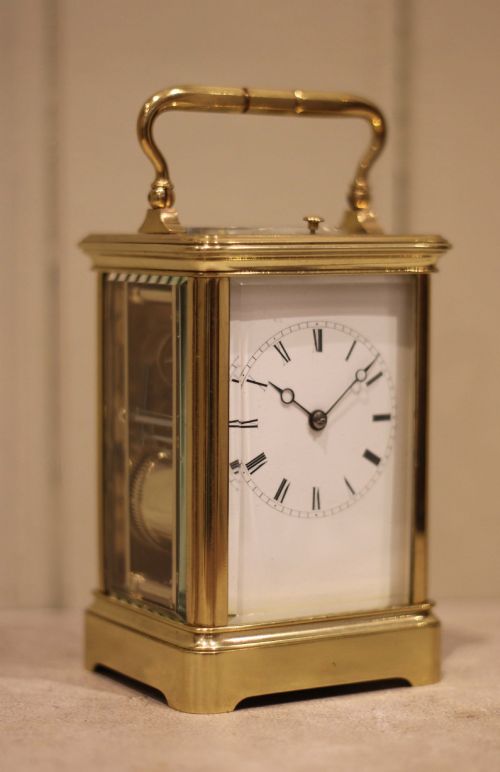
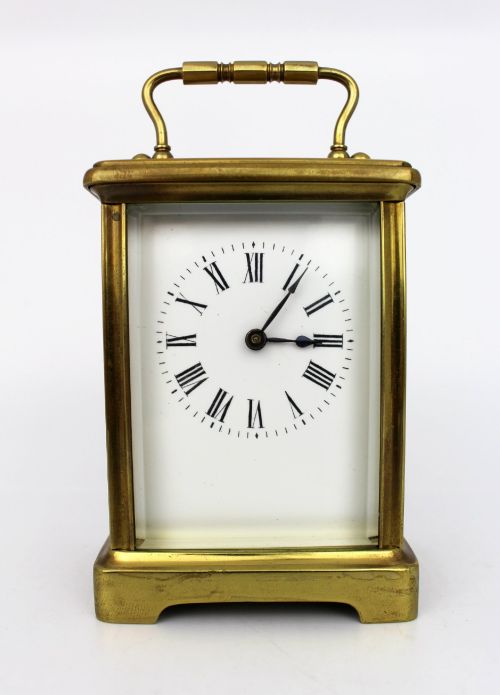
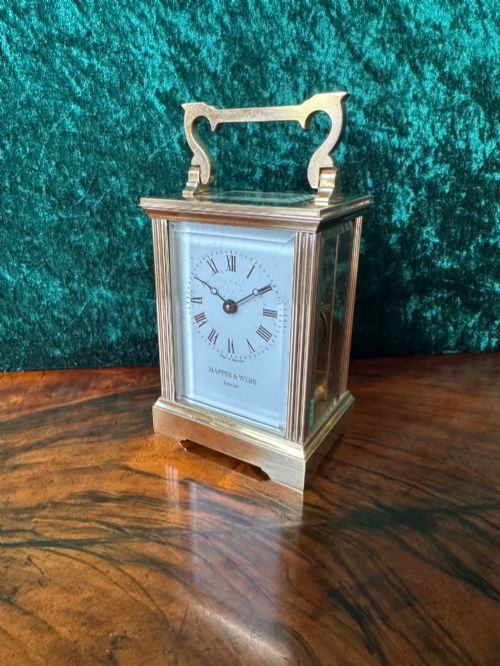
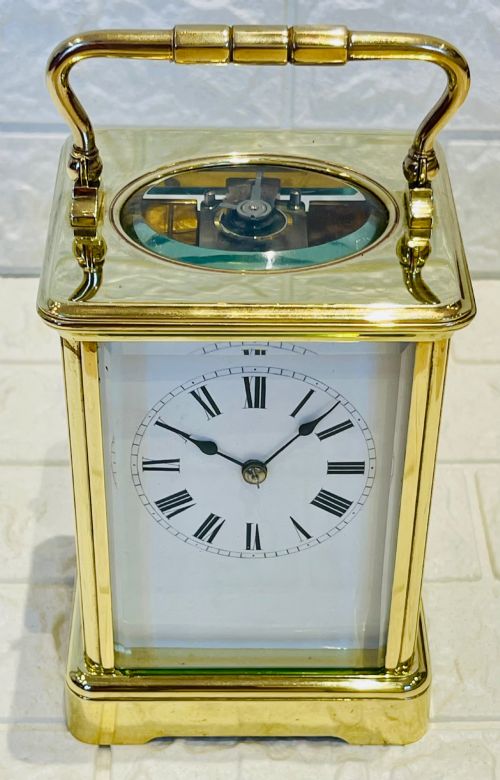
A mechanical brass carriage clock brings together heavy metal housing, glazed panels, and intricate escapements originally designed for travel during the nineteenth century. These items sit comfortably on mantels and desks, offering portable timekeeping enclosed in glass so the inner workings remain visible from multiple angles.
The mechanical brass carriage clock versions encountered here typically stem from Victorian and Edwardian periods, often bearing French or British signatures. Makers housed these mechanisms in heavy brass or gilt frames, sometimes adding leather travel cases for actual transit.
How they were made
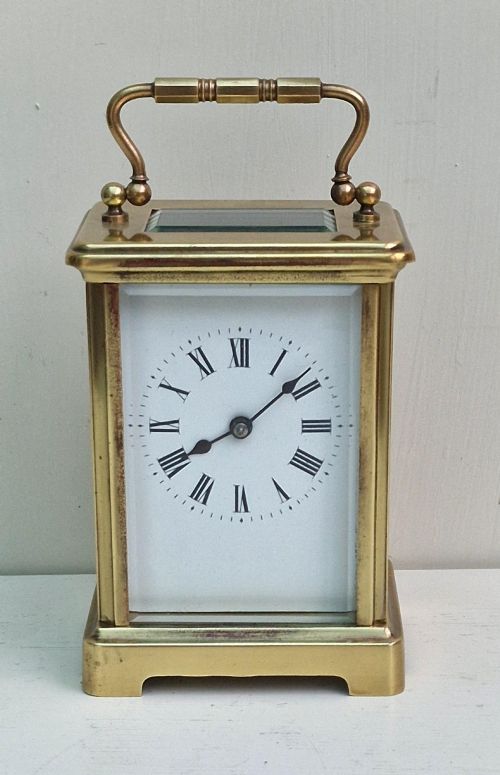
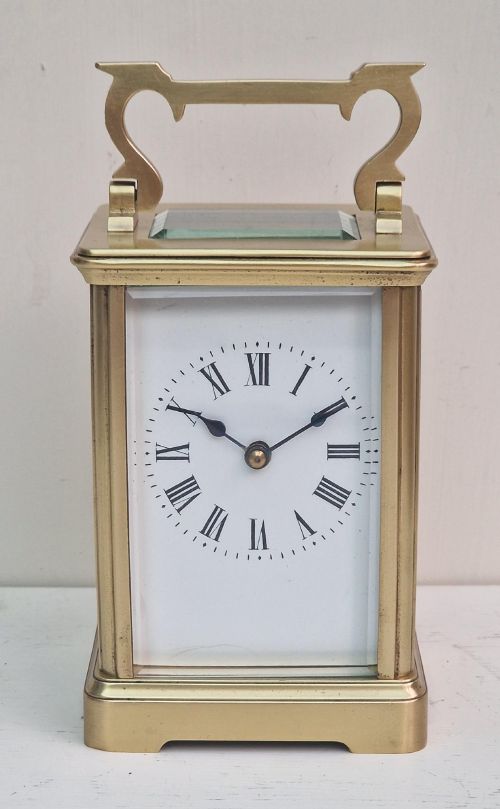
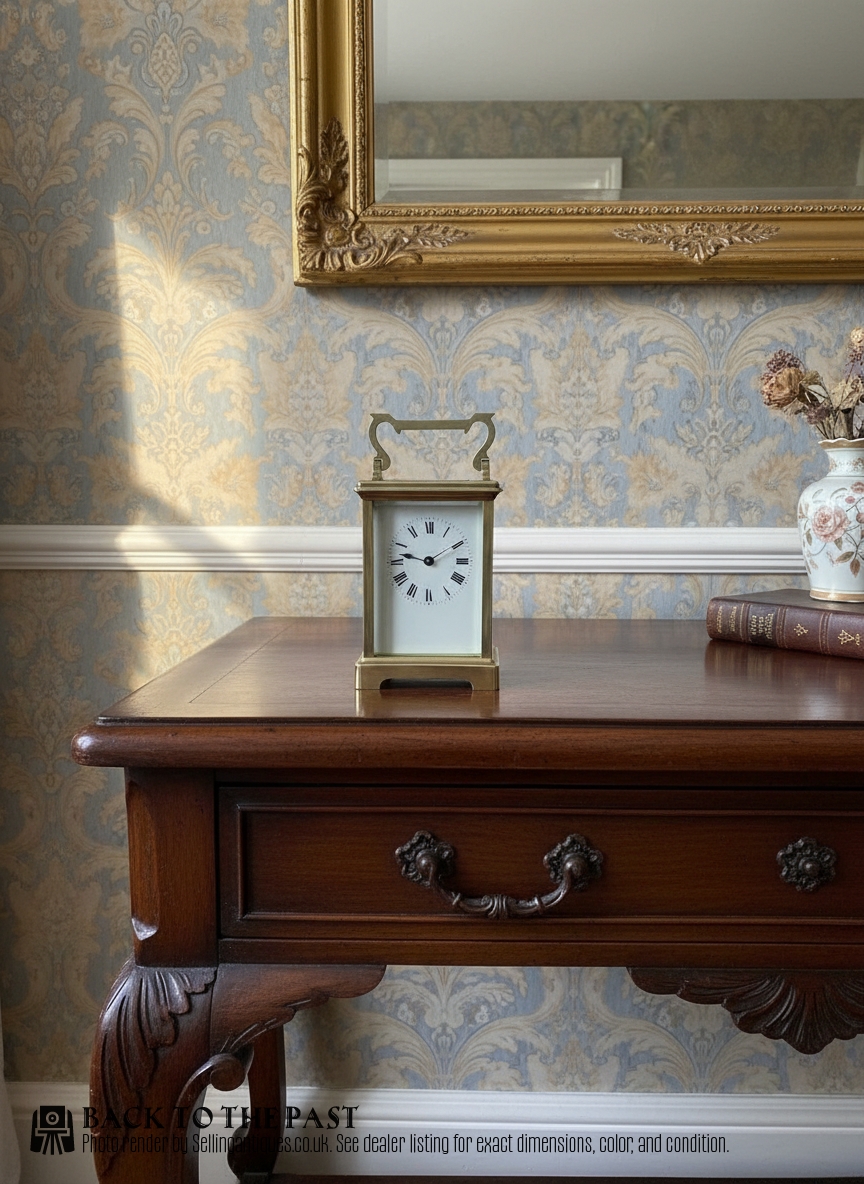
Makers constructed each mechanical brass carriage clock using heavy brass, gilt bronze, and steel components for the frame and movement. Glass panels fitted into the sides and top allow light to reach the dial and mechanisms.
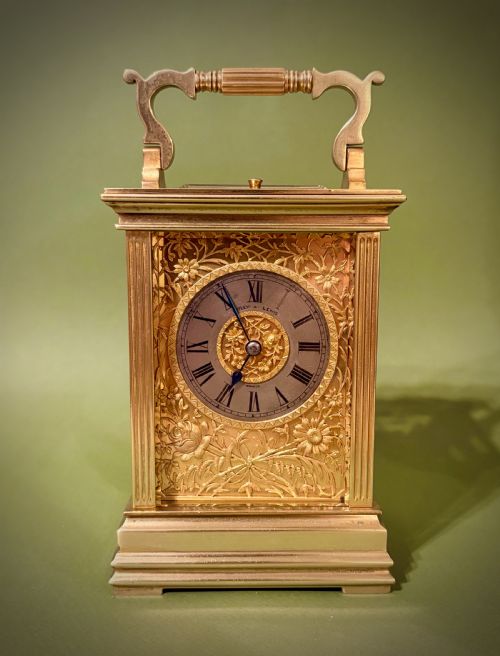
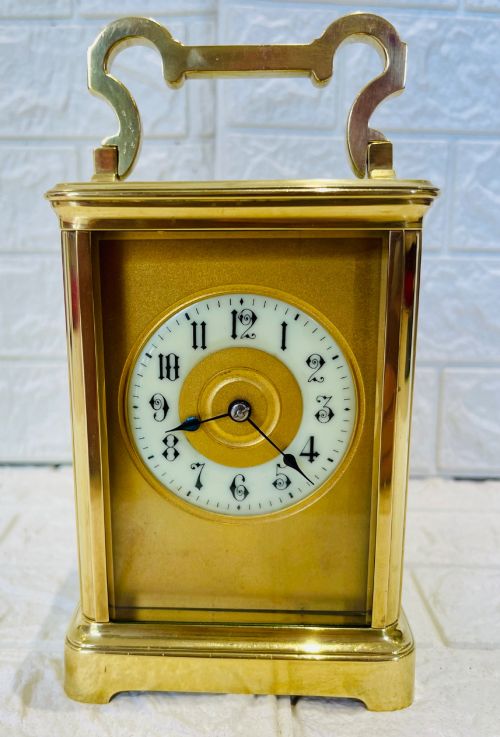
Enamel dials feature painted Roman or Arabic numerals, paired with delicate steel hands. Skilled workers frequently engraved the brass cases with floral or geometric motifs, adding depth to the exterior metal surfaces.
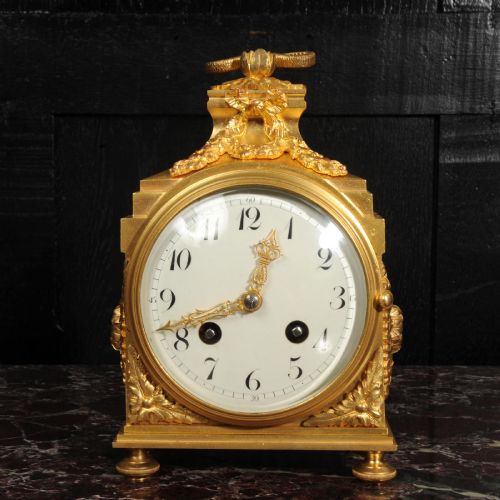
Listings feature brass, gilt bronze, and glass components spanning the Victorian era through the early twentieth century.
What varies in quality
The distinction between ordinary and exceptional examples lies in the complexity of the movement and the crispness of the case casting. Pieces featuring quarter-striking or repeating mechanisms require advanced craftsmanship beyond simple timepieces.
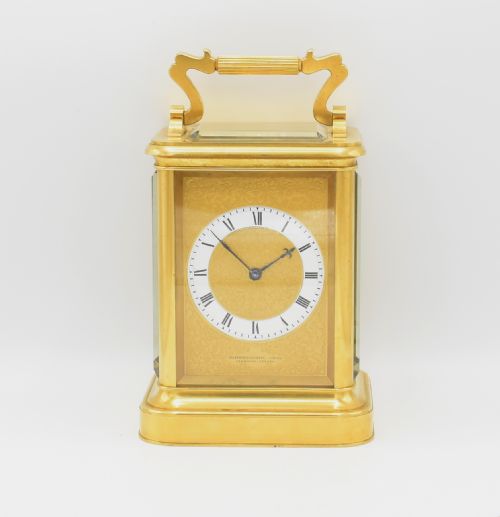
Casing finish also separates the standard production from top tiers, where heavy gilding, bevelled glass panels, and deep hand-engraving on the brass define superior workshop output.
HENRI JACOT·Mappin and Web·Drocourt Paris·C. Detouche Paris·Duverdrey & Bloquel·L Epee
The Mechanical Brass Carriage Clock Glossary
- Carriage clock
- A portable spring-driven timepiece developed for travellers in the nineteenth century. These devices feature a sturdy metal frame and glazed windows.
- Gorge case
- A distinct rectangular brass case style characterised by stepped mouldings at the top and base. This housing is typical of finer nineteenth-century French production.
- Repeater
- A mechanism that chimes the hours and quarters upon demand when a lever or button is pressed. This complication adds significant mechanical complexity to the clock.
- Escapement
- The internal mechanism that controls the release of gear train energy to maintain pendulum or balance wheel motion. It dictates the fundamental timekeeping accuracy of the clock.
Mechanical Brass Carriage Clock: Frequently Asked Questions
How do I wind a mechanical brass carriage clock?
Use the dedicated winding key on the backplate to turn the arbors clockwise until resistance is felt. Care must be taken not to overwind the mainspring.
Moving the hands should be done gently, following the correct rotational direction specified for the particular movement type.
What is a repeating carriage clock?
A repeating carriage clock sounds the last elapsed hour and quarter-hour when a button on top is pressed. This allowed owners to check the time in darkness.
Such mechanisms involve intricate gear trains hidden behind the dial face.
Why do some clocks have travel cases?
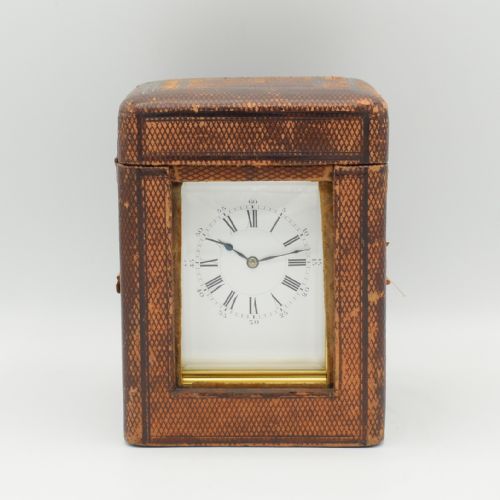
Original leather outer cases protected the brass frames and glass panels during journeys. These fitted cases often feature small windows so the dial remained visible.
Surviving leather cases add context to how owners transported their timepieces.
How do I date my carriage clock?
Dating relies on maker signatures, serial numbers, and stylistic cues in the brass case design. Victorian examples often display registration marks or specific French foundry stamps.
Comparing escapement types from platform cylinder to lever escapement also narrows the period of manufacture.