

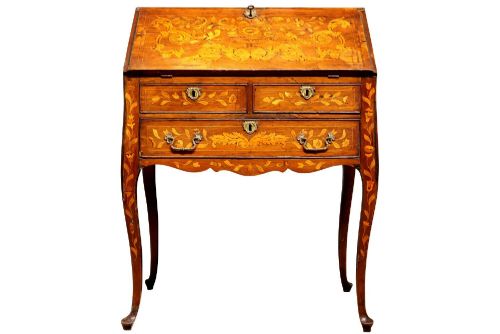

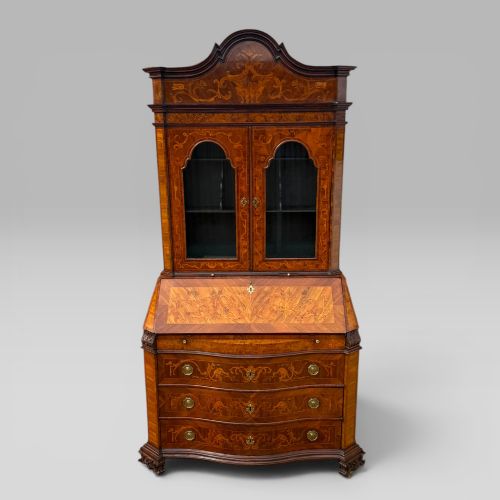
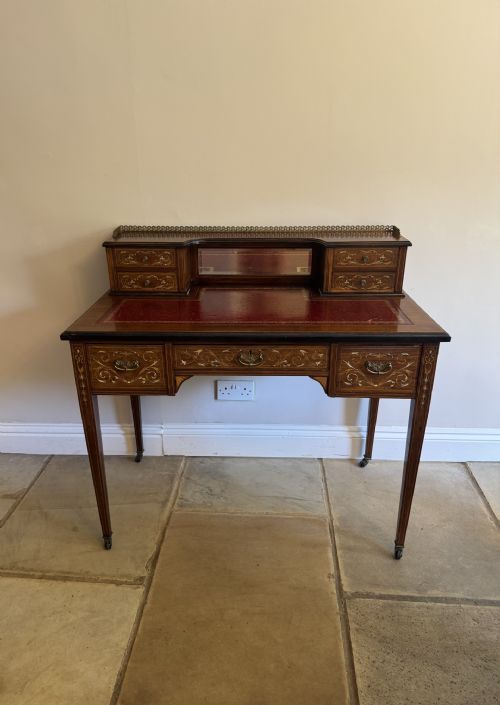
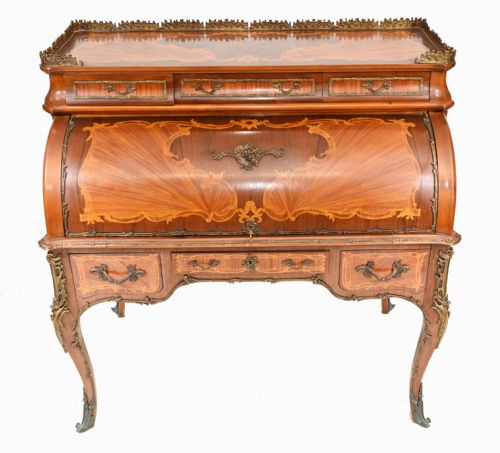


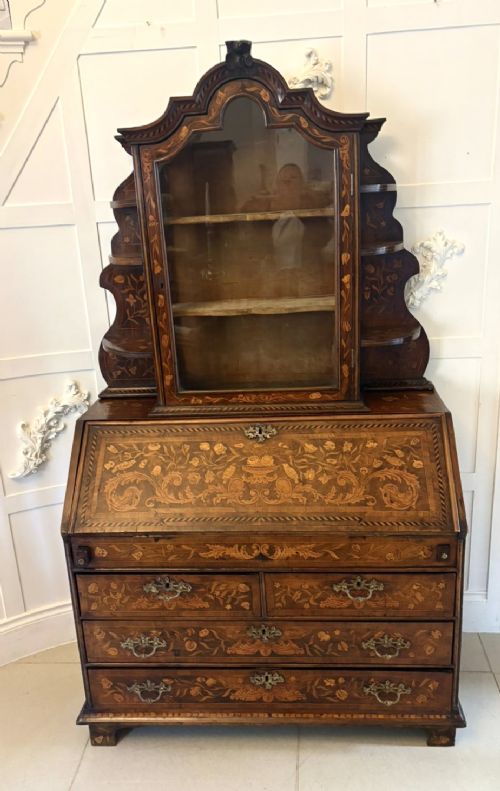


Marquetry Secretary Desk
A marquetry secretary desk brings intricate floral and geometric wood inlay together with a practical writing surface and concealed compartments.
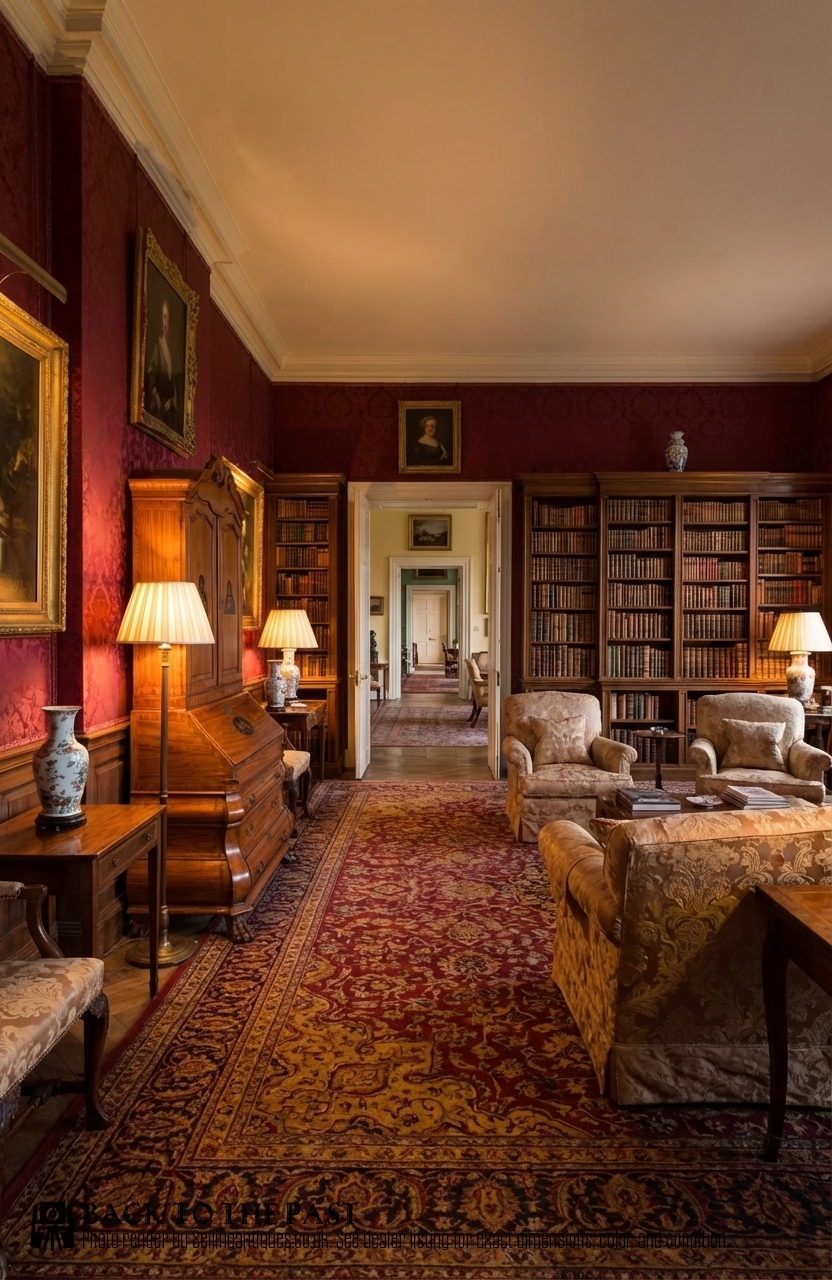
Marquetry Secretary Desk
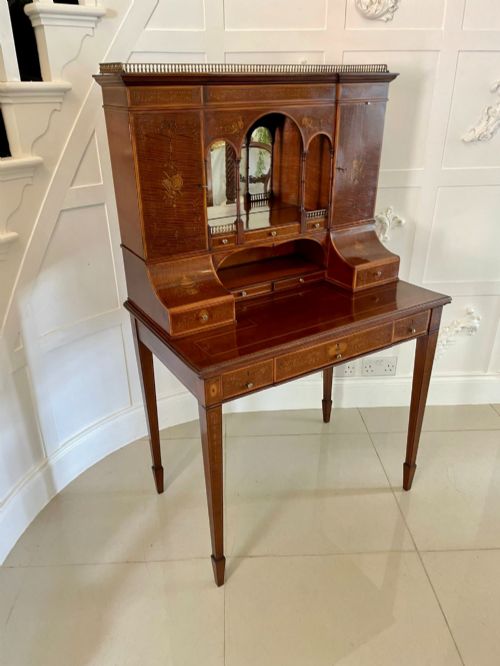
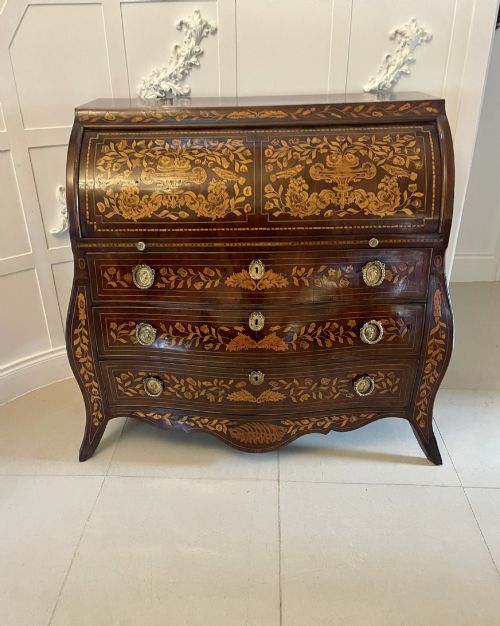
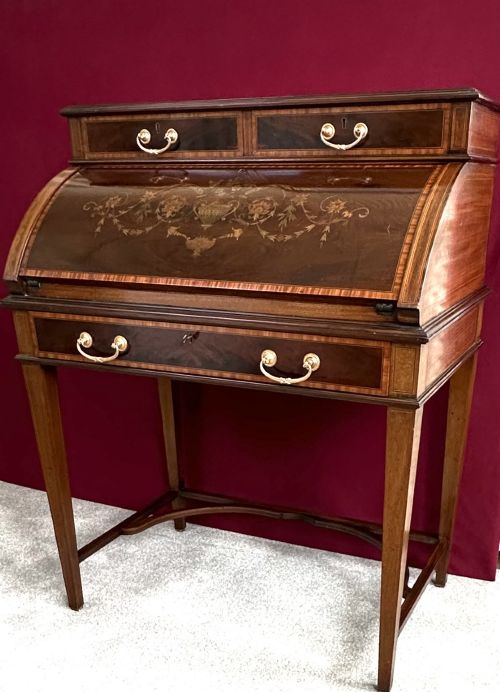
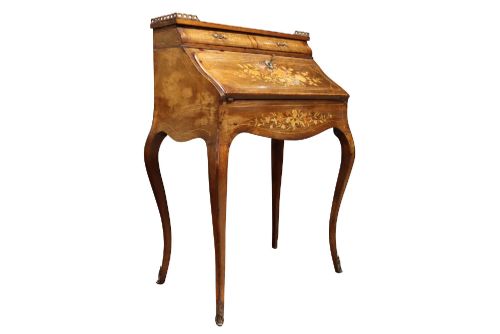
A marquetry secretary desk combines a fitted writing compartment with elaborate wood veneer imagery, taking forms from the seventeenth century onwards. Buyers find bureau bookcases, fall-front desks, and cylinder bureaux among the listed items.
The Dutch Baroque and Rococo styles appear frequently alongside French Revival pieces, showcasing ornate floral patterns across walnut, mahogany, and satinwood foundations. Many examples incorporate shelving or cabinetry above the writing flap.
Victorian and Edwardian interpretations sit alongside eighteenth-century works, giving collectors access to both domestic English cabinet-making and continental European traditions. These pieces served as private correspondence centres for households.
How They Were Made
Cabinet-makers utilised solid carcases of mahogany, walnut, or oak, applying contrasting wood veneers to the exterior surfaces. Marquetry panels were cut from thin sheets of timber including satinwood, tulipwood, and rosewood.
Makers integrated brass hardware, glass panels, marble tops, and ormolu or gilt bronze mounts to enhance structural sections and writing compartments. Internal drawers and pigeonholes relied on precise dovetail joinery.
Marquetry Secretary Desk Retail Price Guide 2026
Typical asking prices for marquetry secretary desk among the pieces listed under this phrase on Sellingantiques today, from the lower quarter to the upper quarter. They describe what is for sale here now, not the wider market.
Listings feature woods such as walnut, mahogany, satinwood, rosewood, burr walnut, tulipwood, and kingwood across multiple centuries.
What Varies in Quality
The precision and complexity of the floral or pictorial wood inlay dictate much of the standard, with finer examples showing sharp contrast and tight joints between individual veneer pieces. The selection of burr walnut or figured mahogany foundations also separates standard workshop output from exceptional commissions.
Internal complexity sets apart the cabinet-maker's skill, observed in secret compartments, graduated small drawers, and fitted stationary wells behind the fall front or cylinder. The quality of cast bronze mounts, brass inlays, and operational hinges completes the distinction.
Edwards & Roberts
The Marquetry Secretary Desk Glossary
- Marquetry
- Decorative veneer work forming pictures or floral patterns by assembling thin pieces of coloured wood.
- Secrétaire à abattant
- A tall upright cabinet featuring a drop-front writing flap that conceals internal pigeonholes and small drawers.
- Bombe
- A swelling, rounded contour found on the front and sides of eighteenth-century case furniture.
- Ormolu
- Gilded bronze mounts applied to furniture for decorative enrichment, common on French revival pieces.
- Davenport
- A compact pedestal desk with a sloping writing surface, popular during the Victorian period.
Marquetry Secretary Desk: Frequently Asked Questions
What is a marquetry secretary desk?
A marquetry secretary desk is a piece of case furniture featuring a dedicated writing surface, often behind a drop-front or cylinder mechanism, decorated with detailed wood veneer patterns.
These pieces combine storage for correspondence with writing facilities, often incorporating upper bookcase sections or internal compartments.
How do I date a secretary desk?
Dating relies on examining the secondary timbers, construction methods, hardware, and stylistic indicators such as Dutch floral marquetry or French revival mounts.
Makers often integrated period-specific design elements like bombe curves or satinwood banding that correspond to eighteenth and nineteenth-century eras.
Where were these desks placed?
These desks occupied principal reception rooms, private libraries, and boudoirs where owners managed correspondence and personal accounts.
Freestanding variations allowed placement away from walls, while upright cabinets utilised vertical space in smaller chambers.
How do I care for wood inlay?
Protecting inlaid surfaces requires maintaining stable room humidity and avoiding direct sunlight to prevent veneer lifting and timber fading.
Regular dusting with a dry cloth preserves the polished finish without introducing moisture to the delicate wood joints.