



Marquetry Round Table
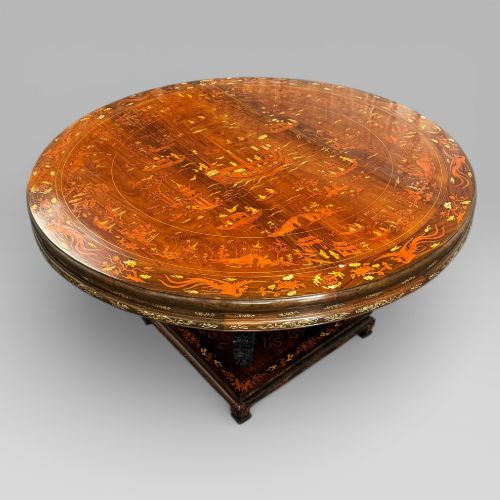
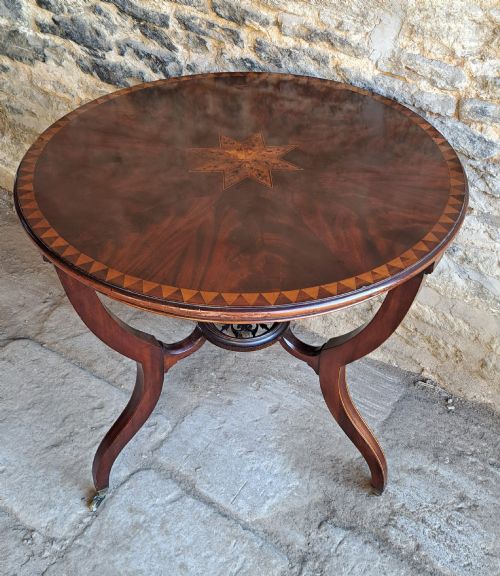
These marquetry round table examples unite patterned wood veneers and circular forms across Victorian, Regency, and Art Deco periods.
Marquetry Round Table
A marquetry round table serves as a focal point in period rooms, functioning as a centre table, occasional table, or breakfast table depending on its scale. Buyers search for these pieces to introduce patterned wood surfaces and circular proportions into traditional and eclectic interiors.
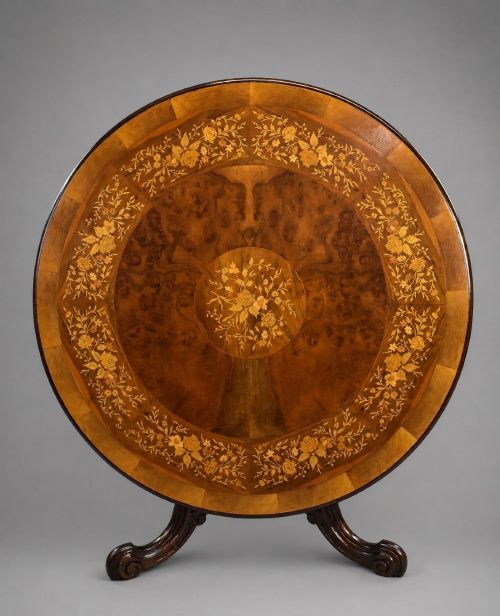
The selection ranges from elaborate Victorian burr walnut centre tables to French kingwood occasional tables and Scandinavian birch coffee tables. Most examples date from the nineteenth century through the early twentieth century, encompassing styles such as French Neoclassical, Louis XVI, and Art Deco revival.
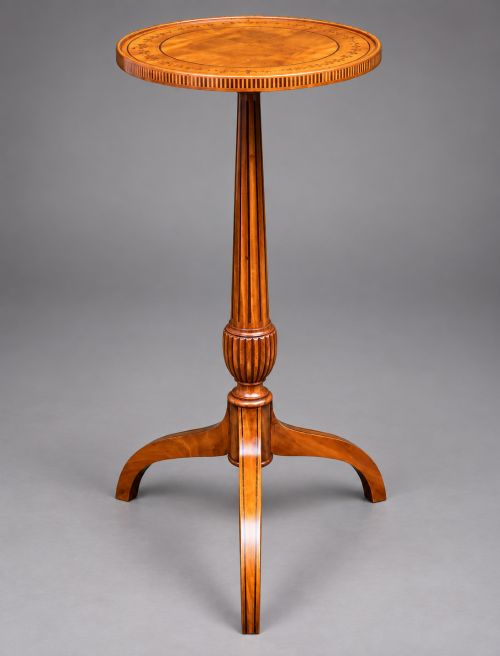
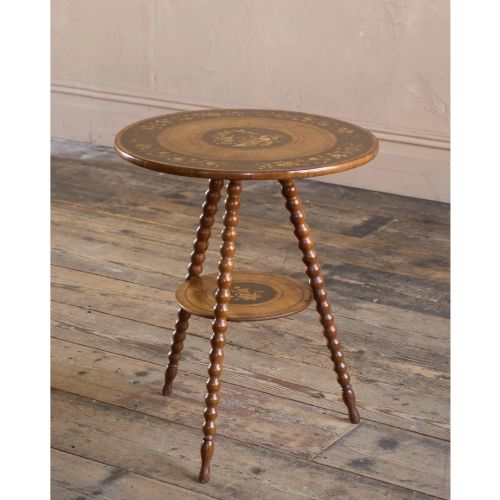
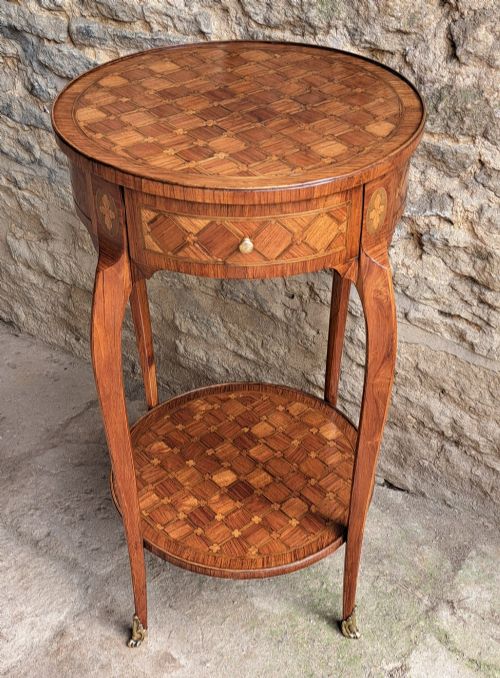
Formats vary from modest wine tables and tripod tables to large entry hall tables and dining tables capable of seating several guests. Buyers encounter both pedestal bases with carved supports and lighter occasional frames fitted with marquetry and wood inlay.
How They Were Made
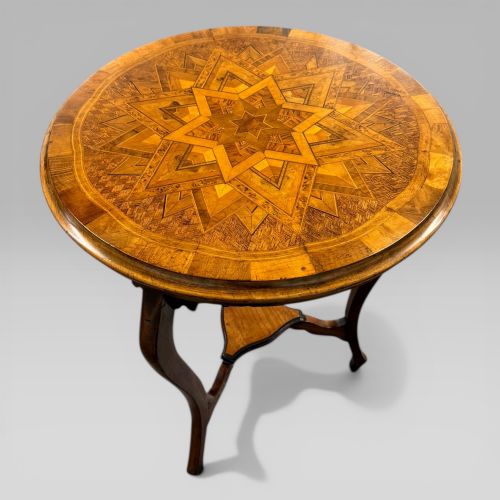
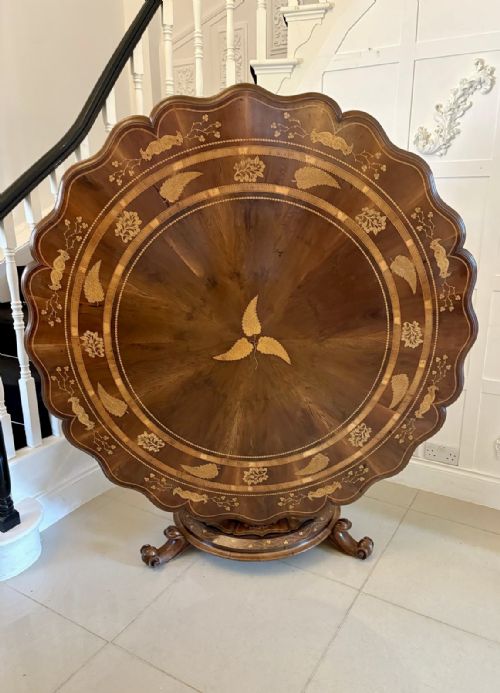
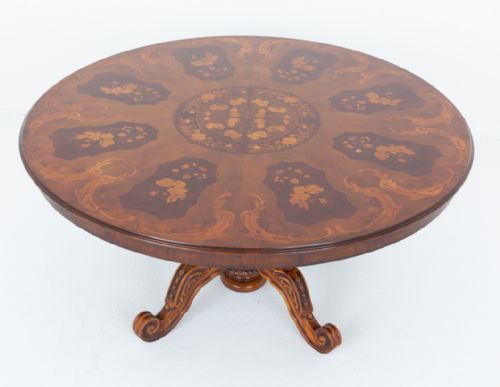
Cabinet makers utilised foundational timbers such as mahogany, walnut, rosewood, and satinwood to construct the structural carcass and legs of each table. Tops received elaborate marquetry inlay and wood inlay, combining contrasting veneers to form floral motifs, geometric patterns, or pictorial scenes.
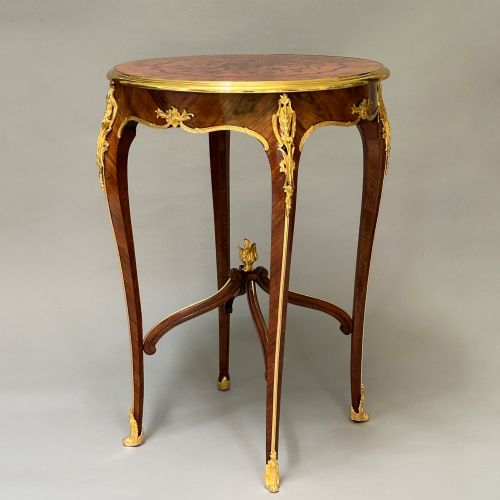
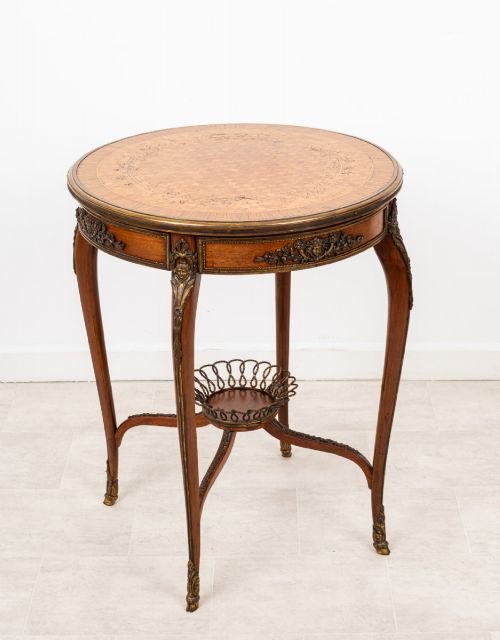
Higher tier examples incorporated decorative mounts in ormolu, gilt bronze, brass, and silvered bronze around the frieze or legs. Certain regional works also integrated specialised materials like malachite, burr birch, and specimen woods sourced internationally.
Some nineteenth century tables required travelling craftsmen to assemble intricate wood puzzles containing dozens of distinct botanical species on a single top.
What Varies in Quality
The distinction between standard production and exhibition quality work rests upon the precision of the veneer cutting and the complexity of the wood inlay. Master workshops employed varied native and exotic timbers to achieve naturalistic shading within the marquetry panels, whereas lesser pieces relied on repetitive stamped motifs.
Structural integrity and finishing details separate workshop tiers, seen in the crispness of carved wooden bases, the weight of cast ormolu mounts, and the stability of the central pedestal or tripod legs under a heavy circular top.
Edwards and Roberts·Anton Seuffert·Egan Workshop·Pietro Ferrario
The Marquetry Round Table Glossary
- Marquetry inlay
- Decorative patterns formed by fitting together thin slices of wood veneer into a paper or panel template before applying it to the table surface. This technique allows for complex pictorial or geometric designs across the tabletop.
- Ormolu
- Gilt bronze mounts applied to the edges, legs, or frieze of nineteenth century furniture, particularly pieces influenced by French cabinet making. The metal is cast and chased before receiving a layer of gold amalgam.
- Centre table
- A freestanding table designed to be viewed from all sides, placed in the middle of a room rather than against a wall. These circular examples often feature a pedestal base with carved feet.
- Tripod table
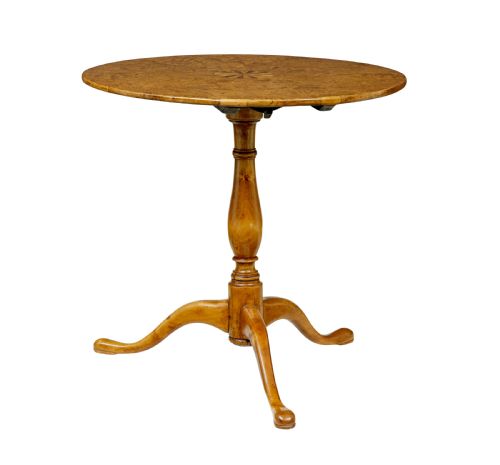
- A small occasional table supported by three legs radiating from a central pillar. They appeared frequently in Victorian and Georgian interiors for serving wine or displaying decorative objects.
- Burr walnut
- Timber taken from the wart-like growth on a walnut tree, yielding a swirling, highly figured grain pattern. Cabinet makers prized this wood for circular tabletops where the natural pattern created symmetrical displays.
Marquetry Round Table: Frequently Asked Questions
How do I style a marquetry round table?
Place a centre table in the middle of a hall or drawing room to showcase the inlaid wood top from all angles. Smaller occasional and coffee tables fit well beside seating areas where their patterned surfaces remain visible.
Keep decorative objects minimal to avoid obscuring the intricate veneer work. A single lamp or bronze piece is often sufficient for functional display.
Were these tables used for dining?
Larger circular examples, particularly those from the Victorian period, functioned as breakfast tables or occasional dining surfaces for smaller households. Their central pedestal construction allowed chairs to fit comfortably around the perimeter.
Smaller formats like wine tables and lamp tables served specific domestic duties rather than communal meals.
How do I tell Victorian from Regency tables?
Regency tables generally display cleaner classical lines, often utilising rosewood or mahogany with understated brass inlay or brass mounts. Their proportions reflect neoclassical restraint and architectural balance.
Victorian pieces tend toward heavier carving, darker burr walnut timbers, and more complex multi-wood marquetry floral panels. The bases are frequently more ornate and robust.