





Sunburst Veneer Table
A sunburst veneer table brings geometric warmth and striking surface grain into a room, making it a focal point for any interior.
Sunburst Veneer Table
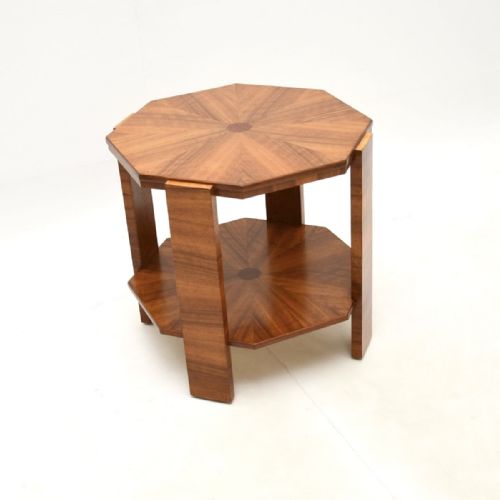
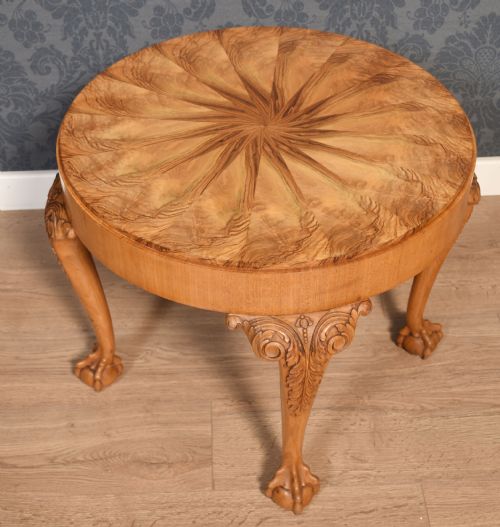
A sunburst veneer table utilises radial patterns of timber grain to draw the eye across the surface. These pieces appear in forms such as centre tables, occasional tables, side tables, coffee tables, and desks. The selection includes designs from the nineteenth century through to the Art Deco period of the 1920s and 1930s.
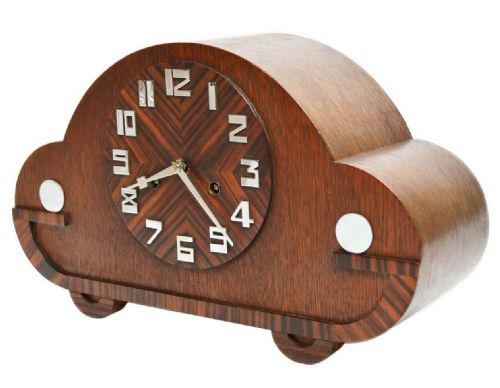
The most common examples on this page date from the Art Deco era, particularly around 1930, featuring geometric wood layouts. Alongside these, nineteenth-century pieces demonstrate earlier approaches to radial and segmented veneering on dining and centre tables. Edwardian and revival styles also represent the form across various decades.
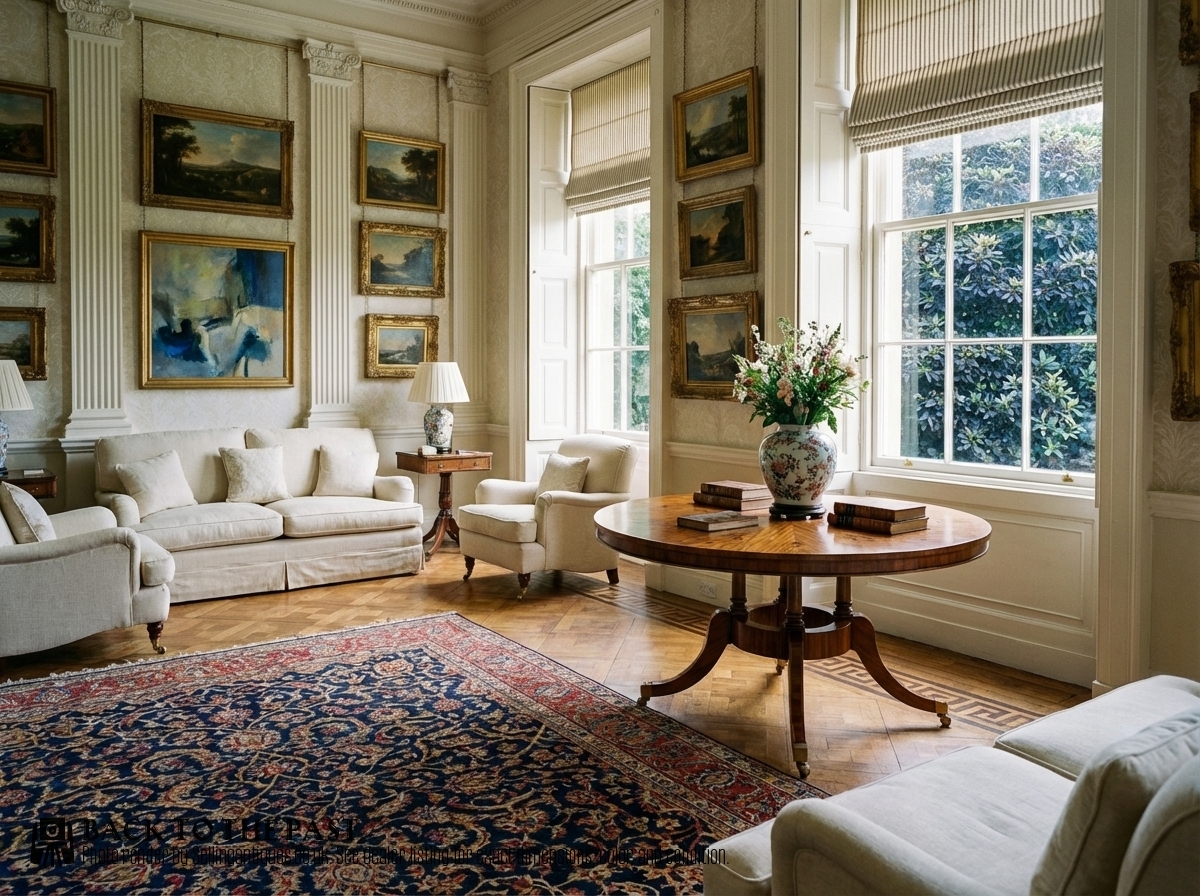
How they were made
Cabinet makers construct these surfaces by laying thin slices of figured timber, such as walnut, mahogany, maple, or satinwood, onto a solid timber substrate. This technique allows artisans to match and radiate the grain from a central point to create the signature sunburst effect.
Details like ebonised wood, brass mounts, and contrasting stringing lines complement the primary veneers. Joinery methods range from nineteenth-century pillar and tilt-top constructions to the clean architectural lines favoured by twentieth-century designers.
Sunburst Veneer Table Retail Price Guide 2026
Typical asking prices for sunburst veneer table among the pieces listed under this phrase on Sellingantiques today, from the lower quarter to the upper quarter. They describe what is for sale here now, not the wider market.
Materials documented across the inventory include walnut, mahogany, birch, satinwood, maple, brass, and ebonised wood.
What varies in quality
The distinction between ordinary and exceptional examples rests upon the precision of the veneer matching at the centre point. Superior execution ensures the grain patterns flow symmetrically without interruption or awkward joints.
The choice of secondary woods and the depth of the figure in materials like walnut or birch dictate the overall visual richness. Greater skill in the initial selection of timber creates a more luminous and engaging surface.
The Sunburst Veneer Table Glossary
- Veneer
- Thin slices of fine timber applied to a core structure to create decorative surfaces. This technique permits complex geometric patterns that solid timber construction cannot easily achieve.
- Radial
- Arranged like rays emanating from a common centre. This layout defines the distinctive sunburst appearance on the tabletop.
- Art Deco
- A design style spanning the 1920s and 1930s characterised by streamlined geometric forms and modern materials. It produced many of the most striking radially veneered tables.
- Centre table
- A freestanding table designed to be viewed from all sides rather than pushed against a wall. These pieces often serve as the focal point of a room.
Sunburst Veneer Table: Frequently Asked Questions
Where should I place a sunburst veneer table?
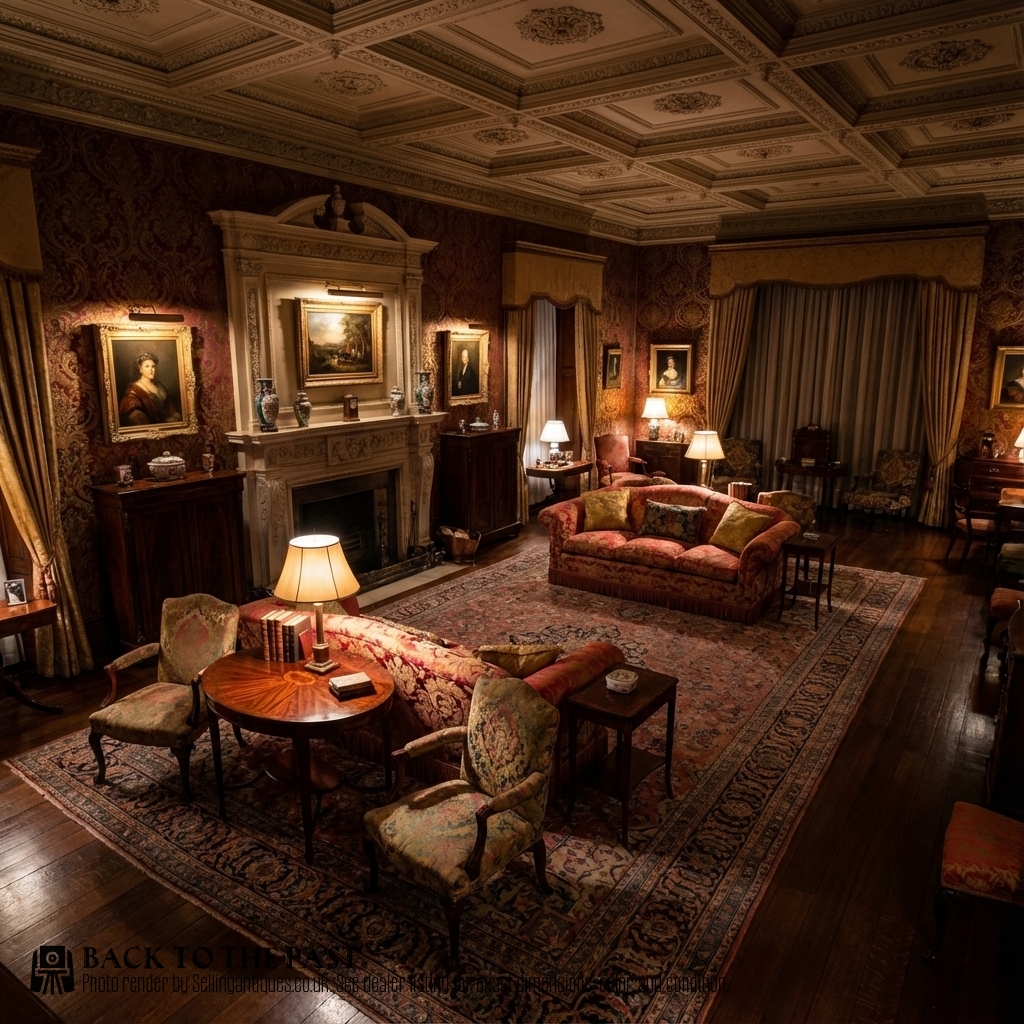
These pieces suit positions where natural light can catch the grain patterns across the surface. A centre table works well in the middle of a room, while occasional and coffee tables fit neatly beside seating.
Because the top is the main decorative feature, keeping it free from heavy clutter allows the geometric design to remain visible.
How do I care for antique veneer?
Keeping the wood away from direct sunlight and steady heat sources prevents the timber and underlying adhesives from drying out. Regular dusting with a soft, dry cloth maintains the finish without needing harsh polishes.
Using coasters and mats protects the delicate surface polish from moisture and heat marks.
How can I tell the period of the table?
The overall silhouette and framing details usually indicate the era of manufacture. Straight-lined geometric proportions point towards Art Deco designs from the 1920s and 1930s.
Turned pedestals, heavier proportions, and rich mahogany or satinwood choices often suggest nineteenth-century or Edwardian origins.
What is the difference between a centre table and a side table?
Centre tables are built to stand independently in open space with decoration finished on all sides. They frequently anchor the middle of a room or a large hallway.
Side and occasional tables are generally smaller and designed to sit against a wall or adjacent to furniture for functional use.