




Marquetry Rosewood Tea Table
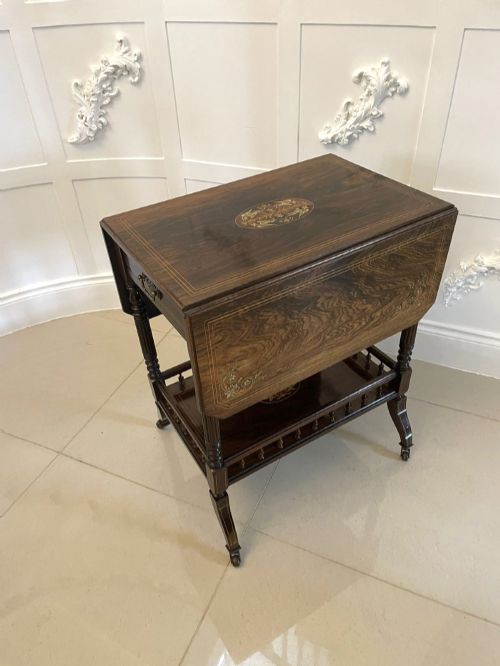
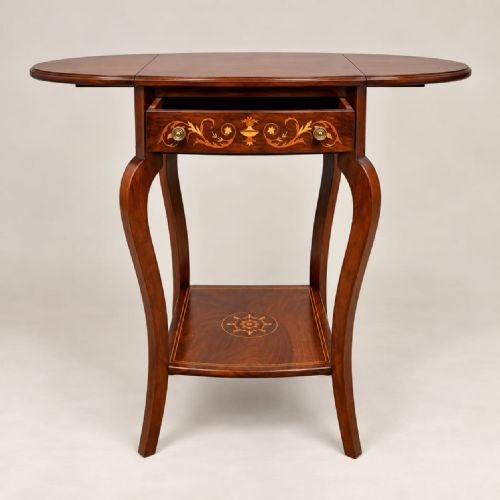
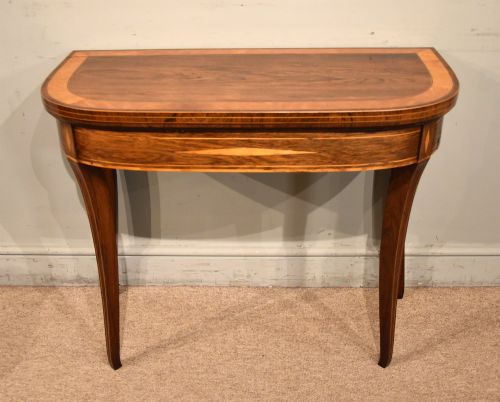
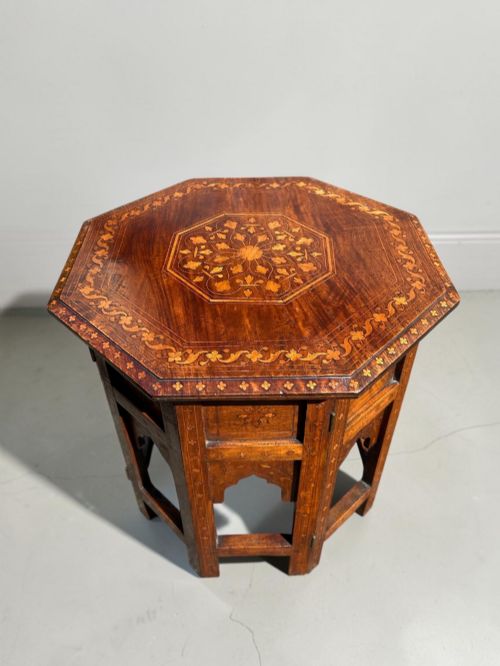
These marquetry rosewood tea table examples combine rich timber with intricate inlay, offering a functional surface that anchors a drawing room with period character.
Marquetry Rosewood Tea Table
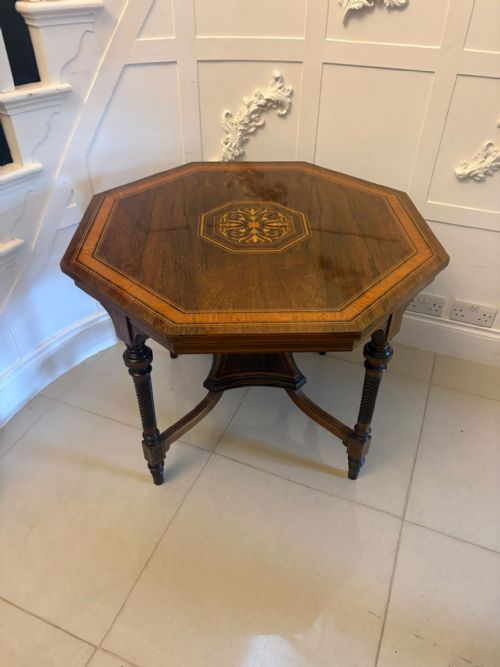
A marquetry rosewood tea table brings together deep, figured timber and detailed decorative veneers into practical furniture forms. Pieces matching this description appear across several eras, though Edwardian and Victorian examples dominate the selection currently available.
Makers utilised various functional formats to suit domestic routines, ranging from drop-leaf occasional tables and swivel-top games tables to expansive centre tables. Many incorporate clever folding mechanisms or tiers, designed to adapt from compact side furniture to larger display or social surfaces.
How they were made
Cabinet makers built these pieces using dense rosewood foundations, frequently enhanced by contrasting timber veneers such as satinwood, boxwood, and kingwood. Detailed marquetry patterns and stringing were meticulously cut and fitted into the primary wood grain.
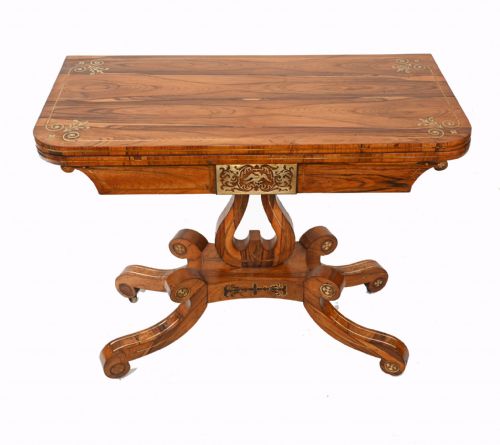
Many items also integrate polished brass inlay, ormolu mounts, and bone details to accentuate the geometric and floral designs. Construction relied on traditional joinery methods, ensuring stability across folding leaves and heavy pedestal bases.
Listings span multiple centuries, incorporating Regency, Victorian, Edwardian, and eighteenth-century examples alongside revival styles.
What varies in quality
The standard of a marquetry rosewood tea table depends largely on the precision of the timber selection and the complexity of the veneer work. Superior examples display seamless inlay integration, crisp floral motifs, and dense figuring within the primary rosewood boards.
Design ambition further separates standard production from exceptional pieces. Tables referencing specific cabinet-making traditions, incorporating secondary timbers like mahogany, or featuring finely cast brass and ormolu mounts demonstrate greater workshop skill.
George Bullock·Edwards & Roberts·Shoolbred & Co·Zwiener·Ince & Mayhew
The Marquetry Rosewood Tea Table Glossary
- Marquetry
- Decorative veneer work arranged in pictorial or geometric patterns using various coloured woods. Craftsmen cut thin sheets of timber to fit precisely into a prepared background.
- Rosewood
- A dense, heavily figured dark timber valued for its rich colour and smooth finish. It serves as the primary structural and visual medium for these tables.
- Ormolu
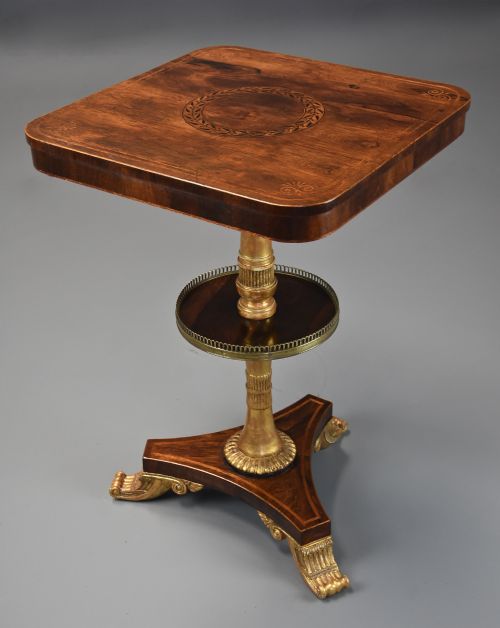
- Gilded bronze used for decorative mounts, feet, and edge banding. It provides a bright metallic contrast against dark timber surfaces.
- Satinwood
- A pale, lustrous exotic timber utilised for contrasting inlay and stringing. It highlights geometric borders and floral marquetry details.
- Etagere
- A multi-tiered shelving furniture form designed for display. These open tables provide several stacked surfaces supported by slender uprights.
Marquetry Rosewood Tea Table: Frequently Asked Questions
How do I use a folding card table?
These tables feature swivel or hinged tops that open to reveal a larger baize-lined playing surface, supported by pivoting frames.
When closed, they function as compact side or console tables against a wall, making them adaptable for smaller rooms.
Where should I place an occasional table?
An occasional table suits placement beside seating arrangements or in hallways as a lamp or display surface.
Due to the decorated top and marquetry details, positioning the piece where natural light catches the wood grain enhances the appearance.
How do I identify an Edwardian piece?
Edwardian examples often display lighter proportions, delicate satinwood inlay, and refined oval or kidney-shaped tops.
Cabinet makers in this period frequently drew inspiration from earlier Regency and French designs while maintaining a slim silhouette.
What is an Anglo-Indian table?
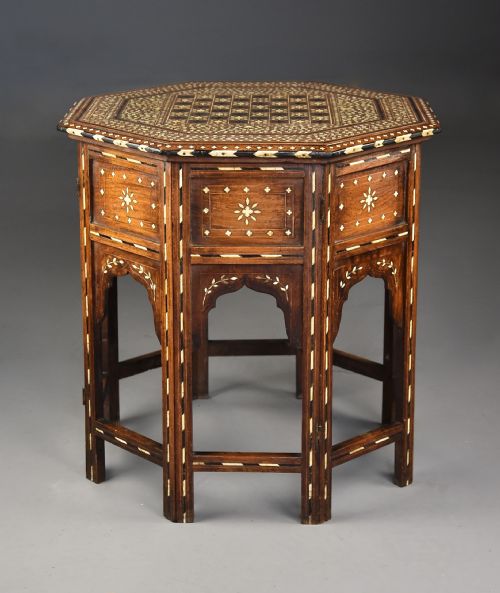
Anglo-Indian pieces reflect nineteenth-century cross-cultural design, featuring intricate carved octagonal forms and dense inlaid patterns.
These tables utilise local timbers and traditional regional carving techniques combined with European furniture shapes.