

Folding Leaf Occasional Table
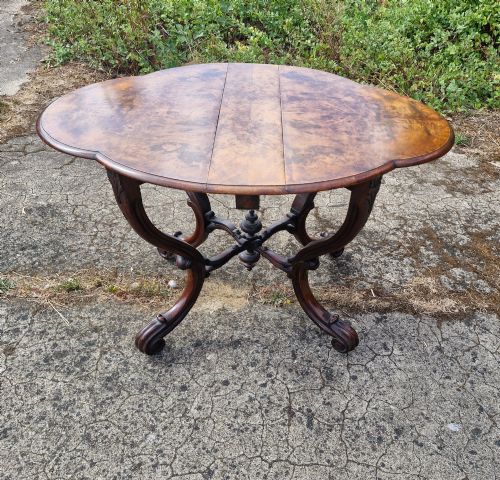
A folding leaf occasional table offers practical versatility through drop leaves and clever folding mechanisms, providing a compact surface that expands as needed.
Folding Leaf Occasional Table
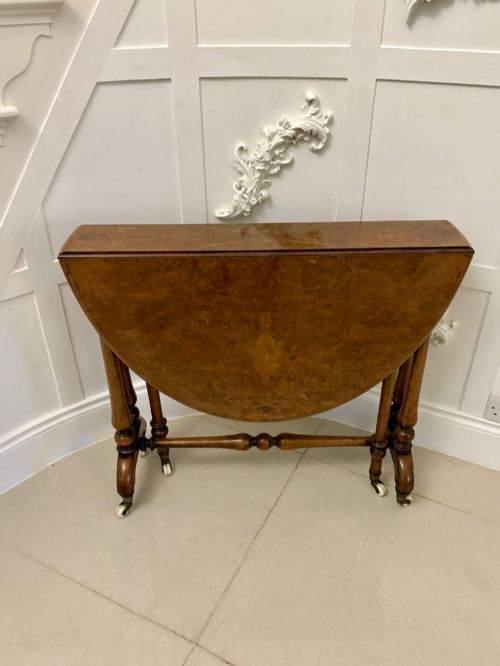
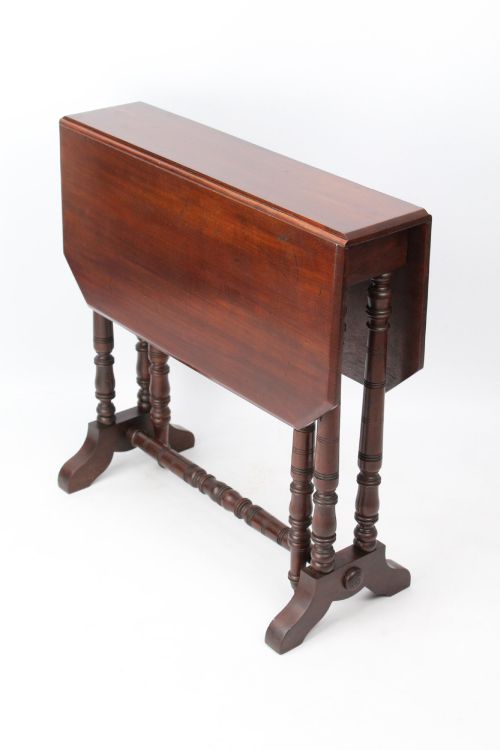
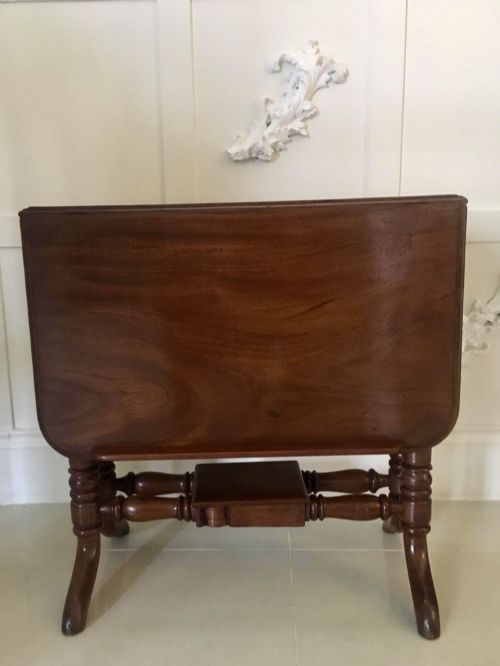
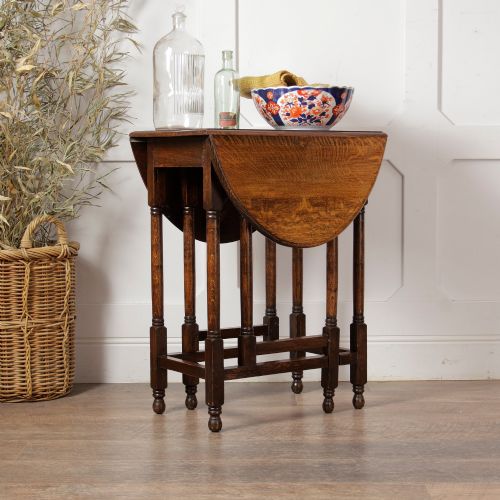
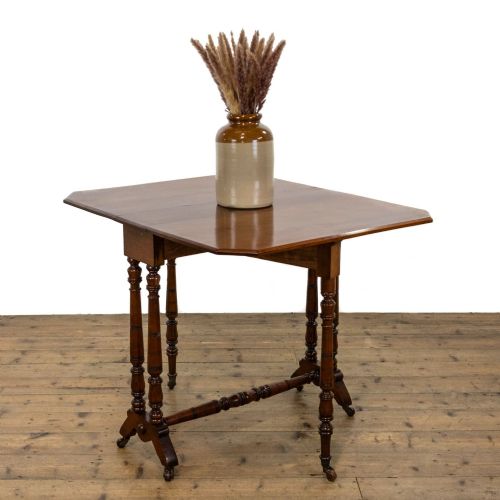
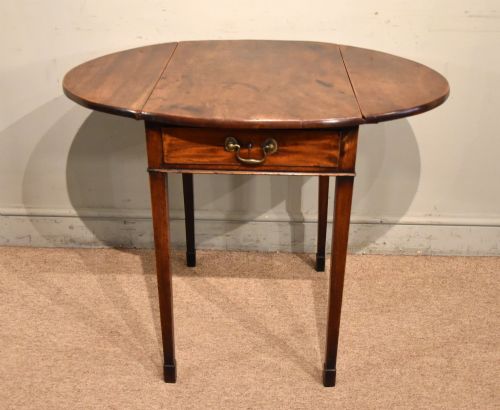
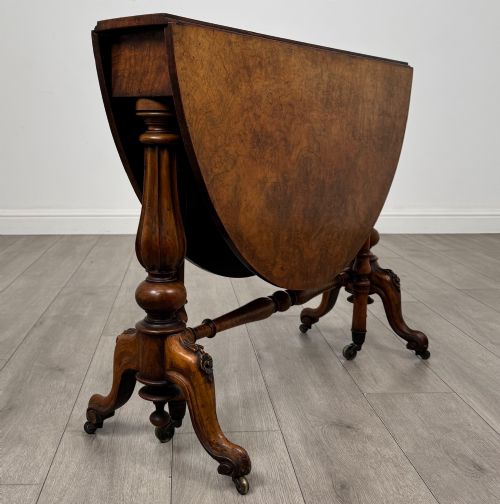
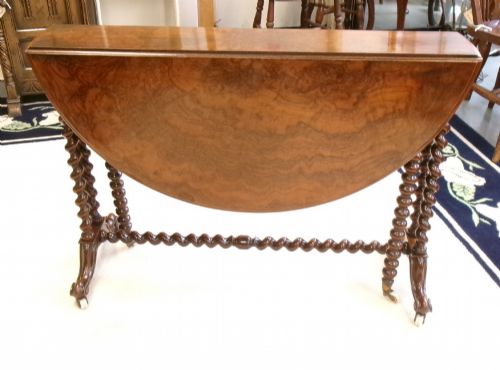
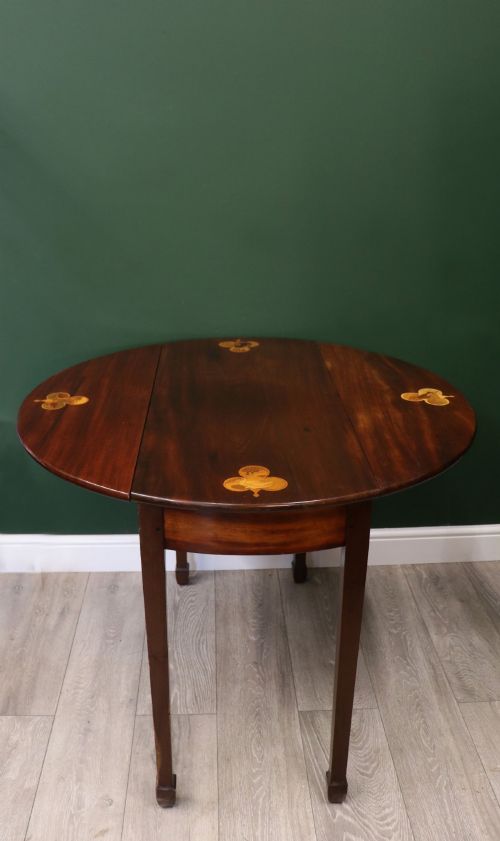
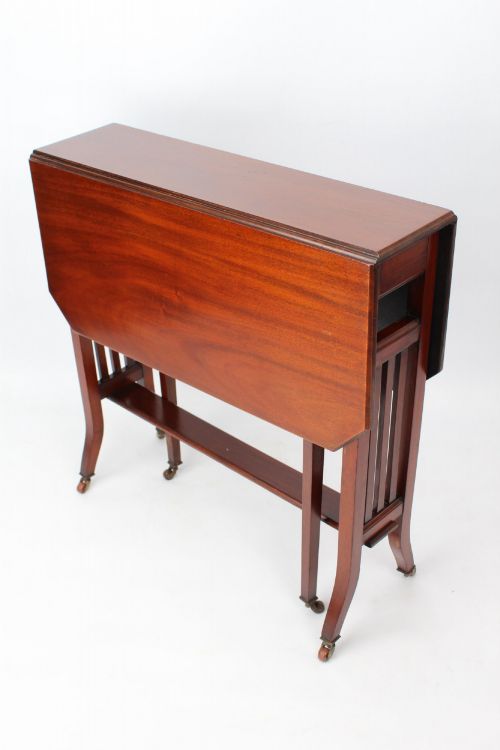
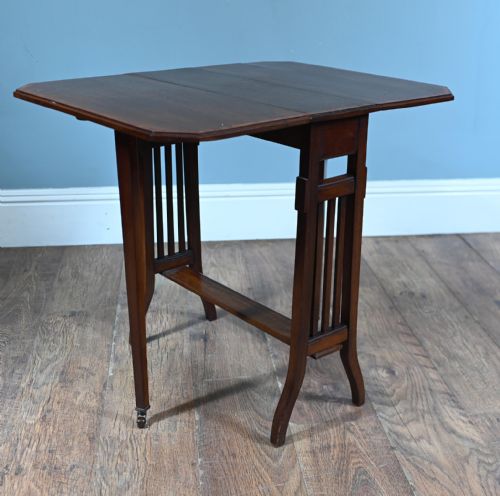
A folding leaf occasional table brings compact convenience to a room, expanding easily when extra surface area is required and folding down neatly to save space when not in use. These versatile furnishings appear in various forms throughout this selection, including Sutherland tables, Pembroke tables, gateleg tables, and drop leaf tables.
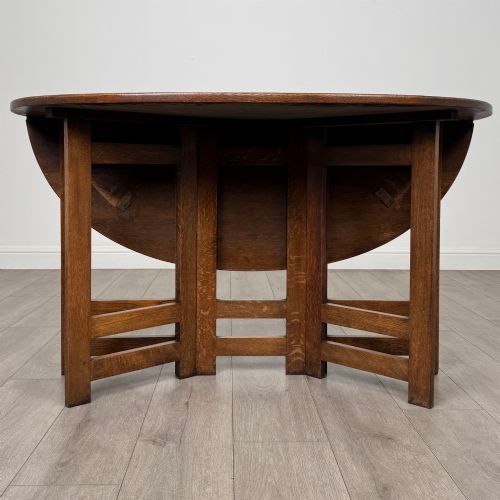
Victorian and Edwardian examples dominate the offerings, frequently constructed from burr walnut or mahogany. Buyers searching for a folding leaf occasional table will discover pieces ranging from eighteenth-century George III designs to early twentieth-century Arts and Crafts items.
Design variations include specialised reading tables, tea tables, and handkerchief tables with trifold mechanisms. The selection encompasses diverse stylistic influences, from Chinoiserie and Anglo Indian pieces to Jacobean Revival and Aesthetic Movement creations.
Materials and construction methods
Makers utilised rich timbers like mahogany, walnut, burr walnut, rosewood, and oak to build these tables, often incorporating secondary woods such as satinwood and boxwood for contrasting details. Cabinetmakers employed intricate marquetry, floral inlay, and delicate stringing to ornament the surfaces of finer examples.
The functional movement relies on specialised hardware and joinery, including brass hinges, gateleg supports, scissor actions, and swivel tops. Drop leaves and folding flaps require precise carpentry to ensure the surfaces align smoothly when extended and rest evenly when dropped.
Some drop leaf tables hide trifold handkerchief mechanisms, offering an unfolding geometry that surprises guests when tea time arrives.
Factors determining quality
The selection of timber significantly impacts desirability, with highly figured burr walnut, choice mahogany, and richly grained rosewood commanding attention. Finer examples display superior timber selection across the entire structure, including the drop leaves and interior framing.
Maple and Co
The Folding Leaf Occasional Table Glossary
- Sutherland table
- A narrow drop-leaf table featuring exceptionally slender legs and leaves that fold down almost vertically. It was named after the Duchess of Sutherland in the nineteenth century.
- Pembroke table
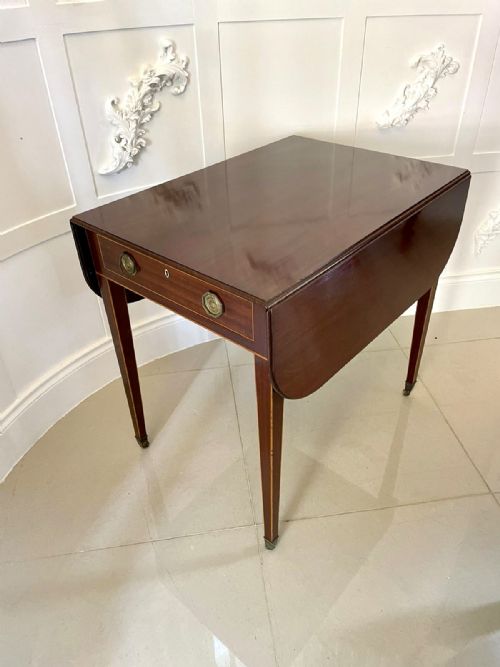
- A small rectangular or oval table with hinged leaves on either side and typically one or two drawers. It emerged during the eighteenth century as a versatile piece for breakfast or writing.
- Gateleg table
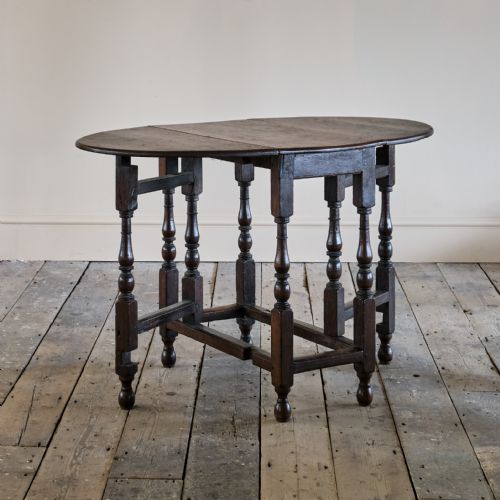
- A table with hinged legs that swing outward to support the drop leaves when raised. This sturdy construction method dates back centuries and remains common in oak and mahogany.
- Marquetry
- The art of applying decorative pieces of veneer to a structure to form intricate designs or pictures. Makers used various contrasting woods to achieve floral and geometric patterns.
- Aesthetic Movement
- A late nineteenth-century design current emphasising art for art's sake and simplicity of line. Pieces from this period often reflect Japanese artistic influences and unconventional forms.
Folding Leaf Occasional Table: Frequently Asked Questions
What is a Sutherland table?
A Sutherland table is a specific type of drop-leaf table characterised by its exceptionally narrow stationary top and leaves that fold down nearly flat. This design allows the table to be stored flush against a wall when closed.
When the leaves are raised and supported by swinging gate legs, it provides a stable surface suitable for tea or writing.
How do Pembroke and gateleg tables differ?
Pembroke tables feature two drop leaves supported by hinged wooden brackets called rule joints, often including one or two small drawers underneath. They typically date from the Georgian era onward and possess a lighter, more formal appearance.
Gateleg tables rely on swinging legs that form part of the underframe to support the leaves, creating a sturdier structure frequently seen in earlier oak designs.
What woods were commonly used?
Makers predominantly utilised mahogany and walnut throughout the eighteenth and nineteenth centuries, often selecting highly figured burr walnut for decorative effect. Oak appears frequently in earlier pieces and in Arts and Crafts designs.
Finer examples incorporate contrasting timbers such as satinwood and boxwood for inlay work, alongside rosewood and padauk.
How do I date a folding table?
Dating relies on examining the timber, construction methods, and stylistic cues present in the piece. Georgian and George III examples display characteristic proportions and bracket supports, while Victorian and Edwardian items often feature burr walnut veneers and elaborate marquetry.
Hardware types, such as brass hinges and screws, also provide reliable clues regarding the period of manufacture.