


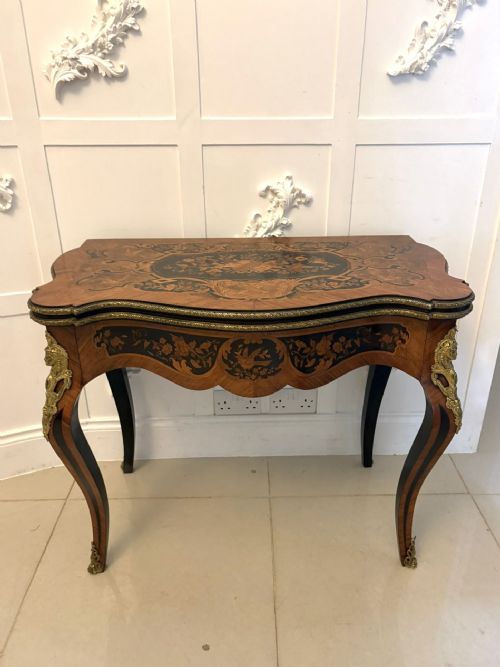


Inlaid Wooden Card Table
An inlaid wooden card table is a folding piece designed for evening entertainment, combining figured timber with precise decorative banding.
Inlaid Wooden Card Table
When you search for an inlaid wooden card table, you encounter folding surfaces designed primarily for pastimes such as cards, chess, and backgammon. The examples found here span the Georgian, Regency, Victorian, and Edwardian eras, alongside pieces dated to the nineteenth and twentieth centuries.
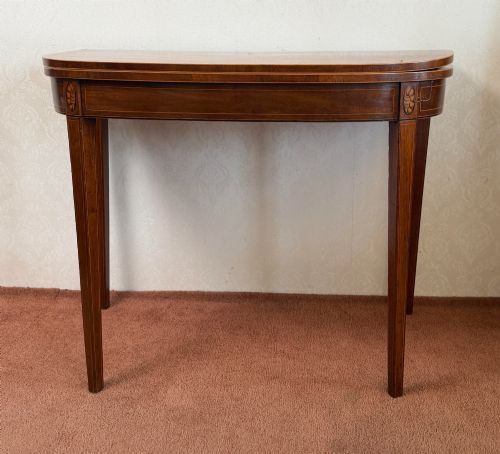
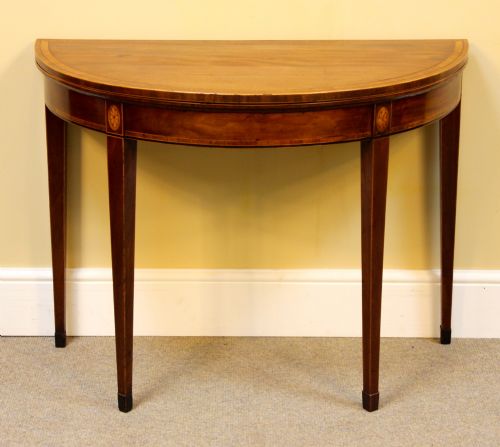
The prevailing forms on this page include demilune, D-shaped, and rectangular silhouettes, often functioning as tea tables when closed. Woods such as mahogany, walnut, rosewood, and satinwood dominate the construction, reflecting the prevailing cabinet-making materials of these periods.
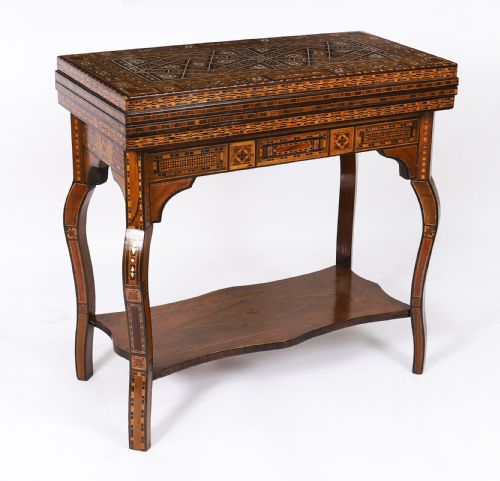
Origins stretch across British workshops as well as continental European traditions, including French Louis XV style pieces and Levantine works. Alongside standard card tables, the listings encompass games tables, occasional tables, and console tables featuring similar folding mechanisms and inlay.
Materials and Technique
Cabinet-makers constructed these tables using dense hardwoods like mahogany, walnut, and rosewood for the primary carcase and legs. Secondary timbers provided stable framing for folding tops that needed to remain flat over decades of use.
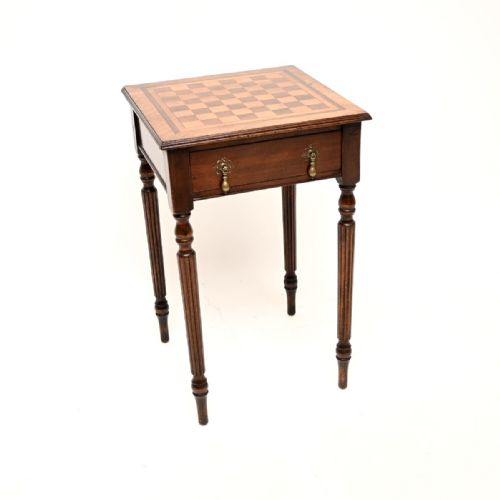
Decorative surfaces relied on contrasting veneers such as satinwood, boxwood, and fruitwood, cut thin and laid into recessed channels. Inlayers created geometric chequered boards for chess or complex marquetry scrolls following classical and revival styles.
Listings feature woods spanning mahogany, walnut, rosewood, satinwood, boxwood, and birch across Georgian, Regency, and Victorian periods.
Distinction in Craft
Quality rests upon the crispness of the timber figuring and the precision of the contrasting inlay work. Finer examples maintain tight joints where individual strips of boxwood or satinwood meet the primary walnut or mahogany field.
The execution of the folding mechanism and the stability of the turnover leaf separate standard production from superior pieces. Well-made hinges and solid pivoting legs ensure the top remains level and true when opened for play.
Shoolbred & Co
The Inlaid Wooden Card Table Glossary
- Demilune
- A half-moon shape used for table tops and frames. This semi-circular profile allows the piece to stand flat against a wall when closed.
- Marquetry
- The art of applying pieces of veneer to a structure to form decorative patterns. Artisans use various coloured woods to build pictorial or geometric designs.
- Boxwood
- A dense, pale yellow wood frequently utilised for fine stringing and inlay details. Its tight grain permits sharp, clean cutting.
- Turnover leaf
- A hinged section of a table top that folds outward to double the available surface area. This mechanism conceals a felt-lined playing well underneath.
- Ormolu
- Gilded bronze mounts applied to furniture for decorative effect. This technique appears predominantly on continental revival pieces.
Inlaid Wooden Card Table: Frequently Asked Questions
How do you use a card table?
These tables remain closed against a wall as side or console furniture until needed for evening entertainment. The top leaf swings or folds open to reveal a baize or polished wood playing surface.
Supporting legs pivot outward from the frame to hold the extended leaf steady during use. Once play concludes, the leaf folds back and the table returns to its compact footprint.
Where should I place it?
A demilune or D-shaped table fits neatly against a hallway or living room wall when the top is closed. Placing the piece in a dry spot away from direct heat sources protects the vulnerable wood veneers.
Opening the table requires clearance on multiple sides for chairs and players, making a corner or perimeter placement ideal for everyday living.
How do I identify the period?
Georgian and Regency tables frequently rely on clean mahogany frames, subtle stringing, and tapered or saber legs. Victorian and Edwardian examples often introduce heavier carved walnut, rosewood, or elaborate marquetry.
Construction methods inside the apron and the type of secondary wood used underneath offer further clues to the date of manufacture.
What games were played on them?
Many tables feature dedicated chess or backgammon boards inlaid directly into the surface using contrasting timbers. Plain wooden or baize-lined tops accommodated card games like whist or quadrille.
Specialist pieces occasionally incorporate rules or layouts for specific pastimes, such as the game of goose found on Edwardian variations.