
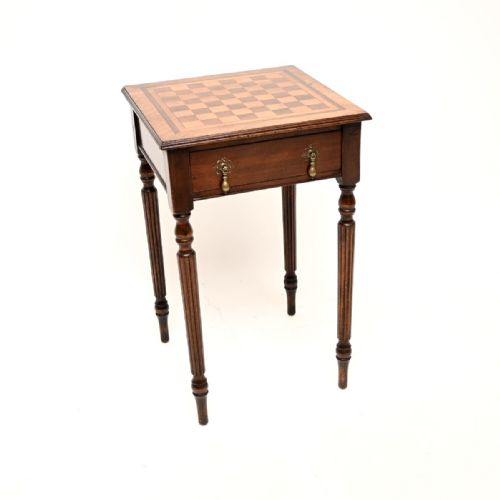
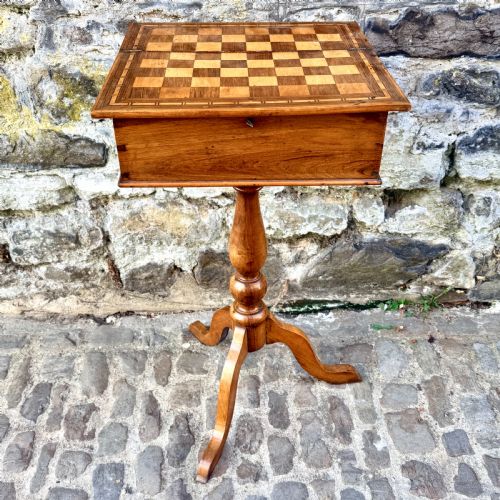
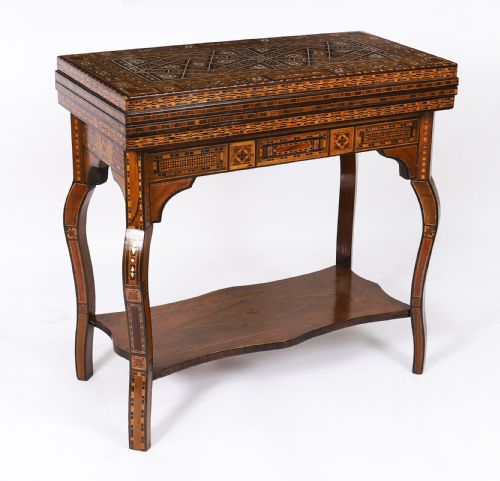
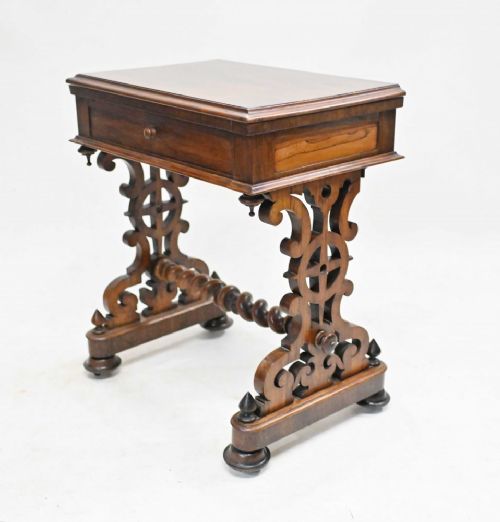


Brown Wooden Chess Table
A brown wooden chess table brings centuries of social play into a room, offering both a functional board and a handsome piece of furniture.
Brown Wooden Chess Table
A brown wooden chess table is a specialised piece designed for board games, most frequently appearing here in walnut, mahogany, and oak forms from the Victorian and Regency eras. These tables range from dedicated tripod occasional stands to multifunctional compendiums and intricate inlaid folding surfaces.
The pieces on this page span the nineteenth and early twentieth centuries, capturing periods when games tables held a prominent place in the parlour. French Provincial and Levantine examples sit alongside British designs, showing the broad geographical spread of nineteenth-century game furniture.
Buyers seeking a brown wooden chess table will encounter distinct regional variations, from the inlaid boxwood and walnut tops of Victorian workshops to the dramatic grain of early nineteenth-century mahogany.
How they were made
Cabinet makers utilised dense hardwoods such as walnut, mahogany, and fruitwood to build stable frames capable of supporting inlaid playing surfaces. Marquetry inlay and boxwood banding created the contrasting squares required for chess, often integrated into multi-game tops alongside backgammon and card layouts.
Turned pedestals, tripod bases, and carved supports gave these tables structural integrity while allowing for compact occasional use in the drawing room. Brass fittings and specialised locking mechanisms appeared on more complex compendiums and tantalus combinations.
Current listings demonstrate a strong presence of nineteenth-century walnut and mahogany, alongside rarer Levantine inlaid examples.
What varies in quality
The standard of a brown wooden chess table rests on the precision of its marquetry and the choice of timber. Crisp contrast in the inlaid squares and balanced grain selection on the main top distinguish finer workshop production from simpler utilitarian pieces.
Structural harmony also dictates value, particularly in the joinery of tripod bases and the smooth operation of folding leaves or pivoting tops. Tables attributed to documented makers demonstrate superior cabinet work in their hidden framing and secondary woods.
Gillows
The Brown Wooden Chess Table Glossary
- Marquetry inlay
- Decorative patterns formed by fitting small pieces of veneer into a prepared wooden surface. This technique created the precise contrasting squares essential for chess boards.
- Tripod base
- A table support featuring three legs radiating from a central pillar. This form allowed for stable placement on uneven nineteenth-century floorboards.
- Games compendium
- A multi-game cabinet or box containing equipment for several pastimes such as chess, backgammon, and cards. These comprehensive sets were popular in wealthy Edwardian and Victorian households.
- Quartetto tables
- A nested set of four occasional tables designed to slide neatly beneath one another. Regency makers such as Gillows produced fine examples of this space-saving form.
Brown Wooden Chess Table: Frequently Asked Questions
What games do these tables play?
Many of these tables are designed for multiple pastimes, featuring reversible or folding tops that accommodate chess, backgammon, and card games.
More complex compendiums include fitted interiors for various board games and social accessories.
How do I date a chess table?
Dating relies on timber choice, leg style, and inlay techniques, with Regency pieces showing lighter proportions and Victorian examples favouring darker walnut.
Turned pedestals and tripod bases also shift in profile across the nineteenth century.
Were these tables used daily?
Parlour games were a central part of nineteenth-century social life, making these tables frequent participants in evening entertainment.
Their dual role as occasional furniture meant they remained in use even when no game was underway.
How should I care for the wood?
Keep wooden games tables away from direct heat sources and strong sunlight to protect the delicate veneer and inlaid boxwood squares.
Regular dusting and occasional application of appropriate wax will maintain the finish of the walnut and mahogany surfaces.