
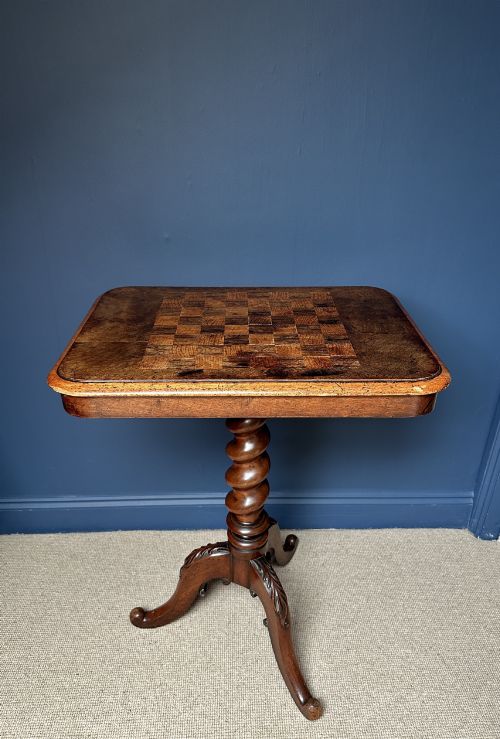
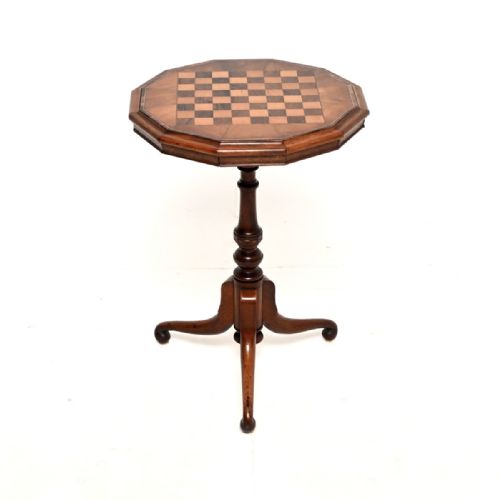


Walnut Chessboard Table
A walnut chessboard table brings both a formal surface for play and rich timber figure into a room, inviting daily use.
Walnut Chessboard Table
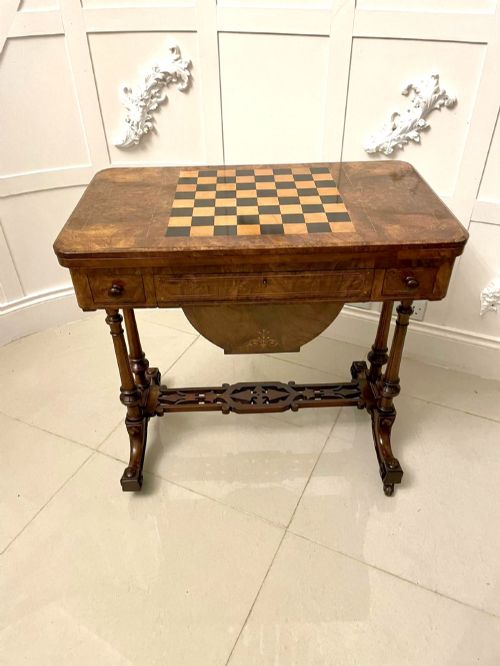
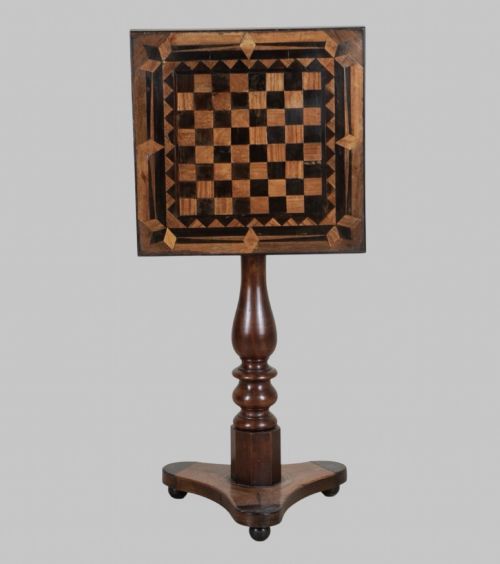
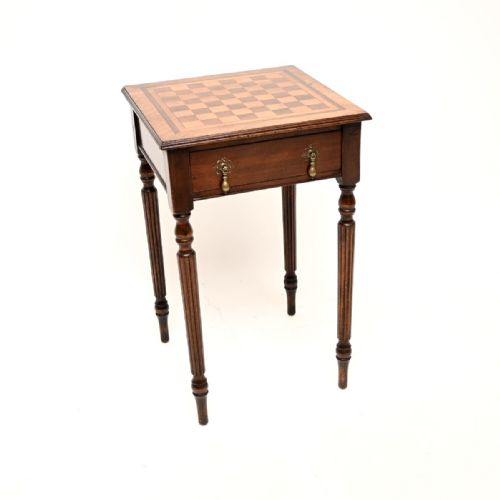
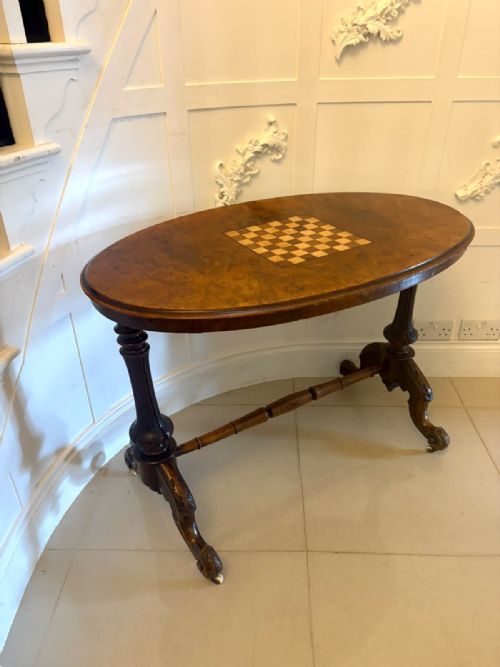
A walnut chessboard table combines a designated playing surface with the practical form of a traditional occasional table, often featuring contrasting boxwood or mahogany squares set directly into the top. These pieces date across the nineteenth and early twentieth centuries, spanning the Georgian, Victorian, and later periods.
The most common version you will encounter on this page is the Victorian walnut games table, frequently constructed with burr walnut veneers and fitted with an inlaid board. Some examples incorporate sewing compartments or fold-over tops to serve multiple functions within the domestic interior.
Beyond the standard pedestal and four-legged tables, the selection includes games compendiums and rectangular boards designed for tabletop use. Each variation reflects the nineteenth-century passion for parlour pastimes and fine cabinetmaking.
How they were made
Cabinetmakers utilised solid walnut and decorative burr walnut veneers over secondary timbers, often applying intricate wood inlay to form the precise geometry of the chess squares. Contrasting light woods such as boxwood provided the pale squares, while rosewood and mahogany occasionally appeared in the surrounding borders and stringing.
Structural elements frequently involved carved wooden supports, turned pedestals, and brass fittings, particularly on Victorian centre tables with pivoting or folding tops. Joinery methods relied on traditional cabinet construction to ensure stability across the multi-material surfaces.
Listings feature walnut, boxwood, mahogany, burr walnut, and rosewood across Victorian, Georgian, and twentieth-century periods.
What varies in quality
Quality rests primarily in the crispness of the timber inlay and the selection of the walnut veneer, where richly figured burr surfaces elevate a piece far above plain boards. Precision in aligning the contrasting squares indicates the skill of the original maker.
The sophistication of the secondary functions, such as integrated sewing compartments or clever folding mechanisms, also distinguishes finer examples. Substantial structural joinery and well-preserved carved elements complete the hierarchy of manufacture.
The Walnut Chessboard Table Glossary
- Burr walnut
- A highly figured wood grain obtained from the wart-like growths on walnut trees, prized for its swirling patterns and rich texture on table tops.
- Boxwood
- A dense, pale yellow wood frequently utilised for the lighter squares on inlaid chessboards and delicate stringing details.
- Games compendium
- A multi-functional box or table containing equipment for several different pastimes, popular in the nineteenth century for home entertainment.
- Stringing
- Thin inlay lines of contrasting timber used to outline panels and borders on antique furniture surfaces.
Walnut Chessboard Table: Frequently Asked Questions
What is a walnut chessboard table?
A walnut chessboard table is a dedicated piece of furniture featuring an integrated board for playing chess, constructed primarily from walnut timber. These tables served both as functional items for recreation and as decorative household furnishings.
Most examples date from the nineteenth century and reflect the Victorian enthusiasm for parlour games. They range from simple occasional tables to complex pieces with multiple folding leaves and storage compartments.
How were these tables used?
These tables were placed in drawing rooms and parlours to accommodate formal games of chess and draughts among family and guests. Between matches, their decorative timber tops allowed them to function as standard occasional tables for displaying ornaments.
Some designs also incorporated sewing drawers or expandable leaves, making them versatile companions for daily domestic life. Their dual purpose ensured they remained central to the social life of the nineteenth-century home.
How do I live with a walnut chessboard table?
Living with one of these tables simply involves placing it in a stable environment away from direct sunlight and sudden temperature shifts, which can affect the delicate veneers. Regular dusting with a dry cloth helps preserve the polished wood finish without requiring heavy treatment.
Using coasters or protective pads on the top prevents moisture rings while still allowing the board to be seen. The table integrates easily into a sitting room as a functional surface that retains its historic character.
How can I tell the periods apart?
Georgian examples often display simpler, more restrained lines with mahogany and walnut combinations, dating from the early decades of the nineteenth century. Victorian pieces are typically heavier in proportion, frequently utilising burr walnut veneers, elaborate carvings, and sophisticated pivoting mechanisms.
Later nineteenth-century and early twentieth-century versions may show machine-cut precision in their inlay work and simpler structural turnings. Examining the secondary timbers and construction methods helps confirm the era of manufacture.