



Georgian Fold Over Desk
A Georgian fold over desk is a clever convertible surface designed for tea or cards, offering refined timberwork that suits a traditional interior.
Georgian Fold Over Desk
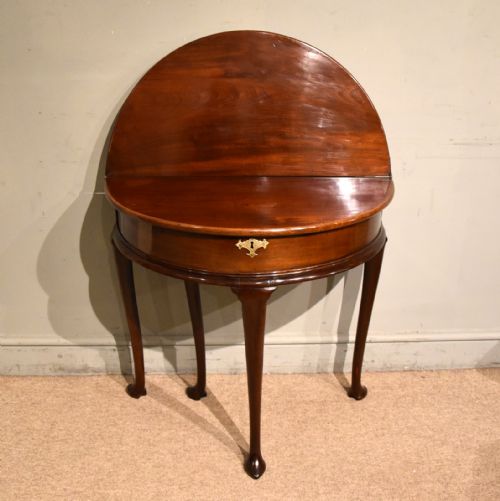
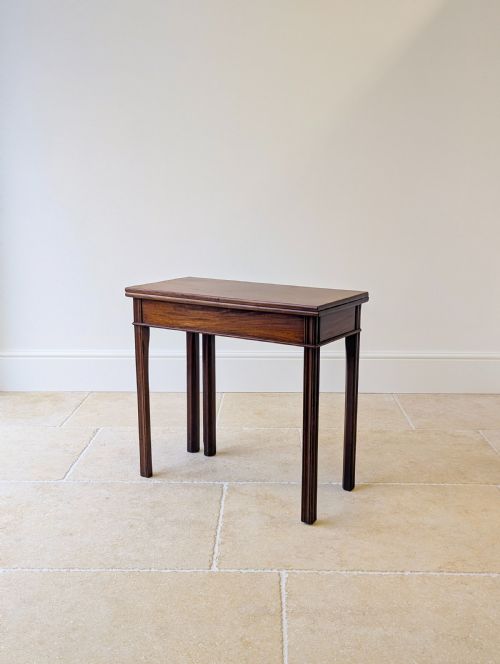
When you search for a Georgian fold over desk, you are looking at dual-purpose tables from the eighteenth and early nineteenth centuries that transform from a compact side table into a larger playing or serving surface. These pieces emerge from periods such as the George II, George III, and Regency eras, reflecting the social habits of their time when tea drinking and card games required adaptable furniture.
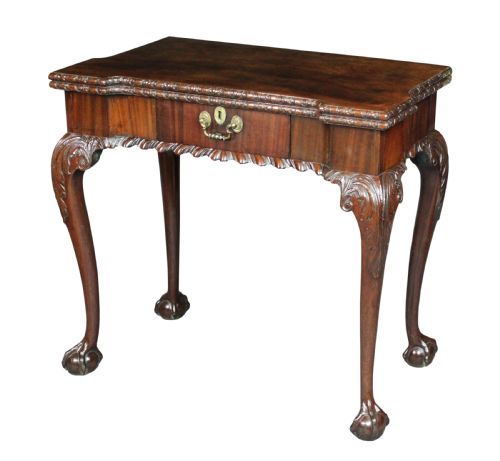
On this page, you are most likely to meet mahogany tea tables and card tables featuring hinged tops that fold open to reveal a baize-lined interior or a polished timber expanse. Forms range from simple rectangular side tables to serpentine shapes, Dutch marquetry inlaid pieces, and concertina action tables that expand evenly on four legs.
The craftsmanship spans diverse regional influences, including Chippendale designs and Dutch Baroque aesthetics, alongside occasional satinwood inlay and boxwood details. Each example demonstrates how domestic spaces adapted to hospitality, housing gaming counters or tea service with discrete elegance.

Materials and construction methods
Cabinetmakers relied heavily on solid mahogany and rich veneers, often accented with satinwood, boxwood, and brass hardware to define the edges and hinges of the folding tops. Oak frequently served as a secondary timber for interior framing and drawer linings.
Sophisticated mechanisms like concertina actions were engineered into the frame to support the heavy unfolding leaf without putting undue strain on the legs. Surface decoration involved intricate marquetry inlay and carved details, particularly evident in Regency period gaming tables.
Georgian Fold Over Desk Retail Price Guide 2026
Typical asking prices for georgian fold over desk among the pieces listed under this phrase on Sellingantiques today, from the lower quarter to the upper quarter. They describe what is for sale here now, not the wider market.
The listings encompass mahogany, satinwood, rosewood, oak, and brass, spanning the George II, George III, Regency, and Dutch Baroque styles.
Distinctions in quality and execution
The hierarchy of quality rests on the selection of timber figures, such as highly grained mahogany or crisp satinwood inlay, and the precision of the folding mechanism. Superior pieces maintain structural integrity in the concertina frame, ensuring the extended top remains completely level.
Carved ornamentations and serpentine shaping demand a higher level of joiner skill than plain rectilinear forms. The integration of period materials, including original brass fittings and baize, distinguishes untouched examples from later restorations.
The Georgian Fold Over Desk Glossary
- Concertina action
- An expanding frame mechanism that allows all four legs to move outward when the table top is unfolded, providing balanced support. This engineering feat is typical of finer card tables.
- Baize
- A woolen felt material traditionally used to line the playing surface of card and games tables. It provides a soft texture that protects counters and dampens the sound of dice.
- Marquetry
- Decorative patterns formed by inserting thin pieces of wood, ivory, or shell into a veneer background. It appears on Dutch Baroque examples within the listings.
- Serpentine
- A curved shape characterised by a concave central section flanked by two convex ends. This undulating profile requires skilled woodworking.
- Satinwood
- A durable, lustrous timber native to India and Ceylon, prized for its golden yellow colour. It was utilised for contrasting inlay and banding on eighteenth-century furniture.
Georgian Fold Over Desk: Frequently Asked Questions
What is a fold over desk used for?
These pieces functioned historically as versatile furniture for social gatherings, serving either as tea tables or as dedicated surfaces for card and gaming evenings.
Today, they suit living rooms or hallways as decorative console tables that can quickly expand to accommodate guests or writing tasks.
How do you tell George II and George III styles apart?
George II pieces often exhibit heavier proportions, darker native timbers, and robust carved details influenced by earlier baroque traditions.
George III furniture typically displays lighter forms, more refined mahogany grain, and classical geometric or satinwood inlay influenced by neoclassical tastes.
How do I live with a antique folding table?
Keep the timber away from direct heat sources and strong sunlight to prevent the mahogany or satinwood veneers from drying and cracking.
Use wax polish sparingly and place protective felt pads under any objects resting on the polished surface to preserve the finish.
What is a concertina action?
A concertina action is a complex wooden framework linked to the rear legs that extends outwards when the hinged top is opened.
This clever design ensures the weight of the open leaf rests directly over a sturdy leg rather than relying solely on hinges.