
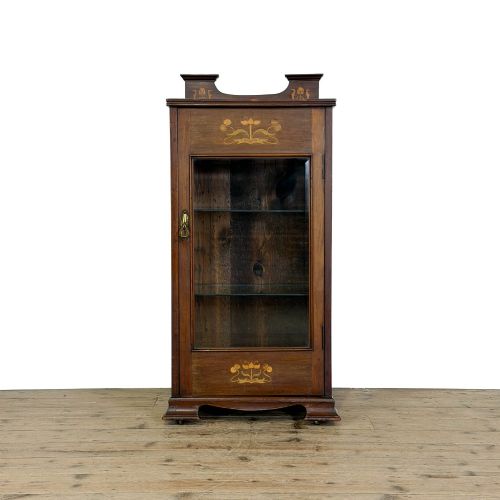
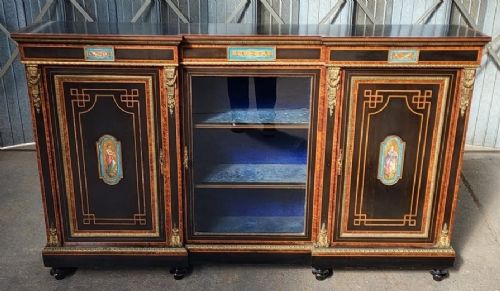
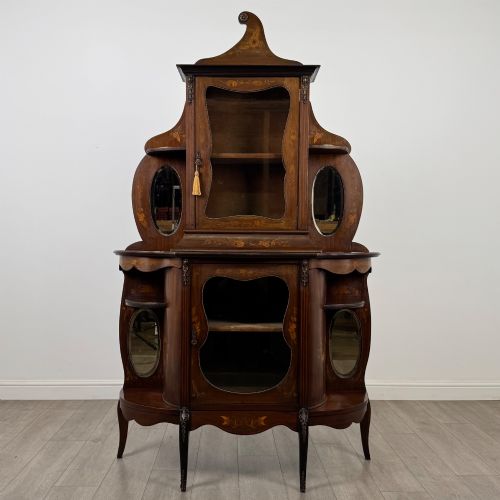
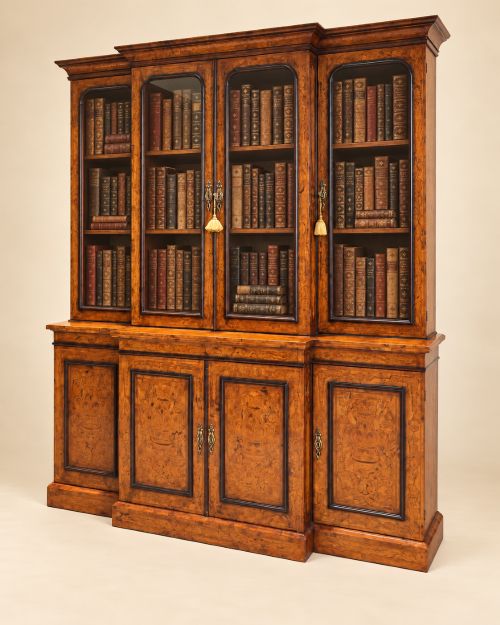


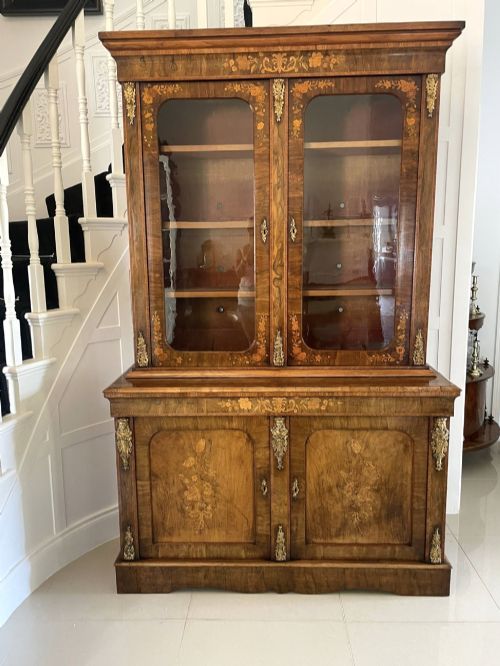
Marquetry Inlaid Display Cabinet
A marquetry inlaid display cabinet brings together intricate botanical veneers and glazed storage, offering a sophisticated focal point for a refined interior.
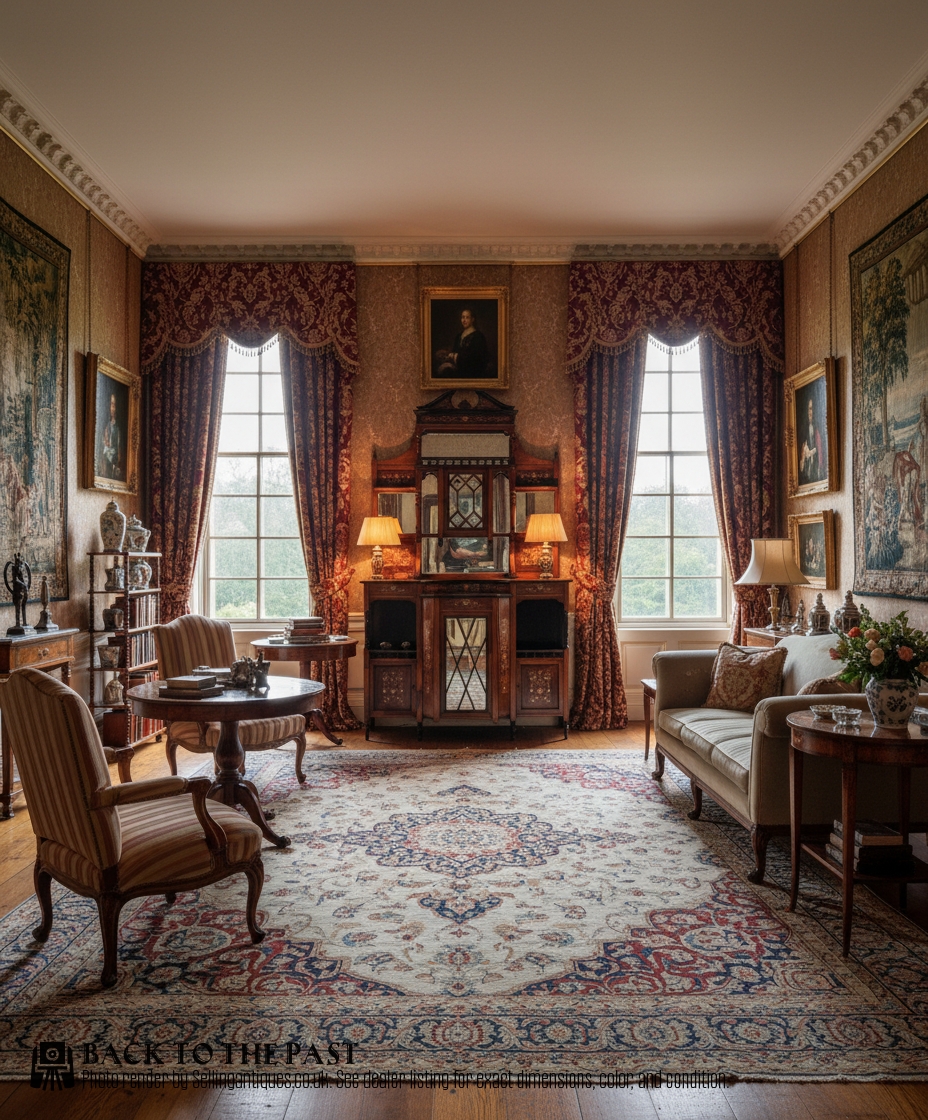
Marquetry Inlaid Display Cabinet
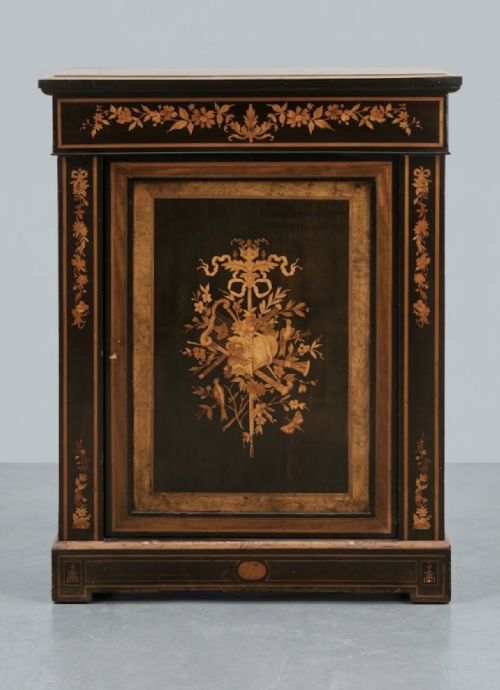
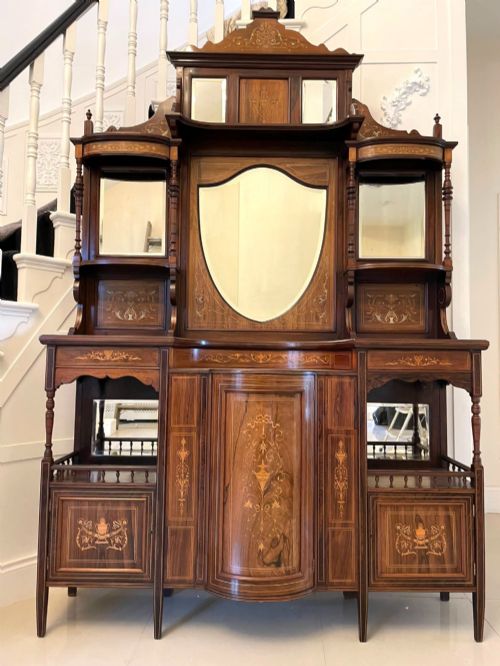
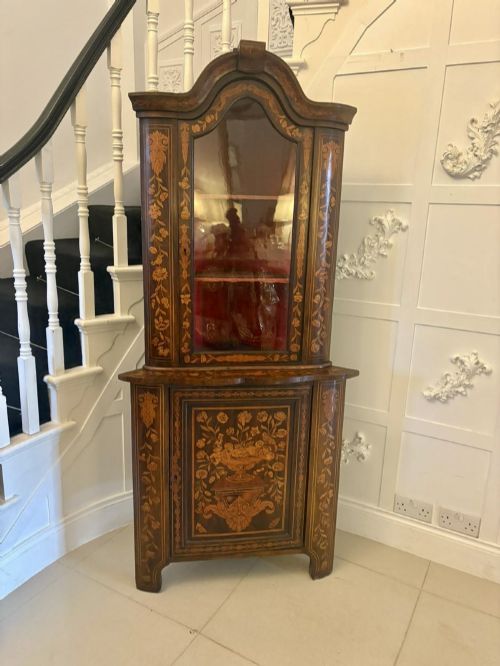
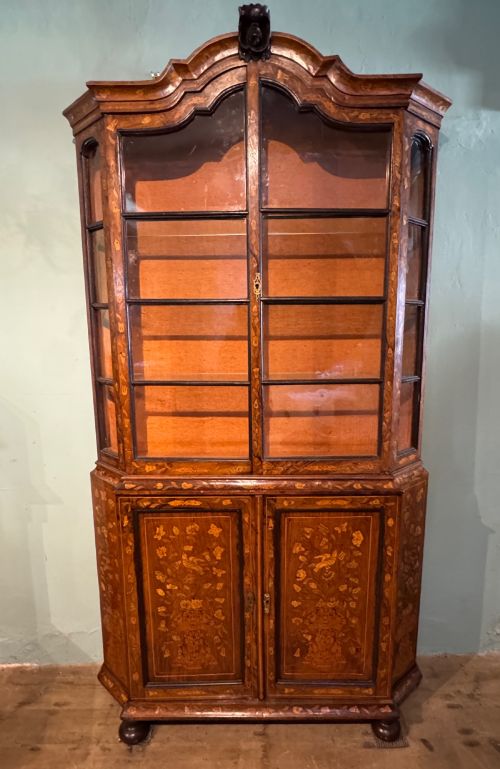
A marquetry inlaid display cabinet is a fitted furniture piece designed to house and exhibit collections behind glass doors while displaying intricate wood veneers on its outer surfaces. These pieces appear frequently in Victorian and Edwardian iterations, alongside earlier eighteenth-century Dutch examples and Sheraton Revival interpretations.
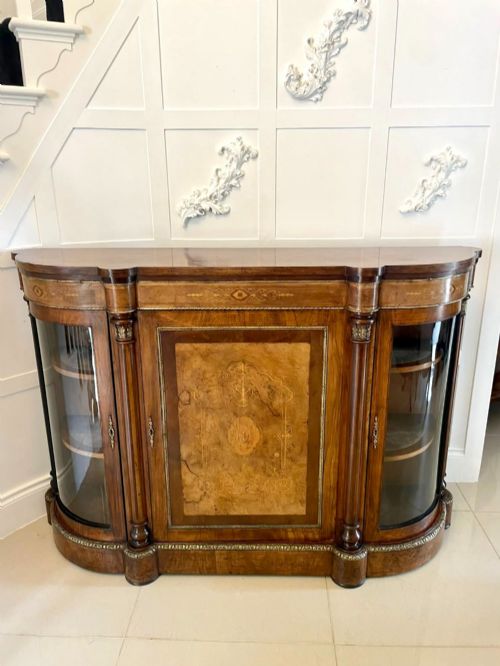
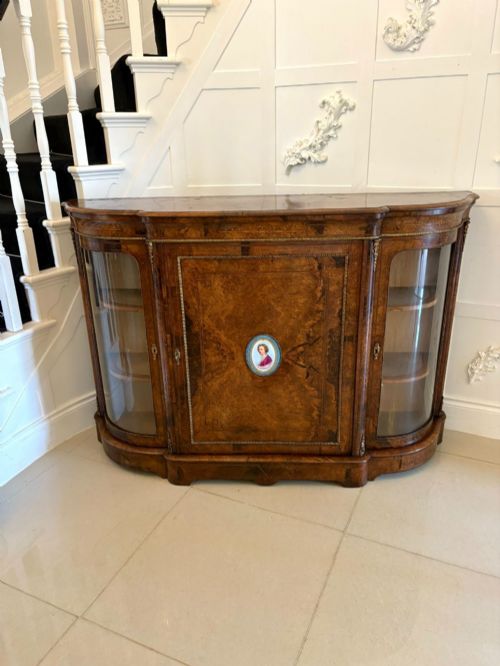
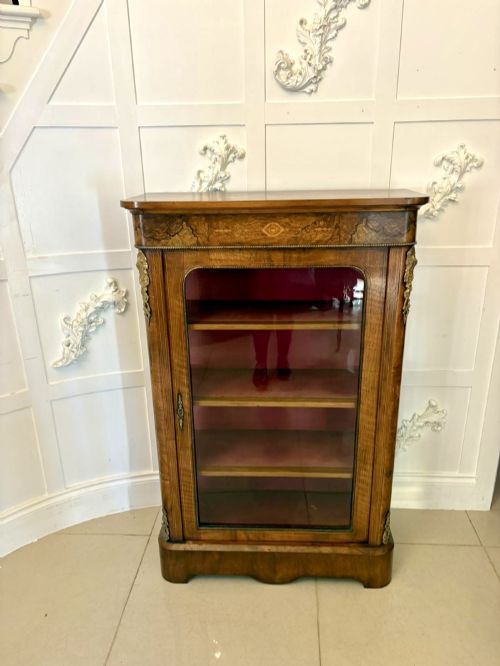
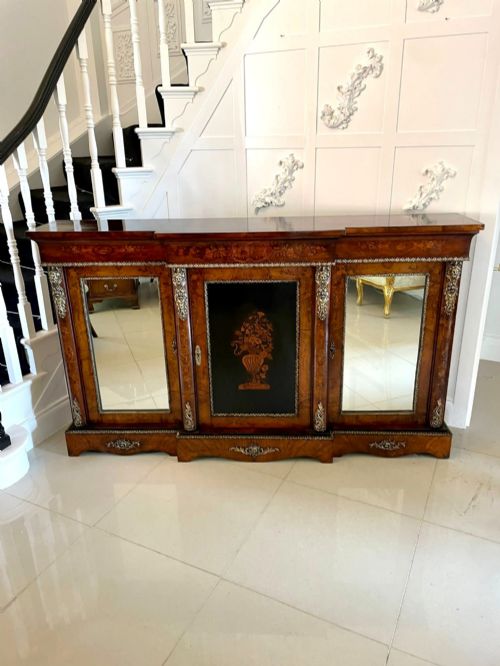
The architectural forms span upright pier cabinets, low credenzas, corner units, and breakfront bookcases, depending on the floor space they were built to occupy. Walnut, mahogany, and rosewood form the primary carcass structures, frequently embellished with contrasting satinwood or harewood inlay.
Victorian examples often incorporate elaborate floral motifs and gilt mounts, whereas Edwardian iterations tend toward lighter mahogany frames with delicate ribbon or urn patterns.
What Varies in Quality
The standard of a marquetry inlaid display cabinet rests on the precision of the veneer work and the crispness of the botanical or classical motifs. Finely cut inlay fits flush into the ground timber without heavy use of dark filler around the edges, whereas lesser examples show wider joint lines.
Structural heft also dictates grade, with superior pieces utilising heavy timber carcasses, robust internal shelving, and substantial cast ormolu mounts rather than light pressed brass.
The inventory includes Dutch Baroque and Sheraton Revival styles alongside standard nineteenth-century credenzas and corner cabinets.
Edwards & Roberts·Collinson & Lock·Gillows·Maple & Co
The Marquetry Inlaid Display Cabinet Glossary
- Marquetry
- A decorative technique where small pieces of contrasting veneer are assembled into pictorial designs and glued onto a structural carcass. This method allows cabinetmakers to create complex floral and geometric scenes.
- Ormolu
- Gilded bronze mounts applied to the exterior angles and borders of nineteenth-century furniture. The technique provides a bright metallic contrast against dark woods like walnut and ebonised timber.
- Burr Walnut
- Timber taken from the abnormal growth of a walnut tree, yielding highly figured, swirling grain patterns. It is typically sliced into thin veneers for statement furniture surfaces.
- Pier Cabinet
- A narrow upright display cabinet designed specifically to stand against the wall space between windows. These pieces often feature a single glazed door and shallow depth.
Marquetry Inlaid Display Cabinet: Frequently Asked Questions
How do I care for the veneer?
Keep wooden cabinets away from direct sunlight and sudden temperature shifts to prevent the delicate marquetry veneers from drying out or lifting over time.
Apply a traditional wax polish occasionally to nourish the timber surface without building up excessive residue.
Where should I place a corner cabinet?
Corner cabinets fit neatly into unused angles of a room, maximising display space without dominating the main floor area.
Pair them with surrounding antique seating to create a balanced period arrangement in a study or drawing room.
How do I identify a Victorian piece?
Victorian examples frequently employ burr walnut or rosewood carcasses combined with heavy ormolu mounts and intricate floral marquetry panels.
Many of these nineteenth-century pieces also feature glazed central doors flanked by curved glass side panels.
What is the difference between a credenza and a pier cabinet?
A credenza is a low, broad cabinet often fitted with multiple doors, designed to stand against a main wall.
In contrast, a pier cabinet is tall and narrow, built to occupy the specific wall space between two windows.