

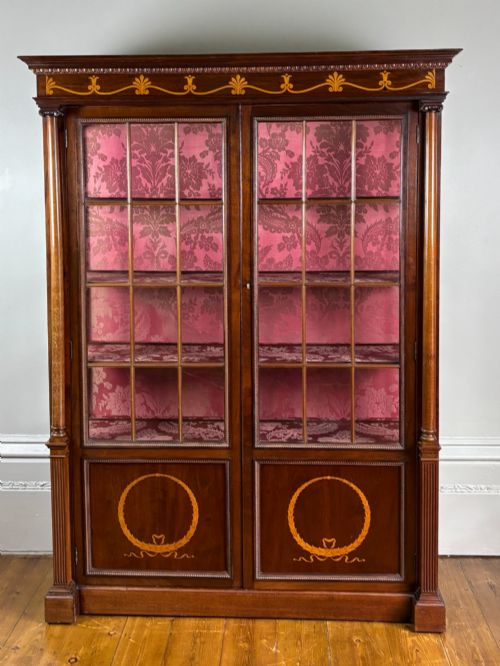
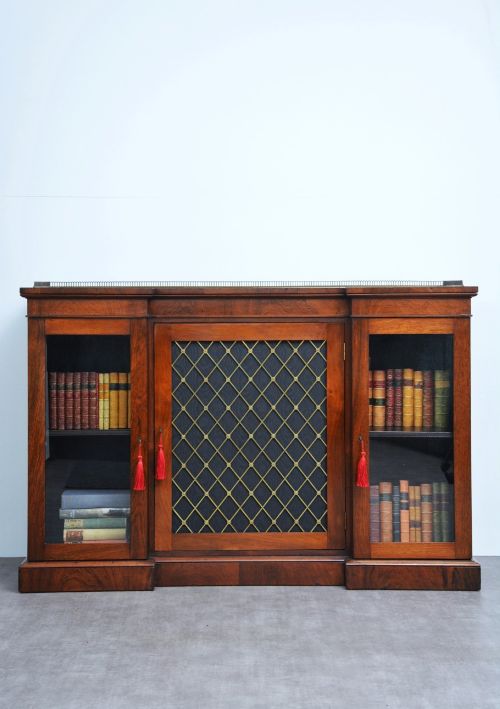
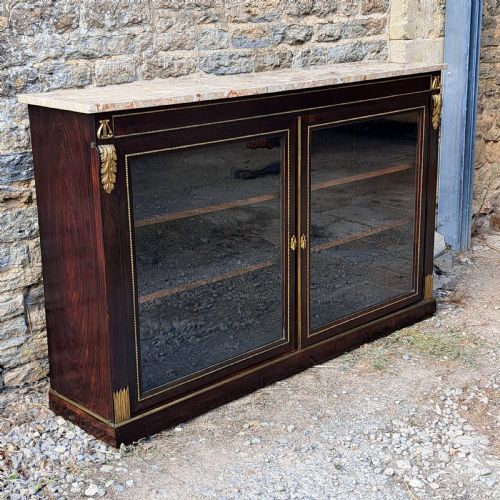
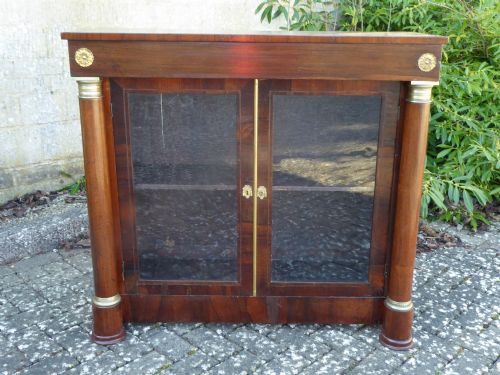


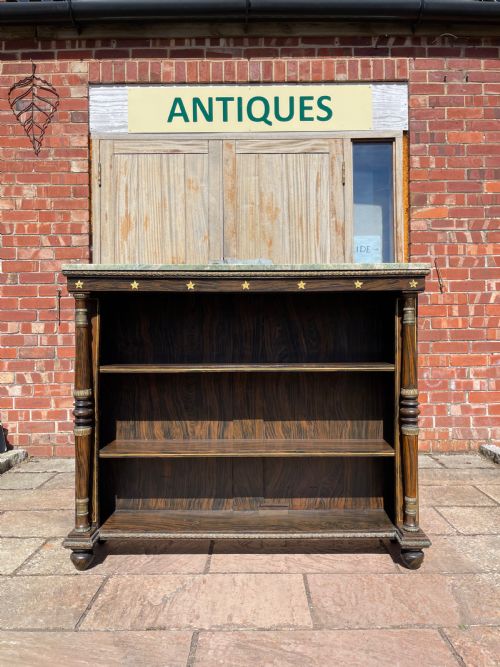

Georgian Rosewood Display Cabinet
A georgian rosewood display cabinet brings warmth and striking grain to a room, offering refined storage for books and treasured objects.
Georgian Rosewood Display Cabinet
A georgian rosewood display cabinet typically spans the nineteenth century, encompassing Georgian, Regency, George IV, and Edwardian periods. These pieces serve primarily as bookcases, display cabinets, corner cabinets, and chiffoniers, often combining glass doors or open shelving with enclosed storage.
The versions most frequently met on this page include bookcase cabinets and chiffoniers featuring graduated shelves and brass inlay. Pieces range from large format breakfront bookcases to compact corner cabinets and side cabinets.
Origins represented in the evidence point towards English cabinet making, with styles moving from strict Regency lines through to Georgian Revival interpretations. Painted and simulated rosewood finishes also appear alongside natural timber examples.
Materials and construction
Makers utilised rich rosewood timbers, frequently enhanced with brass inlay and supported by glass panels for display sections. Interior elements incorporate fabric linings and mirror glass to reflect light through the stored items.
Surface treatments extend beyond solid timber to include painted and simulated rosewood finishes on alternative woods. Bone details and marble accents occasionally feature within the construction of these cabinets.
Structural forms rely on traditional cabinet-making joints to support heavy bookcase sections and multi-tiered chiffonier shelving. Glazing techniques secure individual glass panes within timber framing for display doors.
Georgian Rosewood Display Cabinet Retail Price Guide 2026
Typical asking prices for georgian rosewood display cabinet among the pieces listed under this phrase on Sellingantiques today, from the lower quarter to the upper quarter. They describe what is for sale here now, not the wider market.
Materials recorded across the inventory include solid rosewood, brass, glass, marble, mirror glass, bone, and painted finishes.
Judging quality and execution
Quality separates pieces through the selection of timber grain and the precision of brass inlay work. Superior examples display carefully matched rosewood veneers across large surfaces like breakfront doors.
The sophistication of painted or simulated rosewood finishes dictates the visual success of alternative timber pieces. Finer proportions in waterfall bookcases and chiffonier shelving reflect higher design ambition from the period.
The Georgian Rosewood Display Cabinet Glossary
- Regency
- A stylistic period spanning the early nineteenth century defined by classical restraint and archaeological influence. Pieces from this era often feature clean architectural lines and decorative brass mounts.
- Chiffonier
- A low sideboard or cabinet featuring shelves above, commonly used for serving or display in nineteenth-century interiors. The layout typically includes enclosed lower cupboards.
- Breakfront
- A piece of furniture where the central section projects forward from the flanking wings. This architectural arrangement creates depth and visual rhythm in large bookcases.
- Simulated rosewood
- A painted surface treatment mimicking the distinctive dark grain of true rosewood. Artisans utilised this technique on alternative woods during periods when exotic timber costs ran high.
Georgian Rosewood Display Cabinet: Frequently Asked Questions
What is a georgian rosewood display cabinet?
A georgian rosewood display cabinet is a nineteenth-century storage piece designed to showcase books and ornamental objects behind glass or open shelving. These items combine utility with decorative timber work.
They appear in formats ranging from grand breakfront bookcases to compact corner cupboards and chiffoniers with graduated shelves.
How do I date a rosewood cabinet?
Dating relies on observing stylistic markers from periods like the Regency, George IV, or Georgian Revival eras. Structural conventions and decorative motifs provide further chronological clues.
Changes in proportion and the use of simulated paint finishes versus solid rosewood help place pieces within the nineteenth century.
Where were these cabinets used?
These cabinets found places in principal reception rooms, libraries, and parlours of period homes. They served to organise growing book collections alongside valued porcelain and curiosities.
Corner cabinets specifically utilised dead architectural space, while chiffoniers stood against dining room or drawing room walls.
What is simulated rosewood?
Simulated rosewood is a decorative paint finish applied to a base timber to imitate the rich dark grain and figuring of natural rosewood. Craftsmen used this method when solid exotic wood was scarce or expensive.
Examples of this technique appear on nineteenth-century side cabinets and bookcases.