


Rosewood China Cabinet
These rosewood china cabinet examples bring together rich tropical timber and glazed display space to show your collection at its best.
Rosewood China Cabinet
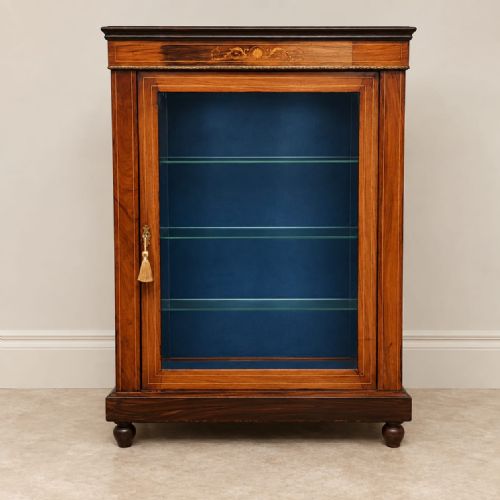
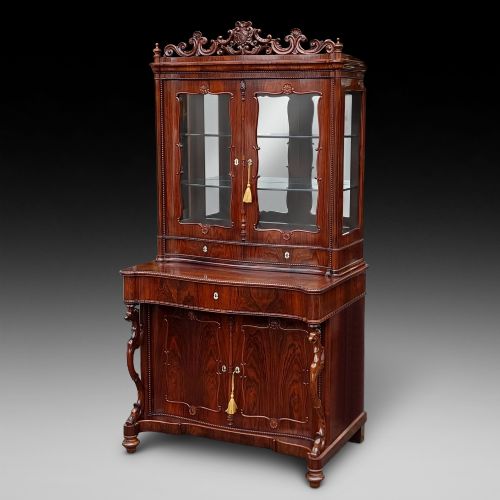
A rosewood china cabinet takes several forms across the 19th Century, Victorian, Edwardian, and Regency periods, appearing as freestanding vitrines, glazed bookcases, pier cabinets, and cabinets on stands. The timber itself provides a dense, dark grain that forms the visual foundation for each piece.
Makers often shaped these display cabinets with revival influences, including Louis XV, Louis XVI, Biedermeier, and Chinoiserie styles, alongside English Victorian and Edwardian iterations. They serve primarily to protect and exhibit porcelain, glassware, and books behind glass doors.
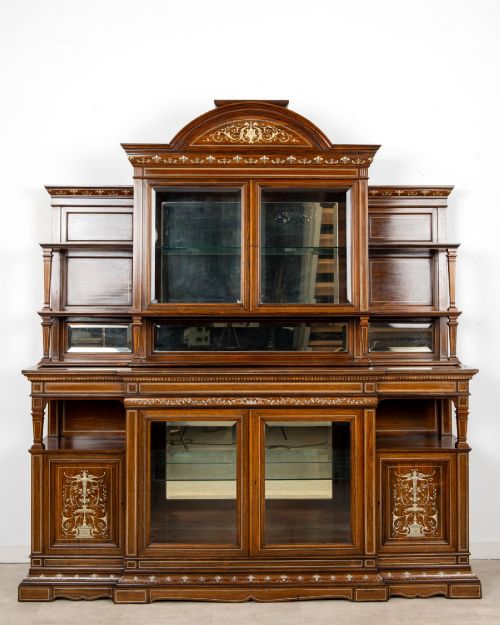
Buyers meet variations ranging from compact single-door pier cabinets to larger breakfront bookcases and French vitrines mounted with ormolu. Each object adapts the core materials of rosewood, glass, and brass to domestic display requirements.
What Varies in Quality
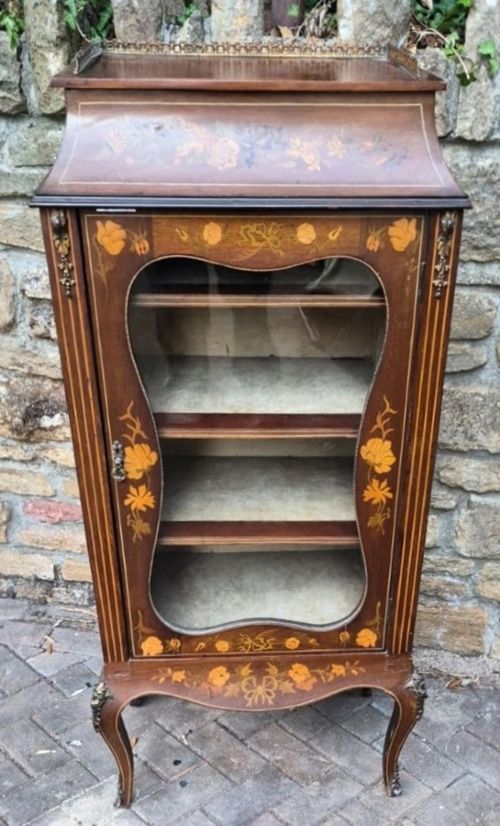
Quality rests in the crispness of the cabinetmaking, from the precision of the marquetry and satinwood inlay to the handling of carved hardwood elements. Finer examples display harmonious proportions and careful selection of rosewood veneer grain.
The integration of metalwork, such as chased ormolu mounts or brass inlay, marks the distinction between standard workshop production and pieces attributed to prominent makers. The weight and clarity of the glass and the execution of interior fabric linings also signal higher standards of manufacture.
Mother-of-pearl inlay catches the parlour candlelight just as it did in eighteen-hundred-and-something.
Collinson & Lock·François Linke·Edwards & Roberts·Thomas Justice & Sons
The Rosewood China Cabinet Glossary
- Vitrine
- A glass-fronted cabinet designed specifically for displaying fine porcelain and objets d'art. These pieces often feature glass sides to allow maximum light onto the items inside.
- Ormolu
- Gilded bronze mounts applied to furniture for decorative effect. This technique was widely used on French cabinets and vitrines during the 19th Century.
- Breakfront
- A cabinet design where the central section projects forward from the flanking wings. This architectural arrangement adds depth and visual interest to larger bookcases.
- Marquetry
- Decorative veneer work arranged in pictorial or geometric patterns using various coloured woods. It appears frequently on Edwardian and Victorian inlaid display cabinets.
- Pier cabinet
- A narrow cabinet designed to stand against the wall space between windows. These compact pieces were popular in Victorian interiors for displaying small collections.
Rosewood China Cabinet: Frequently Asked Questions
What is a rosewood china cabinet?
A rosewood china cabinet is a glazed display piece constructed primarily from rosewood timber, designed to hold and exhibit porcelain, glassware, and decorative objects.
These pieces range from tall Victorian bookcases and French vitrines to compact pier cabinets and cabinets on stands originating from the 19th Century and Edwardian eras.
How do I date a rosewood cabinet?
Dating relies on identifying stylistic markers, construction methods, and period characteristics such as Regency brass inlay or Edwardian marquetry.
Reviewing the specific timber preparation, hardware, and revival styles - ranging from Biedermeier to Louis XV - helps narrow down the decade of manufacture.
Where should I place a vitrine?
Vitrines suit rooms where natural light can illuminate the glass panels and interior shelves without exposing the contents or timber to direct, harsh sunlight.
Placing them against solid interior walls ensures stability, while placement in drawing rooms or dining spaces keeps displayed collections accessible to view.
How do I care for rosewood furniture?
Rosewood requires stable indoor humidity and temperature levels to prevent timber movement and veneer lifting.
Routine dusting with a soft, dry cloth preserves the polished surface, avoiding moisture and harsh chemical polishes that can damage the antique finish.