




Inlaid Rosewood Display Bookcase
An inlaid rosewood display bookcase combines rich timber with delicate marquetry to showcase treasured volumes and objects.
Inlaid Rosewood Display Bookcase
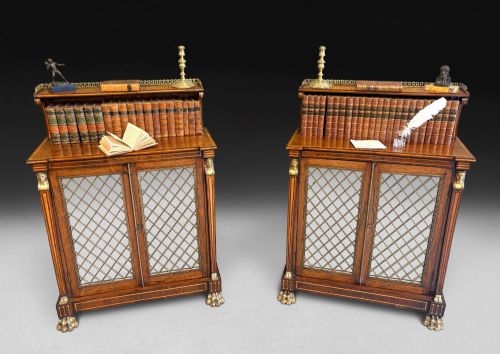
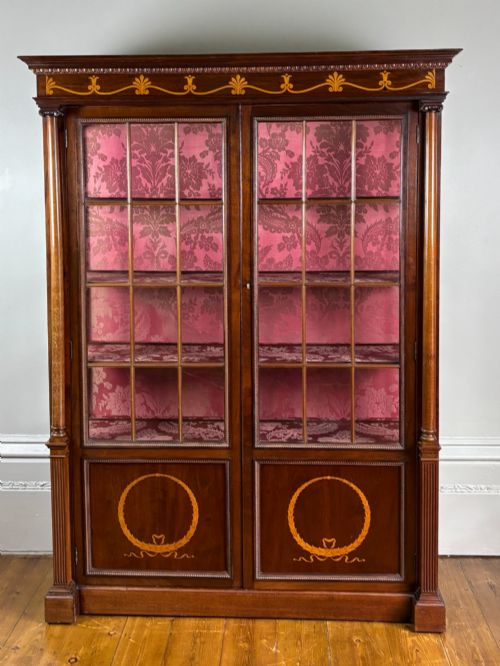
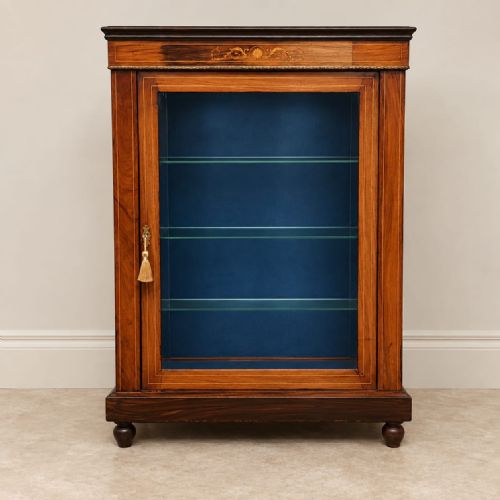
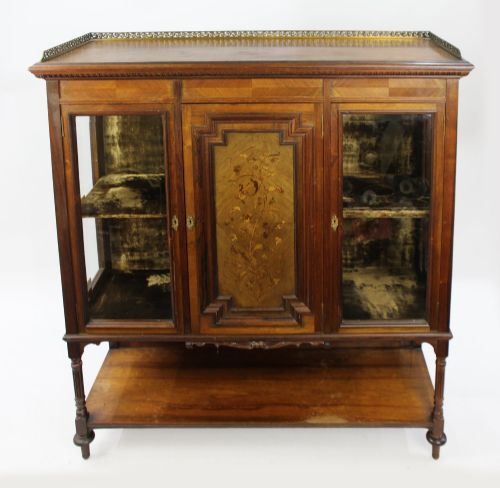
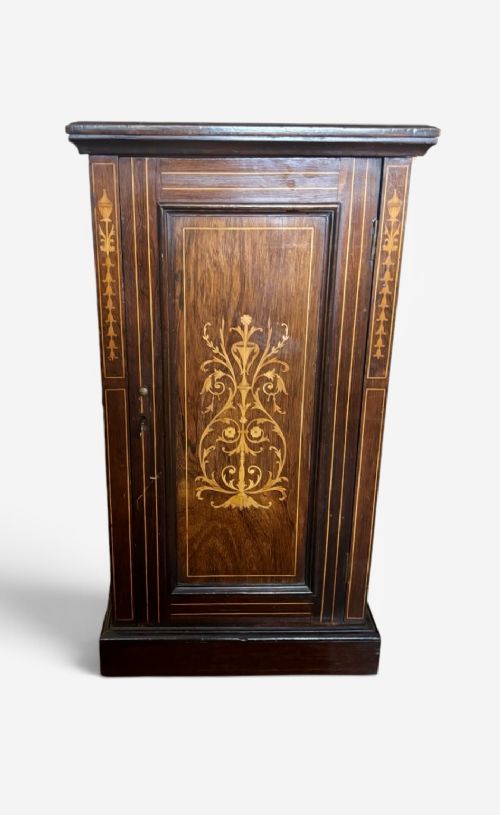
When searching for an inlaid rosewood display bookcase, a buyer encounters pieces primarily from the Regency, Victorian, and Edwardian eras, spanning the nineteenth century. These items manifest as display cabinets, pier cabinets, side cabinets, and open bookcases that combine storage with glass-fronted or open shelving.
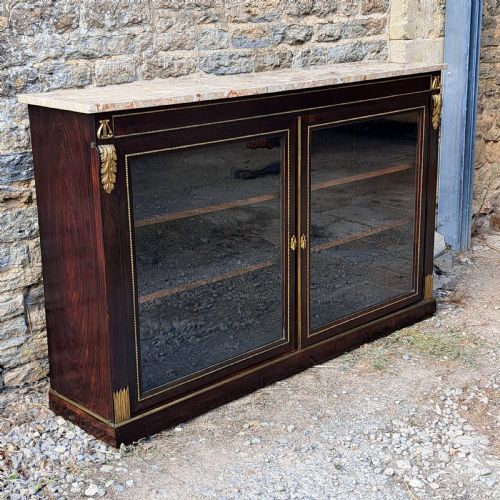
The version most frequently met on this page is the Victorian or Regency cabinet, featuring rich rosewood timber combined with contrasting satinwood or brass inlay. Formats range from narrow pier cabinets designed for specific wall spaces to larger two-door side cabinets and bookcases.
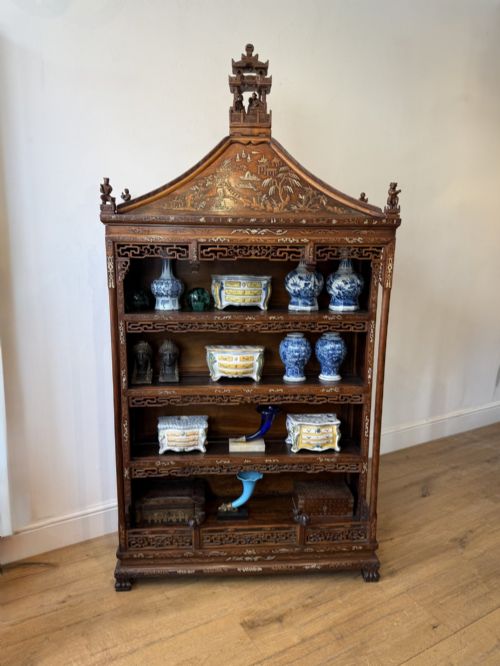
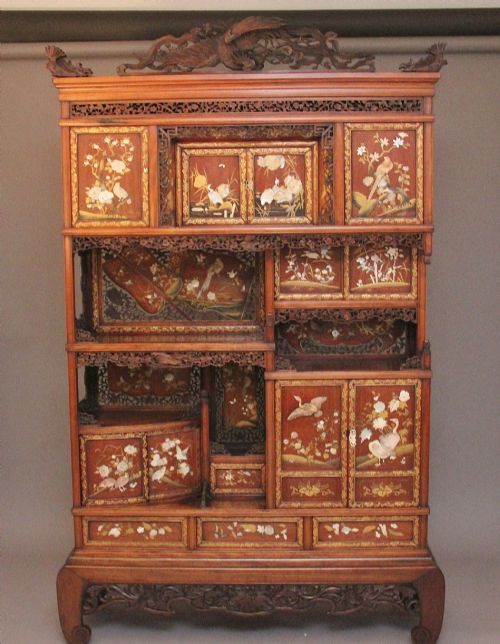
Origins represented in the evidence stretch from British workshops of the Georgian and Victorian periods to Japanese Meiji period examples and Chinese influences. Each variation serves the dual purpose of housing a library while framing decorative objects behind glass.
Materials and technique
Construction relies heavily on dense rosewood as the primary timber, frequently enhanced with contrasting satinwood stringing, marquetry, and bone inlay. Cabinet makers utilised these timbers to create deep brown and purple-streaked surfaces that received elaborate botanical or geometric designs.
Brass inlay and brass mounts appear frequently across Regency pieces, providing sharp metallic contrast to the dark wood grain. Glass panels are integrated into doors to protect books and curiosities, while internal mirrored backs sometimes amplify ambient light within the display space.
Inlaid Rosewood Display Bookcase Retail Price Guide 2026
Typical asking prices for inlaid rosewood display bookcase among the pieces listed under this phrase on Sellingantiques today, from the lower quarter to the upper quarter. They describe what is for sale here now, not the wider market.
Listings feature rosewood, satinwood, hardwood, and brass materials across Victorian, Regency, and Edwardian cabinet forms.
Craftsmanship and materials
The division between standard items and superior examples rests upon the precision of the marquetry and the choice of secondary timbers. Finer pieces demonstrate meticulous hand-cut satinwood and brass inlay that remains flush with the rosewood surface.
Structural harmony also dictates quality, distinguishing master-built cabinets with integrated glazing bars and substantial hardwood carcasses from simpler utility pieces. The integration of quality brass hardware and well-figured grain patterns further elevates a piece within its period.
Edwards & Roberts
The Inlaid Rosewood Display Bookcase Glossary
- Marquetry
- Decorative patterns formed by inserting thin slices of wood, ivory, or shell into a wooden veneer base. This technique creates pictorial or geometric motifs across the cabinet doors.
- Pier cabinet
- A low cabinet built specifically to fit the wall space between windows. These narrow pieces often feature glass doors for displaying porcelain and small books.
- Chiffonier
- A low sideboard or bookcase featuring shelves or a closed cupboard beneath. Regency versions frequently combine open book storage with enclosed lower compartments.
- Satinwood
- A lustrous, yellow-toned timber imported from the tropics and used extensively for contrasting inlay work on dark rosewood furniture.
- Stringing
- Thin lines of contrasting wood inlay used to outline panels and drawers on cabinet facades. This linear detail defines the architectural proportions of Victorian and Edwardian pieces.
Inlaid Rosewood Display Bookcase: Frequently Asked Questions
How do I date an inlaid rosewood display bookcase?
Dating relies upon observing the structural proportions, hardware types, and characteristic inlay motifs associated with periods such as Regency, Victorian, or Edwardian manufacture. Regency examples often incorporate bold brass inlay, whereas Victorian pieces frequently display intricate floral marquetry.
Secondary woods and construction methods inside the carcass also provide clear indicators of age. Comparing the cabinet style to documented pieces helps narrow the decade of production.
Where were these bookcases placed in a historic home?
These cabinets typically occupied formal reception rooms, libraries, and drawing rooms where homeowners entertained guests. Narrow pier variants fitted neatly between tall windows to maximise wall utilisation in grand houses.
Their glass doors protected leather-bound volumes and delicate ornaments from dust while displaying them openly. They served as both functional library storage and status symbols for affluent Victorian and Regency households.
How do I care for rosewood furniture?
Maintenance requires keeping the timber away from direct sunlight and maintaining stable room humidity to prevent veneer cracking. Gentle dusting with a dry, soft cloth preserves the polished surface without stripping the natural oils.
Harsh chemical polishes should be avoided in favour of traditional beeswax applied sparingly. Regular attention keeps the rosewood grain deep and lustrous over decades of domestic use.
What is the difference between a pier cabinet and a display cabinet?
A pier cabinet is traditionally built with a narrow footprint designed to stand against the wall space between two architectural openings. Display cabinets encompass a broader range of freestanding or tabletop glazed furniture designed primarily to exhibit collections.
While both utilise glass doors and rosewood surfaces, pier cabinets prioritize space-saving vertical proportions. Display cabinets often provide wider shelving and more expansive glass viewing areas.