



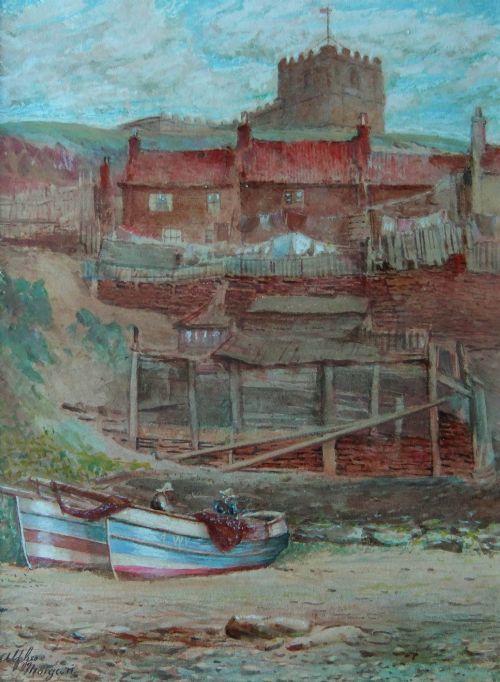
Maritime Harbour Painting
A maritime harbour painting captures the salt, movement, and business of the coast across British, European, and wider waters.
Maritime Harbour Painting
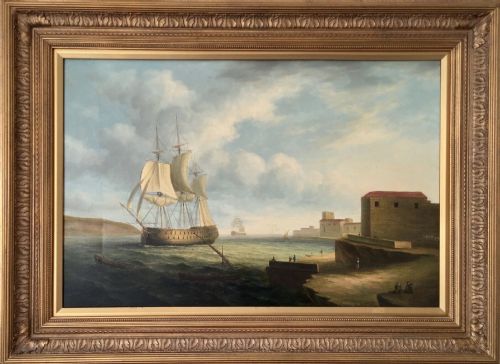
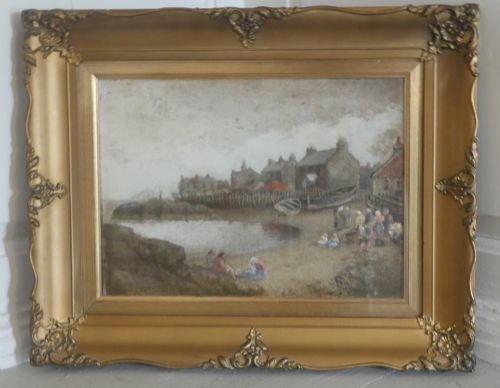
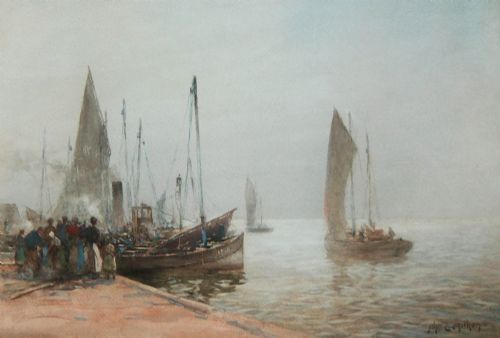
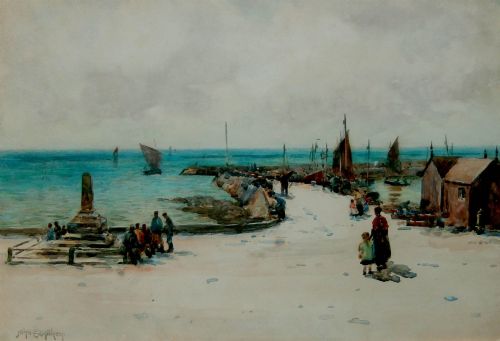
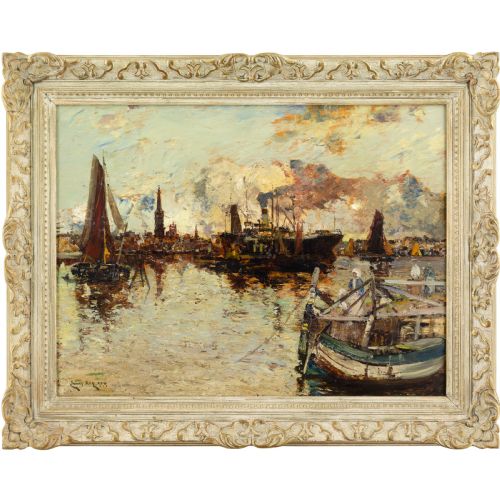
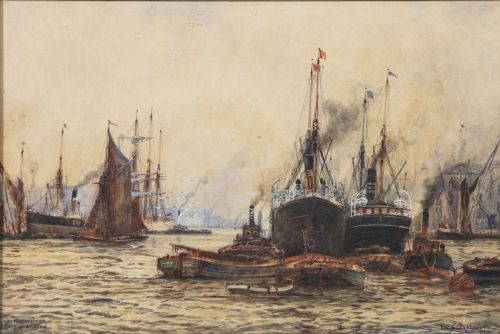
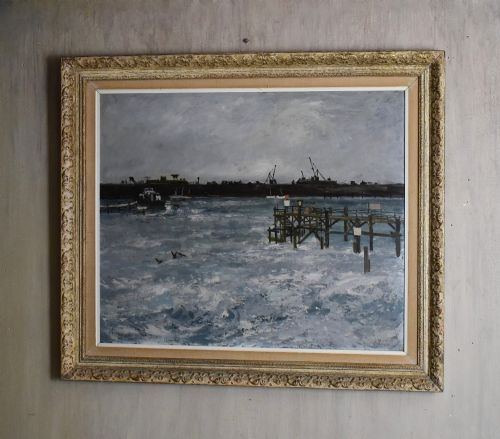
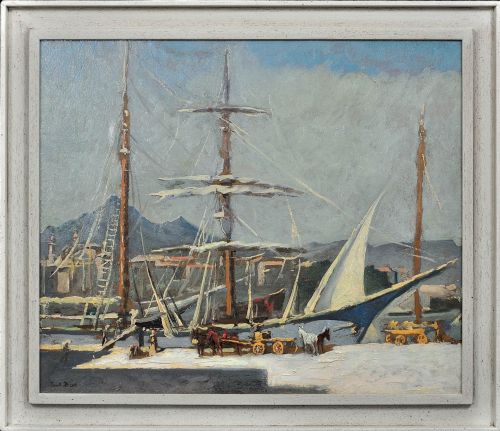
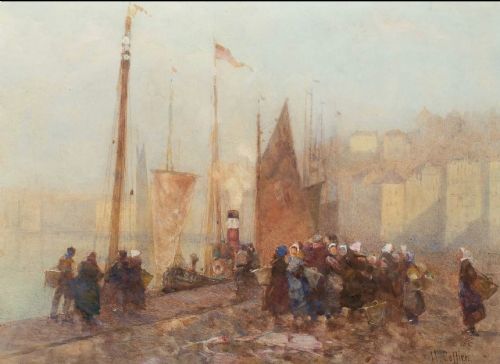
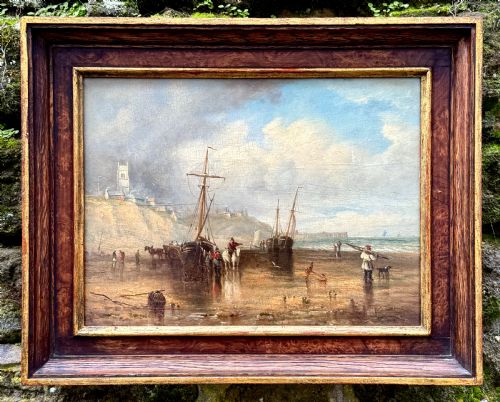
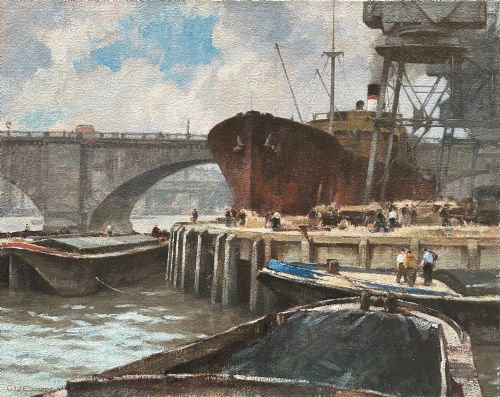
A maritime harbour painting depicts coastal scenes, busy quaysides, and sheltered waters, ranging from small fishing havens in Cornwall to grand Mediterranean ports and northern river pools. These works document maritime life, shipping vessels, and trading ports through the eyes of artists working from the nineteenth century into the mid-twentieth century. Collectors encounter both finished studio works and direct watercolour sketches that record specific coastal topography and harbour architecture.
The selections available here span Victorian and Edwardian periods, British Impressionism, and mid-century modern interpretations. Works frequently focus on named locations such as Whitby, St Ives, London's River Thames, or foreign ports like Valletta and Sydney Harbour. Buyers choose these pieces to bring the atmosphere of historical maritime trade and coastal communities into an interior space.
Materials and methods
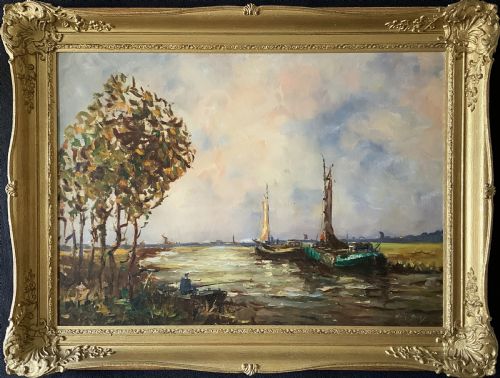
Artists captured coastal light using either oil paint or watercolour applied to canvas, panel, board, or heavy paper. Oil paintings on canvas or wood panel allowed for rich impasto textures and deep atmospheric effects, particularly suited to moody northern seas and evening departures.
Watercolour paintings on paper offered fluid immediacy, utilised by artists recording quick atmospheric shifts in working fishing ports and tidal estuaries. Many of these historical works retain their original gilt wood frames, protecting the delicate paper or canvas surfaces beneath glass or open air.
Listings feature works executed in oil on canvas, oil on board, and watercolour on paper, framed in wood and gilt wood.
Assessing quality and execution
The success of a maritime harbour painting rests upon the artist's command of light, atmosphere, and topographical accuracy. Stronger examples demonstrate a confident handling of water, shipping weight, and sky, whereas lesser works rely on formulaic repetition without genuine observation.
Provenance and documentation also separate the ordinary from the exceptional. Signed works by recognised painters with recorded exhibition histories or clear biographical details command greater interest among collectors than unsigned or generic workshop copies.
James Hardy·Kenneth Cozens·Eugène-Louis Gillot·Edward Mills·James E. Aitken·John E. Aitken·William Banks Fortescue·James Kay·Frank William Scarbrough·Peter Brannan·Paul Bret·Hector Caffieri·Thomas Creswick·Cyril Walduck Edwards·Willem Bos·Alfred G. Morgan·Thomas Hodgson Liddell·Frank Kelsey·Walter Goodin·F A Roylance·George F Pennington·Charles William Wyllie·Paul Delvaux·Commander Eric Tufnell·William Edward Webb
The Maritime Harbour Painting Glossary
- Watercolour
- A painting method in which fine pigment is suspended in a water-soluble binder and applied to paper. It allows for translucent washes and rapid execution.
- Impasto
- Paint applied thickly to a canvas or panel, standing visibly above the surface. This technique creates a textured, tactile quality that catches the light.
- Gilt wood
- Wood carved and coated with a thin layer of gold leaf or metallic gilt finish. It is commonly found on historical frames surrounding oil paintings.
- Provenance
- The documented history of ownership of an artwork from its creation to the present day. Clear provenance confirms authenticity and origin.
Maritime Harbour Painting: Frequently Asked Questions
What periods do these harbour paintings cover?
The selections span from the nineteenth century through the Edwardian era up to the mid-twentieth century, including works created in the nineteen-fifties and nineteen-sixties.
These dates reflect changing artistic movements, moving from traditional Victorian maritime recording toward impressionist and mid-century modern interpretations of coastal life.
Where are the depicted harbours located?
The paintings record locations across British shores, including Cornish fishing villages, Yorkshire ports, and the River Thames in London. International harbours in Europe, the Mediterranean, and Australia also appear.
Artists frequently inscribed specific regional details, such as Whitby, St Ives, or Valletta, directly onto the work or documentation.
How should I care for a framed watercolour?
Watercolour paintings on paper require protection from direct sunlight to prevent fading of the pigments and discoloration of the paper support. Maintaining stable indoor humidity levels prevents warping of the paper and damage to the surrounding frame.
Glazing should remain intact to shield the delicate medium from airborne pollutants and moisture.
What is the difference between oil and watercolour in these works?
Oil paintings use pigment suspended in drying oils applied to canvas or wood panel, offering rich textures, heavy impasto, and durable surfaces. Watercolours use water-soluble binders on paper, creating translucent, luminous effects that capture shifting coastal light.
Both media served artists seeking to document the changing moods of working docks and tidal basins.