




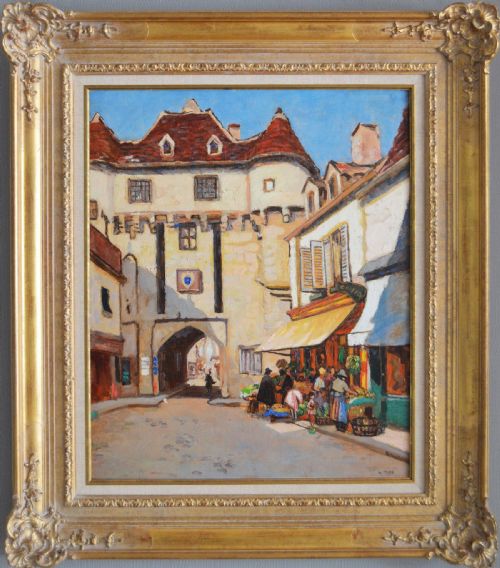
Impressionist Townscape Painting
Impressionist townscape painting captures the motion and light of city streets through loose, expressive brushwork.
Impressionist Townscape Painting
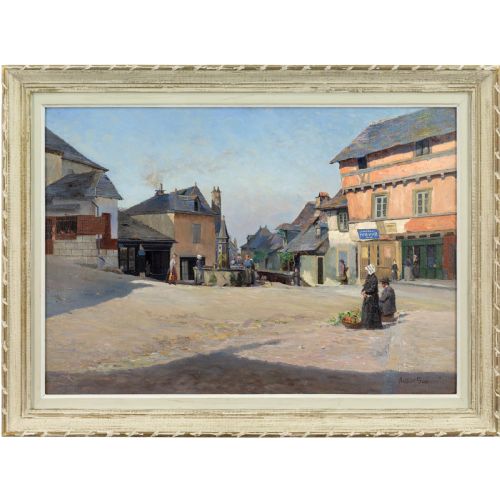
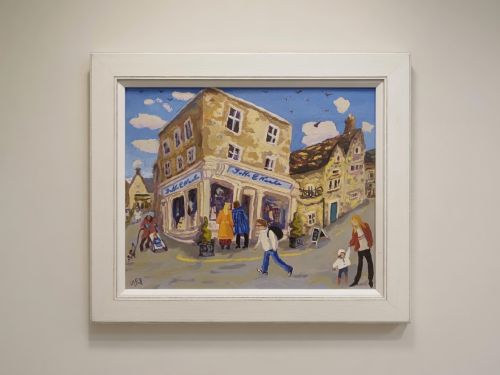
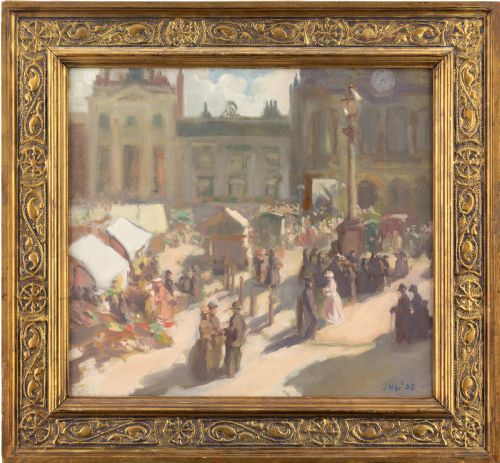
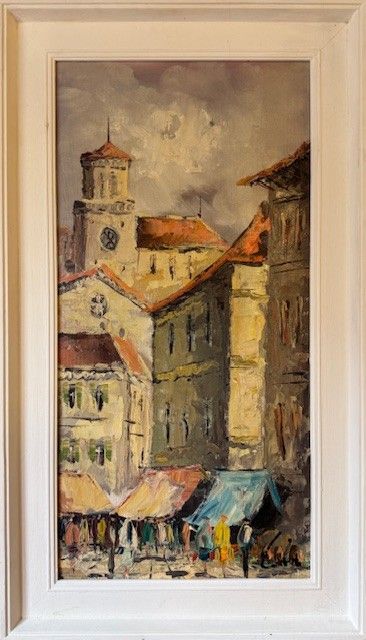
An impressionist townscape painting presents urban views, market squares, and bustling streets captured through loose brushwork and a focus on atmospheric light. These works emerge from various periods including the nineteenth century, the Edwardian era, and the mid-twentieth century.
Buyers encounter oil paintings on canvas and wood panels alongside occasional watercolours that depict British and French locations. Subjects range from Yorkshire coastal towns and Oxfordshire bookshops to French market squares.
The styles span British Impressionism, Post-Impressionism, Realism, and contemporary British work. Artists record specific urban locations with expressive handling rather than rigid architectural precision.
How they were made
Artists apply oil paint directly onto stretched canvas or wooden panels, sometimes utilising boards for a rigid support. This medium allows for rich texture and impasto where the pigment stands proud of the surface.
Paintings often sit within wooden frames, occasionally highlighted with gilt finishes to complement the composition. The physical application of paint relies on visible strokes that build the impression of light falling on buildings and street surfaces.
Some townscapes catch domestic life spilling outdoors, including a quiet view featuring flowers resting on a studio windowsill.
What varies in quality
The strength of an impressionist townscape painting depends upon the confidence of the brushwork and the artist's ability to convey atmospheric light. Stronger examples capture the movement and specific mood of a street or market without getting bogged down in unnecessary detail.
The harmony of the palette and the structural composition dictate the visual success of the piece. Works that balance loose handling with a convincing sense of space stand apart from stiffer compositions.
Arthur Gué·Lucy Pratt·John Hodgson Lobley RBA·Paul-Élie Gernez·A. McDonald·Joseph W. Milliken·John Sanderson Wells·Josephine Haswell Miller ARSA·Donald Wood·Augustus William Enness·Letitia Marion Hamilton
The Impressionist Townscape Painting Glossary
- Impressionism
- A style of painting that focuses on capturing the immediate visual impression of a scene, particularly shifting light and colour. Artists use unblended brushstrokes and outdoor settings to achieve this effect.
- Post-Impressionism
- An artistic development that builds upon impressionist techniques while exploring greater emotional depth and structural form. Painters emphasise symbolic colours and distinct linear patterns.
- Oil Paint
- A slow-drying paint made of pigment particles suspended in a drying oil, typically linseed oil. It allows for rich blending, deep tones, and thick impasto applications.
- Panel
- A rigid flat support used instead of canvas for painting, frequently made of wood. Artists appreciate its stable surface for detailed or direct brushwork.
- Gilt
- A thin layer of gold leaf or gold paint applied to wooden frames. It adds a reflective border that enhances the warmth of the painting within.
Impressionist Townscape Painting: Frequently Asked Questions
What is an impressionist townscape painting?
An impressionist townscape painting depicts urban streets, markets, and architecture through loose, expressive brushwork that prioritises light and atmosphere over rigid detail.
These works record specific locations in Britain and France across the nineteenth and twentieth centuries using oil on canvas, panel, or board.
How do I date an impressionist townscape?
Dating relies on the artist's recorded working period, stylistic markers of movements like Post-Impressionism or Victorian realism, and framing materials.
Signatures, exhibition labels, and written inscriptions on the reverse of the canvas or wooden support also provide clear chronological evidence.
Where should I hang these paintings?
These townscapes suit rooms with steady ambient light away from direct sunlight, which can damage oil paint and vulnerable wooden frames over time.
Pairing the works with neutral wall colours allows the brushwork and palette of the street scene to remain the visual focus.
What subjects appear in these works?
The subjects include French market squares, Yorkshire coastal towns, Oxfordshire street views, and architectural studies from various decades.
Artists frequently capture daily public life, local commerce, and specific town architecture under changing daylight conditions.