

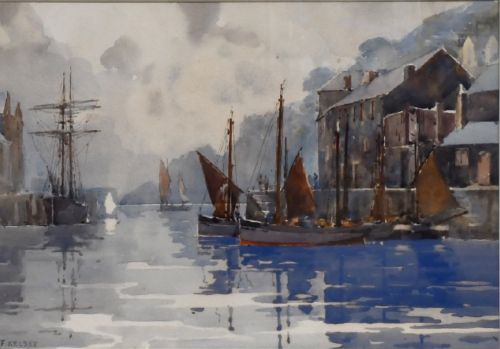


Vintage Ship Watercolour
A vintage ship watercolour captures the movement of vessels and harbours on paper, offering collectors a direct record of maritime history.
Vintage Ship Watercolour
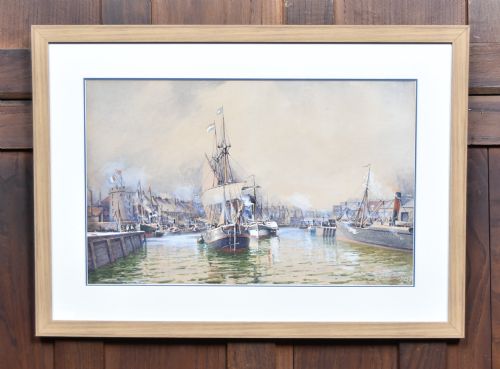
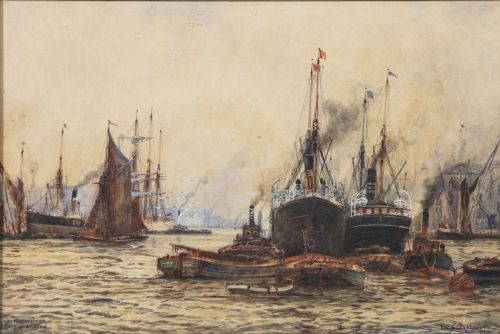
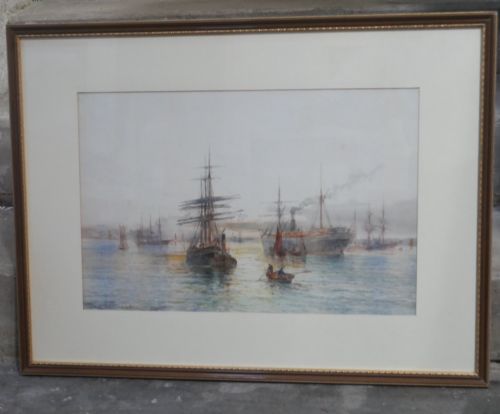
A vintage ship watercolour brings together sailing vessels, steamships and coastal ports across paper surfaces from the nineteenth and twentieth centuries. Buyers searching this phrase meet works depicting named barques, naval carriers and quiet dockyards set against open water or harbour walls.
The pieces on this page span Victorian marine art, Edwardian maritime scenes and mid-century watercolours. Many examples record specific locations such as the Port of London, Dublin Bay and the River Humber.
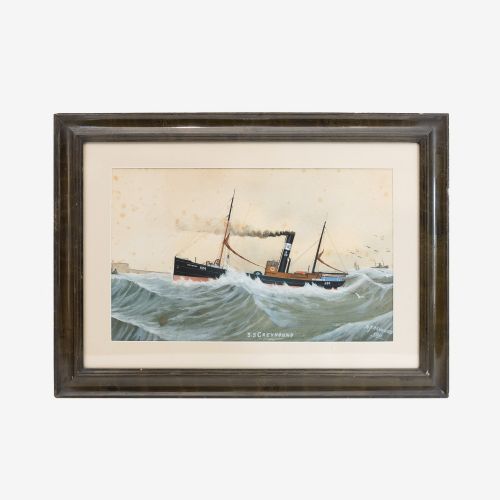
Compositions range from detailed portraits of individual ships like the S.S. Greyhound to broader harbour views featuring lighthouses and moored yachts. Collectors find both signed professional works and initialled studies among these framed artworks.
Pigment and Paper
Artists executed these works using watercolour pigment and ink on paper supports, sometimes combining gouache to build opaque highlights on sails and foam. Paper sheets required careful mounting behind glass within wood or gilt wood frames to protect the delicate water-soluble mediums from moisture.
Framing often utilised period materials, including hand-enamelled polychrome surrounds that complement the maritime subject matter. The physical construction relies on stable paper grounds paired with traditional wooden mouldings.
A French navy ironclad painting preserves a sailor's sentimental tribute to his shipmates, complete with heartfelt manuscript memories.
Execution and Detail
Quality rests upon the artist's command of water-soluble pigment to render rigging, hull construction and atmospheric coastal light with precision. Stronger examples display confident brushwork in rendering choppy seas and accurate architectural details on naval or merchant vessels.
The handling of light on water and the clarity of ship identification separate accomplished marine paintings from simpler amateur sketches. Original framing and period provenance further distinguish the works at this level.
Charles Edward Dixon·Frank William Scarbrough·Thomas Bush Hardy·William Frederick Settle·Henry Scott Tuke
The Vintage Ship Watercolour Glossary
- Barque
- A sailing vessel with three or more masts having square sails on fore and mainmasts and fore-and-aft sails on the mizzenmast. These large commercial ships frequently appear in nineteenth-century marine paintings.
- Gouache
- An opaque watercolour paint made from pigment mixed with a water-soluble binder and white filler. Artists utilised this medium to add solid highlights to ship hulls and breaking waves.
- Seascape
- A work of art depicting the sea, coastal views or ships in open water. This genre encompasses both calm harbour scenes and stormy open-ocean compositions.
- Man-of-war
- A powerful armed warship used by a navy during the sail era. These vessels feature prominently in historical naval watercolours.
- Provenance
- The chronological history of ownership and exhibition for a work of art. Documented backgrounds help confirm the attribution of nineteenth-century marine pieces.
Vintage Ship Watercolour: Frequently Asked Questions
What subjects appear in these watercolours?
These watercolours depict sailing ships, ironclad battleships, commercial barques and naval vessels at sea or moored in port. Artists also recorded lighthouses, dockyards and coastal towns across Britain and Europe.
Scenes range from busy shipping lanes in the Pool of London to quiet coastal inlets in Cornwall and Devon.
How should I display vintage ship watercolours?
Watercolour pigments on paper are sensitive to direct sunlight and high humidity. Display them on interior walls away from bright windows using UV-filtering glass to protect the colours.
Keep pieces in stable environmental conditions to prevent the paper from warping and to preserve the original wood or gilt frames.
How do I identify the ship in a painting?
Many nineteenth and twentieth-century marine paintings include inscriptions on the mount, backing paper or lower corners naming the vessel, captain or location. Naval flags, riggers' configurations and distinctive funnel markings also offer clues for identification.
Researching historical shipping records can often connect a named barque or steamship to its operational dates.
What is the difference between Victorian and Edwardian marine art?
Victorian marine paintings often focus on romanticised sailing ships, dramatic seas and traditional merchant barques under full sail. Edwardian works frequently incorporate steamships, ironclads and busier industrial port scenes.
Palette and brushwork also shifted toward lighter, more impressionistic treatments as the twentieth century approached.