







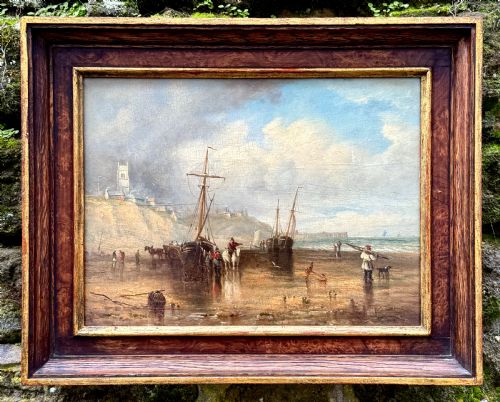
Maritime Coastal Oil Painting
A maritime coastal oil painting captures the enduring drama of harbours, rocky shores and open waters across the nineteenth and twentieth centuries.
Maritime Coastal Oil Painting
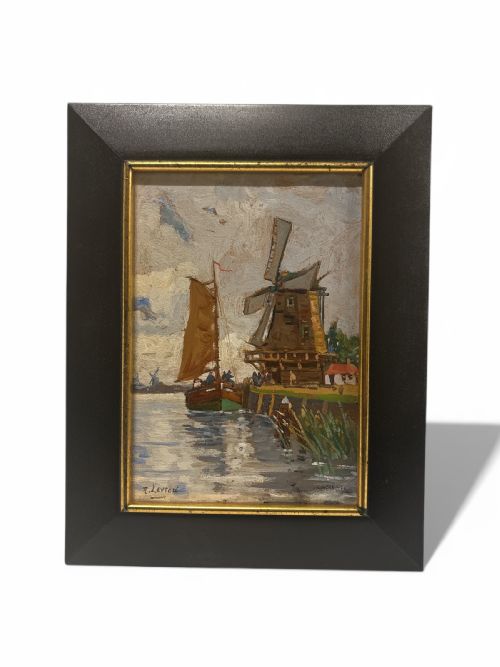
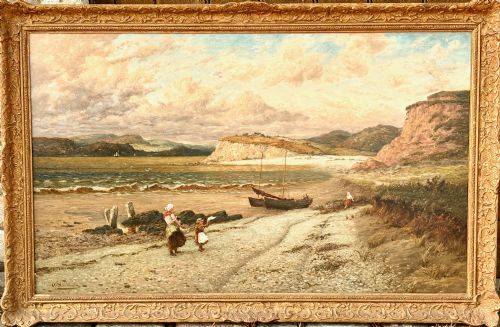
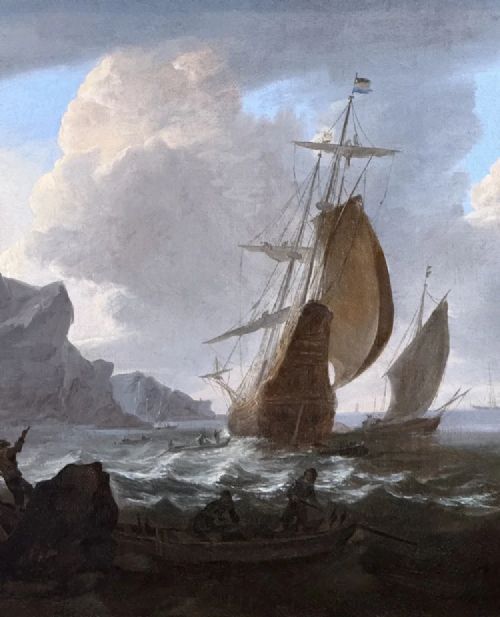
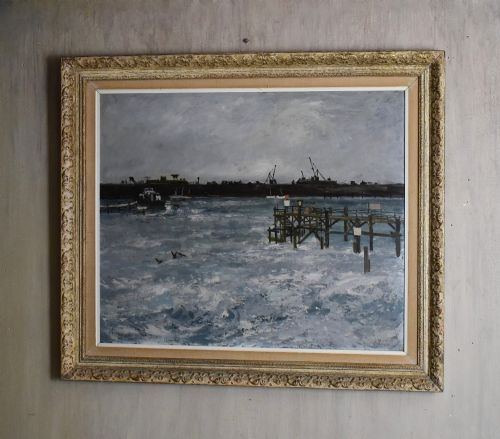
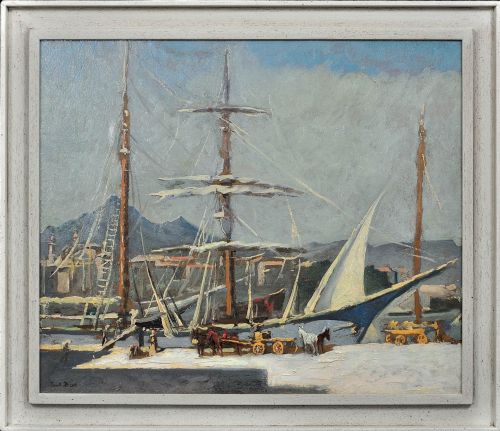
A maritime coastal oil painting typically depicts harbours, estuaries, vessels at sea or rugged shorelines. These works range from nineteenth-century Victorian marine scenes to mid-twentieth-century British Impressionism and Post-Impressionism.
The pieces on this page span several decades, featuring works produced by British, French and Canadian artists. Subjects vary widely from local fishing ports and quiet coves to dramatic gale-force seas and harbour trade.
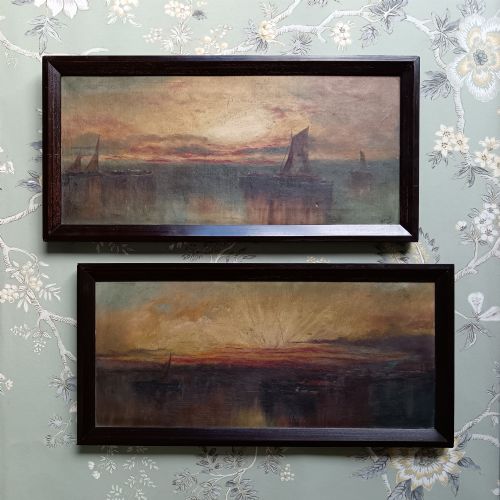
Buyers will encounter framed canvas works, pieces painted on wooden panels or board, and oval sea views. Both single paintings and matched pairs appear across the nineteenth and twentieth centuries.
Materials and technique
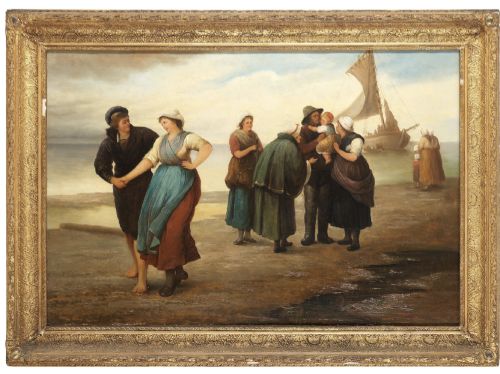
Artists painted primarily with oil pigments applied onto canvas, wooden panels or board. Canvases were frequently mounted in decorative gilt wood frames that complement the maritime subject matter.
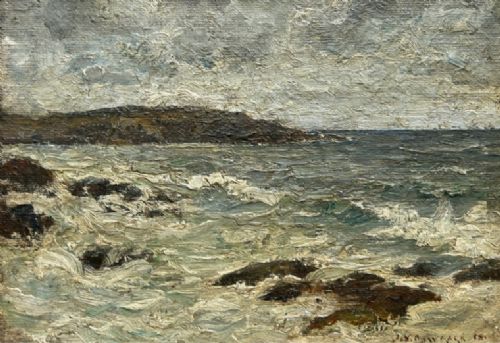
Techniques range from smooth, detailed nineteenth-century brushwork recording rigging and harbour architecture to expressive impasto surfaces capturing the texture of breaking waves and coastal skies.
The listings span from the seventeenth century through to the late twentieth century, utilising oil paint on canvas, wood and board.
Judging quality in marine art
Quality rests upon the artist's command of light, atmosphere and the specific behaviour of water under different weather conditions. Strong compositions balance the static weight of vessels against the dynamic movement of sea and sky.
Condition of both the pigment layer and the original gilt frame contributes significantly to the integrity of a piece. Finer works display confident handling of tone without muddying the shadows of coastal vignettes.
James Hardy·Kenneth Cozens·B. Nash·Edward Mills·Bonaventura Peeters·Peter Brannan·Paul Bret·Bernard Benedict Hemy·Thomas Creswick·Lucy Pratt·Donald McIntyre·Cecil Allan Mould·John Wilson Carmichael·Abraham Cooper·John Moore of Ipswich·William Henry Williamson·John Holland·Abraham Hulk I·William Edward Webb·Edward Matthew Elliott·Charles Napier Hemy·Louis Suire·Gyrth Russell
The Maritime Coastal Oil Painting Glossary
- Impasto
- Paint applied thickly to a canvas or board so that it stands out from the surface. This technique lets artists build textured representations of turbulent water and wind-swept clouds.
- Gilt wood
- Timber frames covered with a thin layer of gold leaf or gold-coloured metallic finish. These ornate surrounds were standard for displaying finished fine art paintings.
- Marine art
- Artistic works that document ships, harbours, coastal landscapes and naval battles. This genre holds a long tradition within British and European painting.
- Panel
- A flat piece of wood used as a rigid support for oil paint instead of stretched canvas. Panels were favoured by painters working on smaller, highly detailed compositions.
- Provenance
- The documented history of ownership surrounding an artwork. Clear records help verify the attribution and exhibition history of nineteenth and twentieth-century paintings.
Maritime Coastal Oil Painting: Frequently Asked Questions
How do I date a maritime oil painting?
Dating relies on stylistic clues, framing materials, signatures and artist biography records. Clothing styles on figures and the rigging details of depicted vessels often narrow down the era.
Many works carry inscriptions, artist signatures or gallery labels on the reverse of the canvas or wooden panel to confirm the exact period.
Where should I hang a coastal painting?
These artworks suit rooms with stable humidity away from direct, harsh sunlight to protect the oil pigments and gilt wood frames. Placing them at eye level in living areas or studies allows proper appreciation of the brushwork.
Pairing them with neutral wall colours helps the atmospheric blues and greys of marine scenes stand out effectively.
What is the difference between board and canvas?
Canvas is a woven fabric stretched across a wooden frame, offering slight give and a traditional textured surface. Board and panel provide a rigid, solid support that resists punctures.
Both materials were widely used across different centuries, with boards frequently chosen for smaller plein air studies painted outdoors.
Are framed marine paintings original?
Many listings include period frames that correspond to the date of the artwork's creation, particularly elaborate gilt wood designs from the nineteenth and early twentieth centuries. Original frames complement the artistic style of the period.
Some works may have been reframed later in their history, which is standard practice for older fine art pieces needing conservation.