



Impressionist Boat Canvas Painting
When you search for an impressionist boat canvas painting, you encounter works capturing water, vessels, and light across the nineteenth and twentieth centuries.
Impressionist Boat Canvas Painting
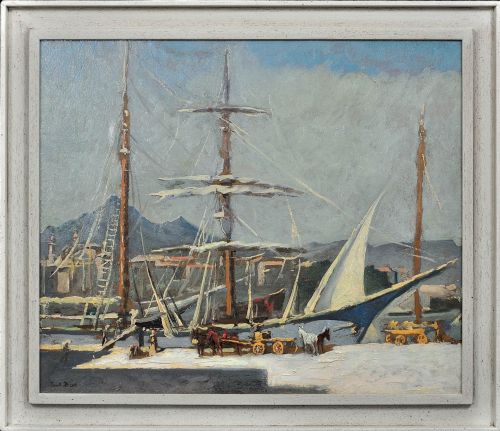
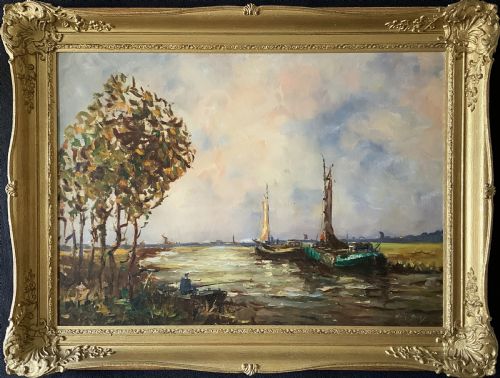
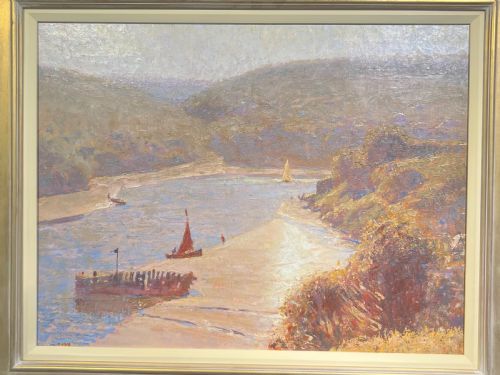
An impressionist boat canvas painting typically depicts maritime scenes, harbours, rivers, and coastal inlets rendered with loose brushwork and a focus on natural light. The selection ranges from nineteenth-century French and British coastal views to mid-century abstracts and river landscapes.
Buyers most frequently meet works originating from British and French regional schools, alongside Dutch and Brazilian harbour scenes. These pieces frequently capture working vessels such as fishing boats, yachts, and barges moored in tidal ports or navigating inland waterways.
Materials and methods
Artists painted primarily using oil paint applied to stretched canvas or supporting boards, often framed in wood or gilt surrounds. The pigment application varies from smooth tonal gradations to heavy impasto that builds physical texture upon the surface.
The technique relies on rapid brushstrokes and broken colour to capture shifting atmospheric conditions on water, prioritising light and movement over rigid topographical precision.
Several canvases smell faintly of old linseed oil and salt air, as though the harbour breeze crossed the room with them.
Evaluating standard
Quality rests upon the artist's confidence in handling light, water reflection, and spatial depth within the composition. Stronger examples demonstrate a distinct personal hand and secure draughtsmanship in rendering the hulls and rigging of vessels.
Provenance and documented exhibition history elevate individual works, particularly when linked to recognised regional groups or established plein-air traditions.
Paul Bret·Willem Bos·Cecil Allan Mould·Elisabeth Bardon·Edward Matthew Elliott·Jean-Baptiste Olive·Raymond Picque·Gabriel Dauchot·Edward Seago·Armand Guillaumin·William Lambert Bell·Owen Bowen·Herbert Royle·Antonio Godoy·Pauline Boumphrey·Hendrik Yan Wolter·Henri Ottman·Frank Myers Boggs·Augustus William Enness·Alec Caruthers Gould·Bertram Priestman
The Impressionist Boat Canvas Painting Glossary
- Impasto
- Paint applied thickly to a canvas, standing in relief and retaining the marks of the brush or palette knife. This technique adds tactile dimension to water surfaces and vessel hulls.
- Plein-air
- Painting executed outdoors directly in front of the subject to capture natural light and transient atmospheric effects. Artists working in this manner recorded harbours and rivers on location.
- Impressionism
- A nineteenth-century movement defined by relatively small, thin yet visible brush strokes and open composition. The emphasis rests on accurate depiction of light in its changing qualities.
- Provenance
- The chronological history of the ownership of a work of art, establishing its authenticity and past collections. Documented origin supports the attribution of listed paintings.
Impressionist Boat Canvas Painting: Frequently Asked Questions
What subjects appear in these paintings?
The compositions show coastal harbours, tidal rivers, estuaries, and canals featuring various watercraft from sailing yachts to working fishing boats and barges. Scenes range from French riverbanks to British fishing ports and Mediterranean coastal inlets.
Many works focus on specific regional locations, recording working maritime communities and domestic boating lakes during the nineteenth and twentieth centuries.
How do I care for an oil on canvas?
Keep the painting away from direct sunlight, extreme temperature fluctuations, and high humidity to protect both the canvas support and the oil paint layer. Gentle dusting with a soft, dry brush maintains the surface.
Avoid using water or cleaning solutions on the painted surface, and consult a professional conservator if the canvas requires tension adjustment or cleaning.
How are different periods identified?
Dating relies on stylistic markers, framing materials, artist biographical records, and stretcher construction. Nineteenth-century works often employ tighter academic brushwork, whereas mid-century examples lean towards looser abstraction and bolder palettes.
Signatures, exhibition labels on the reverse, and recorded dates of activity help place individual paintings within specific decades.
Where were these marine scenes painted?
Artists travelled to active ports, river estuaries, and coastal towns across Britain, France, the Netherlands, and South America to record maritime life. Locations such as Cornwall, the French Riviera, and the Thames appear frequently.
Pleiten-air practitioners set up easels directly on quaysides, beaches, and riverbanks to capture the immediate environment.