



Vintage Harbour Canvas Painting
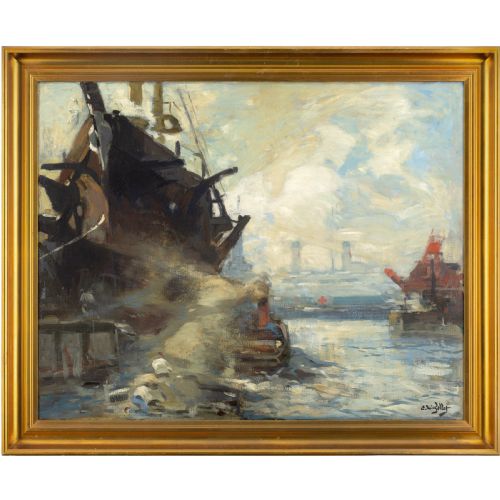
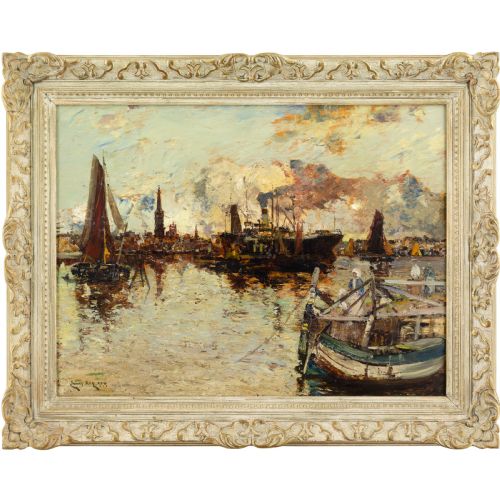
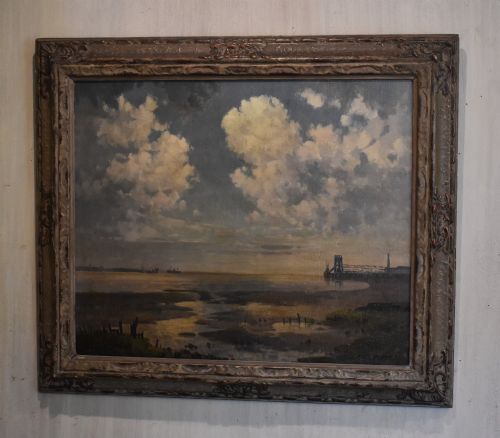
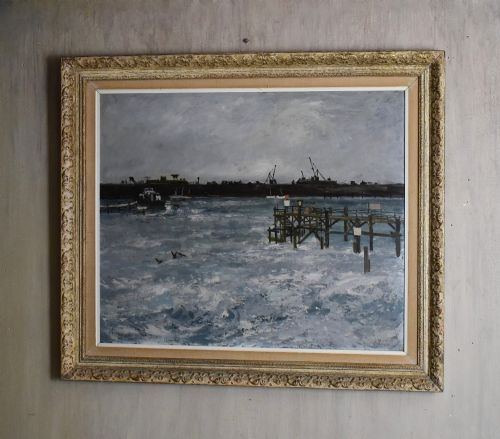
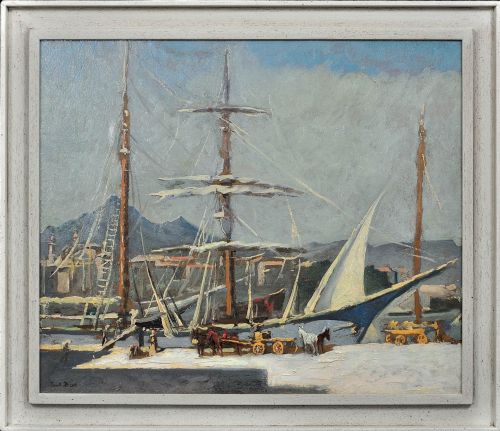
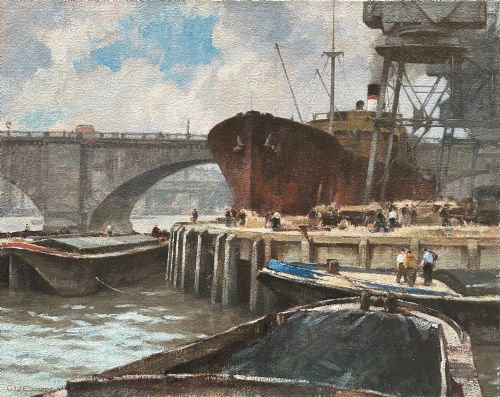
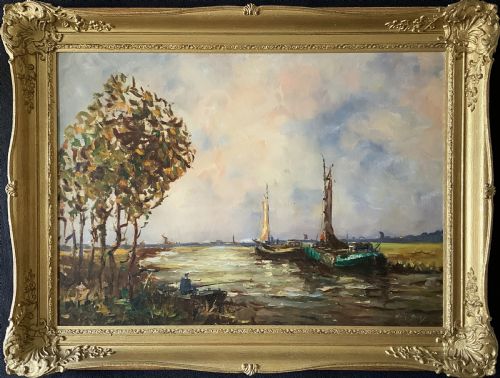
A vintage harbour canvas painting captures the enduring life of coastal quaysides and maritime trade through the brush of past artists.
Vintage Harbour Canvas Painting
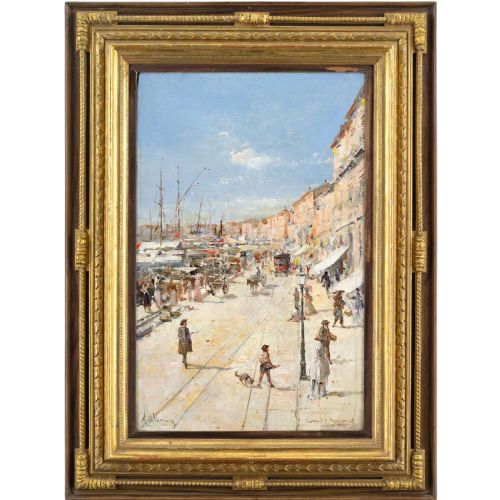
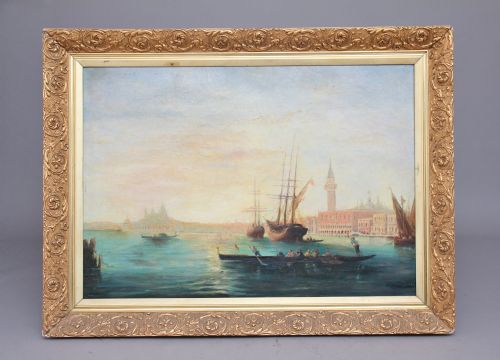
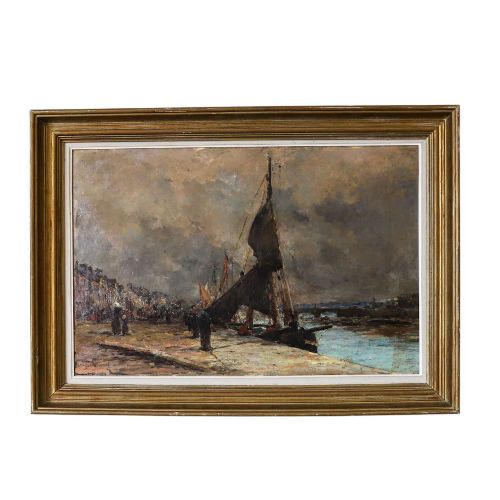
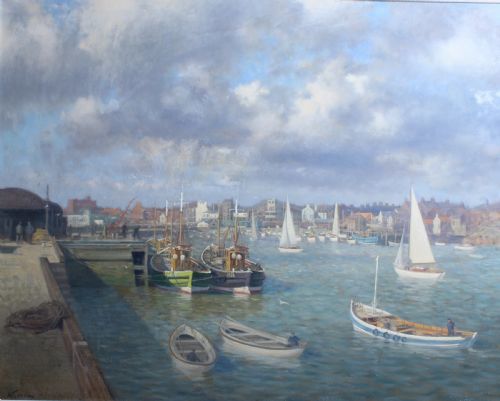
A buyer seeking a vintage harbour canvas painting encounters works spanning from the nineteenth century through the mid-twentieth century, capturing busy ports, quiet fishing villages, and coastal shipping. These oil paintings record specific maritime locations across Britain, France, Italy, and the Netherlands, from Cornish fishing harbours to Mediterranean quays.
The selection ranges from Victorian maritime realists to British Impressionists and mid-century modern interpreters of the coast. Canvases depict sail boats, fishing trawlers, and wartime hospital ships anchored in bustling tidal basins.
Most examples arrive framed, often in period gilt timber moulding that complements the maritime palette of blues, greys, and earth tones.
Judging Quality
Quality rests upon the artist's handling of light and atmosphere, particularly how effectively the pigment conveys the specific quality of coastal air and shifting tidal water.
Skilled brushwork captures the architectural precision of rigging, hull construction, and stone quaysides without stiffness, balancing detail with the looser touch characteristic of impressionist movements.
The preservation of the original canvas support and the integrity of the period frame contribute significantly to the standing of an individual piece.
The collection includes coastal scenes from British, French, Dutch, and Italian ports painted in impressionist and maritime realist styles.
Kenneth Cozens·Eugène-Louis Gillot·James Kay RSW·Augusto Alberici·Clive Browne·Peter Brannan·Paul Bret·Cyril Walduck Edwards·Willem Bos·Paul-Jean Anderbouhr·William Edward Webb·Edward Matthew Elliott·Gyrth Russell·Jean-Baptiste Olive·Raymond Picque·Fred Pailhes·George Turland Goosey·Adrian Van Porten·Donald McIntyre·T.S. Wallis·Alfred Henry Vickers·William Lambert Bell·James Torrington Bell·Gustave De Breanski
The Vintage Harbour Canvas Painting Glossary
- Canvas
- A heavy woven fabric, typically linen or cotton, stretched across a wooden framework to serve as the foundational surface for oil paintings. It provides a durable and slightly textured ground that holds thick applications of pigment securely.
- Impasto
- A technique where oil paint is laid thickly onto the canvas, standing out in relief from the plane. Painters utilise this method to render the tactile weight of water, clouds, and wooden hulls.
- Gilt frame
- A wooden picture surround coated with a thin layer of gold leaf or metallic paint. These ornate borders were designed to isolate the maritime scene and reflect ambient light into the composition.
- Post-Impressionism
- An art movement extending beyond impressionism that focused on structural forms, expressive brushwork, and symbolic colour. Works in this style emphasise the distinct geometry of harbour buildings and boats.
- Maritime realists
- Painters dedicated to depicting ships, coastal topography, and seafaring labour with accurate detail. Their canvases serve as visual records of historic port infrastructure.
Vintage Harbour Canvas Painting: Frequently Asked Questions
Are these paintings signed by the artist?
Many examples feature legible signatures or monograms applied by the painter in the lower corners of the canvas. Documentation on the reverse often provides additional provenance.
Unsigned works do appear from earlier periods, attributed instead through stylistic comparison and dealer records.
How should I hang my harbour painting?
Canvases require a stable wall away from direct sunlight, heating vents, and high humidity. Fluctuating temperatures cause the wooden stretcher and canvas to expand and contract.
Picture wire must be secured properly to the sturdy timber frame to support the weight of the piece safely.
How do I identify the period of the frame?
Period frames exhibit construction methods such as mitred corners joined with wooden splines and hand-applied gesso beneath the gilt finish. Tool marks and natural ageing of the wood indicate authenticity.
Replacements are common, as historical paintings were frequently reframed to suit changing interior tastes.