


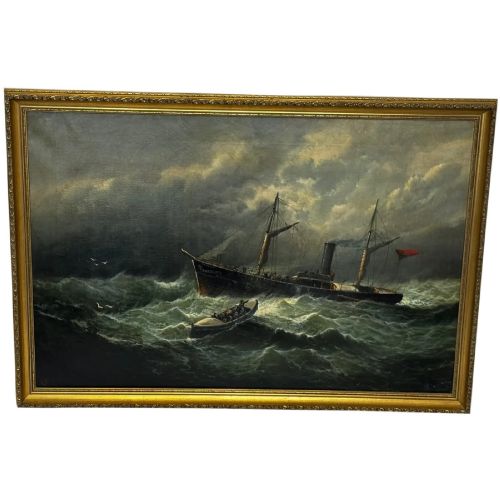
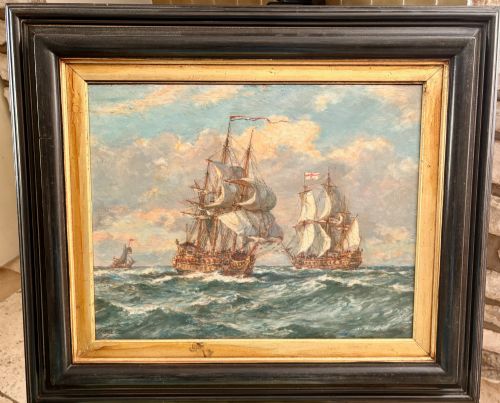
Maritime Canvas Painting
Maritime canvas painting captures the enduring drama of open water, historic vessels and coastal light through historic brushwork.
Maritime Canvas Painting
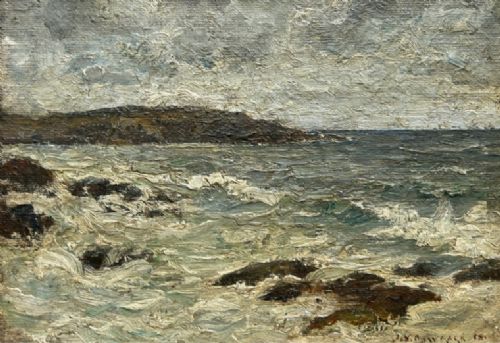
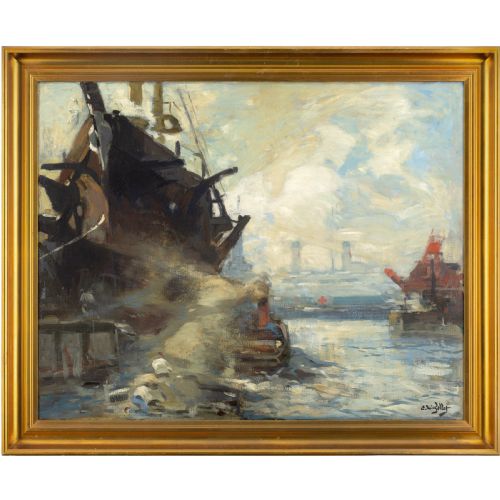
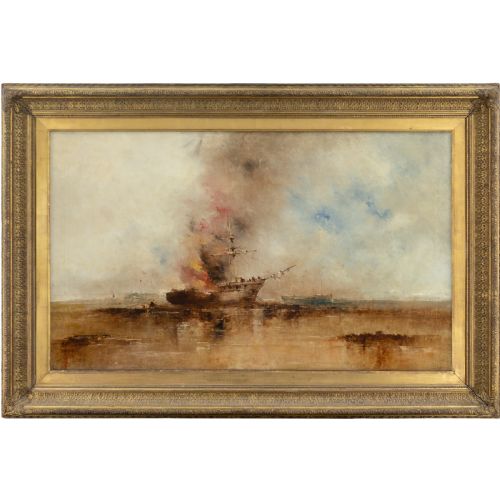
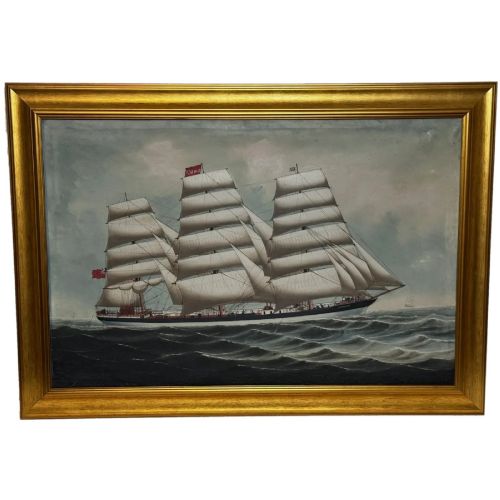
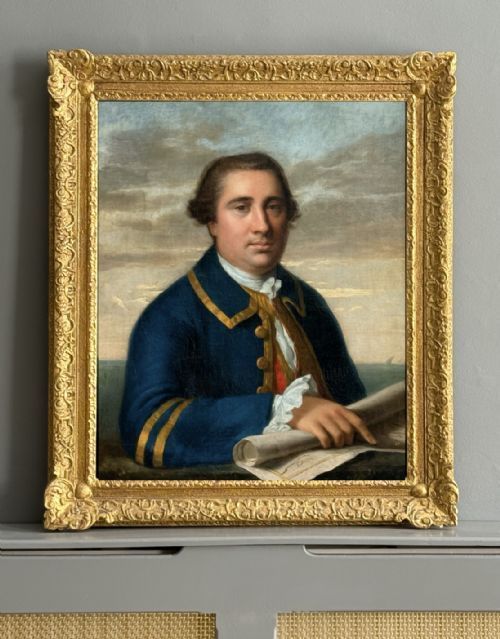
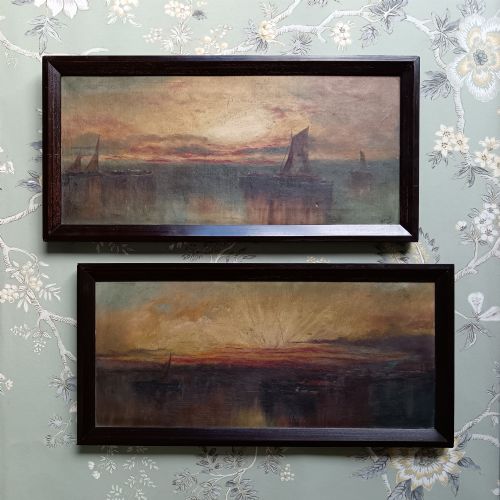
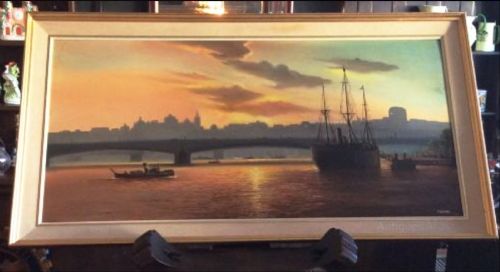
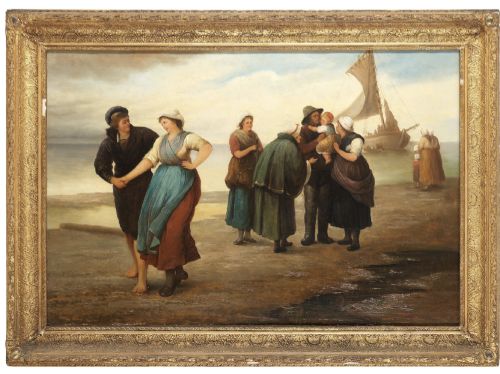
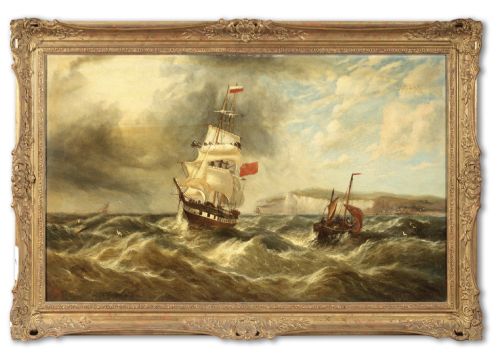
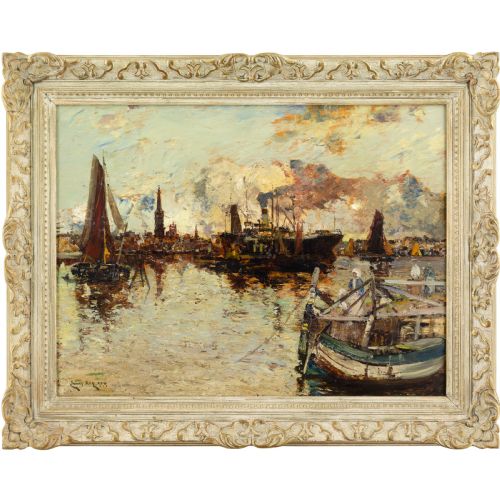
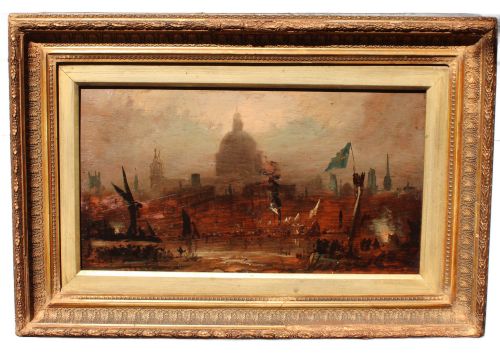
When you search for maritime canvas painting, you encounter framed oil works depicting marine subjects, coastal landscapes and river scenes across multiple centuries. The selection spans quiet harbour views, turbulent seascapes and historical vessel portraits executed by British and European artists.
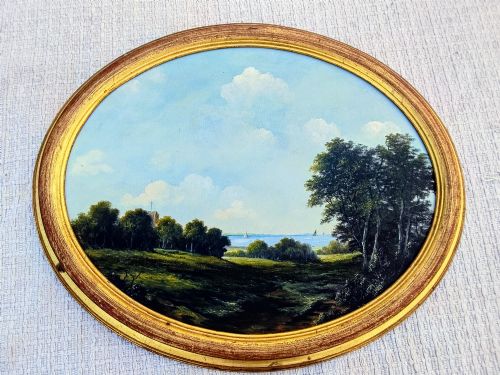
Most examples originate from the nineteenth and early twentieth centuries, reflecting Victorian and Edwardian periods of maritime dominance and artistic production. These works take forms ranging from intimate oval sea views to large panoramic river scenes set in original giltwood frames.
How they were made
Techniques range from smooth academic realism detailing ship rigging to textured impasto brushwork capturing the rough movement of water and wind.
Materials documented in the inventory include oil paint, canvas, wood, giltwood and gold leaf.
What varies in quality
Quality rests in the artist's command of light, shadow and perspective, particularly in the difficult depiction of moving water and accurate vessel architecture. Superior works demonstrate confident handling of paint that conveys atmosphere and depth rather than stiff mechanical representation.
The condition of the canvas and the preservation of the original giltwood frame also influence the overall standing of a piece, with intact historical framing adding significant context to the artwork.
Kenneth Cozens·Eugène-Louis Gillot·William McAlpine·Reginald Arthur Borstel·Lemuel Francis Abbott·B. Nash·John Rose Miles·James Kay·Bonaventura Peeters·Peter Brannan·Francis Moltino·Paul Bret·Bernard Benedict Hemy·Thomas Creswick·Lucy Pratt·Cyril Walduck Edwards·Francis Hayman·Willem Bos·Cecil Allan Mould·John Wilson Carmichael·Abraham Cooper·Joseph Farquharson
The Maritime Canvas Painting Glossary
- Impasto
- Paint applied thickly to a canvas so that it stands out from the surface. This technique allows brush marks to retain physical texture and catch the light.
- Seascape
- A work of art depicting the sea. These scenes focus primarily on open water, coastal views or maritime weather conditions.
- Giltwood
- Wood that has been covered with a thin layer of gold leaf or gold paint. Frames finished in this manner are frequently found accompanying period paintings.
- Provenance
- The chronological history of the ownership of a piece. Documented backgrounds help confirm attribution to specific artists.
Maritime Canvas Painting: Frequently Asked Questions
How do I date a maritime painting?
Dating relies on stylistic evidence, artist signatures, framing materials and the rigging or design of depicted vessels. Historical events recorded in the title also provide a firm chronological anchor.
Examinations of the canvas weave and stretcher bars offer further clues to the period of creation.
Where should I hang a marine oil painting?
These works suit traditional reception rooms, studies or hallways where sufficient natural light highlights the oil medium and gilt frames. Avoid placing them in direct sunlight or damp environments.
Pairing a large panoramic seascape with neutral wall colours allows the rich tones of the canvas to stand out.
Are all these works painted on canvas?
While the majority utilise oil on canvas, some examples are executed on wooden boards or panels. Both supports were standard practice for artists across the eighteenth and nineteenth centuries.
Canvas works typically feature stretcher frames behind the fabric.
How do I care for an antique oil painting?
Keep the artwork away from extreme temperature fluctuations and excessive moisture to protect both the canvas and the wooden frame. Dust the surface gently with a soft, dry brush without using liquid cleaners.
Professional conservation should be sought if the paint surface requires cleaning or stabilisation.