

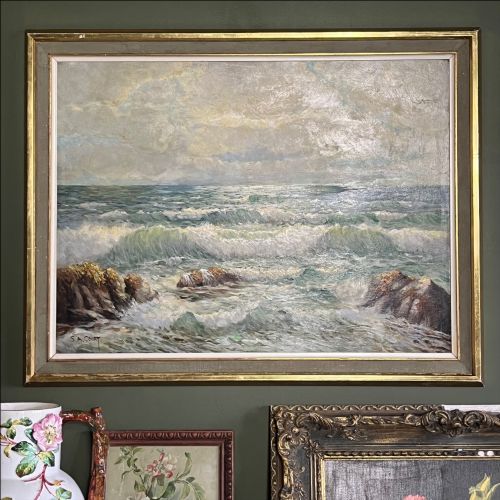
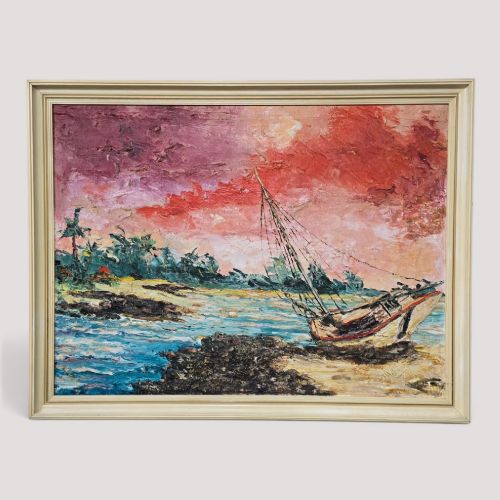
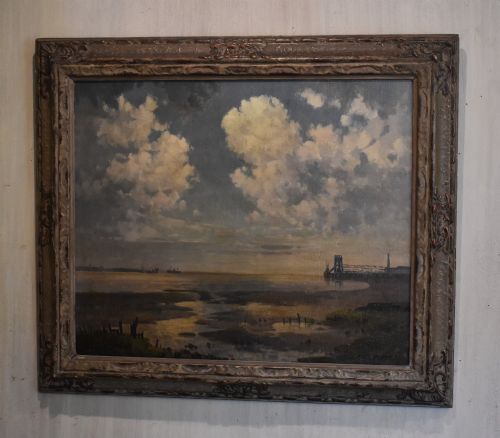
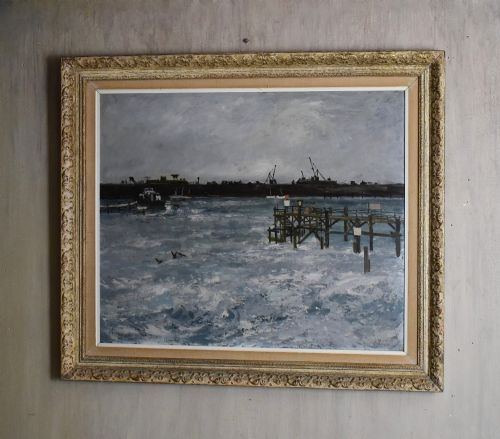


Mid Century Marine Landscape
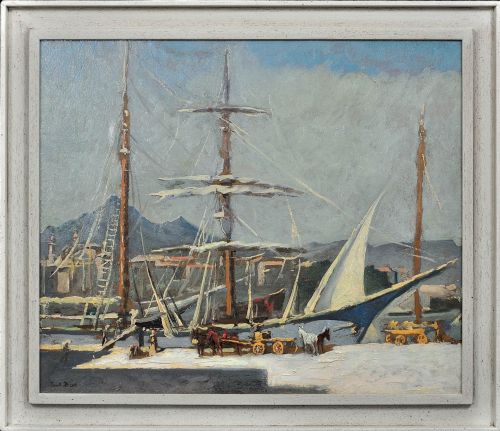
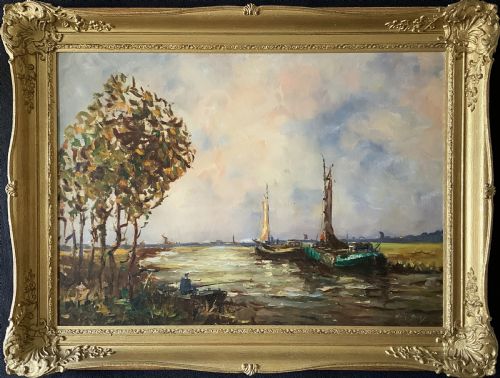
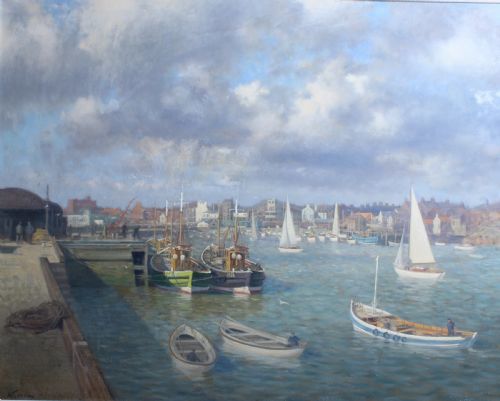
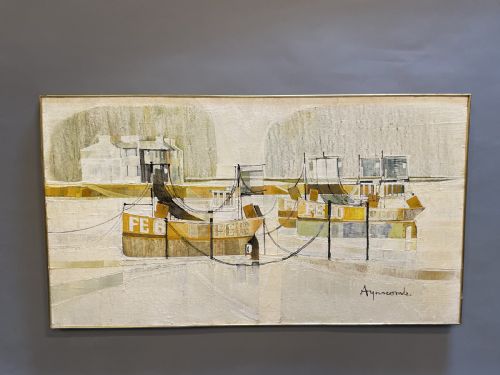
Mid century marine landscape works capture coastal harbours, boats, and open water through the lens of mid-century observation.
Mid Century Marine Landscape
Mid century marine landscape works depict coastal scenes, harbours, and maritime activities across Britain, France, Italy, and beyond. A buyer looking at this selection finds coastal villages, estuarine rivers, and working ports recorded in oil, watercolour, and pastel.
The dominant examples on this page date from the 1930s to the 1960s, leaning heavily into mid-century impressionism, post-impressionism, and modern British styles. Artists record specific locations ranging from Cornish fishing harbours to Mediterranean ports.
Works appear in various formats including oil paintings on canvas, wood panels, and board, alongside framed watercolours. These pieces document both bustling industrial docks and quiet coastal inlets through the visual language of the mid-century period.
Materials and techniques
Artists utilise oil paint on canvas, wood panel, and board, frequently applying pigment with visible impasto strokes or en plein air observation. Watercolours and pastels on paper also record coastal light and atmosphere.
Support materials range from traditional stretched canvas to wooden boards and panels, often housed within period frames that complement the painting style. Painters apply varied brushwork to capture shifting light on water, harbour walls, and moored vessels.
Materials documented in the collection include oil paint, canvas, wood panels, watercolour, pastel, and gilt framing.
Distinctions in quality
Quality rests upon the artist's handling of light, composition, and paint application rather than the mere subject matter. Stronger works demonstrate confident brushwork and a cohesive sense of place, whether capturing the industrial reality of a dock or the impressionist atmosphere of a bay.
The preservation of the paint surface and the integrity of the original support material influence the standing of an individual piece. Works that retain their original framing and surface stability offer a more complete historical record of the artist's intent.
Kenneth Cozens·Sidney A Court·Clive Browne·Peter Brannan·Paul Bret·Willem Bos·Walter Goodin·Lionel Horsnell·Raymond Picque·James Fry·Fred Pailhes·Edward Seago·Fernando Del Basso·William Tuck·Roger de la Corbiere·Sam Bough·Edward M Elliott·Jack R Mould·Antonio Godoy·S J Lamorna Birch·Maurice Sijs·J M Hastings
The Mid Century Marine Landscape Glossary
- Impasto
- Paint applied thickly to a canvas or board, standing out from the surface so that texture and brush marks remain visible. This technique adds physical depth to water and sky elements.
- En plein air
- Painting outdoors to capture direct natural light and atmospheric conditions on location. Artists using this method record immediate visual impressions of coastal weather.
- Estuary
- The tidal mouth of a large river where the tide meets the stream. These environments provide subjects featuring mudflats, moored boats, and shifting water levels.
- Post-Impressionism
- An artistic movement extending impressionism while rejecting its limitations, favouring more symbolic content and expressive use of paint. Artists apply bolder forms to maritime scenes.
- Provenance
- The chronology of the ownership and history of a piece of art. Documentation assists in confirming attribution and exhibition history.
Mid Century Marine Landscape: Frequently Asked Questions
What defines a mid century marine landscape?
A mid century marine landscape is an artwork created between the 1930s and 1960s focusing on coastal views, harbours, and maritime life. These pieces employ impressionist, modernist, or traditional approaches to record working ports and quiet shores.
The style reflects the period's interest in en plein air observation and expressive brushwork, capturing the changing light and atmosphere of coastal environments across Britain and continental Europe.
How do I identify the period of a marine painting?
Dating relies on stylistic clues, framing, artist biographical dates, and the materials used for the support. Mid-century works often feature distinct impressionist or modernist handling of paint that separates them from earlier 18th or 19th-century maritime art.
Examining the reverse of the canvas or board can reveal artist signatures, dates, exhibition labels, or framing stamps that anchor the piece in a specific decade.
Where were these marine scenes typically painted?
Artists painted these scenes along active commercial ports, fishing villages, and quiet bays primarily in Britain, France, Italy, and the Netherlands. Locations range from Cornish harbours like Polperro to Mediterranean ports in Sicily and southern France.
Creators travelled to coastal areas to record local working vessels, tide patterns, and harbour architecture directly from life.
How should I care for an oil painting on board or canvas?
Oil paintings require stable indoor environments away from direct sunlight, high humidity, and extreme temperature fluctuations. Keep the surface clean using a soft, dry brush to remove dust gently without applying pressure.
Avoid using water or chemical cleaners on the paint layer. Professional conservators should handle any structural repairs or deep cleaning of the paint surface.