


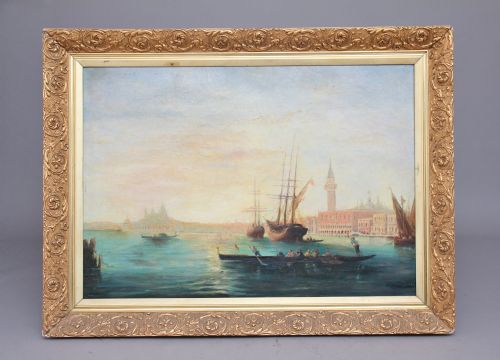
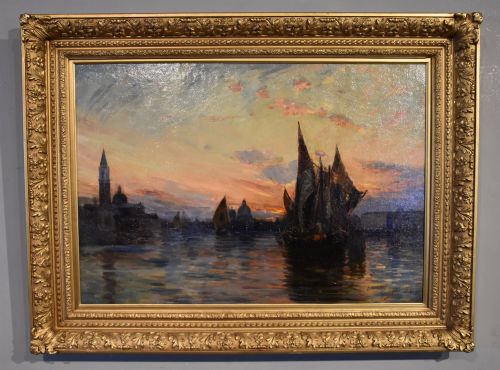
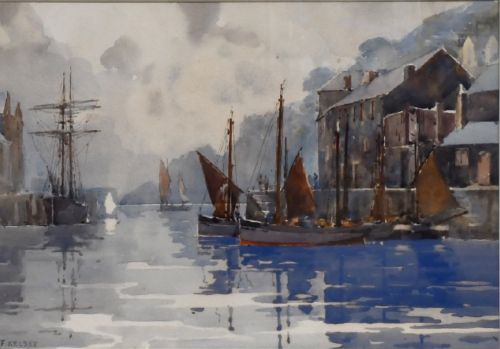


Impressionist Harbour Painting
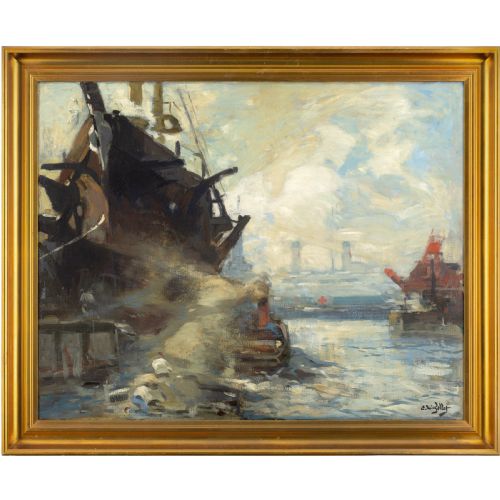
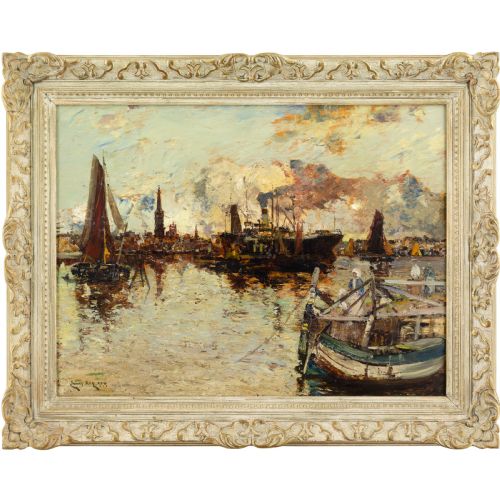
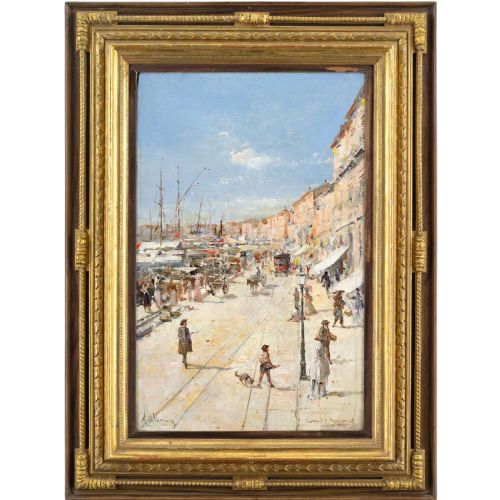
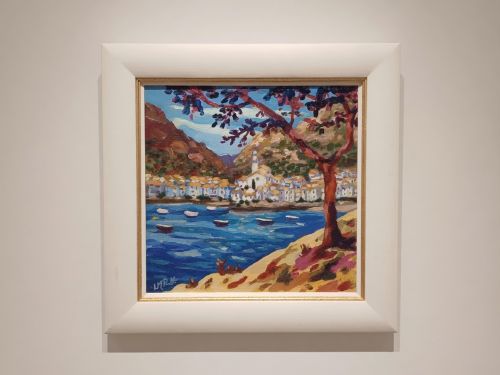
An impressionist harbour painting captures the shifting light and bustling maritime life of coastal scenes through loose, expressive brushwork.
Impressionist Harbour Painting
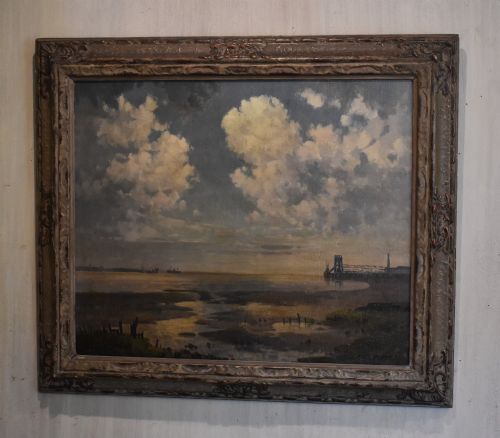
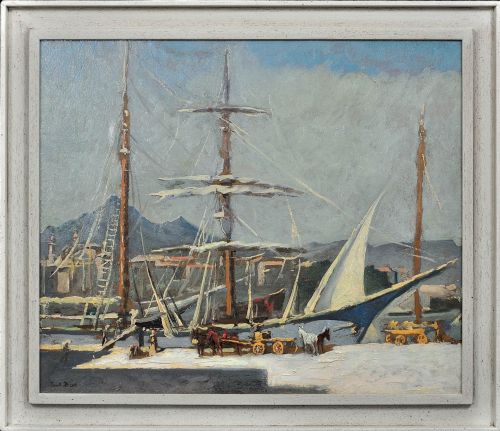
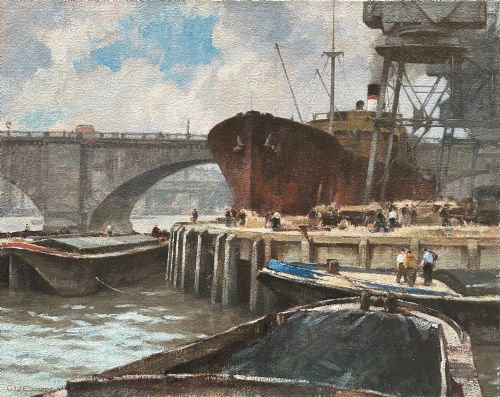
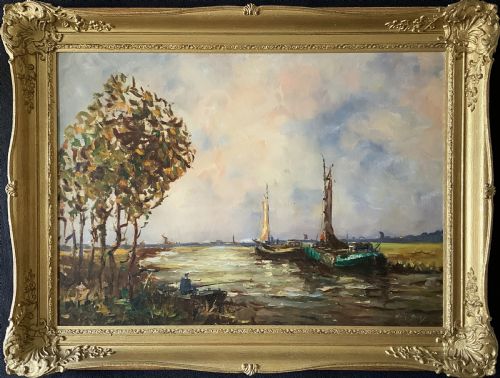
When searching for an impressionist harbour painting, collectors encounter coastal scenes, quayside views, and maritime landscapes executed in oil or watercolour. These works record ports from Cornwall to the Mediterranean across the nineteenth and twentieth centuries.
The pieces on this page are most frequently oil paintings on canvas or board, alongside watercolours on paper. Subjects range from busy fishing ports like St Ives and Concarneau to quiet canalscapes and wartime maritime vistas.
Stylistically, the selection spans British Impressionism, Post-Impressionism, and the Newlyn School. Mid-century examples also appear alongside Victorian and Edwardian interpretations of coastal light.
How they were made
Artists painted primarily in oil on canvas or oil on board, building texture with loaded brushes and palette knives to render water and stone. Watercolours on paper capture lighter, more translucent atmospheric effects in coastal air.
Gilt wood frames often house these works, providing a traditional border that complements the maritime palette of blues, greys, and earthy tones.
Impressionist Harbour Painting Retail Price Guide 2026
Typical asking prices for impressionist harbour painting among the pieces listed under this phrase on Sellingantiques today, from the lower quarter to the upper quarter. They describe what is for sale here now, not the wider market.
Sailors watching artists paint from the quay likely wondered why nobody was helping with the nets.
What varies in quality
Quality rests in the handling of light and the economy of brushstrokes rather than mere detail or scale. A superior composition evokes the atmosphere of the port through confident marks that suggest movement in water and rigging.
Condition of the canvas, stability of the oil paint, and the preservation of the paper in watercolours influence desirability. Original period framing also contributes to the integrity of the piece.
Eugène-Louis Gillot·William Banks Fortescue·James Kay·Augusto Alberici·Clive Browne·Paul Bret·Hector Caffieri·Willem Bos·Thomas Hodgson Liddell·Frank Kelsey·Paul-Jean Anderbouhr·Edward Matthew Elliott·Gyrth Russell·Jean-Baptiste Olive·Raymond Picque·William Lee Hankey·Fred Pailhes·George Turland Goosey·Fred Lawson·Arthur Tucker·Ernest F. Hill·Frederick Stuart Richardson·William Lambert Bell·James Torrington Bell·Ralph Todd
The Impressionist Harbour Painting Glossary
- Impressionism
- A style of painting emphasising light and its changing qualities, ordinary subject matter, and visible brushstrokes. Artists sought to capture the visual impression of a specific moment.
- Post-Impressionism
- A predominantly French art movement that developed from Impressionism, extending its boundaries while rejecting its limitations. Painters often utilised vivid colours and distinct geometric forms.
- Newlyn School
- An art colony based in Cornwall during the late nineteenth and early twentieth centuries. Painters worked in the open air, focusing on realism and local fishing communities.
- Watercolour
- A paint wherein the colour pigments are suspended in a water-soluble vehicle. The medium yields transparent washes of colour on paper.
- Quayside
- The stone or metal platform beside a waterway where boats load and unload. It frequently forms the architectural anchor in maritime compositions.
Impressionist Harbour Painting: Frequently Asked Questions
What subjects appear in these paintings?
The works depict fishing boats, quaysides, tidal harbours, and coastal architecture. Scenes range from British ports in Cornwall and Yorkshire to Mediterranean harbours in France and Italy.
Artists also recorded industrial maritime activities, naval vessels, and quiet canalscapes. The focus remains on the interplay between water, craft, and shoreline light.
How do oil and watercolour differ here?
Oil paintings utilise heavy pigment on canvas or board, allowing for textured brushwork and deep layers of colour. Watercolours rely on translucent washes on paper to capture bright, airy atmospheric conditions.
Oils generally offer a heavier impasto, whereas watercolours present a lighter, more fluid interpretation of coastal reflections.
Which periods are represented?
The selection spans from the late nineteenth century through the Edwardian era and mid-twentieth century. Dates range from the 1900s up to the 1960s.
Works reflect changing artistic movements, moving from traditional Victorian seascapes towards post-impressionist and mid-century modern interpretations.
Where were these coastal scenes painted?
Locations include British coastal villages such as St Ives, Polperro, and Whitby, alongside Scottish harbours. Continental destinations feature prominently, including ports in Normandy, Brittany, and the Mediterranean.
Artists travelled extensively to capture specific coastal light, recording harbours from the English Channel to the Venetian lagoon.