



1950s French Oil Painting
These 1950s French oil painting works bring mid-century modernist character to a room through expressive brushwork and rich colour.
1950s French Oil Painting
When you search for a 1950s French oil painting, you encounter mid-century works that span landscapes, still lifes, portraits and modernist compositions. These pieces capture the artistic movements active in France during the mid-twentieth century, ranging from post-impressionist views to cubist and surrealist abstractions.
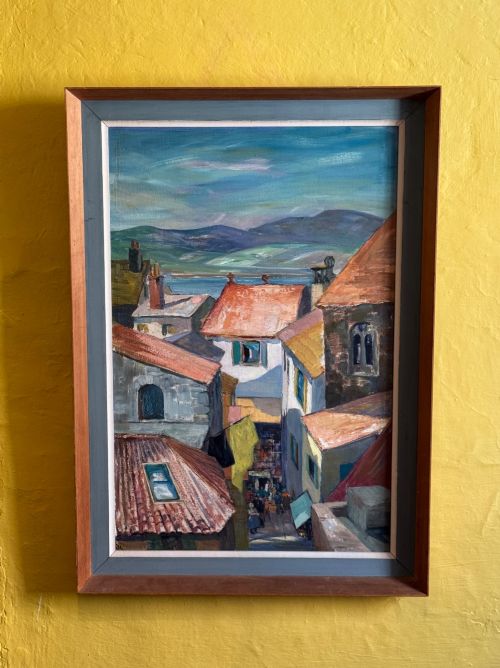
The selections available here showcase diverse regional subjects, from Corsican hills and Normandy harbours to Provence olive trees and intimate interiors. You are most likely to meet canvases and boards depicting coastal scenes, figurative studies and structured landscapes created within that decade.
Materials and techniques
Artists of this period applied oil paint primarily onto stretched canvas or rigid board surfaces, building texture through varied brushwork and palette knife application. Many of these works retain their original wood framing, sometimes complemented by gilt or gold leaf finishes.
The technique relies on the rich pigment load of oil mediums to achieve both Chiaroscuro contrast and vibrant colourist palettes. Painters balanced representational subjects with modernist abstraction, utilising the physical properties of paint to create depth and movement.
1950s French Oil Painting Retail Price Guide 2026
Typical asking prices for 1950s french oil painting among the pieces listed under this phrase on Sellingantiques today, from the lower quarter to the upper quarter. They describe what is for sale here now, not the wider market.
Listings feature works spanning the entire decade of the nineteen-fifties, created on canvas, board, and wood with oil paint.
Judging quality in mid-century French art
Quality in these works rests upon the confidence of the composition and the handling of the medium, distinguishing ambitious modernist abstractions from more routine decorative output. A strong piece demonstrates deliberate brush control and a cohesive colour scheme that gives the subject energy and presence.
The relationship between the canvas and its frame also contributes to the overall integrity of the piece, as does the clarity of the artist's vision whether working in a surrealist, cubist or expressionist idiom.
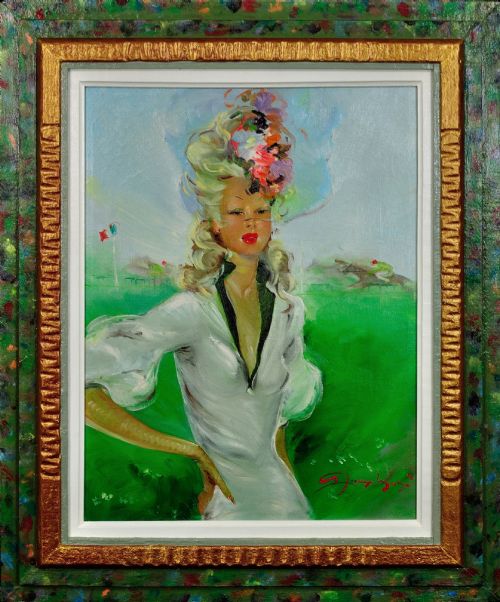
Jean-Gabriel Domergue·Fred Pailhes
The 1950s French Oil Painting Glossary
- Chiaroscuro
- A technique employing strong contrasts between light and dark to give a sense of volume to figures and objects. This method was utilised by mid-century painters to dramatise interior and figurative scenes.
- Colourist
- An artist whose work is characterised by a primary focus on the expressive and emotional qualities of colour. Such paintings rely on vibrant hues rather than strict naturalism.
- Cubist
- A style of art that deconstructs subjects into geometric shapes and multiple simultaneous viewpoints. Works in this vein break away from traditional perspective.
- Surrealism
- An artistic movement exploring the subconscious mind, dream imagery and unexpected juxtapositions of objects. Paintings in this style often feature unusual spatial arrangements and symbolic elements.
- Gilt
- A thin layer of gold or gold-like material applied to wood frames to provide a decorative metallic finish. This treatment enhances the presentation of the artwork.
1950s French Oil Painting: Frequently Asked Questions
How do I identify a 1950s French oil painting?
Look for stylistic markers such as mid-century modernist composition, cubist abstraction, or colourist palettes typical of the decade. The materials, including oil on canvas or board and period wood framing, also help anchor the work in its era.
Examining the subject matter, whether a Normandy harbour or a Corsican landscape, provides further context regarding the regional French schools active during the nineteen-fifties.
Where were these paintings created?
These works were produced across France, reflecting urban studio practices in Paris as well as regional scenes in Normandy, Provence and Corsica. Emigre artists working within France also contributed to this artistic landscape.
Many pieces capture specific local topography, documenting the light and landscape of these distinct geographical areas.
How should I care for an oil painting on canvas?
Keep the canvas away from direct sunlight and fluctuating humidity levels to prevent paint cracking or warping of the wood stretcher bars. Dust the surface gently with a dry, soft brush without applying pressure.
Avoid using liquid cleaners or touching the paint surface directly, as natural oils from skin can damage the pigment over time.
What is the difference between oil on canvas and oil on board?
Oil on canvas involves paint applied to a flexible woven fabric stretched over a wooden frame, which yields slightly to pressure. Oil on board uses a rigid wooden or composite backing surface, providing a firm support for the pigment.
Both were common supports in the nineteen-fifties, with board often used for smaller en plein air studies and canvas favored for larger compositions.