





Vintage Harbour Artwork
Vintage harbour artwork captures coastal life and maritime history through paintings created across the nineteenth and twentieth centuries.
Vintage Harbour Artwork
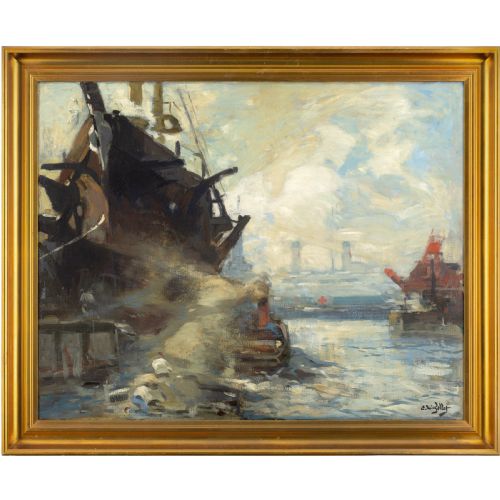
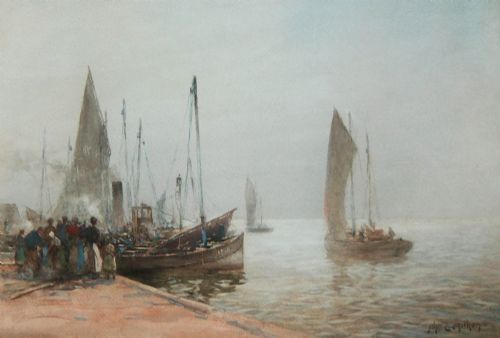
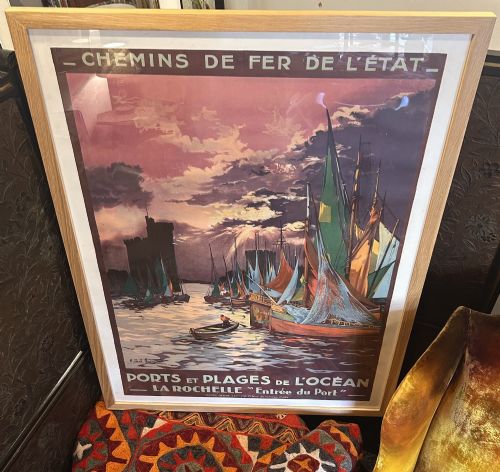
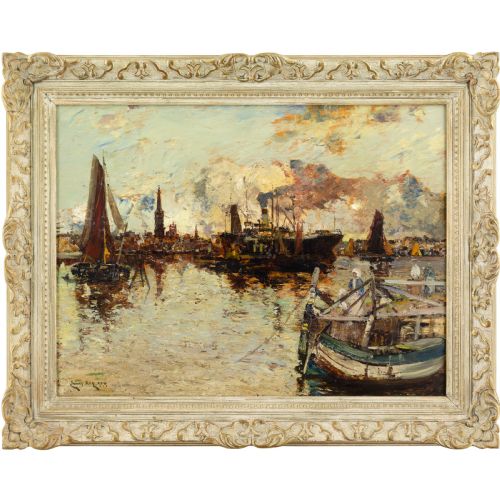
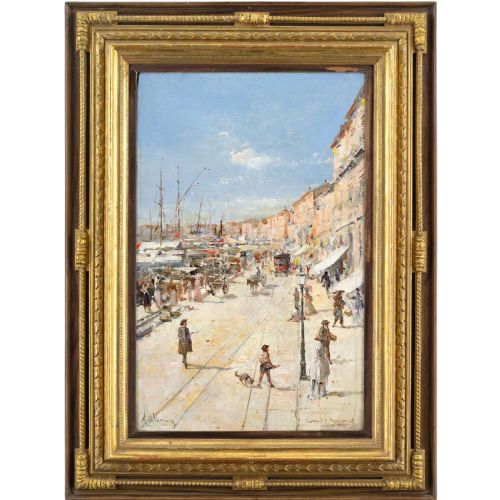
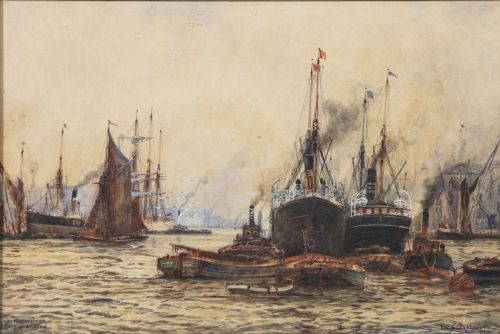
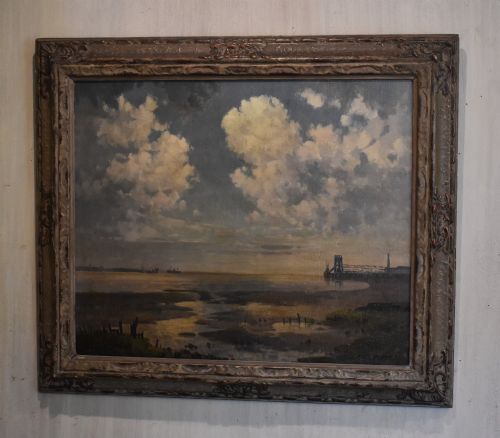
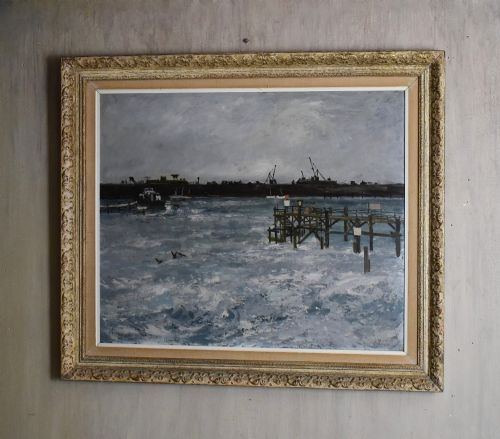
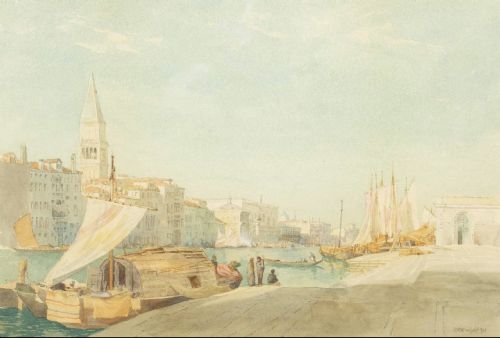
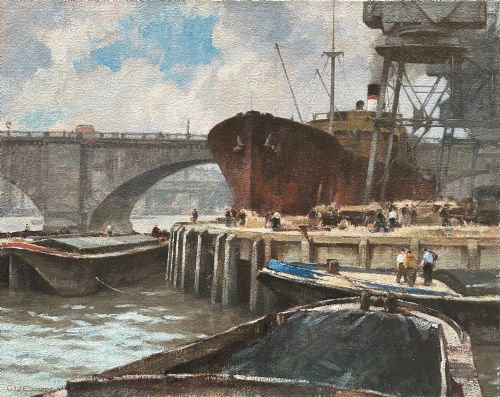
Vintage harbour artwork encompasses original paintings, watercolours and framed prints depicting coastal scenes, docks and maritime activity. These works span from the nineteenth century through the mid-twentieth century, capturing ports from British fishing villages to Mediterranean harbours.
The most common formats on this page are traditional watercolours on paper and oil paintings on canvas or board. Artists documented bustling commercial ports, quiet estuaries and local coastal craft using styles ranging from Victorian academic realism to British Impressionism and mid-century modernism.
Subjects frequently focus on specific named locations, including Cornish fishing ports like St Ives and Looe, Yorkshire coastal towns, and continental European ports in France, Italy and the Netherlands. Buyers will find both signed works by known regional artists and uncredited archival views.
How they were made
Artists relied primarily on traditional pigment applications, utilising watercolour on paper for delicate atmospheric coastal light or oil paint on canvas and board for richer texture and depth. Watercolours often employed wash techniques to render open skies and reflective water, sometimes augmented with pen and ink detailing.
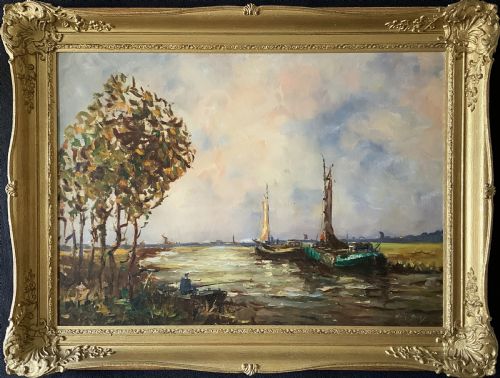
Oil paintings utilised layered brushwork, ranging from smooth nineteenth-century academic finishes to expressive impasto applications seen in mid-century works. These pieces were typically housed in wood frames, frequently gilt or painted, providing structural support and framing the composition.
Several artists captured busy harbour tugboats puffing black coal smoke into otherwise pristine coastal skies.
What varies in quality
Quality in these coastal works rests on the artist's handling of light, atmosphere and maritime architecture rather than the subject matter alone. Superior examples demonstrate a confident command of perspective, capturing the movement of water and the intricate rigging of vessels with precision.
The choice of medium and surface preparation also influences the longevity and visual impact of the piece. Works that retain their original pigments without excessive fading, mounted within period-appropriate framing, represent the stronger examples within this category.
Kenneth Cozens·Eugène-Louis Gillot·Edward Mills·James E Aitken·John E Aitken·William Banks Fortescue·James Kay·Augusto Alberici·Frank William Scarbrough·Clive Browne·Peter Brannan·Paul Bret·Richard Henry Wright·Cyril Walduck Edwards·Willem Bos·William Matthison·Frank Kelsey·Walter Goodin·F A Roylance·George F Pennington·Alfred George Morgan·Paul-Jean Anderbouhr·Eric Tufnell·Lokre·William Edward Webb
The Vintage Harbour Artwork Glossary
- Watercolour
- A painting method where natural pigments are suspended in a water-soluble binder on paper. This medium was widely utilised for British coastal scenes to capture translucent effects of light and sea.
- Impasto
- A technique where paint is laid onto a canvas in thick layers, standing visibly above the surface. This approach creates texture and gives physical presence to water and skies in mid-century maritime paintings.
- Seascape
- A type of fine art depicting the sea, coastal views or maritime vessels. These works form the core of harbour artwork collections.
- Provenance
- The documented history of ownership for a work of art. Established provenance helps confirm the origin and attribution of vintage paintings.
- Gilt frame
- A wooden picture frame coated with a thin layer of gold leaf or metallic paint. Many nineteenth-century and Edwardian maritime paintings retain these traditional decorative enclosures.
Vintage Harbour Artwork: Frequently Asked Questions
How do I identify the date of a harbour painting?
Dates can often be determined by the artist's active period, stylistic clues such as the transition from Victorian realism to mid-century modernism, and framing materials. Signatures and gallery labels on the reverse also provide chronological markers.
Archival records and maritime history books help cross-reference depicted ships, clothing styles, and harbour infrastructure to narrow down the decade of creation.
Where were most of these coastal scenes painted?
The works originate primarily from British and European coastal locations, reflecting popular artist colonies in Cornwall, Yorkshire, and along the French and Dutch coasts. Fishing ports and commercial harbours attracted painters seeking dynamic play of light and maritime trade activity.
Many pieces document specific harbours such as St Ives, Whitby, and various Mediterranean ports during the late nineteenth and mid-twentieth centuries.
What is the difference between watercolour and oil harbour paintings?
Watercolour paintings use water-soluble pigments on paper, offering transparent washes and delicate representations of coastal mist and light. They are traditionally displayed under glass for protection.
Oil paintings utilise oil-bound pigments on canvas or board, allowing for heavier textures, deeper colour saturation, and visible brushwork that captures the physical weight of water and ships.
How should I display and care for vintage maritime art?
Works on paper, particularly watercolours, require protection from direct sunlight to prevent pigment fading and paper degradation. Displaying them in rooms with stable humidity levels helps preserve both the paper and the frame.
Oil paintings on canvas are generally more resilient but still benefit from avoiding extreme temperature fluctuations and excessive moisture. Dusting should be done gently with a soft, dry brush.