
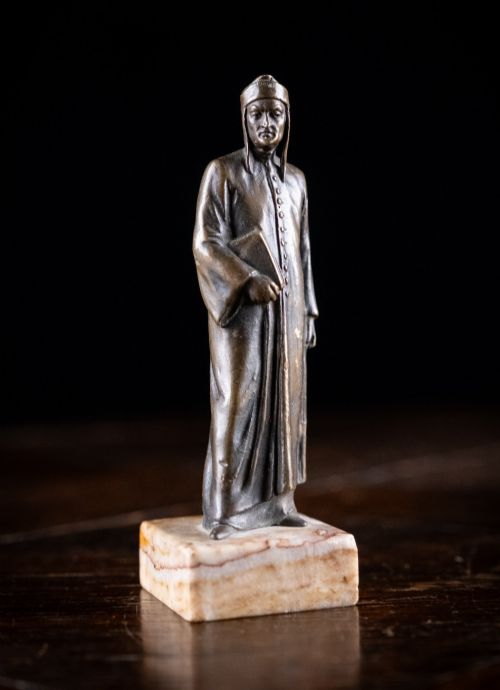
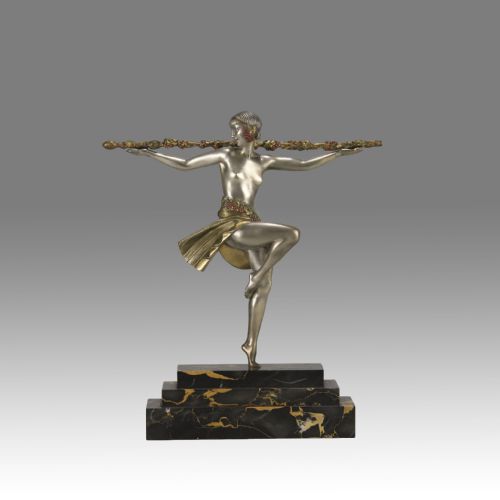
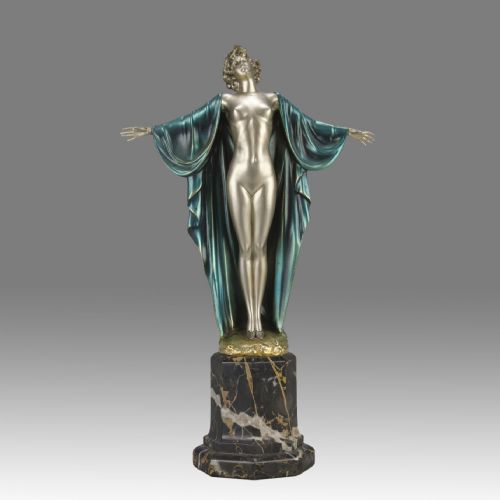
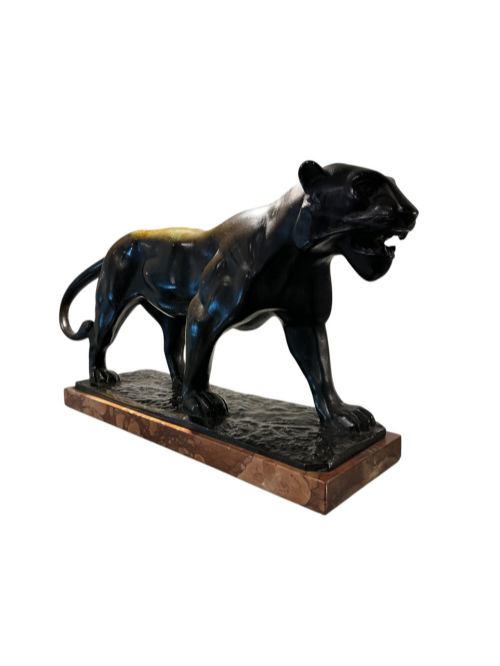
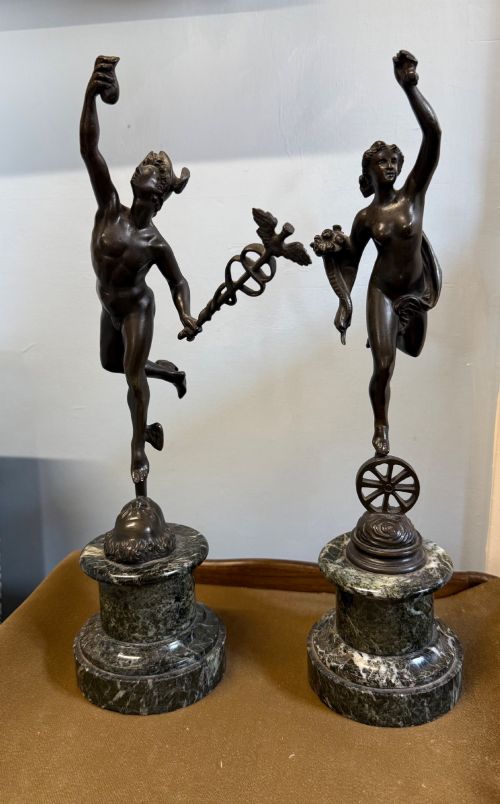
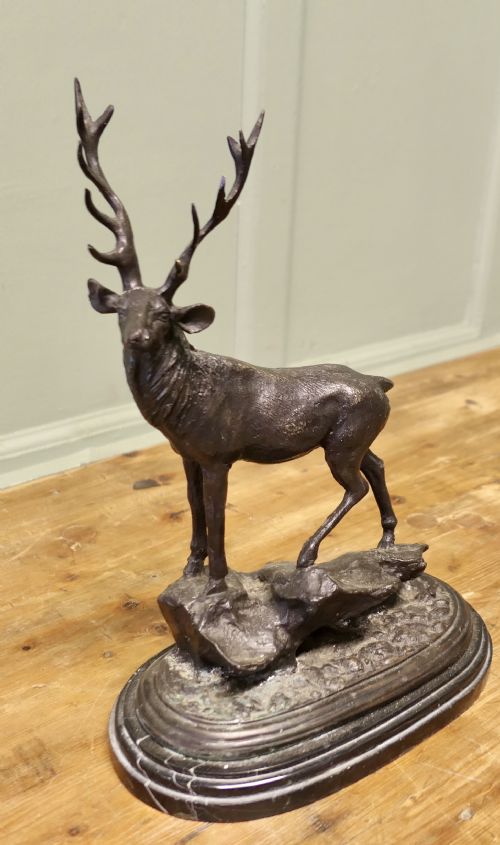
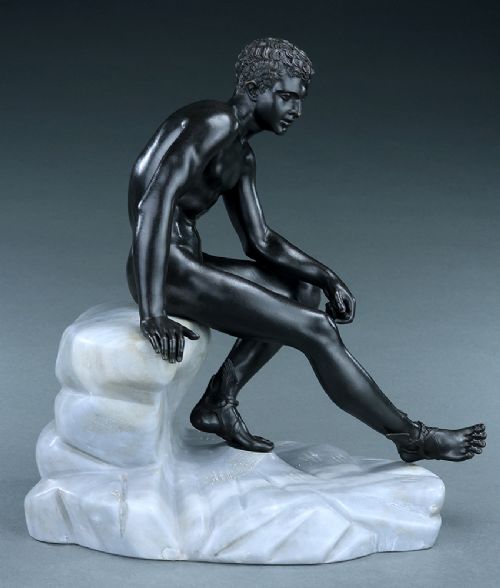
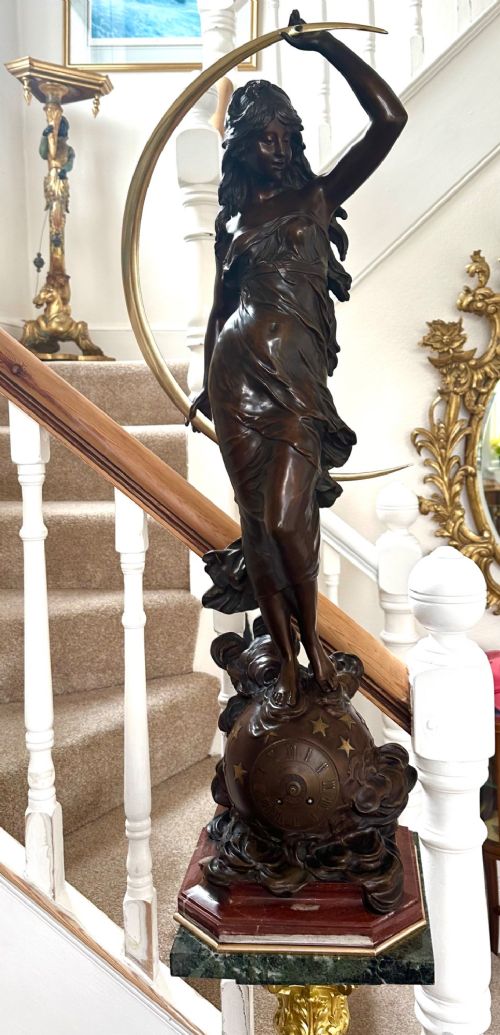
Marble Base Bronze Statue
These marble base bronze statue pieces combine cast metal figures with stone plinths, offering collectors classical mythology, animal studies, and striking decorative forms.
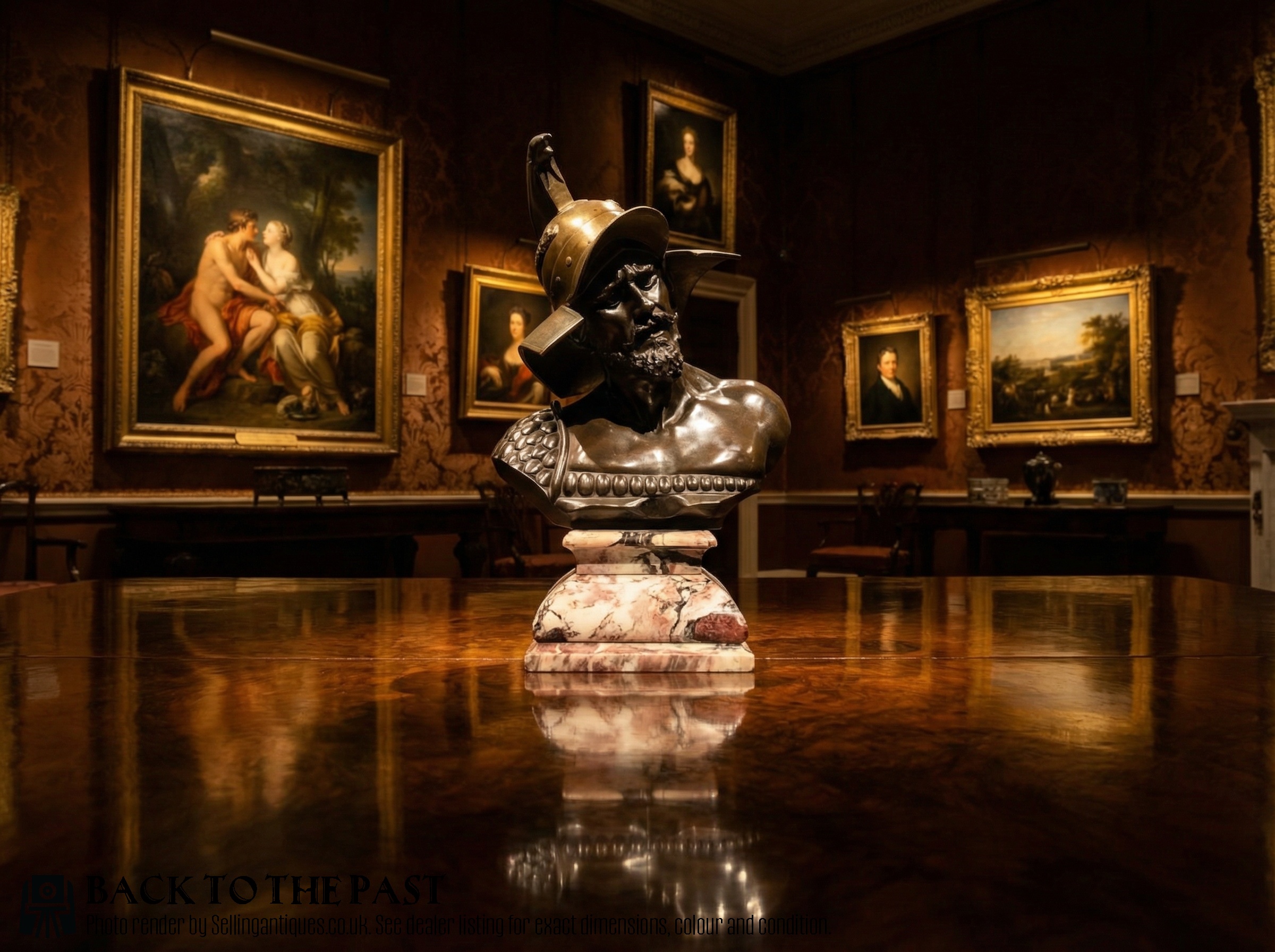
Marble Base Bronze Statue
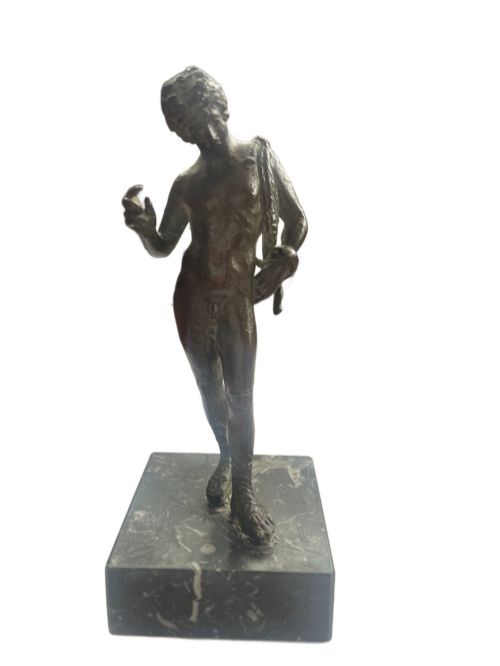
A marble base bronze statue brings together a cast metal figure and a fitted stone plinth, creating a stable and decorative sculptural object. You will frequently encounter nineteenth-century French foundry work, Grand Tour souvenirs from Italy, and twentieth-century modernist designs.
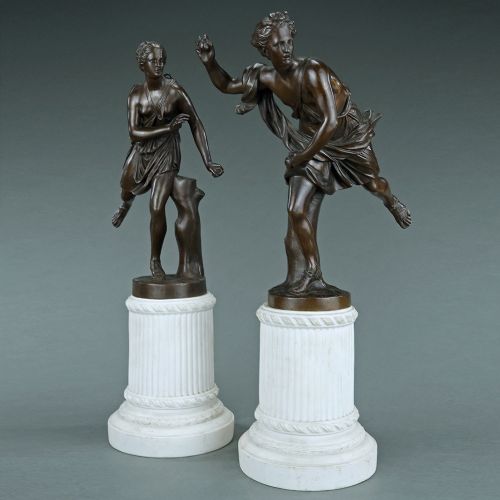
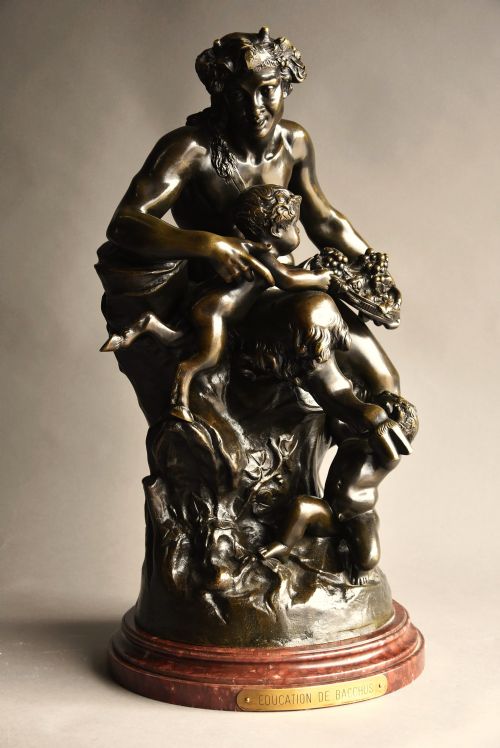
The subjects range widely across historical, mythological, and animalier themes, depicting figures like Dante, classical gods, hunting dogs, and dancers. These works bridge the gap between architectural models, cabinet bronzes, and functional items such as table lamps.
The stones used for the foundations vary from simple black marble to fossil marble, Siena marble, and grey varieties. Each combination reflects the aesthetic preferences of its period, moving from neoclassical austerity to the geometric lines of Art Deco.

How they were made
Foundries created the metal components using traditional casting methods, often finishing the surface with cold painting, enamel, gilt, or ormolu highlights. The resulting bronze or brass figures required careful chasing and patination to achieve depth and texture.
Stonemasons shaped the supporting plinths from blocks of natural marble, cutting and polishing the material to fit the specific contours of each sculpture. Metal pins or screws secured the heavy figures firmly to their stone bases.
Marble Base Bronze Statue Retail Price Guide 2026
Typical asking prices for marble base bronze statue among the pieces listed under this phrase on Sellingantiques today, from the lower quarter to the upper quarter. They describe what is for sale here now, not the wider market.
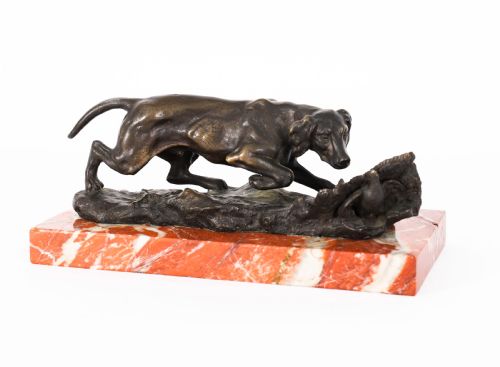
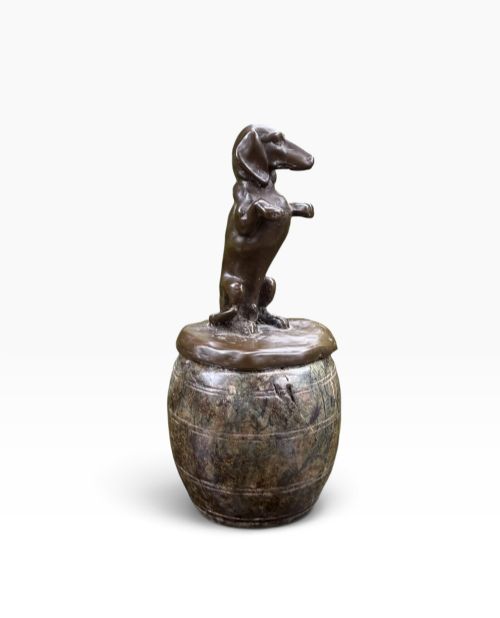
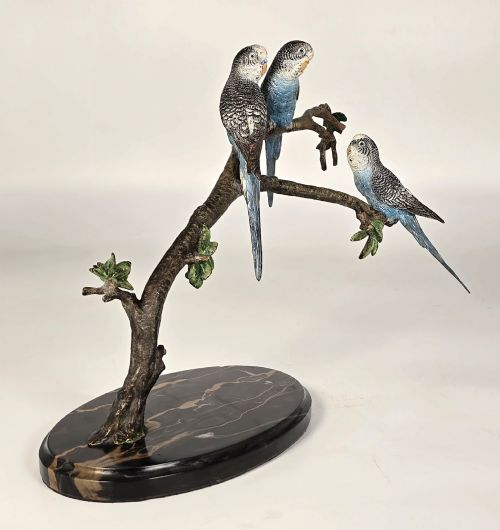
Several bronze dogs share shelf space with diminutive budgerigars perched on leafy branches.
What varies in quality
The crispness of the metal casting and the precision of the hand-chasing determine the fidelity of the details in hair, drapery, and expression. Finer examples show sharp definition and subtle patination rather than soft edges or thick, obscuring paint layers.
The choice and preparation of the stone base also signal the grade of the piece, with dense, polished fossil or Siena marbles indicating superior production compared to plain or hastily finished slabs.
Carl Kauba·Barbedienne·Bruno Zach·Pierre le Faguays·Ferdinand Preiss·Emile Carlier·Demetre Chiparus·Henri Godet·Georges Van Der Straeten·Pierre Jules Mene·Prosper Lecourtier
The Marble Base Bronze Statue Glossary
- Animalier
- A style of sculpture focusing on realistic depictions of animals, particularly dogs, big cats, and birds, popular during the nineteenth century.
- Cold painted
- A technique where paint is applied to a cold bronze surface without subsequent firing, often seen on Austrian figures from the early twentieth century.
- Grand Tour
- Souvenirs purchased by travellers on educational journeys through Europe, frequently comprising miniature bronzes of classical antiquities mounted on stone.
- Ormolu
- Gilded bronze, where a layer of gold amalgam is applied to the metal base through a chemical and heat process.
- Patina
- The surface sheen and coloration developed naturally over time or applied artificially by the foundry to accentuate the bronze contours.
Marble Base Bronze Statue: Frequently Asked Questions
Are these pieces signed by the artist?
Many sculptures carry signatures, foundry marks, or stamps cast directly into the metal base or along the edge of the figure. These inscriptions help identify the creator and occasionally point to the specific workshop responsible for the casting.
Unsigned pieces remain common, particularly among Grand Tour souvenirs and anonymous decorative works. In these instances, stylistic clues and material composition guide the attribution.
How can I tell the period from the style?
Nineteenth-century works often favour classical mythology, grand historical figures, and naturalistic animal studies with deep, dark patination. The construction methods usually feature heavy, traditional bronze casting combined with simple black or coloured marble plinths.
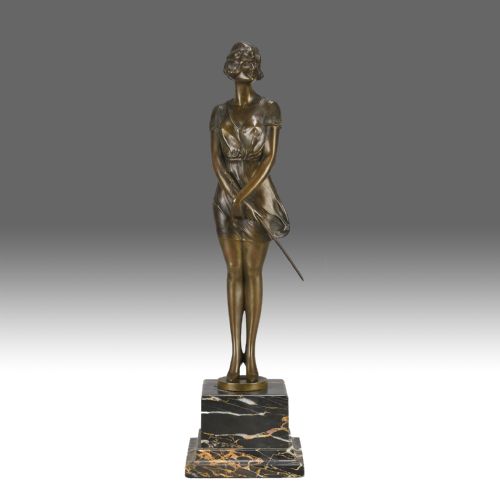
Twentieth-century pieces frequently embrace Art Deco geometry, sleek dancers, and playful cold-painted highlights. The stones chosen during this later era often include variegated red marbles or stepped, multi-coloured geometric bases.
Why are some figures mounted on stone?
Mounting a metal sculpture on a stone plinth provides essential stability, anchoring a top-heavy cast figure to a solid foundation. This pairing also elevates the artwork visually, creating a distinct boundary between the display surface and the sculpture.
Different stones offered contrasting background tones that enhanced the colour of the bronze, gilt, or painted surfaces above them. The weight of the marble further prevented the ensemble from tipping over during handling.