



Mantelpiece Shelf Clock
A mantelpiece shelf clock grounds a room with ticking weight, pairing functional timekeeping with the sculptural mass of marble, mahogany, and gilt bronze.
Mantelpiece Shelf Clock
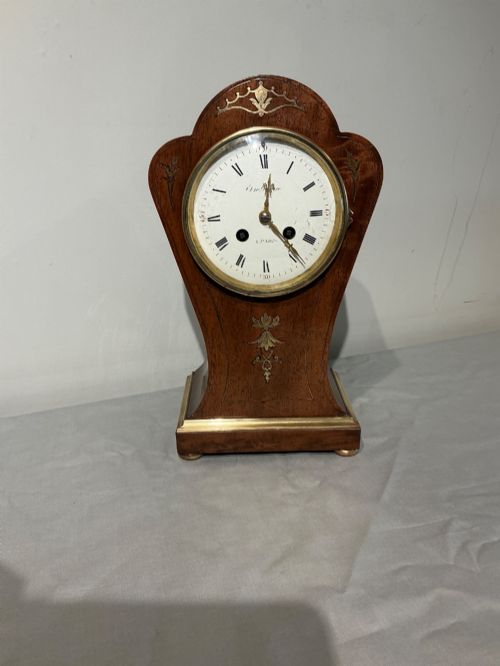
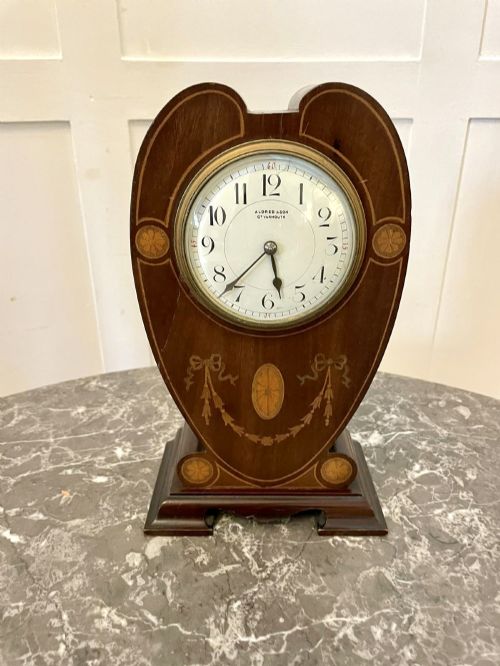
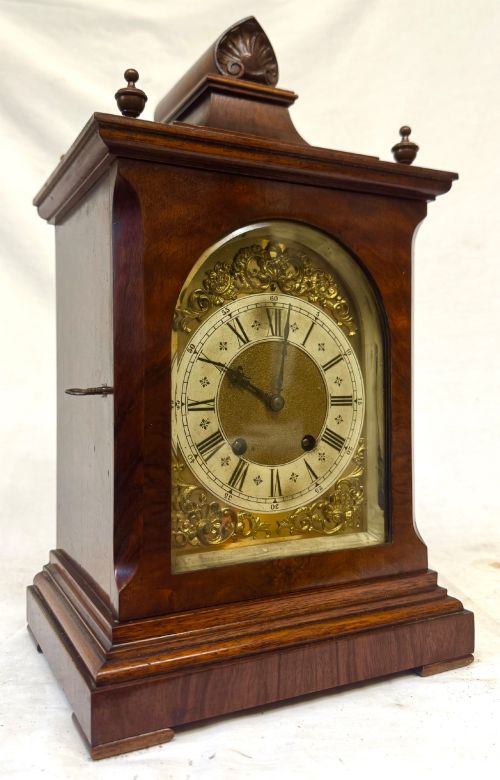
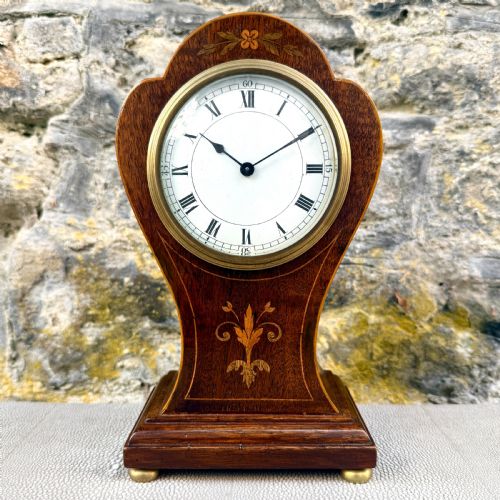
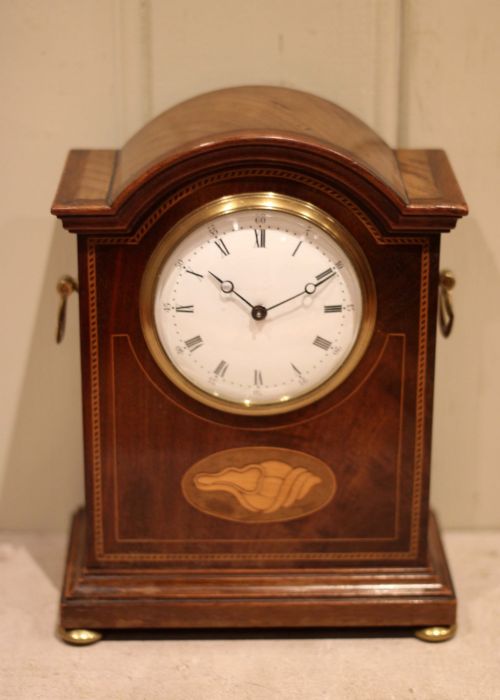
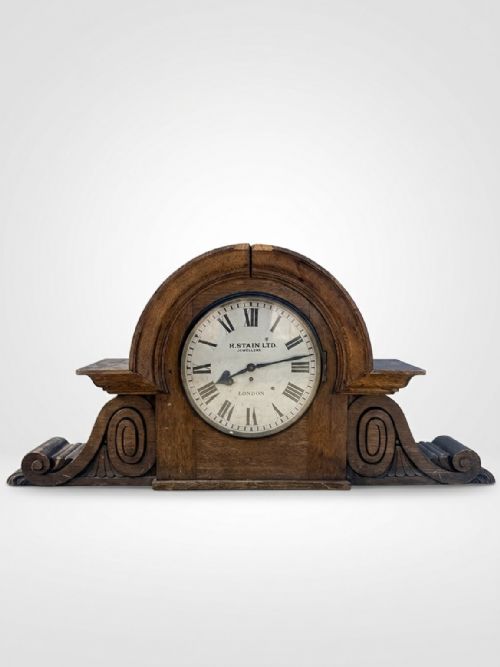
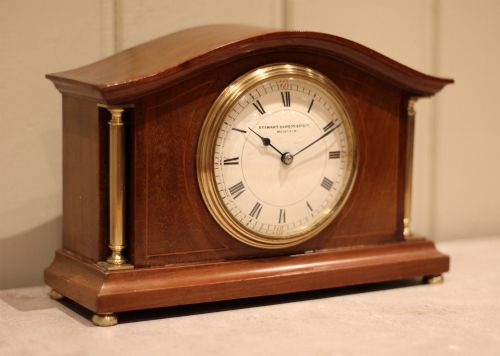
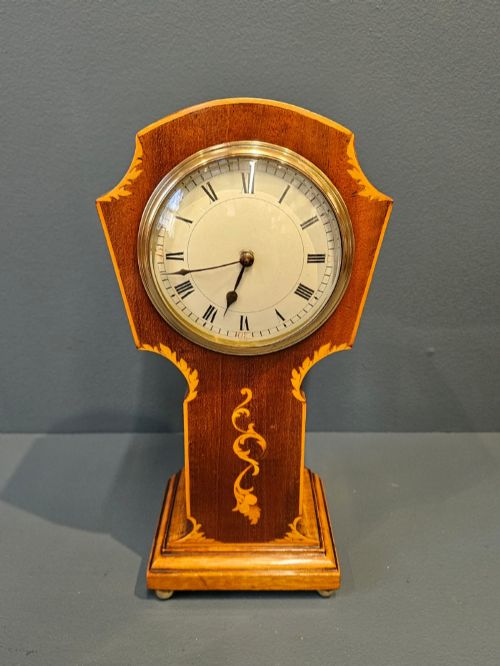
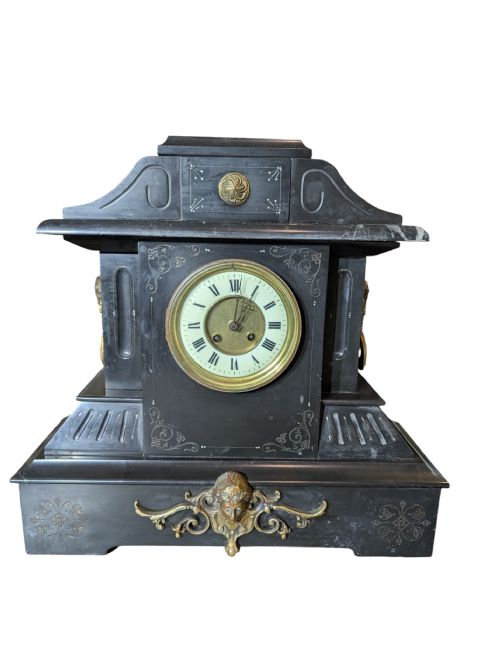
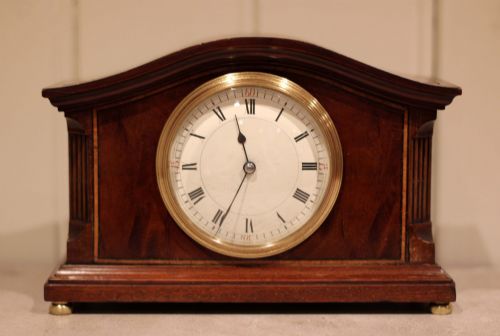
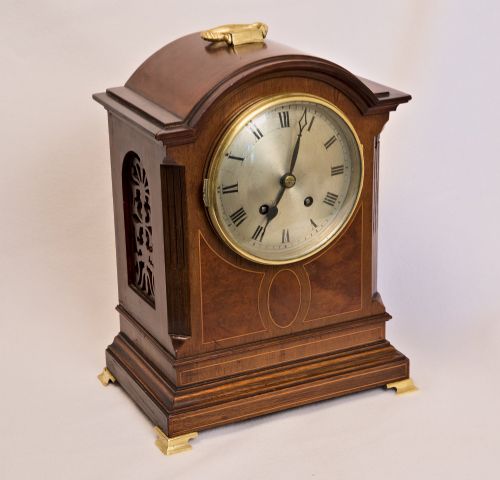
A mantelpiece shelf clock serves as both a practical timekeeper and a decorative focal point for interior spaces. The pieces gathered here span the nineteenth and twentieth centuries, taking the form of upright timepieces, architectural bracket clocks, and ornate decorative units.
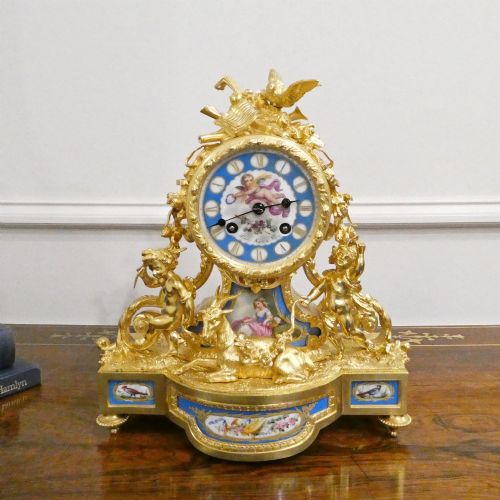
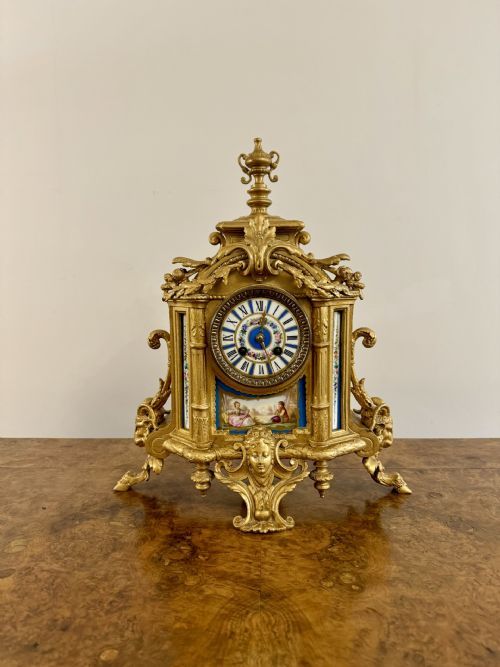
You will frequently meet Edwardian mahogany models alongside substantial Victorian marble designs and French gilt bronze or porcelain examples. These objects occupy the surfaces of chimneypieces, ledges, and side tables, housing mechanical movements within wooden, stone, or metallic cases.
Materials and construction
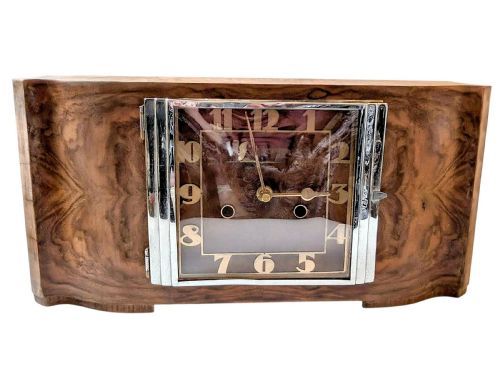
Clockmakers and cabinetmakers constructed cases using dense timbers such as mahogany, walnut, and rosewood, often applying marquetry inlay, brass stringing, or silver fronts. Stone examples utilised black, red, and sienna marble, frequently paired with cast bronze, ormolu, and porcelain plaques.
Movements were engineered from brass and steel components, driven by springs or weights to power the hands and striking mechanisms. Dials incorporated enamelled numerals, visible escapements, and protective glass bezels framed by metalbezels and bezels of cast ornament.
Mantelpiece Shelf Clock Retail Price Guide 2026
Typical asking prices for mantelpiece shelf clock among the pieces listed under this phrase on Sellingantiques today, from the lower quarter to the upper quarter. They describe what is for sale here now, not the wider market.
The listings on this page span from the mid-nineteenth century through the Edwardian era and into the Art Deco period.
Distinctions in execution
Superior examples reveal themselves through the crispness of cast ormolu and bronze details, the depth of marquetry grain on mahogany and rosewood surfaces, and the integrity of hand-painted porcelain panels. Case construction shows careful joinery and well-fitted doors that align cleanly with the dial surround.
The sophistication of the internal movement and the reputation of the maker differentiate standard production from high-end pieces. Finer clocks integrate complex eight-day striking trains, signed dial plates, and substantial stone or timber housings with harmonious proportion.
Henry Marc·Lenzkirch·Walker and Hall·Japy Fils·Thomas A Paris
The Mantelpiece Shelf Clock Glossary
- Ormolu
- Gilded bronze, applied to cast decorative mounts and figures on French cases. This technique creates a rich golden surface finish.
- Marquetry
- The art of applying decorative pieces of veneer to a structure to form intricate patterns. It is commonly found on mahogany and walnut clock bodies.
- Timepiece
- A clock that measures and indicates time without a striking mechanism. Such models focus solely on the visual presentation and the running movement.
- Bracket clock
- A portable clock originally designed to sit on a wall bracket. Later versions functioned primarily as large shelf or mantelpiece clocks.
- Escapement
- The mechanical linkage that regulates the speed of the clock. It converts rotational force into impulsive movements to maintain the swing of the pendulum.
Mantelpiece Shelf Clock: Frequently Asked Questions
How do I wind an antique clock safely?
Insert the key into the winding square and turn it gently until you feel resistance. Avoid over-winding, as this can damage the internal spring.
Support the case with one hand while operating the key with the other. Ensure you wind both sides if the movement includes a striking train.
What is the difference between a timepiece and a striking clock?
A timepiece simply tells the time without generating sound. These movements require fewer internal components and often feature simpler dial layouts.
A striking clock sounds the hours or quarters using a bell, gong, or rack mechanism. These heavier movements require separate winding arbours for the time and strike trains.
Where should I place a heavy marble clock?
Position the clock on a sturdy, level surface that can support considerable weight. Marble and slate models are exceptionally heavy and require stable foundations.
Keep the clock away from direct sunlight, radiators, and damp areas to protect the stone, timber, and internal metalwork from temperature extremes.
How do I identify a French nineteenth-century clock?
Look for cast gilt bronze mounts, Sevres-style porcelain panels, and numerical signatures on the backplate or dial. French makers frequently utilised ormolu and intricate marble cases.
Inspect the movement for maker stamps and serial numbers. Many French pieces from this era employ distinct architectural proportions and decorative revival styles.