
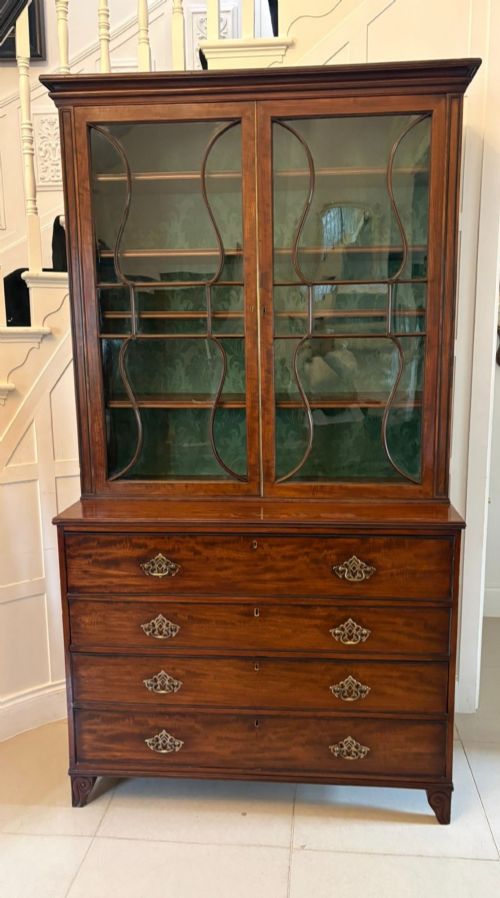
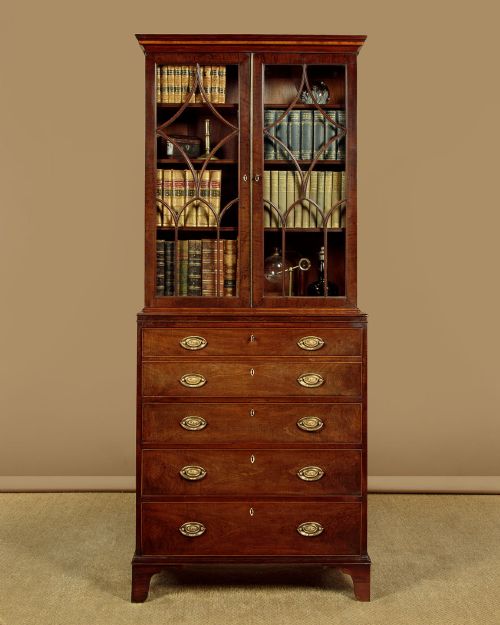
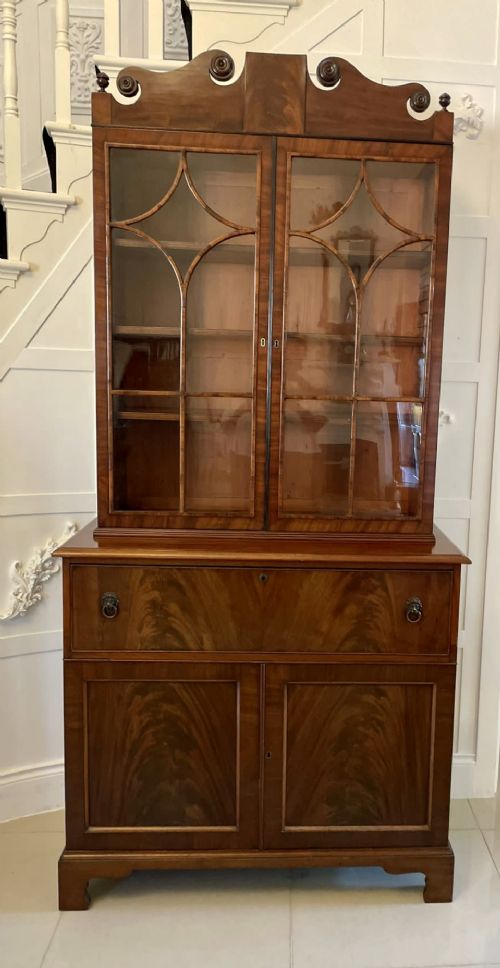
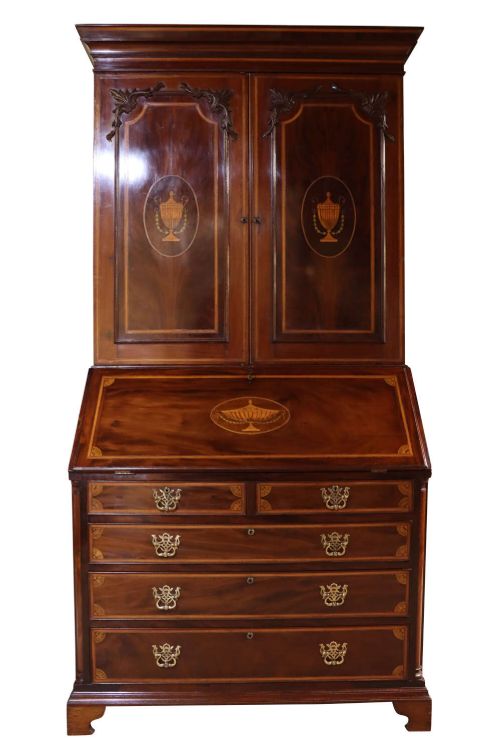
Mahogany Writing Bookcase
A mahogany writing bookcase brings together a panelled library and a fitted writing compartment in one towering piece of furniture.
Mahogany Writing Bookcase
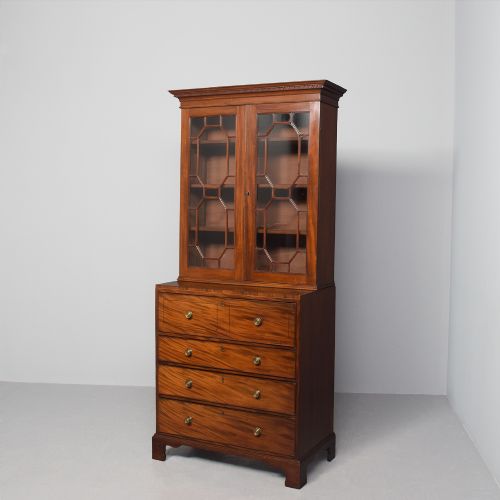
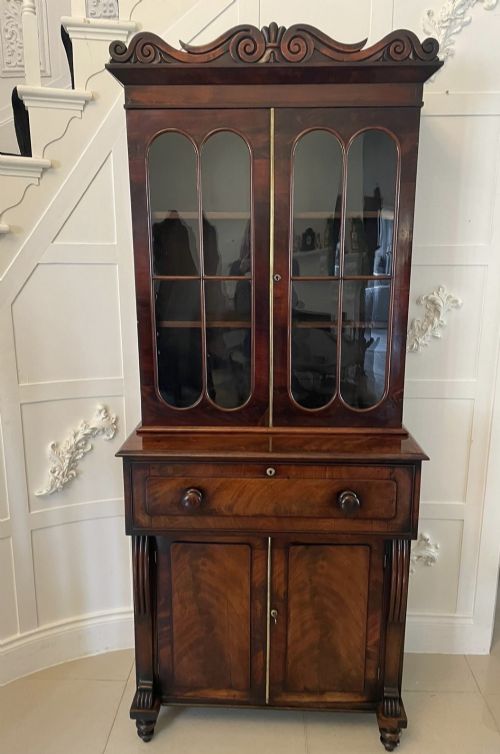
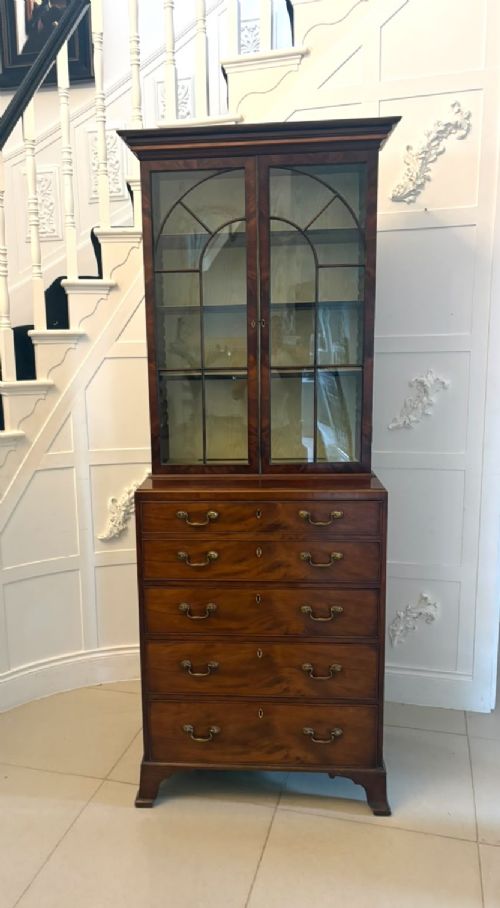
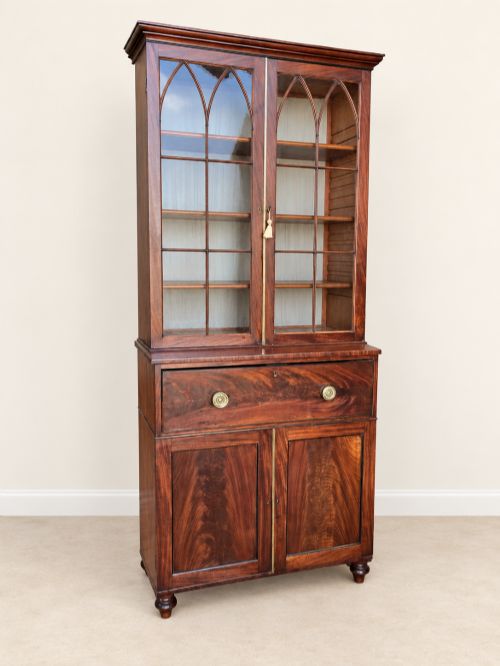
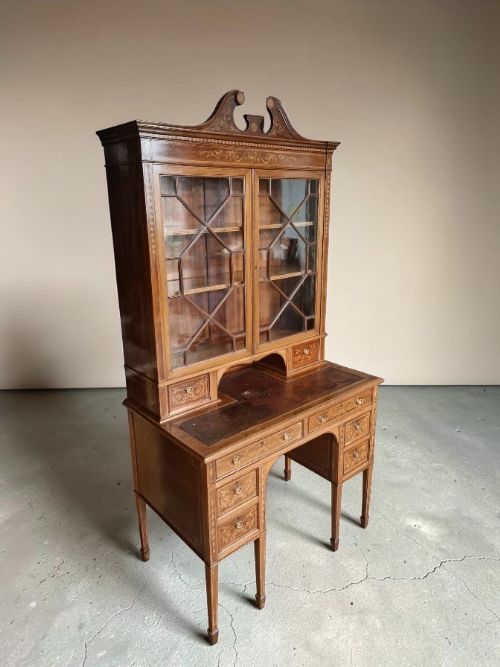
A mahogany writing bookcase is a dual-purpose piece combining upper shelving behind glass with a lower bureau or secretaire section designed for correspondence and storage. When you search for a mahogany writing bookcase, you encounter tall library pieces spanning the Georgian, Regency, Victorian and Edwardian eras, alongside compact variants.
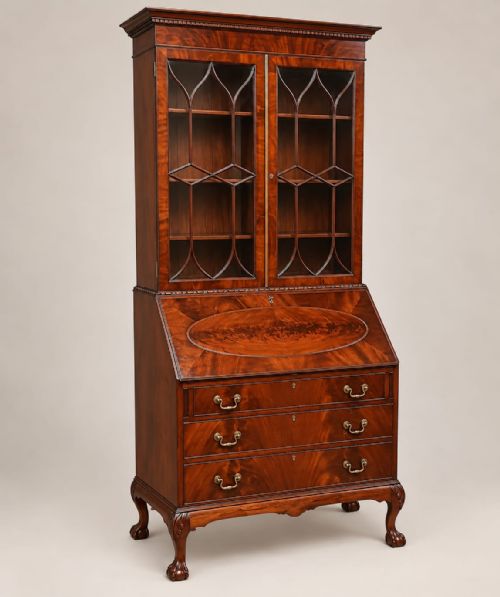
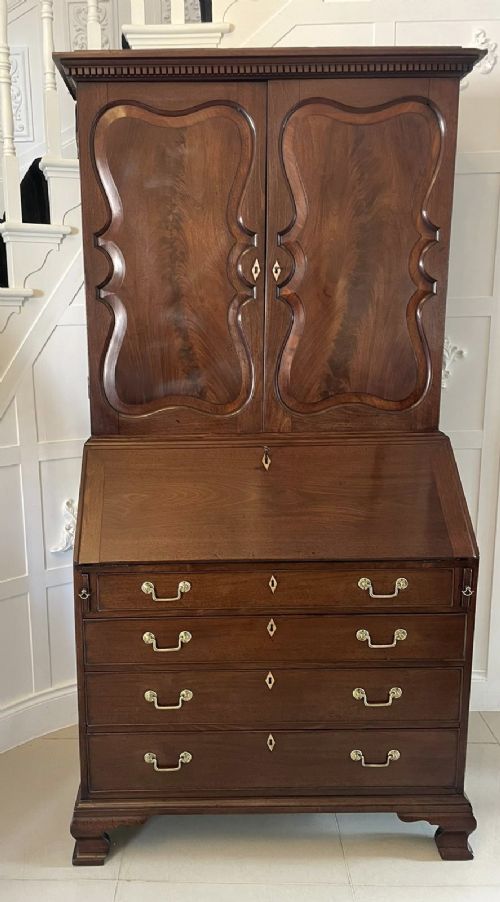
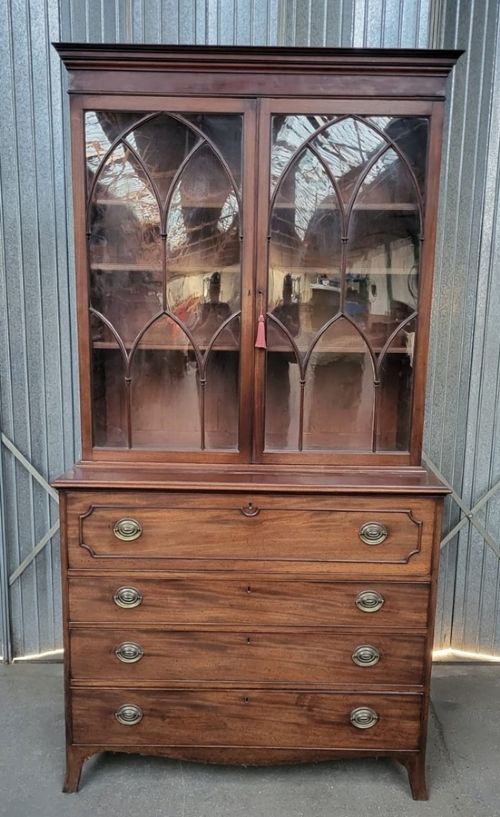
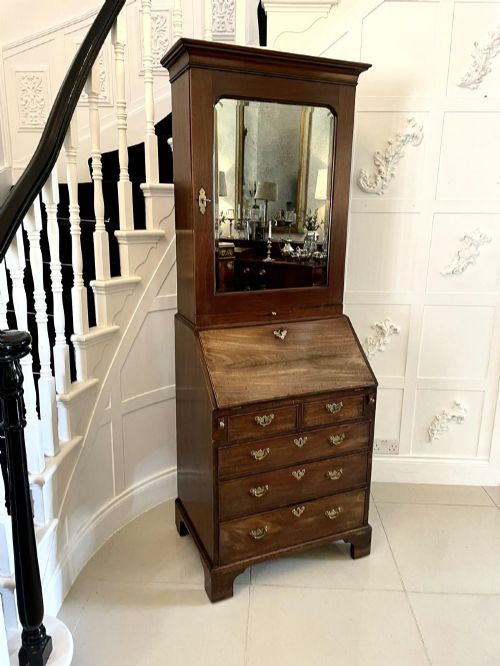
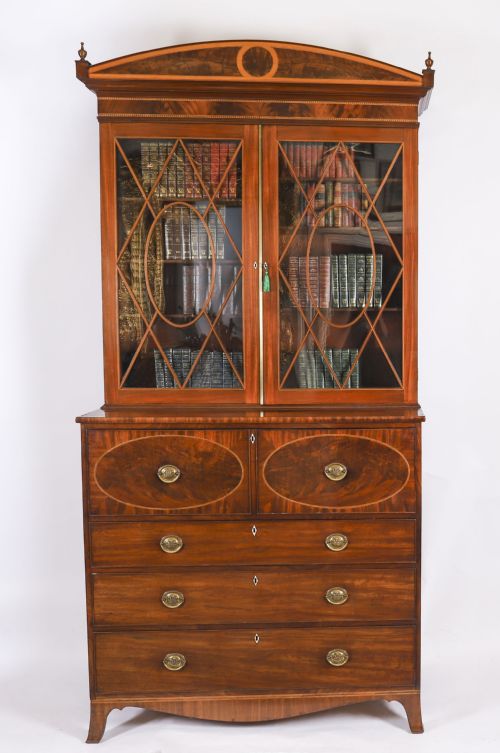
The most common forms on this page are bureau bookcases and secretaire bookcases, constructed primarily from timber during the eighteenth and nineteenth centuries. These items range from grand George II and George III library cabinets to smaller Edwardian iterations and apprentice samples.
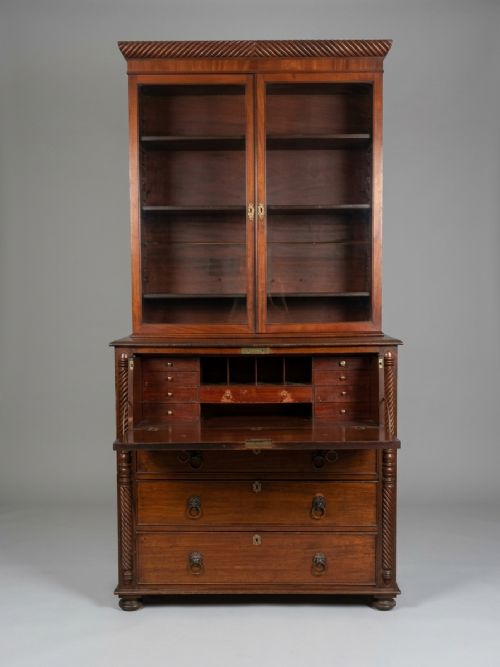
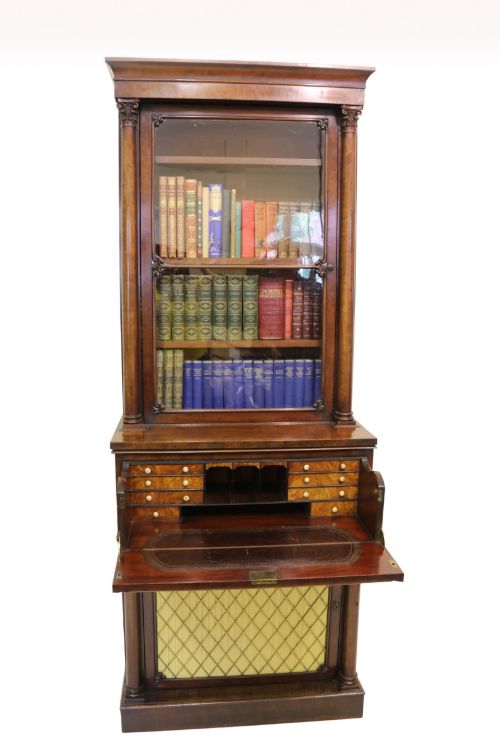
Makers and workshops varied the proportions significantly, producing everything from tall and slim eighteenth-century examples to dwarf cabinets and cylinder bureau bookcases. The lower section typically drops down to form a writing surface, revealing pigeonholes and small drawers inside.
Determinants of quality
Quality rests in the choice of timber figure, such as highly figured flame mahogany veneers, and the crispness of any satinwood inlay. The architectural proportion of the cornice and the delicacy of the astragal glazing bars separate ordinary workshop output from finer cabinet work.
Internal complexity also dictates standard, with superior fitted interiors boasting multiple pigeonholes, secret compartments and finely turned small drawers. The integration of the writing mechanism with the main carcase demonstrates the underlying skill of the maker.
One tiny apprentice sample exists at a quarter size, complete with French polished surfaces to demonstrate skill to a master.
George Oakley·Gillows·Tudor and Burrey·Maple and Co
The Mahogany Writing Bookcase Glossary
- Secretaire
- A cabinet or desk with a pull-out or drop-front drawer revealing a writing surface and small compartments. This component forms the primary writing element in many tall bookcases.
- Astragal
- Moulding used to hold the glass panes in the upper cabinet doors. Fine astragal bars divide the glazed area into smaller geometric sections.
- Flame mahogany
- Timber veneer cut from the fork of the mahogany tree to produce a swirling, flame-like grain pattern. Makers reserved this decorative wood for prominent drawer fronts and panel surfaces.
- Bureau bookcase
- A piece combining a sloping desk front over drawers with a glazed bookcase top. The fall-front opens to create a flat writing surface.
- Fitted interior
- The arrangement of small drawers, pigeonholes and central doors concealed within the writing section. Better versions include concealed compartments and matching veneers.
Mahogany Writing Bookcase: Frequently Asked Questions
How do I use a secretaire drawer?
The front of the secretaire drawer pulls or drops forward on hinges, supported by lopers or side arms to create a stable desk surface.
Inside, you find pigeonholes and small drawers for paper and ink, allowing you to write without disturbing the books stored above.
Are these bookcases one piece or two?
Most examples are constructed in two distinct sections for ease of transport and placement.
The upper bookcase rests directly upon the lower bureau or secretaire cabinet base, held in place by its own weight and mouldings.
How do I date an antique bookcase?
Dating relies on stylistic clues such as the profile of the cornice, the shape of the glazing bars and the presence of satinwood inlay.
Secondary timbers like oak inside the drawers and the grain pattern of the mahogany provide further chronological markers.