
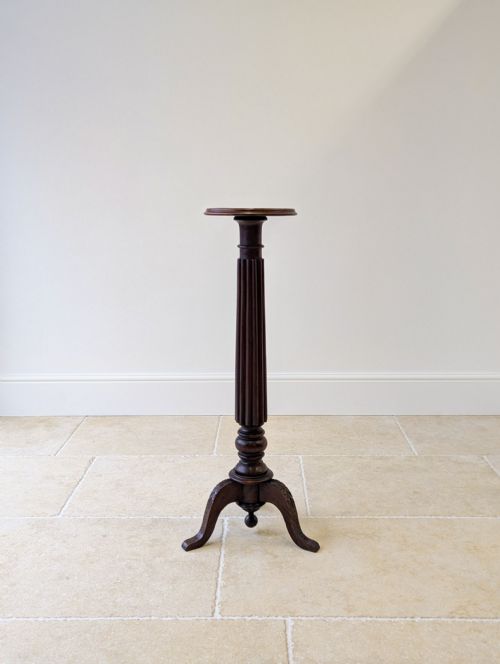
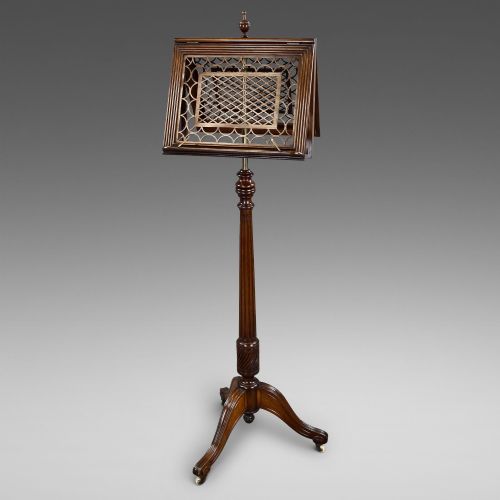
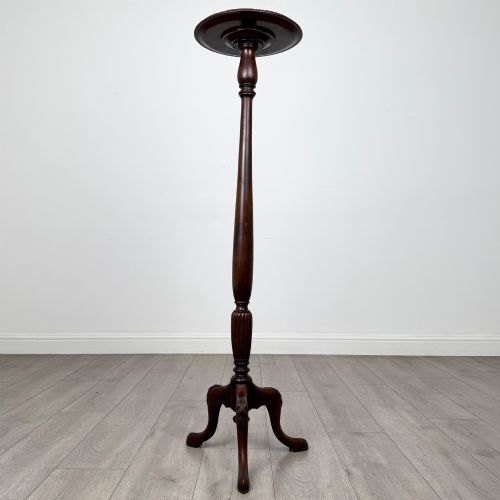
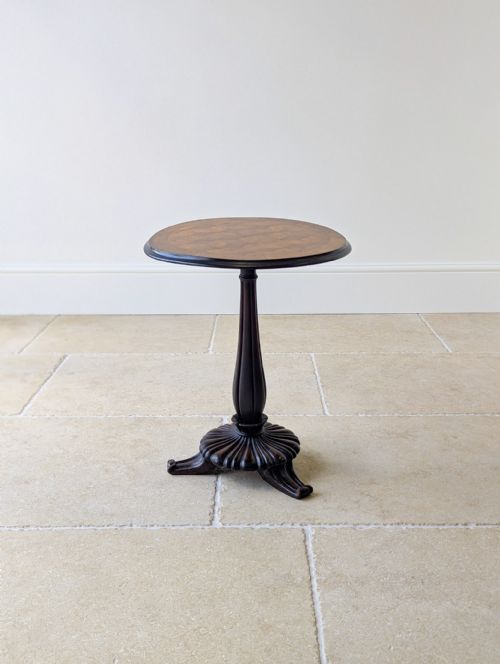
Mahogany Wooden Tripod
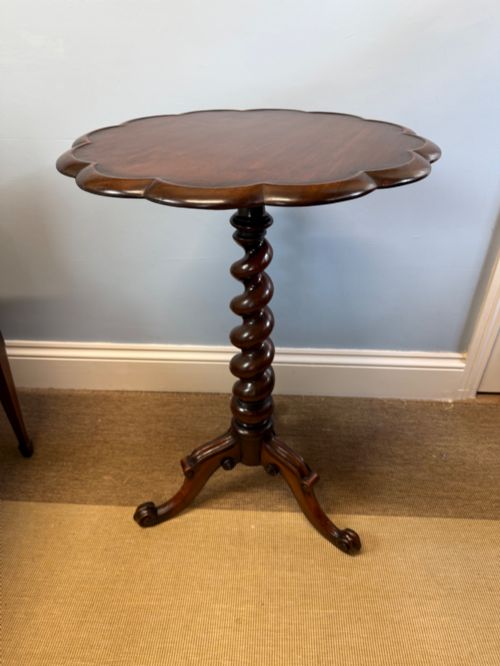
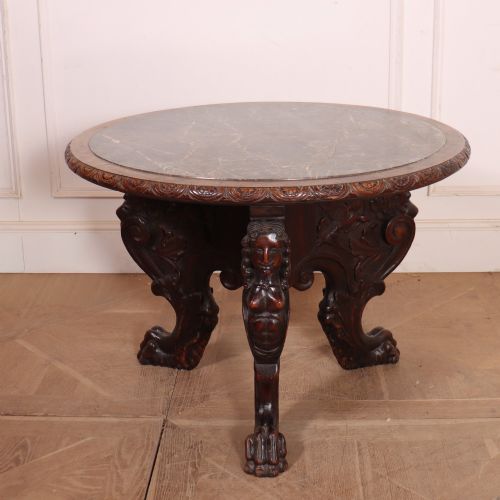
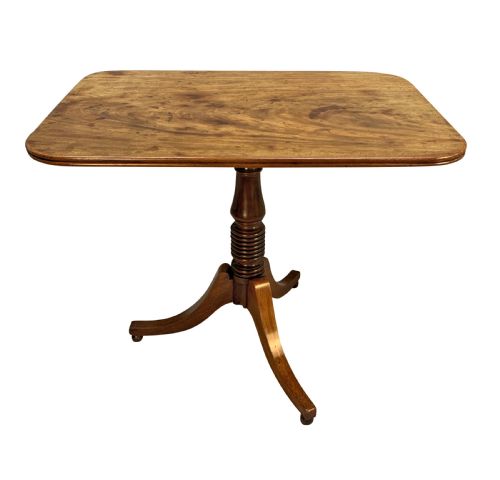
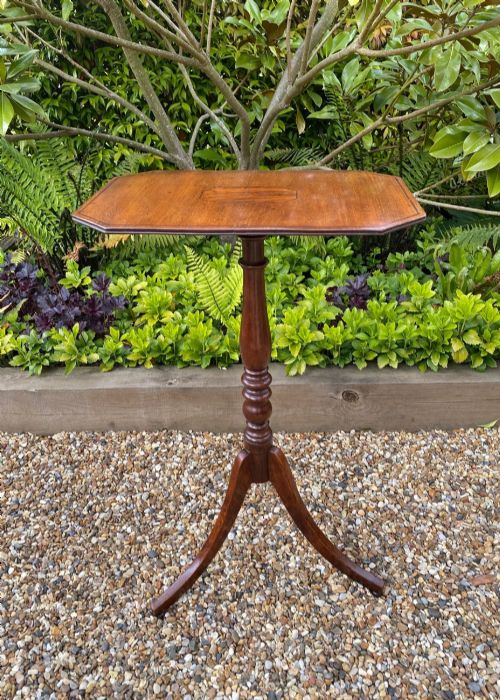
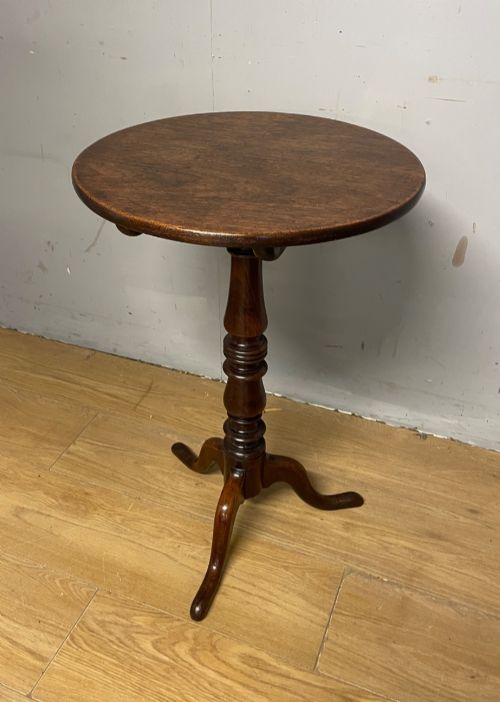
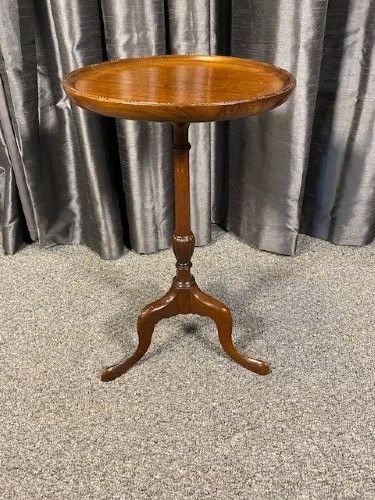
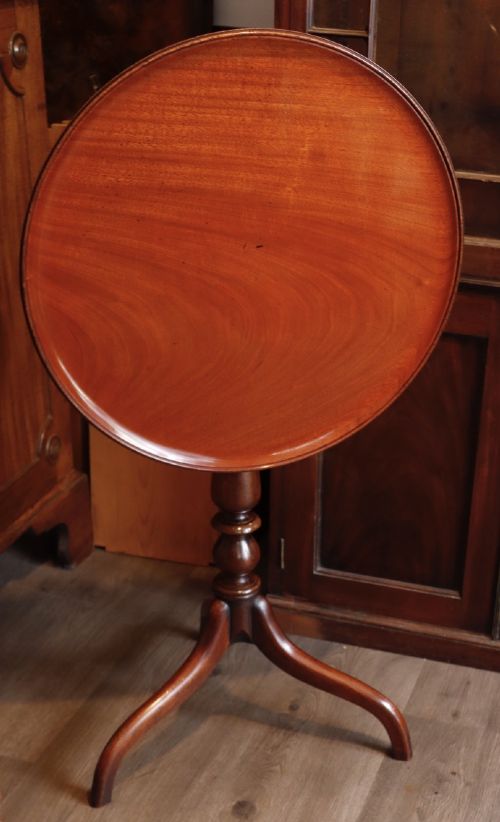
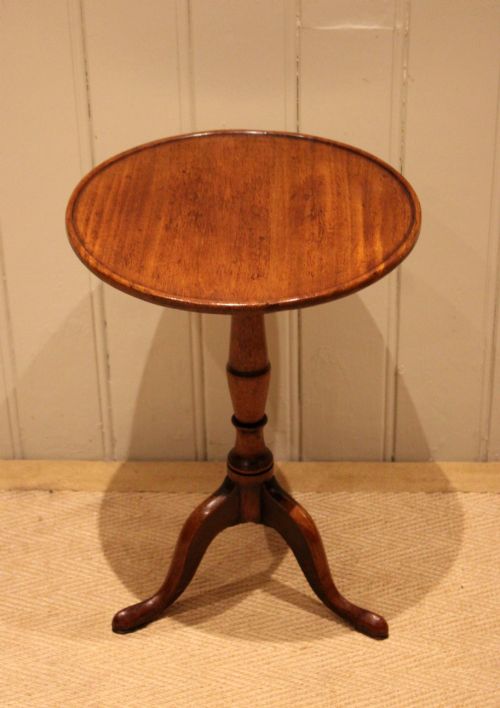
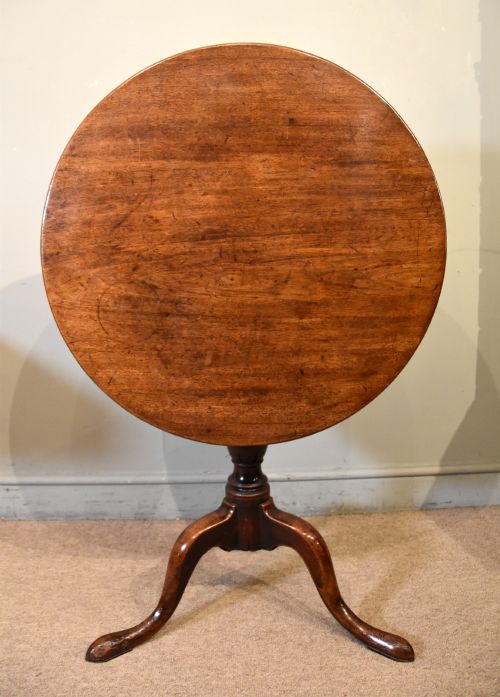
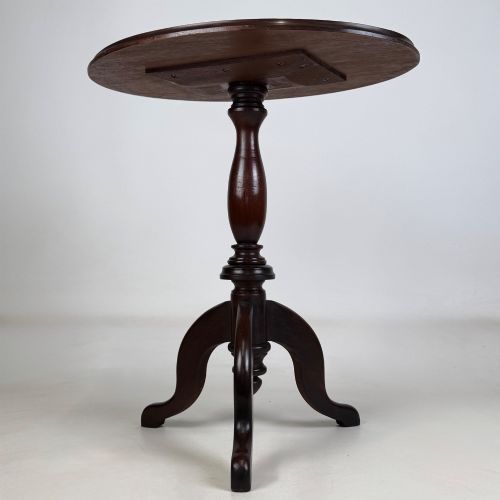
A mahogany wooden tripod brings centuries of English cabinet-making into a room, offering a stable three-legged base for lamps, wine glasses or plants.
Mahogany Wooden Tripod
When searching for a mahogany wooden tripod, a buyer is looking at small, portable furniture supported by three legs radiating from a central pillar. These pieces span periods from the eighteenth century through the Edwardian era and into the twentieth century, reflecting shifting domestic habits over generations.
The most common forms on this page are wine tables, occasional tables, side tables and tall plant stands or torcheres. Many examples feature tilting tops or birdcage mechanisms, designed to stow flat against a wall when not in use.
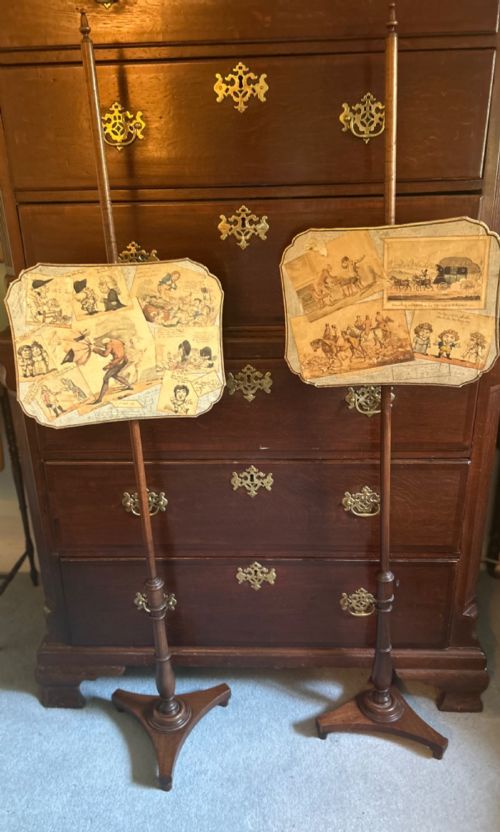
Origins range across Georgian, Regency, William IV and Victorian eras, alongside later revivals. Buyers encounter everything from simple round wine tables to inlaid chess boards, pole screens and music stands.
How they were made
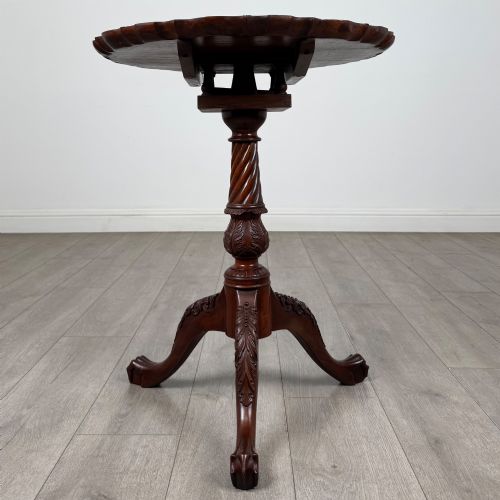
Cabinet-makers relied heavily on solid mahogany and hardwood, sometimes combining walnut, oak, cherry or brass fittings depending on the period. Wood inlay and carved wood details appear across various styles, from Georgian carved edges to Victorian torchere columns.
Construction techniques balanced stability with lightness, joining the three-legged base to a turned pillar using pegged tenons or iron spider brackets. Tilt-top actions and birdcage mechanisms required precise carpentry to allow the table top to pivot and lock securely.
Listings feature mahogany, walnut, oak, and brass, spanning the Georgian, Regency, William IV, Victorian, and Edwardian periods.
What varies in quality
Quality rests in the crispness of the timber carving and the architectural proportions of the pillar and leg assembly. Fine examples show thoughtful grain selection in the top and robust, well-turned cabriole or peg legs that meet the central column with tight joints.
The integrity of the mechanical actions separates standard tables from superior pieces. Smooth movement in a tilt-top mechanism or birdcage pivot, alongside original brass catches and unwarped timber tops, marks the work of a skilled workshop.
The Mahogany Wooden Tripod Glossary
- Tilt-top
- A table top mounted on a hinge mechanism that pivots from horizontal to vertical. This allows the piece to be stored against a wall when floor space is needed.
- Birdcage
- A revolving wooden framework beneath a table top that allows the surface to both tilt and rotate. It sits between the top and the central pillar.
- Torchere
- A tall, slender stand designed to hold a candle, lamp or plant. These elevated pieces feature prominent vertical posts on tripod bases.
- Treen
- Small handmade wooden household objects and utilitarian items. In this context, it describes diminutive stands carved with particular attention to turning.
- Spider bracket
- The iron or wooden spider-shaped fitting beneath a table top that connects the surface to the central pillar and supports the tilting mechanism.
Mahogany Wooden Tripod: Frequently Asked Questions
Why do some tables tilt?
Tilting tops allowed eighteenth and nineteenth-century households to clear floor space quickly when tables were not holding wine or candles.
The hinged mechanism lets the surface fold flat against the pillar so the entire piece can slide against a wall or into a corner.
What is a birdcage mechanism?
A birdcage is a small revolving wooden cage fitted beneath the table top, connecting the surface to the central pillar.
This construction allows the table top to rotate in a full circle as well as tilt sideways, offering greater flexibility in tight spaces.
Where were torcheres used?
Torcheres served as elevated stands for lighting devices, candles or tall decorative plants in principal reception rooms.
Their slender height drew the eye upward and placed light sources above seated head height during evening gatherings.
How do I spot a George III table?
George III pieces typically display balanced proportions, understated mahogany grain and refined hand-carving on the pillar and knees.
Tripod bases from this period often terminate in pad feet or delicate claw and ball feet rather than later Victorian turnings.