

Mahogany Tiered Display Shelves
Mahogany tiered display shelves combine open shelving and tiered frames, offering versatile display space across Georgian, Regency, and Victorian periods.
Mahogany Tiered Display Shelves
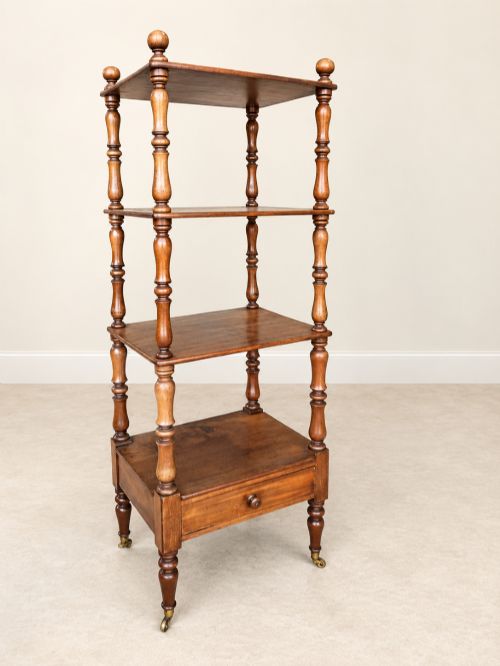
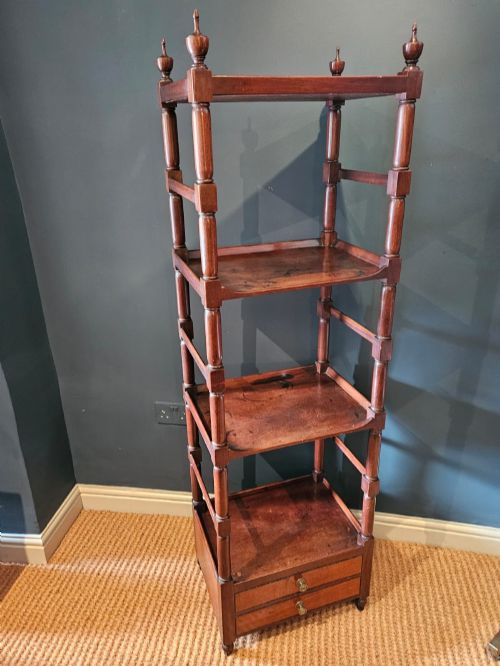
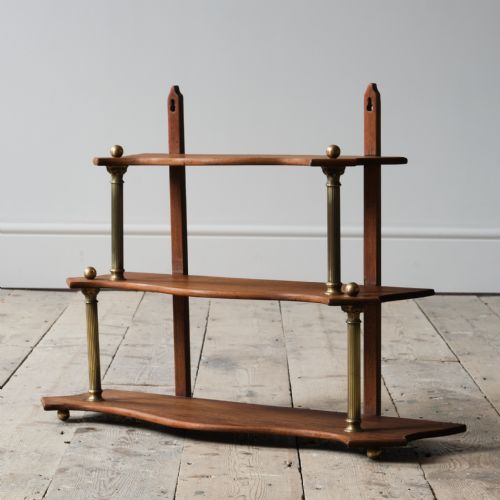
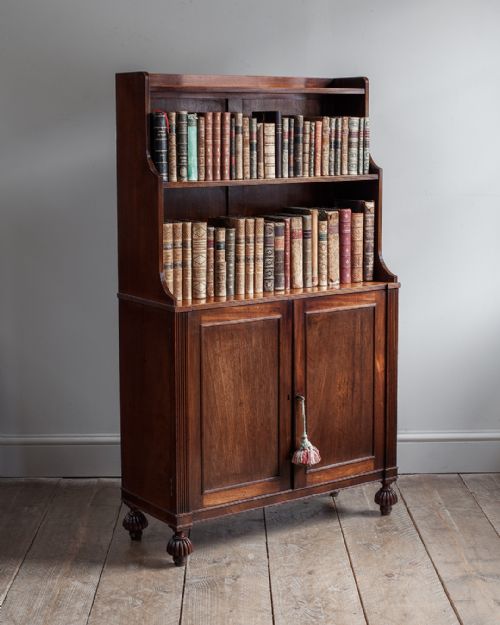
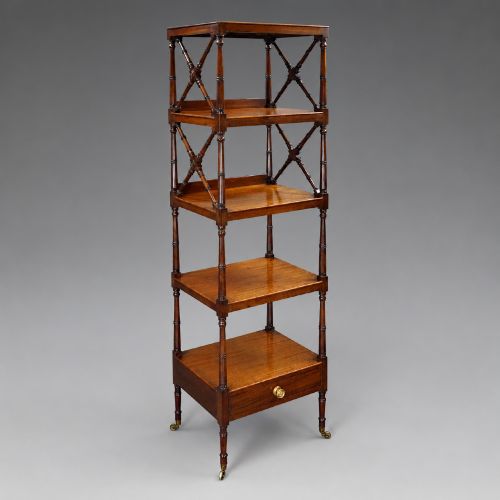
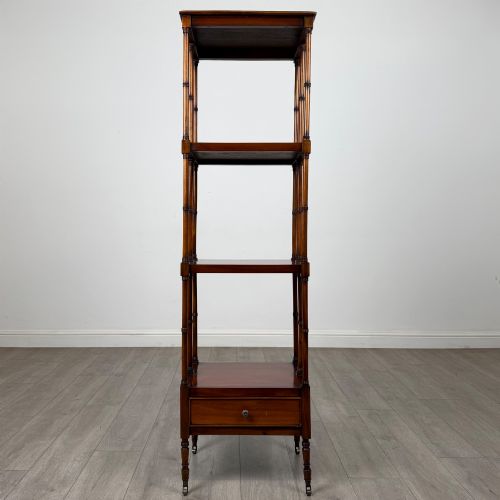
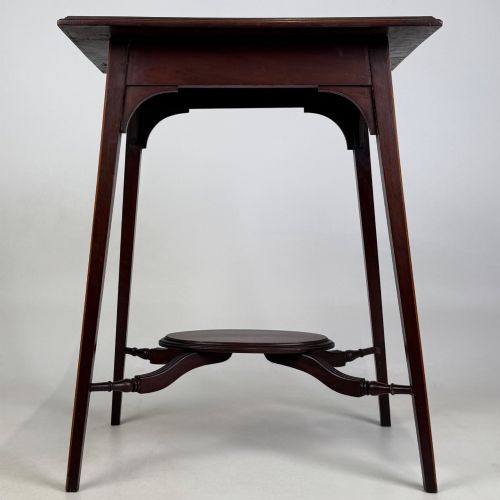
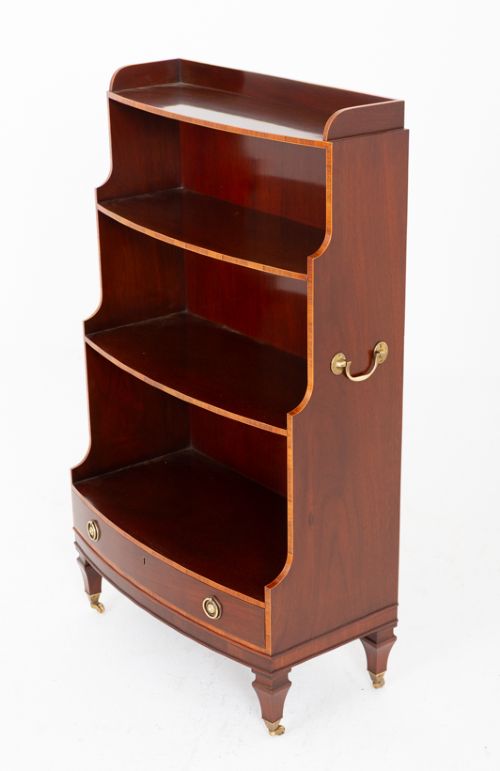
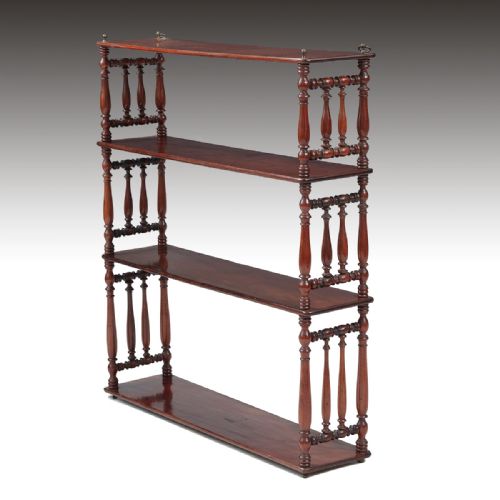
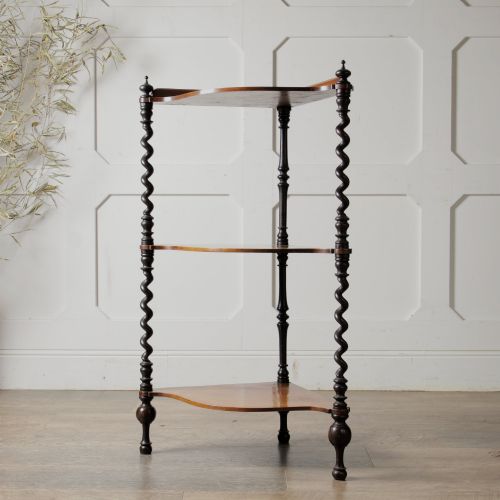
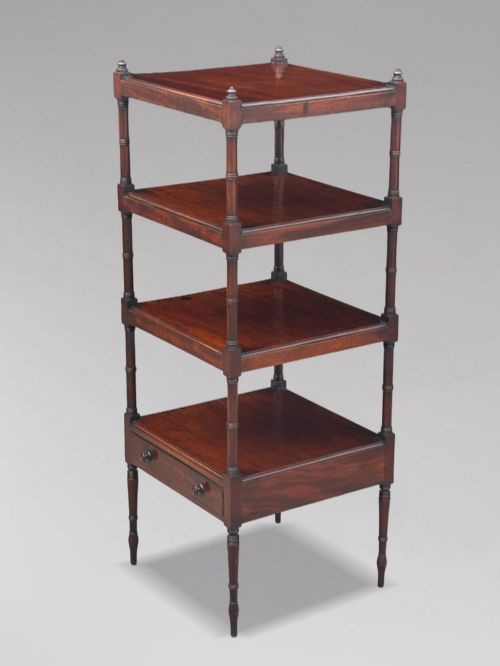
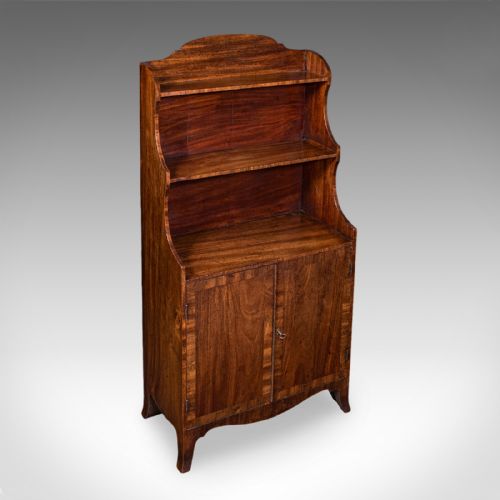
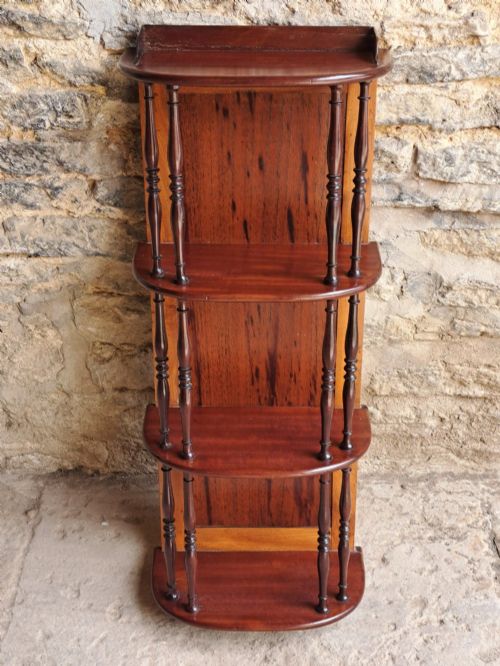
Mahogany tiered display shelves encompass multiple forms across this page, including whatnots, étagères, waterfall bookcases, and wall hanging shelves.
Buyers seeking mahogany tiered display shelves frequently encounter nineteenth-century pieces spanning the Regency, Victorian, and Georgian eras, along with Edwardian and later variations.
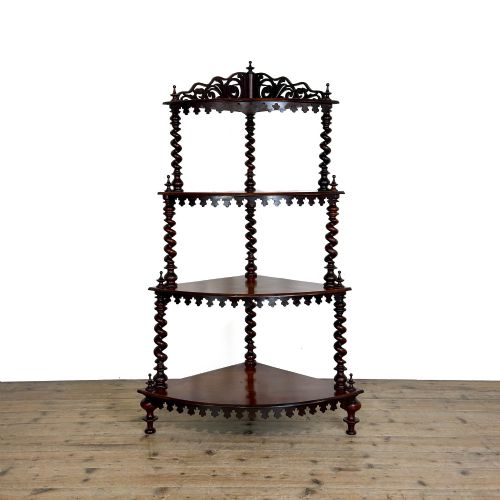
The selection ranges from corner whatnots and small wall shelves to multi-tiered freestanding bookcases and stacking units.
How they were made
Cabinetmakers utilised solid mahogany and wood veneers, frequently incorporating marquetry inlay, boxwood, and walnut details.
Structural hardware and decorative elements often include brass components, such as castors on freestanding pieces and hanging brackets on wall units.
A nineteenth-century whatnot once served as the ultimate test for whether an interior possessed enough porcelain cats and brass knick-knacks.
What varies in quality
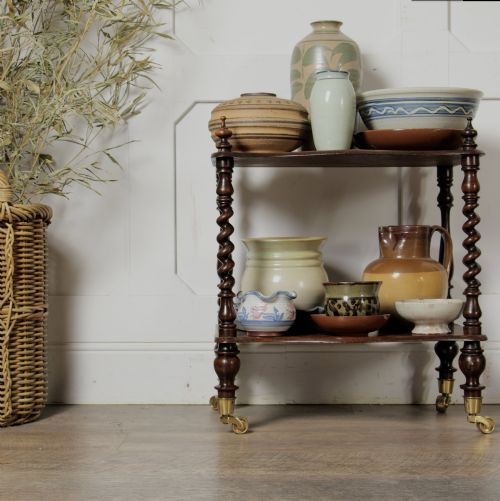
Construction methods and timber selection distinguish simpler utilitarian shelving from finer examples bearing deliberate design choices like barley twist supports or detailed marquetry.
The integration of secondary materials, such as brass castors and inlay work, marks the distinction between standard production pieces and superior workshop output.
Gillows·Globe Wernicke
The Mahogany Tiered Display Shelves Glossary
- Étagère
- A piece of furniture consisting of a set of open shelves for displaying small articles. These pieces often share similarities with whatnots and wall shelves.
- Waterfall bookcase
- A set of open shelves where each tier steps back progressively from bottom to top. This creates a distinctive cascading profile common in nineteenth-century designs.
- Marquetry
- The art and craft of applying pieces of veneer to a structure to form decorative patterns. Craftsmen use various coloured woods to create intricate surface designs.
- Barley twist
- A type of turning shaped like a spiral or helix. This decorative woodworking technique frequently appears on upright supports of nineteenth-century stands.
Mahogany Tiered Display Shelves: Frequently Asked Questions
What are mahogany tiered display shelves used for?
These pieces serve primarily to hold books, decorative objects, and collections in domestic interiors. Their multi-level design allows for organised display without occupying excessive floor space.
Depending on whether the unit is a wall shelf, corner whatnot, or freestanding étagère, they adapt easily to parlours, studies, and living rooms for daily use.
How do I tell a Regency whatnot from a Victorian one?
Regency pieces often display cleaner classical proportions, restraint in ornamentation, and origins near the early nineteenth century. They rely on elegant framing and occasionally brass detailing.
Victorian variants frequently introduce heavier turning, such as barley twist columns, or more ornate flourishes like marquetry inlay, reflecting the shifting tastes of the later period.
Are wall hanging shelves sturdy enough for heavy books?
Wall hanging shelves are generally built for lighter volumes, decorative ornaments, or smaller collections rather than dense, heavy folios. Their capacity depends entirely on the timber frame and secure wall fixings.
Freestanding whatnots and bookcases offer greater structural support for heavier reading material due to their upright floor-standing legs.
How should I care for mahogany shelving?
Maintenance involves dusting regularly with a soft cloth and avoiding direct sunlight, which can fade the rich tones of the mahogany timber. Excessive humidity changes should also be prevented to protect veneers and joints.
Occasional light polishing with appropriate furniture wax helps preserve the finish without building up heavy residues on the wood surface.