
Regency Mahogany Shelving
Regency mahogany shelving offers structured open storage, combining rich timber with clean classical proportions to display books and objects.
Regency Mahogany Shelving
When you search for regency mahogany shelving, you encounter tiered bookcases, wall hanging shelves, and freestanding what-nots designed for domestic display. These pieces originate primarily from the nineteenth century, including pieces built in the Regency period alongside later revivals.
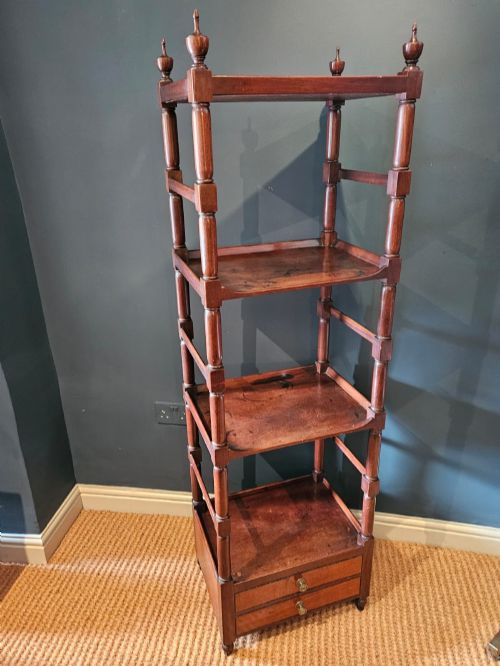
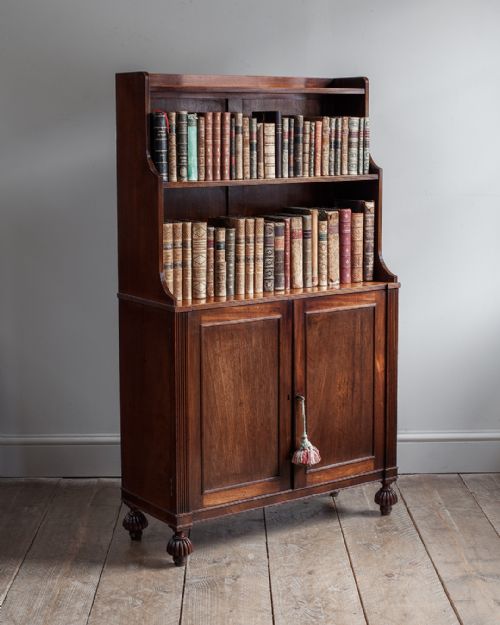
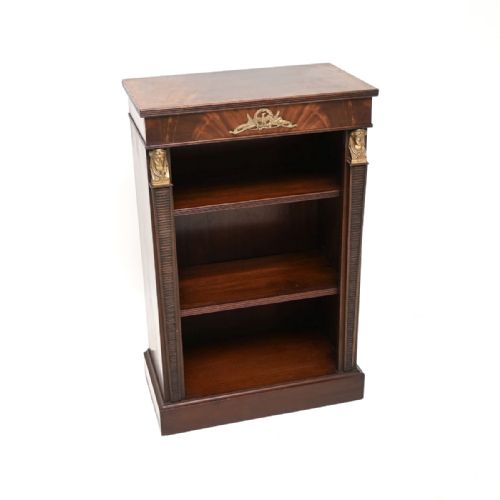
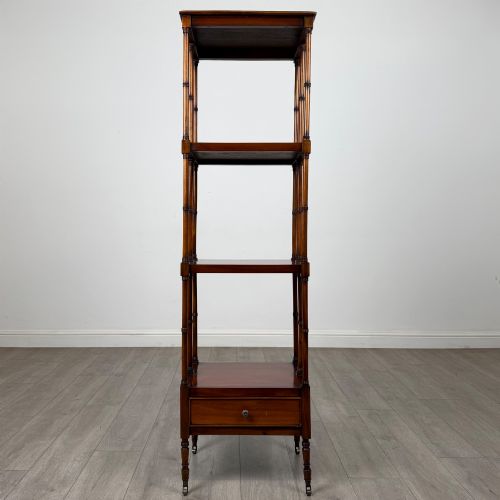
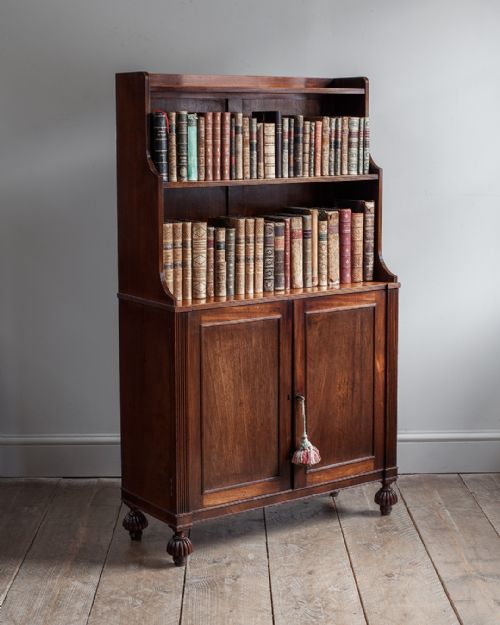
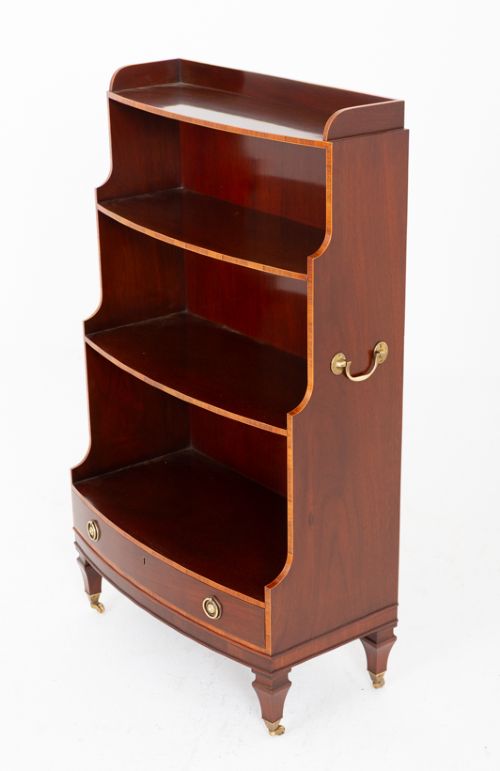
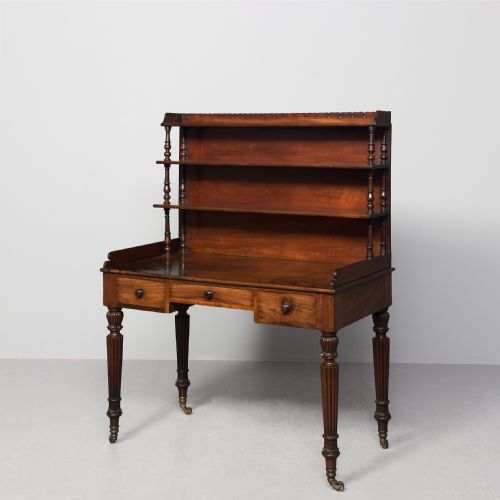
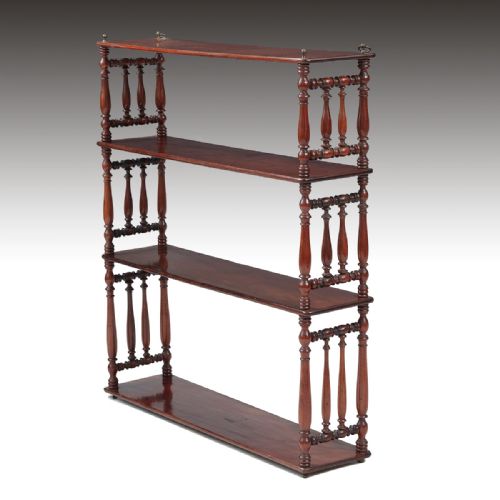
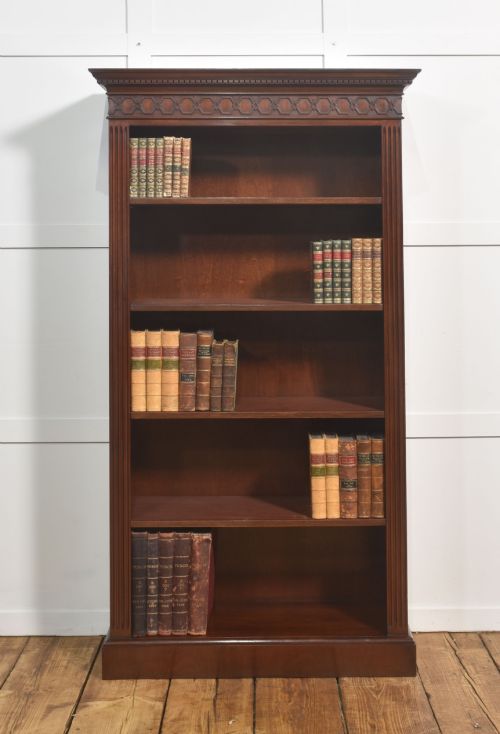
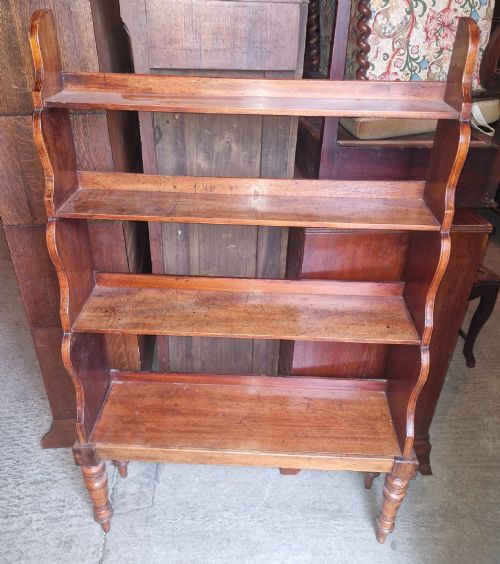
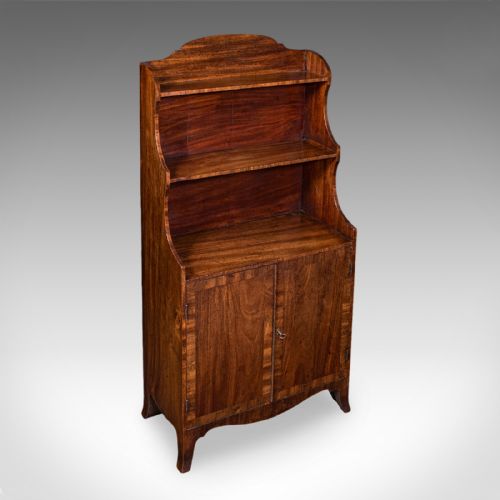
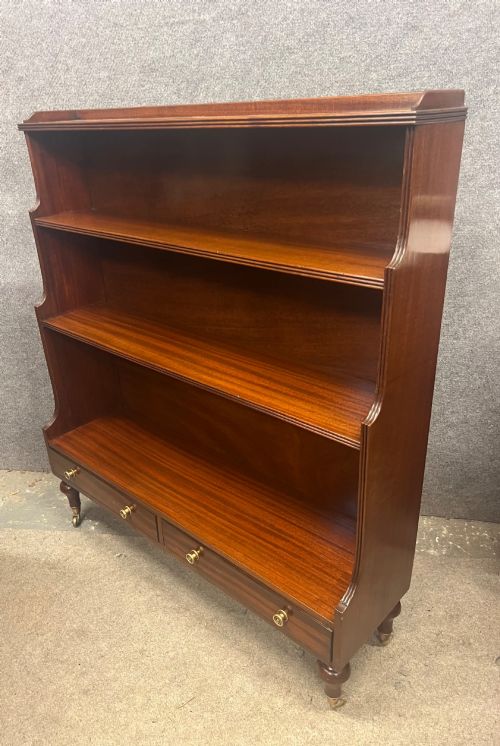
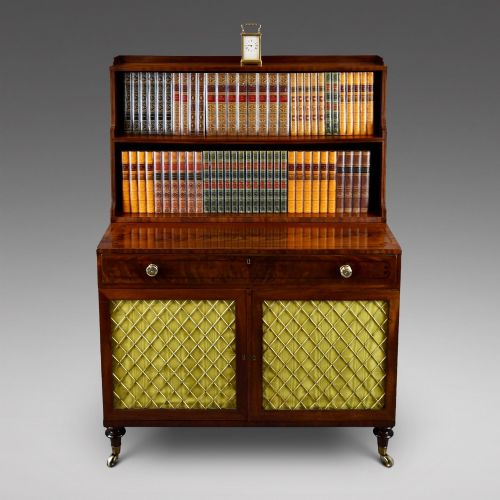
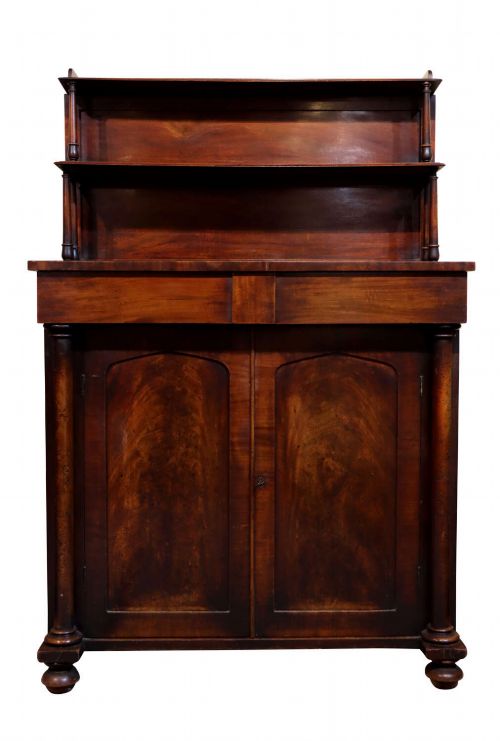
The most common forms on this page include waterfall bookcases with stepped tiers and multi-tiered étagères supported by slender uprights. Open bookcases and dwarf bookcases also appear frequently, alongside side cabinets with integrated shelving units.
While many examples belong strictly to the Regency era or the broader Georgian period, subsequent eras produced significant revival pieces. Edwardian and twentieth-century interpretations adopt the same classical vocabulary in mahogany and flame mahogany veneer.
Distinctions in quality
The degree of figuration in the mahogany veneer separates standard storage from exceptional cabinet work. Flame mahogany requires precise matching across tiers and doors, creating movement that plain timber lacks.
Proportion and the refinement of turned supports dictate the visual balance of a piece. Slender uprights and crisp mouldings distinguish superior examples from heavier, later revival furniture.
Portable bookshelves from the nineteenth century allowed travellers to carry their portable libraries securely from room to room.
James Mein of Kelso
The Regency Mahogany Shelving Glossary
- Waterfall bookcase
- A tiered shelving unit where each successive shelf steps back from the one below it. This stepped profile creates a cascade effect popular in the nineteenth century.
- Flame mahogany
- A veneer cut from the fork of the mahogany tree where the branch joins the trunk. It produces a distinctive flickering flame pattern highly prized by cabinetmakers.
- Breakfront
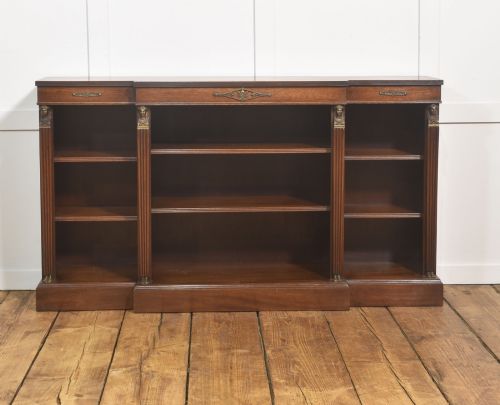
- A piece of furniture whose central section projects forward from the flanking wings. This architectural arrangement adds depth and shadow to large bookcases and side cabinets.
- Étagère
- A French term for a set of open shelves used for ornament or storage. These portable or freestanding pieces emerged during the Regency period.
Regency Mahogany Shelving: Frequently Asked Questions
Where were wall hanging shelves used?
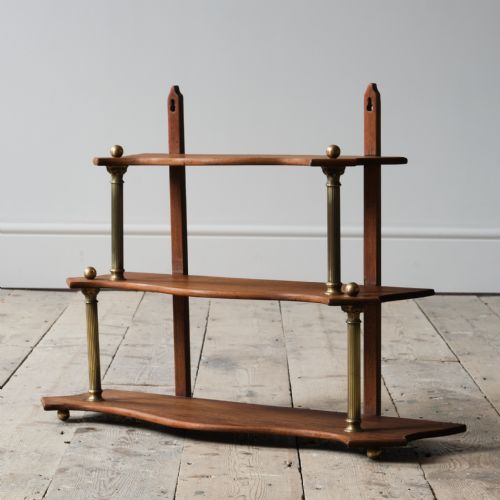
Hanging shelves provided compact storage in parlours and studies where floor space was limited.
These smaller pieces often incorporate pierced sides or brass hanging brackets for secure wall attachment.
How do I spot a Regency revival piece?
Revival pieces date from later periods such as the Edwardian era or the nineteen-thirties while copying earlier Regency forms.
Examination of the secondary woods, timber preparation, and interior construction helps distinguish nineteenth-century originals from twentieth-century interpretations.
What is the difference between a whatnot and a bookcase?
A whatnot is primarily an open tiered stand designed for display, featuring slender uprights and multiple accessible levels.
Bookcases of this period frequently incorporate enclosed cupboards at the base beneath open upper shelving.