

Antique Music Paper Stand
These pieces gather scores and folios together, bringing order to a room through the simple dignity of an antique music paper stand.
Antique Music Paper Stand
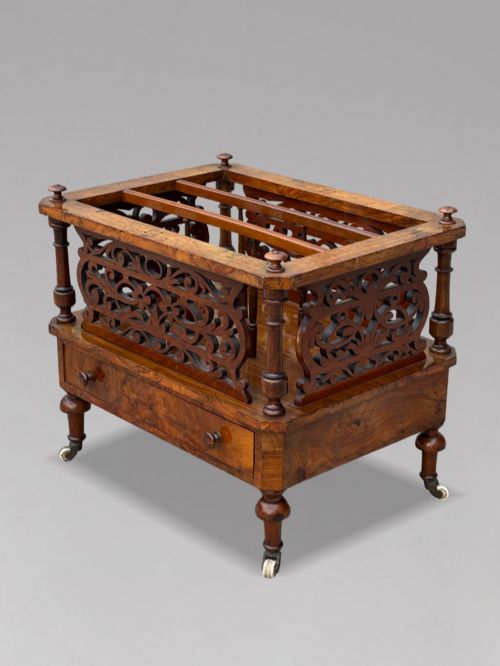
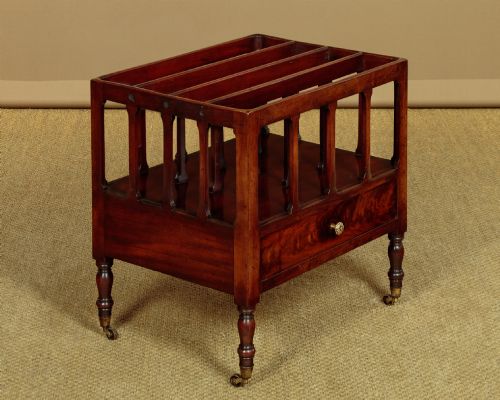
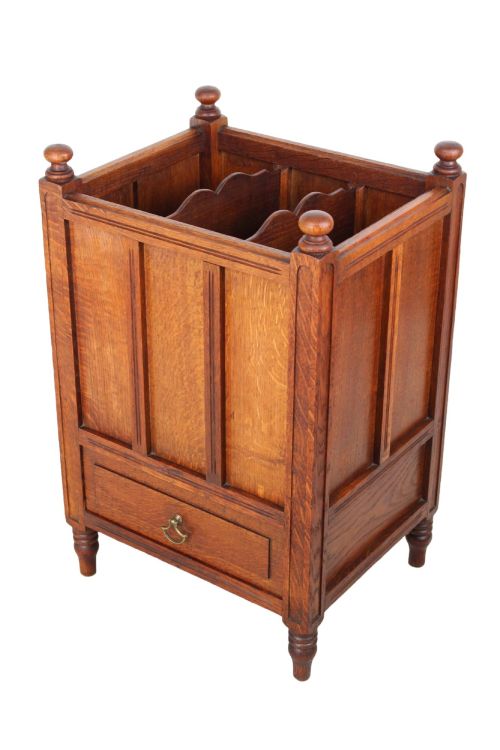
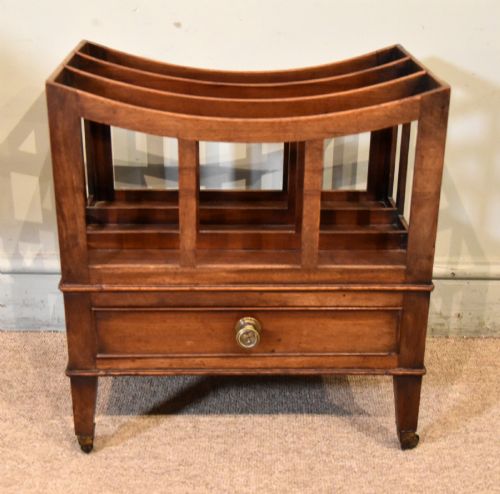
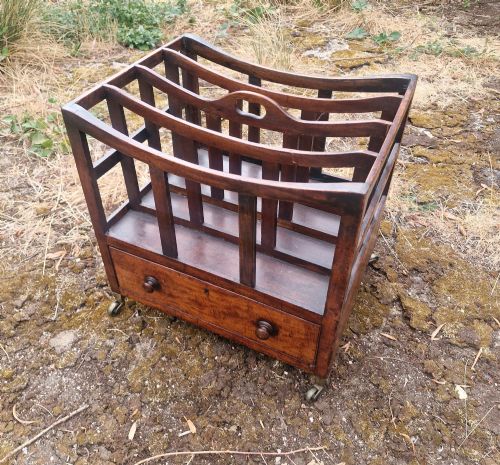
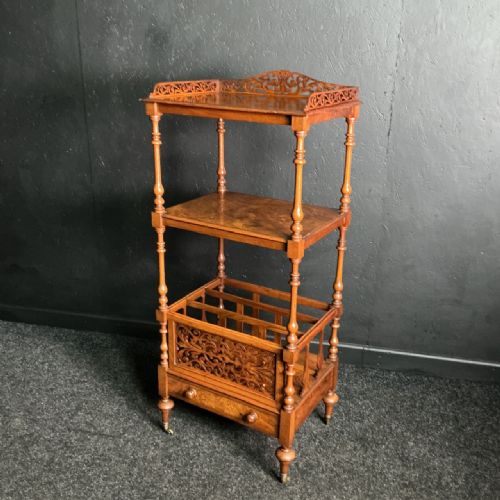
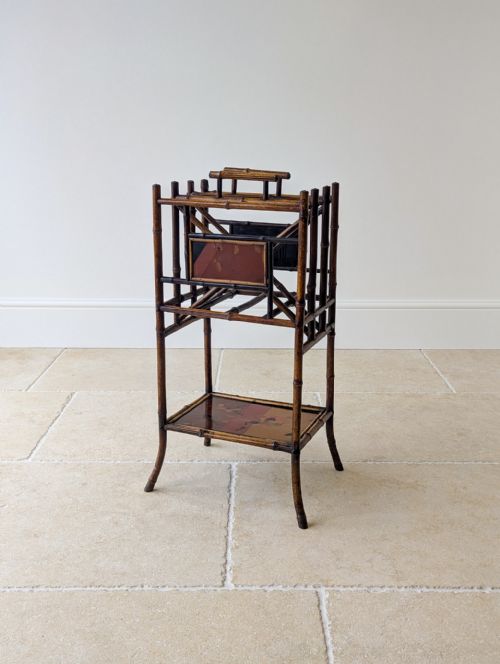
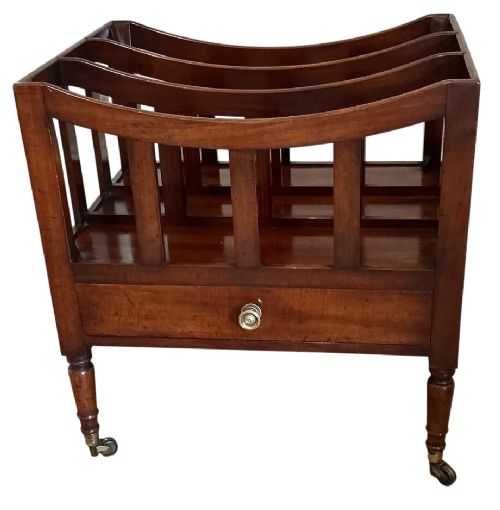
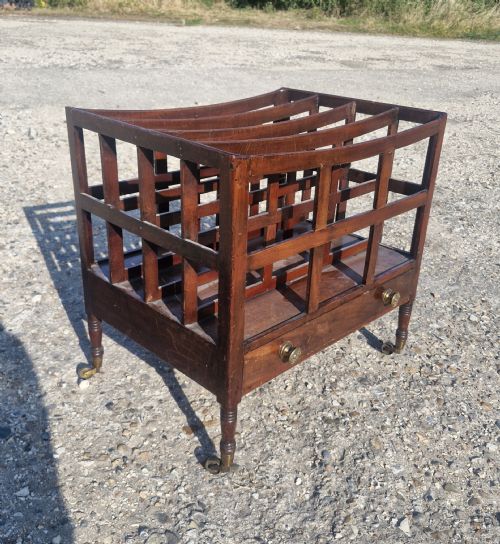
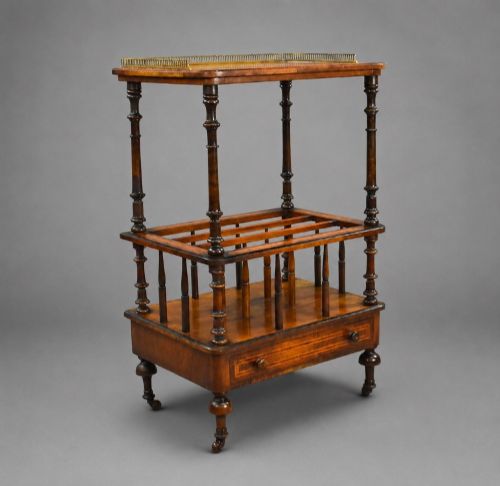
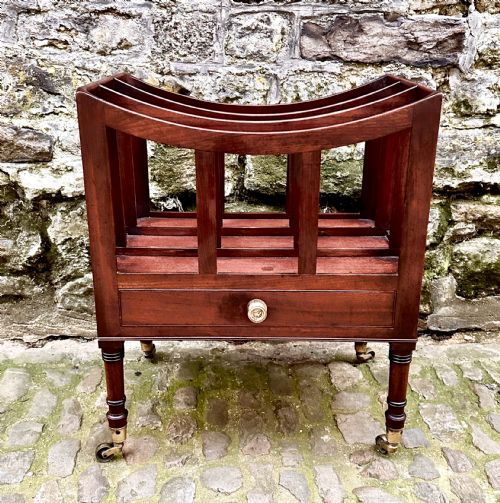
An antique music paper stand typically takes the form of a Canterbury, a compartmented stand designed originally for sheet music and now frequently used for magazines and newspapers. The listings demonstrate that these pieces span from the Georgian and Regency eras through the Victorian and Edwardian periods into the early twentieth century.
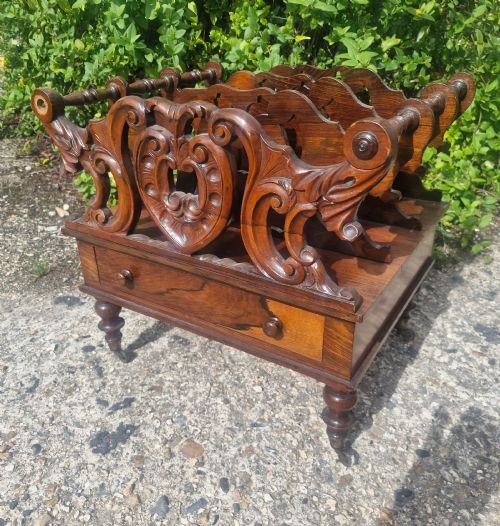
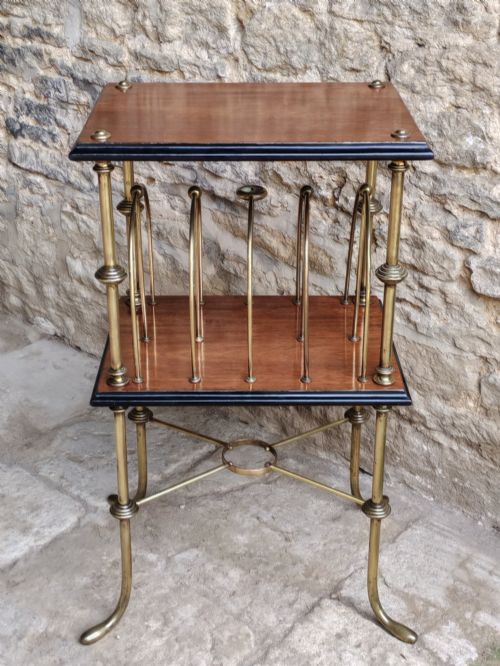
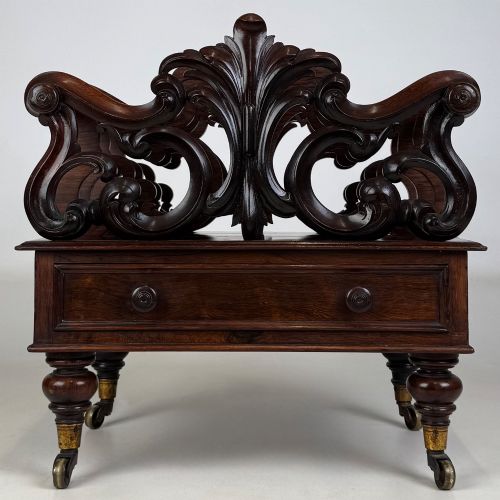
Makers of the nineteenth century favoured rich timbers such as mahogany, rosewood, and burr walnut, often combining vertical partitions with a low drawer or castors. Alongside traditional open canterburys, buyers encounter enclosed music cabinets, revolving magazine stands, and multi-functional side tables.
Materials and construction
Cabinet makers relied heavily on timber selection, utilising mahogany, rosewood, and walnut for their grain and stability. Mahogany and rosewood form the structural divisions of early nineteenth-century pieces, while burr walnut provides highly figured veneered surfaces on later Victorian examples.
Brass fittings appear frequently, serving as castors on the feet or decorative handles on drawers. Metal and ceramic components also emerge in rotating stands and specialised filing units from the later periods.
Some nineteenth-century canterburys include secret side compartments once hidden behind carved folding leaves for private scores.
Design and execution
Quality rests in the crispness of the joinery and the selection of timber veneers, where highly figured burr walnut or rich rosewood elevates a piece above standard utility items. Subtle details such as carved Prince of Wales feathers, fine turning on upright supports, and original brass castors distinguish superior workshop output.
The structural integrity of the vertical partitions dictates longevity, as these dividers endure constant weight from heavy folios. Finer examples display meticulous dovetailing in the lower drawer and careful matching of grain across the entire frame.
The Antique Music Paper Stand Glossary
- Canterbury
- A low stand fitted with upright divisions for holding sheet music, newspapers, or periodicals. This form often incorporates a small drawer beneath the rack and rests on short legs with castors.
- Whatnot
- An open set of multiple shelves used for displaying or storing small objects and papers. They frequently appear in walnut or rosewood from the Victorian period.
- Veneer
- A thin layer of highly figured wood, such as burr walnut, applied over a secondary timber base. This technique creates decorative patterned surfaces on the exterior of cabinets.
- Castor
- A small wheel attached to the legs of furniture to allow easy movement across the floor. Brass variants are common on nineteenth-century pieces.
Antique Music Paper Stand: Frequently Asked Questions
What is a Canterbury?
A Canterbury is a compartmentalised stand designed to hold loose sheets of music or periodicals off the floor.
They emerged in the eighteenth century and remained popular through the Victorian era as domestic music-making grew.
How were music cabinets used?
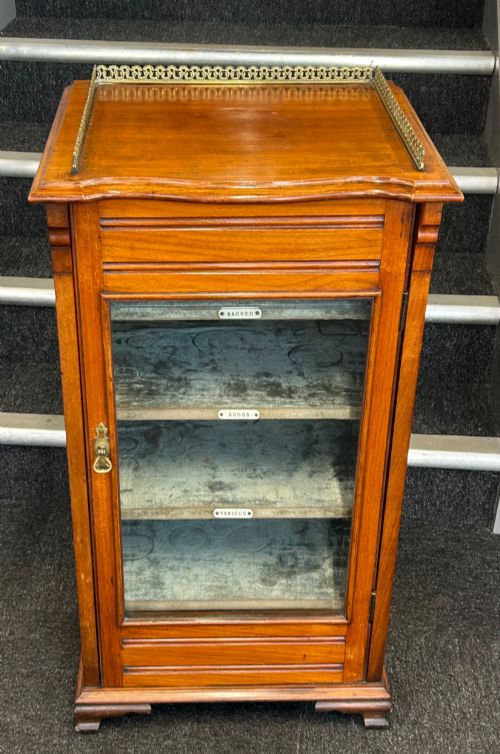
Music cabinets provided enclosed storage with interior shelves specifically sized for bound volumes and sheet music folios.
Their locking doors helped protect delicate paper collections from dust and light exposure.
What woods were commonly used?
Mahogany and rosewood dominate the earlier Regency and William IV pieces, offering deep colour and strong structural grain.
Victorian makers favoured burr walnut for its complex patterns, often applying it as a veneer over solid carcase woods.
Are these stands suitable for modern magazines?
The vertical compartments accommodate contemporary periodicals, newspapers, and large format books with ease.
Their original function for sheet music translates directly to modern storage needs in a living room or study.