
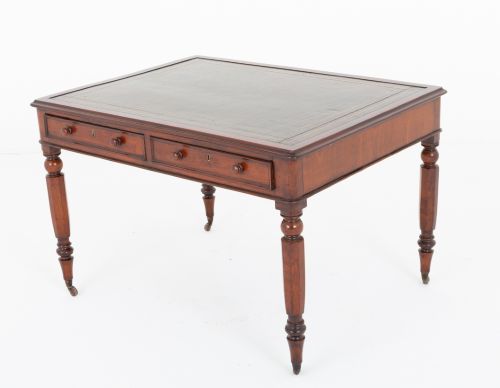
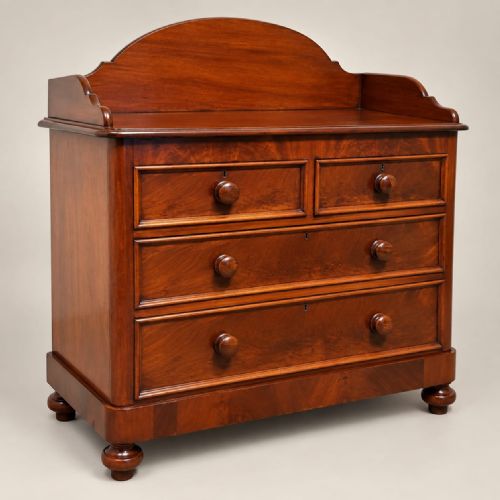
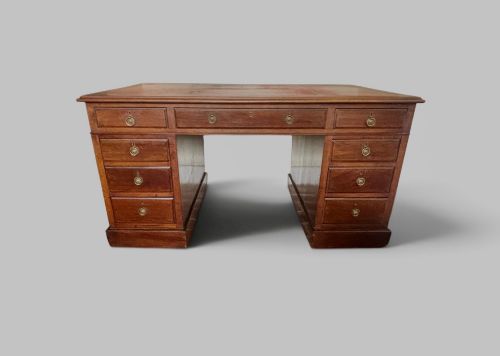
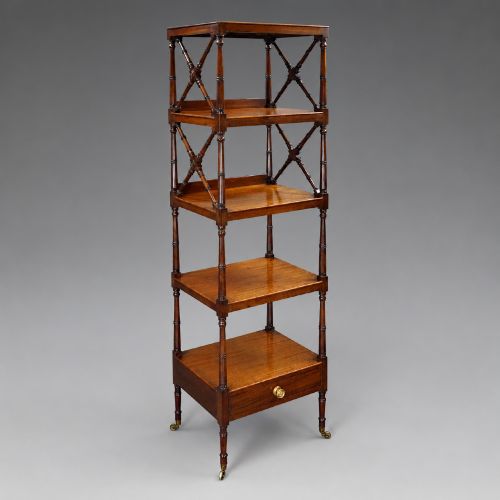


Mahogany Table with Drawers
When you search for a mahogany table with drawers, you are looking at practical English furniture built for storage and writing across multiple centuries.

Mahogany Table with Drawers
A mahogany table with drawers encompasses a wide range of domestic forms spanning from the Georgian and Regency eras through to the Victorian and Edwardian periods. These pieces include compact side tables, larger writing desks, library tables, and Pembroke tables designed with integrated storage compartments.
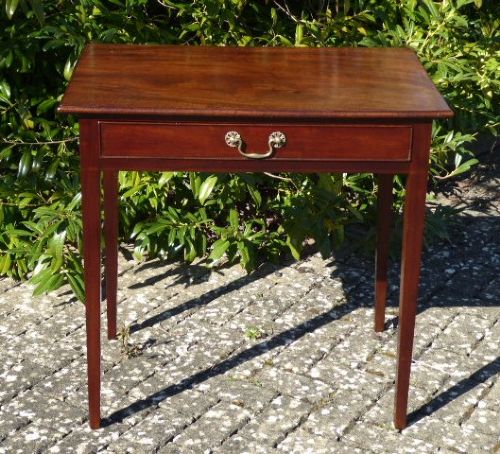
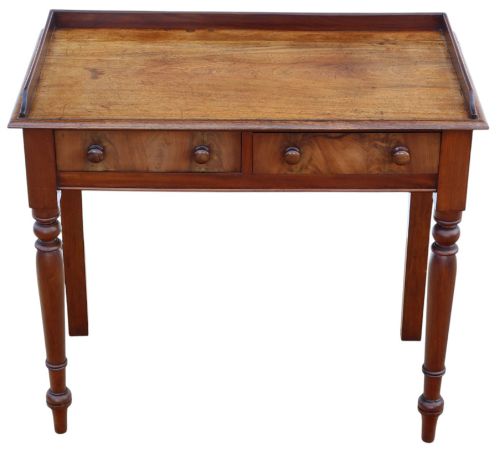
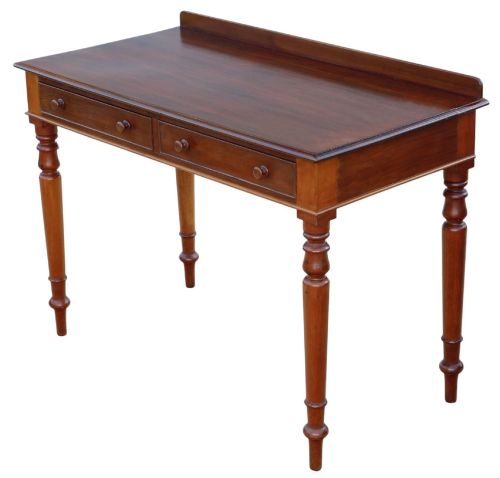
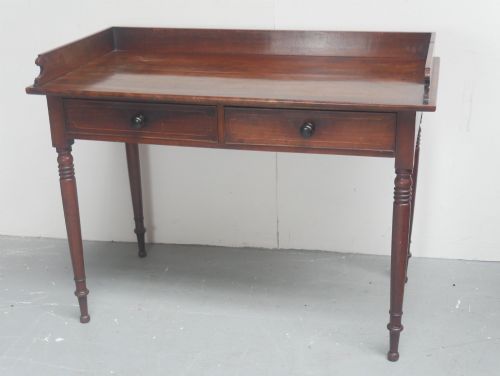
The version you are most likely to meet on this page is a nineteenth-century or Victorian side table featuring one or two frieze drawers beneath the top. Such pieces were produced in large numbers to serve as functional surfaces in bedrooms, parlours, and studies.
Originating primarily from British workshops, these tables demonstrate how cabinetmakers combined a smooth timber surface with concealed or exposed drawer spaces. The selection ranges from simple provincial side tables to sophisticated pedestal desks and drum tables.
How They Were Made
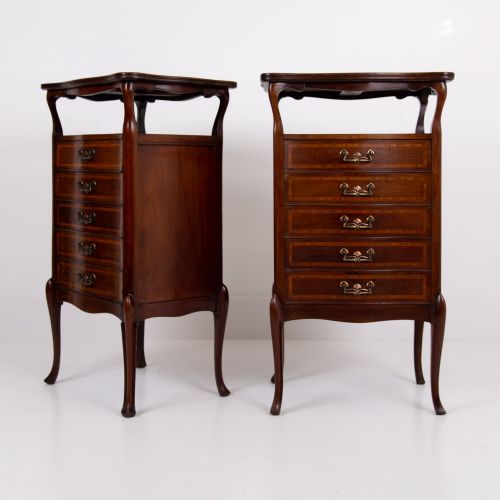
Makers relied heavily on solid mahogany and flame mahogany veneer applied to secondary framing timbers. Workshops frequently incorporated contrasting inlays of satinwood, boxwood, and partridge wood to define drawer edges and borders.
Functional hardware such as brass handles, knobs, and castors were integrated into the design, particularly on pedestal desks and drum tables. Leather inserts were commonly fitted into the writing surfaces of desks and library tables.
Construction techniques included dovetailed drawer construction and turned, tapered, or reeded legs supporting the main body of the table. Some pieces utilised crossbanding and decorative brackets to enhance the structural corners.
Mahogany Table with Drawers Retail Price Guide 2026
Typical asking prices for mahogany table with drawers among the pieces listed under this phrase on Sellingantiques today, from the lower quarter to the upper quarter. They describe what is for sale here now, not the wider market.
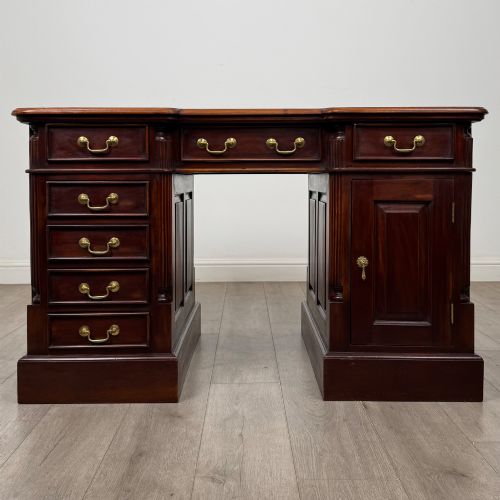
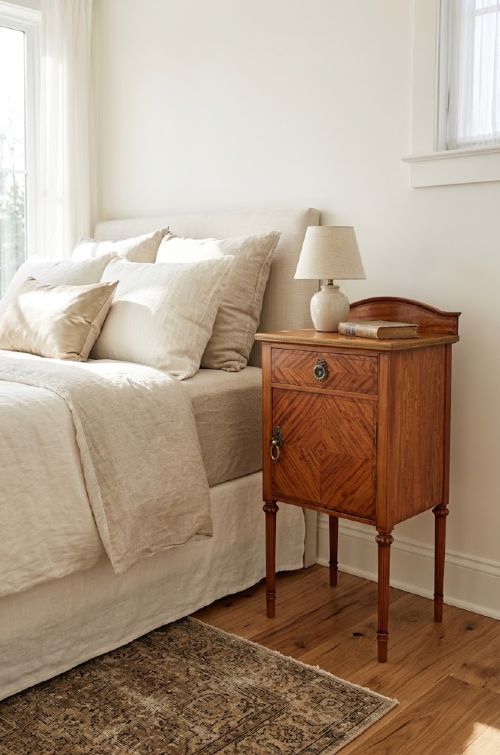
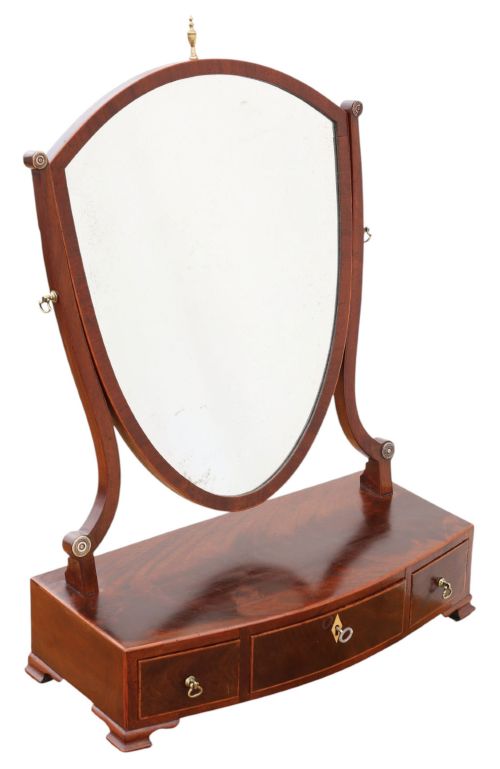
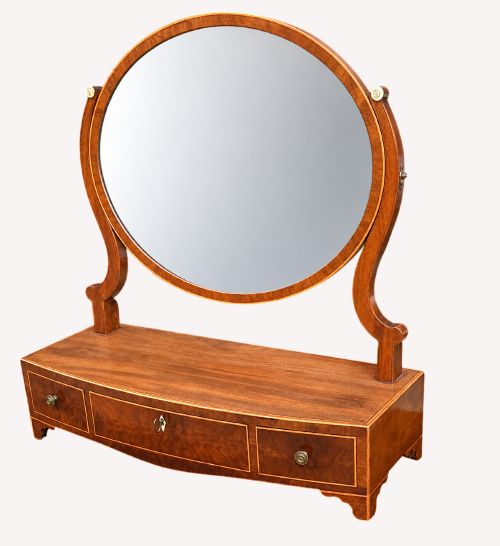
Listings feature side tables, pedestal desks, and dressing table mirrors spanning the Georgian, Regency, and Victorian periods.
What Varies in Quality
The grade of the timber creates a distinct separation across the range. Finer pieces display richly figured flame mahogany or Cuban mahogany, whereas standard examples utilise plain straight-grained stock.
The execution of secondary details distinguishes workshop output. Superior tables exhibit precise crossbanding, finely turned legs, original brass hardware, and hand-cut dovetails within the drawer boxes, while lesser pieces rely on simpler joints and plain timber.
Proportion and architectural balance dictate the overall standing of a piece. Well-considered dimensions and restrained decorative carving indicate higher tier cabinetmaking compared to heavier, utilitarian builds.
Edwards and Roberts·Hobbs and Co
The Mahogany Table with Drawers Glossary
- Frieze drawer
- A drawer built into the upper band or apron of a table directly beneath the top. These drawers are common on side tables and Pembroke tables.
- Crossbanding
- A decorative border technique where strips of veneer are laid across the grain of the primary wood. This method frames the top surface or drawer fronts of better furniture.
- Flame mahogany
- A veneer cut from timber taken from the fork of the tree, producing a distinct flickering flame pattern. It was favoured for high-status drawer fronts and table tops.
- Pembroke table
- A small drop-leaf table with hinged flaps on either side and usually one or two drawers. It was designed to be easily moved around a room.
- Drum table
- A circular library table resting on a central pillar, often fitted with a ring of alternating real and dummy drawers around the circumference.
Mahogany Table with Drawers: Frequently Asked Questions
How were mahogany tables with drawers used?
These tables served multiple domestic purposes depending on their specific form. Side tables and console tables provided surface space and minor storage in hallways and reception rooms, while writing tables and desks accommodated correspondence and paperwork.
Smaller variations such as work tables and Pembroke tables were utilised for sewing, needlework, and occasional tea service. The integrated drawers kept small implements, writing materials, and personal items neatly stored away from the main surface.
What is a pedestal desk?
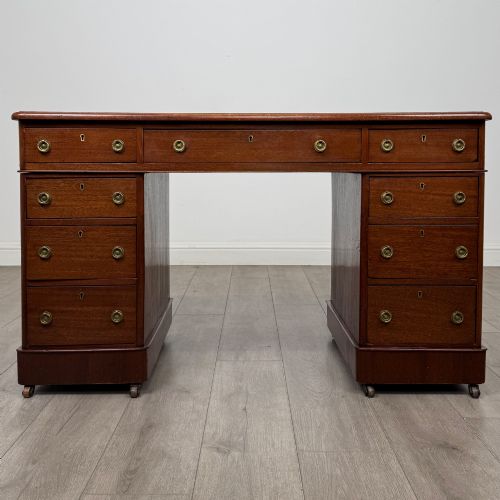
A pedestal desk consists of a large writing surface supported by two separate pedestals containing banks of drawers. These pieces often feature a central frieze drawer above the kneehole space.
Many examples include leather-lined writing surfaces and original brass handles. They were built for heavier administrative use in studies and libraries.
How should I care for mahogany furniture?
Maintain the timber by keeping the table away from direct heat sources and strong sunlight, which can dry out the wood and fade the polish. Regular dusting with a soft, dry cloth is sufficient for daily upkeep.
Avoid using silicone-based sprays or harsh chemical cleaners that can degrade the traditional wax finish. An occasional application of a quality beeswax helps nourish the grain and preserve the surface sheen.