

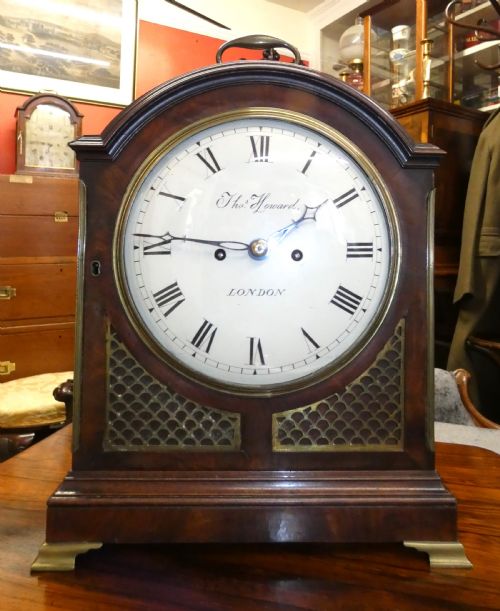
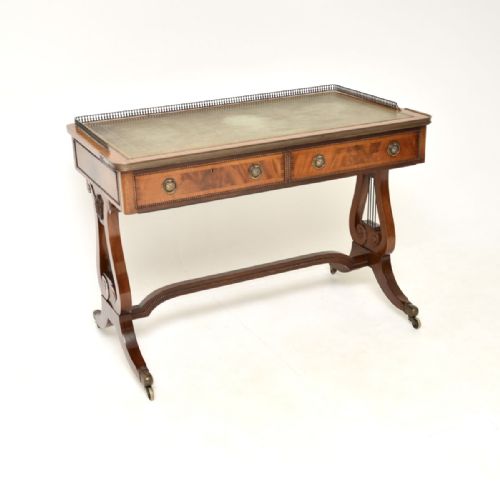
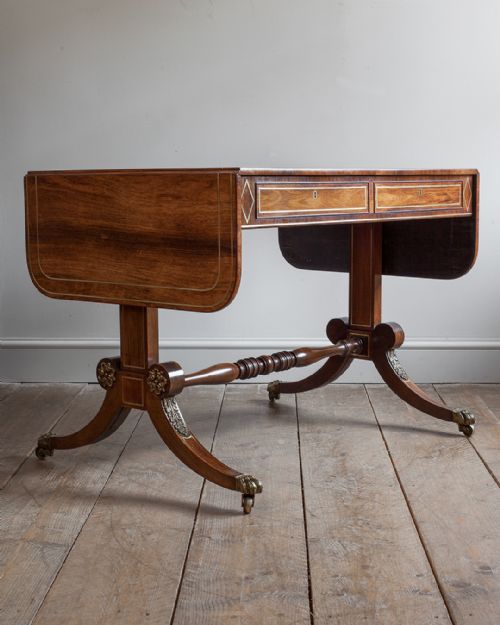
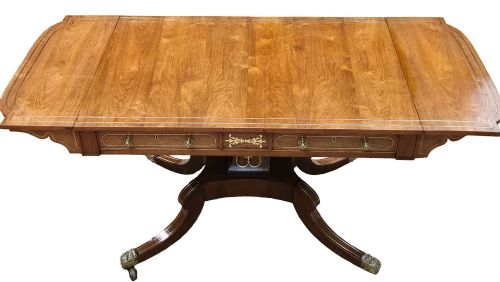



Regency Brass Mounted Desk
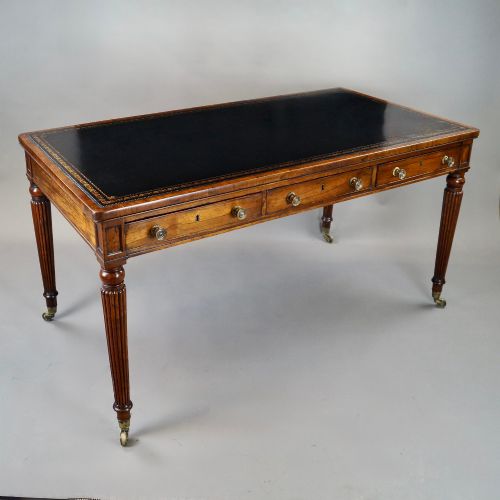
A regency brass mounted desk brings classical proportion and crisp metal detail to a room, offering a refined workspace built from rich timbers.
Regency Brass Mounted Desk
When you search for a regency brass mounted desk, you encounter writing tables, sofa tables utilised for correspondence, and bonheur du jours originating from the Regency period and the nineteenth century. These pieces combine utilitarian surfaces with decorative brass inlays, stringing, and mounts that trace the edges of drawers and tabletops.
The version you are most likely to meet on this page is a rosewood or mahogany writing table or sofa table, often featuring drop leaves, slender turned legs, and brass toe castors. Many examples display contrasting boxwood or brass inlay set directly into dark timber veneers.
What varies in quality
The division between standard workshop production and the finest London cabinet work lies in the crispness of the brass inlay and the selection of timber veneers. Superior pieces exhibit seamless mitres in the metalwork and perfectly matched grain patterns across every drawer front.
Regency Brass Mounted Desk Retail Price Guide 2026
Typical asking prices for regency brass mounted desk among the pieces listed under this phrase on Sellingantiques today, from the lower quarter to the upper quarter. They describe what is for sale here now, not the wider market.
The material selection across these listings relies heavily on exotic rosewood and flame mahogany paired with bright brass inlay.
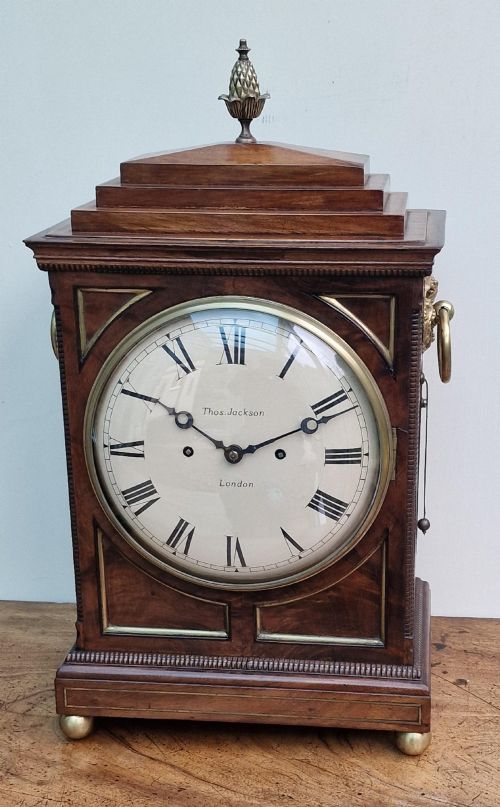
Thomas Jackson·John MaClean·Gillington of Dublin·Budgen Croydon·Berguer of the Strand·McCabe London·Gillows of Lancaster
The Regency Brass Mounted Desk Glossary
- Sofa table
- A rectangular table designed to stand in front of a sofa, featuring drop leaves on either side and usually two drawers. These tables often double as compact writing desks in period interiors.
- Bonheur du jour
- A light lady writing desk featuring a small cabinet or set of pigeonholes superstructure above the main writing surface. The form gained popularity during the Regency period.
- Writing slope
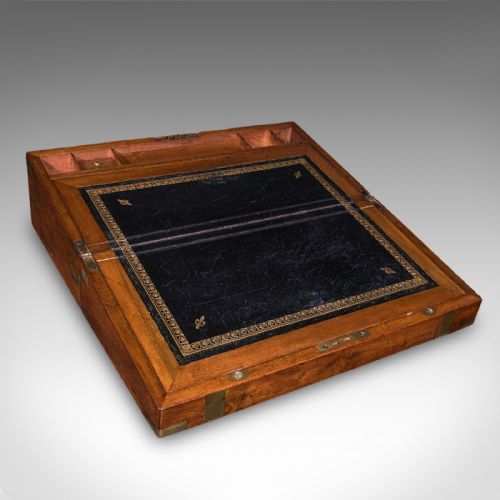
- A portable box with a hinged sloping lid that opens to reveal a velvet or leather writing surface and compartments for ink and paper. They rest on tables or desks for correspondence.
- Brass mount
- Cast or beaten brass ornamentation applied to the corners, legs, or aprons of furniture. They protect vulnerable edges and provide architectural contrast to dark woods.
- Fusee
- A conical pulley inside a clock movement that equalises the power of the mainspring as it winds down. It indicates precision clockmaking found in library and mantel clocks of the period.
Regency Brass Mounted Desk: Frequently Asked Questions
What is a brass mounted desk?
A brass mounted desk is a nineteenth century writing table or library piece decorated with cast brass handles, escutcheons, or inlaid brass stringing along the edges and drawer fronts.
These additions provide structural protection and a sharp visual contrast against dark rosewood and mahogany veneers.
Where were these desks placed?
Original owners positioned these tables in libraries, withdrawing rooms, or centre floor settings where all four sides could be admired. Sofa tables often stood directly behind upholstery in the middle of a room.
Writing slopes and smaller tables rested against walls or near windows to catch natural daylight for correspondence.
How do I care for rosewood and brass?
Maintain these surfaces by dusting gently with a dry, soft cloth and avoiding silicone polishes or excessive moisture. Keep timber away from direct heat sources and sunlight to prevent the rosewood from fading.
Natural beeswax applied sparingly helps preserve the warmth of the polished grain without harming the embedded brass elements.
How do I distinguish Regency style from the period?
Pieces made during the actual Regency period or under George IV exhibit specific proportions, classical motifs, and construction methods characteristic of early nineteenth century British cabinet making. Items labeled as Regency style often denote later nineteenth or twentieth century reproductions influenced by those original designs.
Examining secondary woods, drawer linings, and the wear on brass fixtures helps clarify the true age of a piece.