
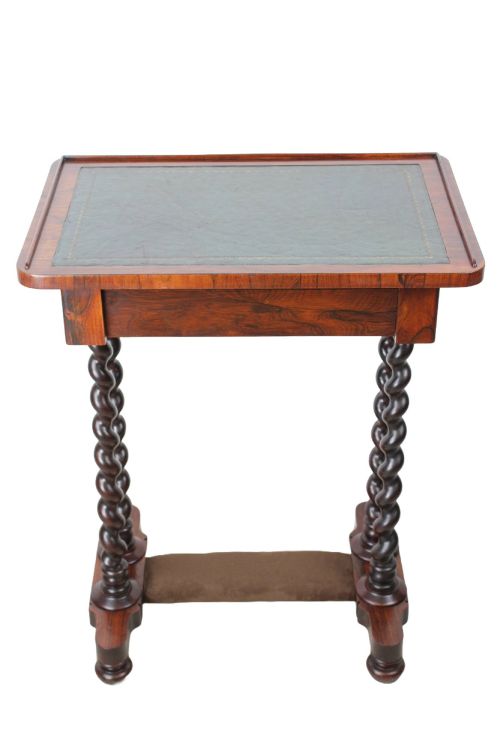
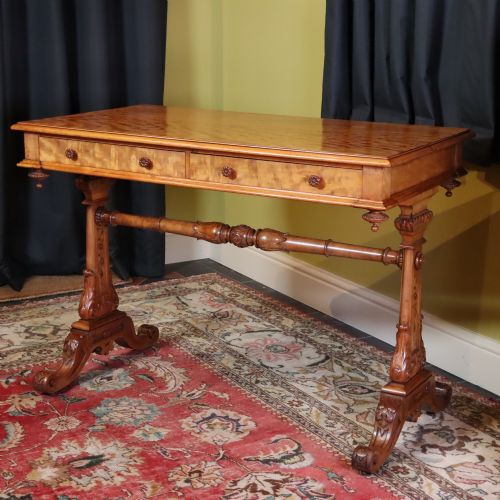
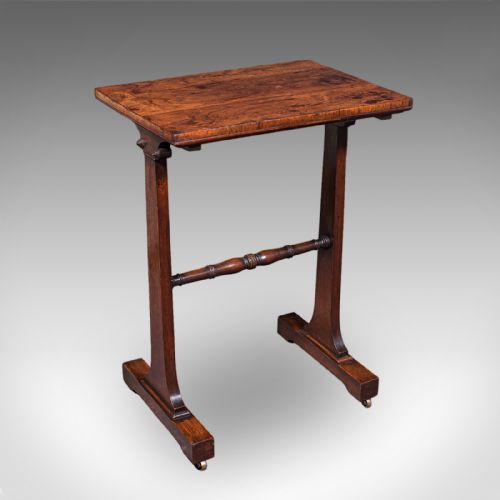
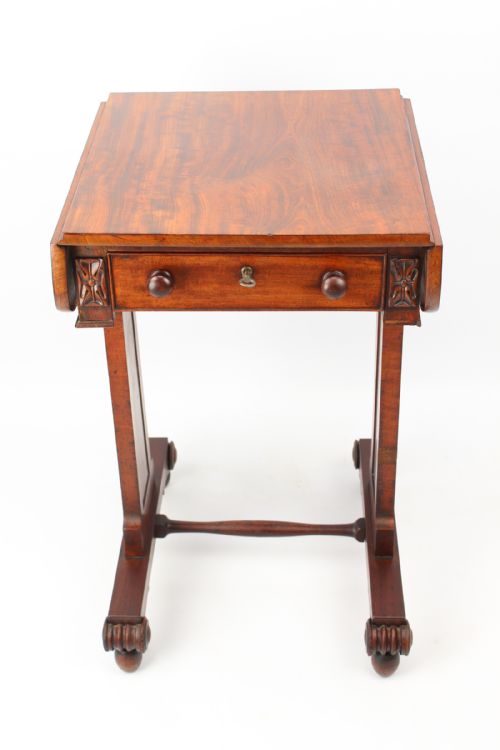

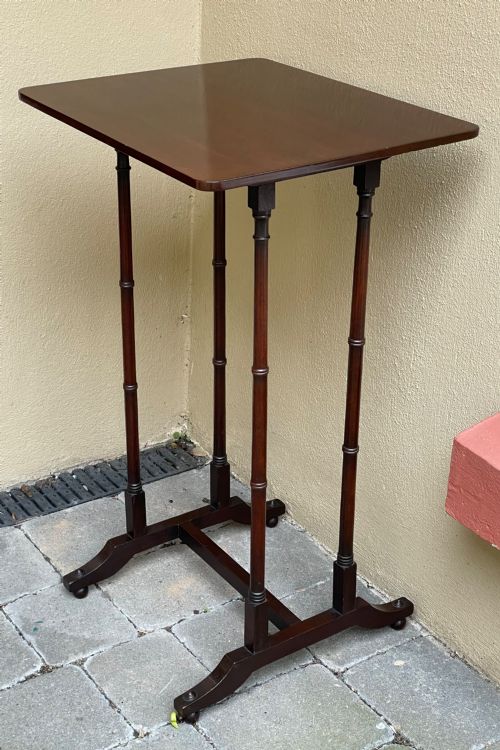


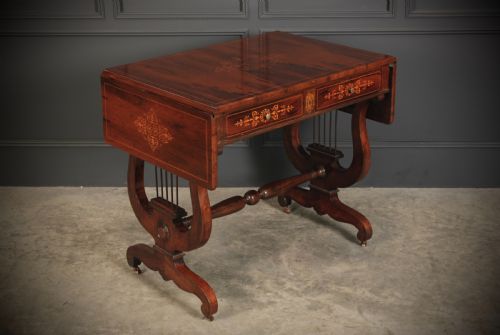
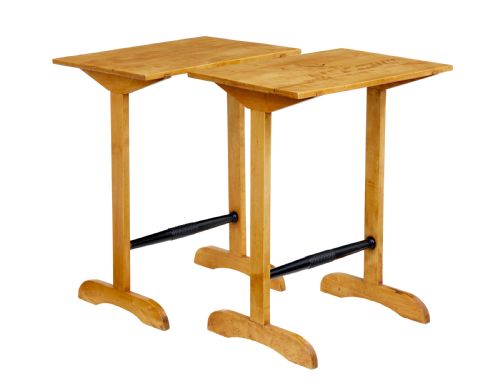


Trestle End Side Table
These trestle end side table pieces bring compact utility to a room, offering sturdy support and refined surfaces for lamps or reading material.
Trestle End Side Table
A trestle end side table provides a compact surface for lamps, drinks, and books while taking up minimal floor space in a morning room, lounge, or hallway.
The selections here span periods from the Regency era through to the Edwardian period, alongside twentieth-century Scandinavian and continental examples.
Forms include lamp tables, occasional tables, sofa tables, and chess top tables, generally featuring twin upright supports connected by a stretcher.
How they were made
Cabinet makers utilised dense hardwoods such as mahogany, rosewood, walnut, and satinwood to construct these tables, often selecting figured veneers for the tops.
Surface decoration frequently involved brass inlay, marquetry, and rich polish to highlight the natural grain of the timber.
Structural stability relied on traditional joinery techniques, securing the trestle ends firmly to the stretcher and the table top.
Materials across these listings include rosewood, mahogany, walnut, satinwood, birch, brass, leather, and marquetry inlay.
What varies in quality
The refinement of the timber selection and the precision of the grain matching across the top set finer examples apart from simpler utilitarian pieces.
Elaborate decorative details, such as intricate brass inlay or fine marquetry work, indicate a higher grade of craftsmanship.
Proportion and structural grace distinguish workshop pieces from more standard commercial production.
Whytock and Reid
The Trestle End Side Table Glossary
- Trestle end
- A form of support consisting of two vertical feet connected by a horizontal beam or stretcher. This design allows for solid floor placement and leaves leg room beneath the surface.
- Sofa table
- A rectangular occasional table traditionally designed to stand in front of or beside a sofa. These often feature drop flaps and small drawers.
- Marquetry
- The art of applying pieces of veneer to a structure to form decorative patterns and pictures. Craftsmen use varied timber colours to create contrast.
- Palisander
- A dense, dark timber often grouped with rosewood. It provides a heavy, polished surface with pronounced grain patterns.
Trestle End Side Table: Frequently Asked Questions
Where should I place a side table?
These tables fit easily beside a sofa, armchair, or in a hallway where surface space is needed without cluttering the room.
Their compact proportions also suit use as lamp tables or wine tables in a corner or morning room.
How do I identify a Regency table?
Regency pieces often display classical proportions, dark timbers like mahogany or rosewood, and sometimes brass inlay or palisander.
They date from the early nineteenth century and lean toward clean lines and architectural influence.
How do I care for polished wood?
Keep wooden surfaces away from direct heat sources and strong sunlight to prevent the timber and polish from drying out.
Dust gently with a soft cloth and avoid chemical sprays that can damage antique finishes.