
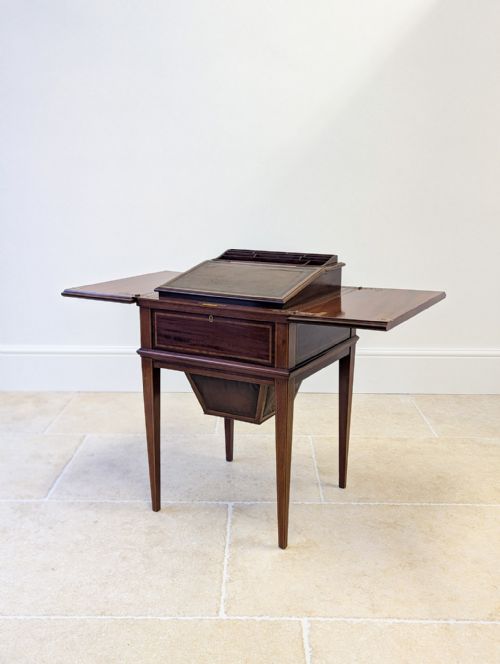
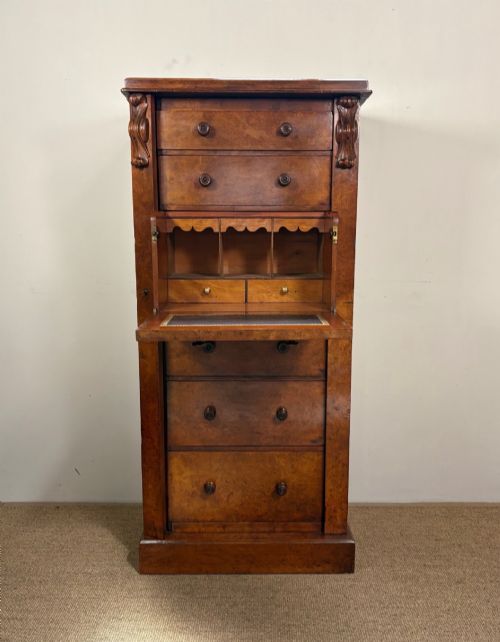
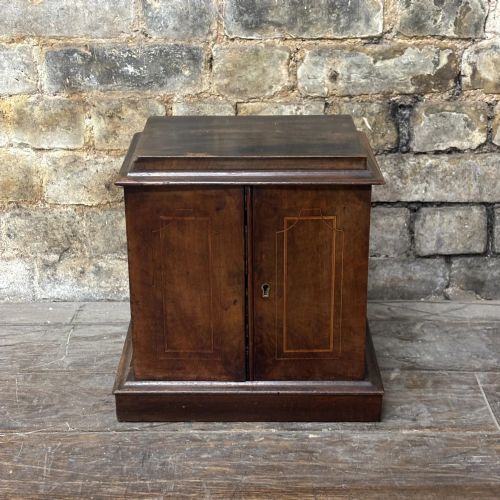
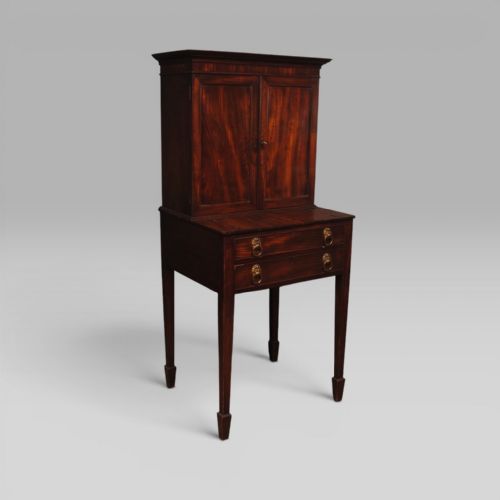
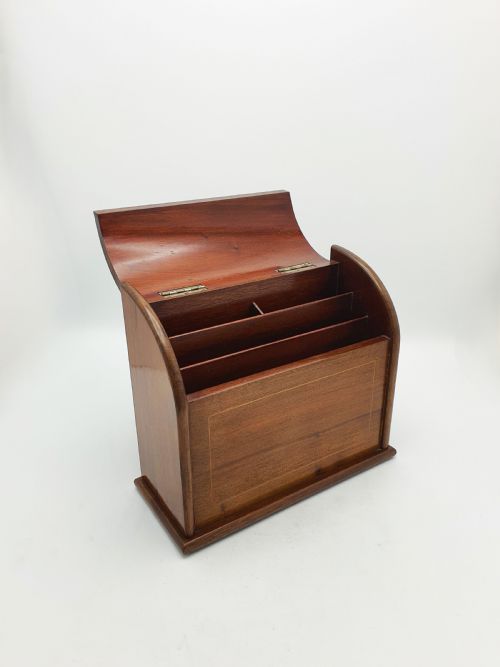


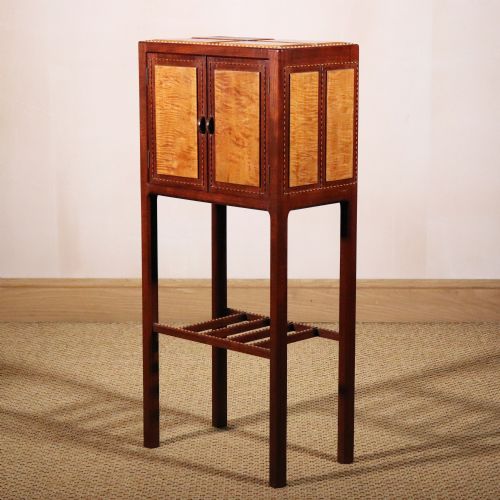


Mahogany Stationery Cabinet
A mahogany stationery cabinet is a practical desk accessory that keeps your correspondence tidy, and these pieces bring period character to any study.
Understanding the mahogany stationery cabinet
A mahogany stationery cabinet is designed to hold paper, envelopes and writing tools in fitted compartments. You will most frequently encounter Edwardian and 19th-century examples on this page, alongside Georgian pieces and occasional French filing cabinets.
Forms vary from table-top cabinets and correspondence boxes to larger house-front designs and writing boxes. Some pieces double as knife boxes or desk accessories, reflecting how domestic storage needs changed across the centuries.
Materials and construction
These pieces rely on solid mahogany and mahogany veneers, frequently paired with contrasting satinwood, boxwood or ebony inlay. Cabinet makers utilised these timbers for rich grain patterns and durable structural integrity.
Metal mounts in brass provide functional hardware for hinges, handles and locks, while internal fittings sometimes incorporate leather surfaces and fitted partitions for organised storage.
Retail Price Guide 2026
Typical UK retail prices for mahogany stationery cabinet, calculated from the Sellingantiques database of over a million retail prices indexed since 2003. This retail price guide relies exclusively on Sellingantiques data; no external sources or auction records are used, so the figures do not describe the wider market.
Materials recorded across these items include solid mahogany, brass mounts, leather linings, and contrasting satinwood and boxwood inlay.
Judging quality
Quality rests on the crispness of the boxwood or satinwood inlay and the selection of the mahogany timber itself. Finer examples display meticulous attention to internal stationery divisions and robust brass hardware.
The sophistication of the form dictates value, moving from straightforward table-top boxes to architectural house-front designs and grander desks with integrated filing compartments.
Chapman London
The Mahogany Stationery Cabinet Glossary
- Cartonnier
- A piece of furniture designed to hold papers and documents, often incorporating multiple vertical compartments. French 19th-century versions frequently combine mahogany with leather.
- Inlay
- A decorative technique where contrasting woods like boxwood or satinwood are inserted into recesses in the mahogany surface. This creates geometric or botanical patterns.
- Knife box
- A tapered wooden container originally built for cutlery that was sometimes adapted or repurposed as a stationery cabinet. Georgian examples often feature sloping lids.
- Edwardian
- Pertaining to the reign of King Edward VII, spanning the early years of the 20th century. Pieces from this era often display lighter proportions and refined inlay work.
Frequently Asked Questions
How were stationery cabinets used?
They sat upon desks or tables in studies and drawing rooms to keep private papers and writing materials organised before the era of mass-produced office furniture.
Owners stored incoming letters, blank stationery, and postage supplies within the fitted partitions, locking the cabinet to preserve the confidentiality of their correspondence.
How do I date a stationery cabinet?
Dating relies on observing the prevailing styles, secondary timbers, and construction methods associated with periods such as the Georgian era or the Edwardian period.
Georgian pieces tend to show heavier proportions and robust joinery, while Edwardian examples often feature delicate satinwood inlay and lighter framing.
How do I care for mahogany furniture?
Keep mahogany stationery cabinets away from direct sunlight and heat sources to prevent the wood from drying out and the veneer from lifting.
Apply a traditional beeswax polish occasionally and buff with a soft cloth to maintain the natural lustre of the timber without building up heavy chemical residues.