


Mahogany Scroll Sofa
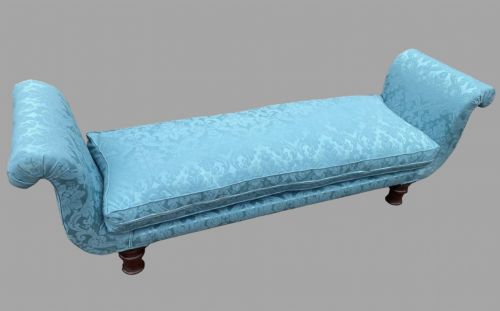
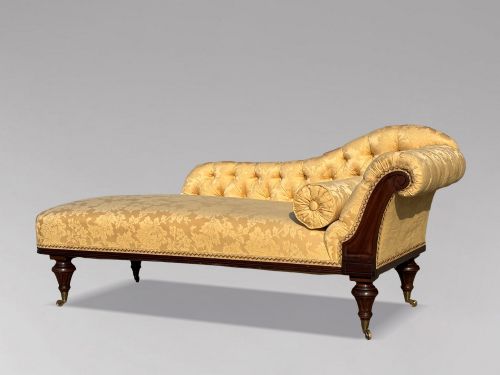
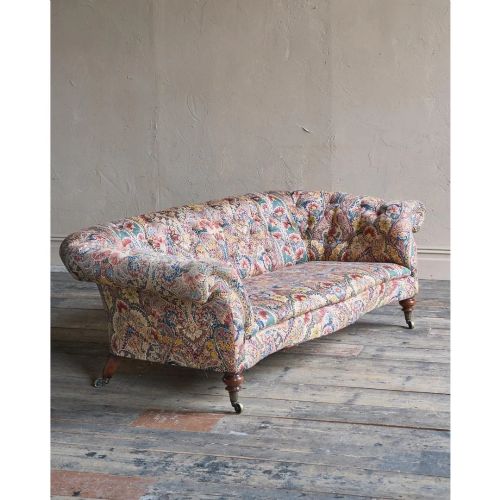
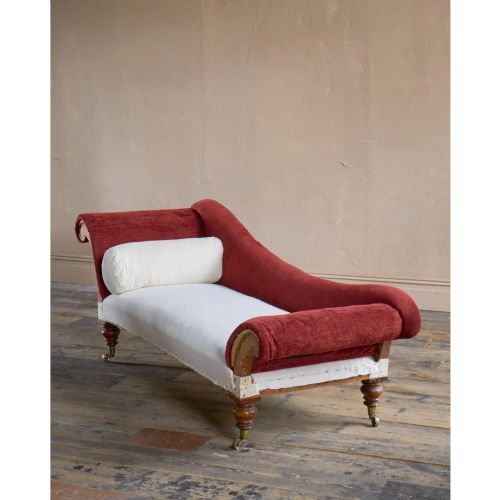
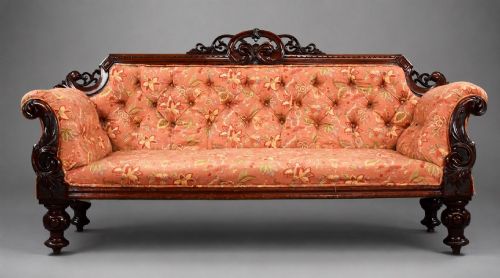
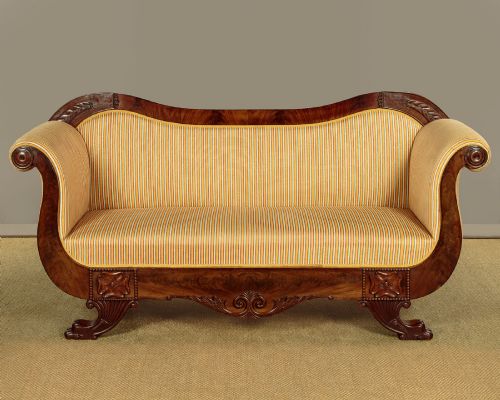
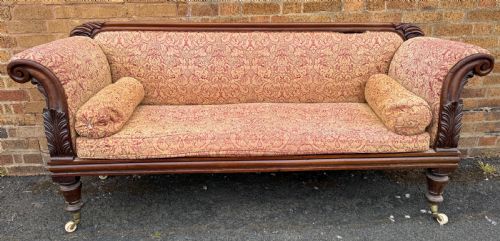
When you want a mahogany scroll sofa, you are looking for nineteenth-century seating defined by sweeping timber arms and generous proportions.

Mahogany Scroll Sofa
A mahogany scroll sofa brings neoclassical presence into a room, originating primarily across the Regency, William IV, and Victorian periods.
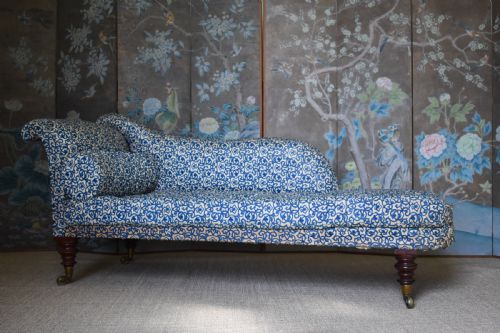
You will most frequently encounter double-ended settees, daybeds, and chaise longues featuring prominent scrolled wooden arms and show frames.
The form spans formal country house drawing room seating as well as more architectural library and hall pieces.
How They Were Made
Cabinetmakers utilised dense mahogany timber for the structural frames, often carving the scrolls and supports by hand.
Internal webbing, hessian, and traditional stuffing supported upholstery finished in velvet, damask, fabric, or leather, sometimes accented with brass fittings.
Listings feature mahogany timber paired with upholstery materials including velvet, damask, hessian, and leather across the nineteenth century.
What Varies in Quality
The distinction lies in the ambition of the timber carving and the architectural crispness of the scroll ends and show frame.
Proportion and balance dictate the success of the piece, separating standard utility furniture from high-design country house examples.
Howard and Sons·Holland and Sons·Gillows·John Taylor and George Smith
The Mahogany Scroll Sofa Glossary
- Scroll end
- A characteristic curving wooden terminal found at one or both ends of a sofa. This sculptural shape defines the silhouette of nineteenth-century seating.
- Show frame
- An exposed timber structure where the polished mahogany forms part of the visible design around the upholstered body. It highlights the quality of the wood.
- Récamier
- A type of daybed or chaise longue with one raised end and a sloping back, named after French portraits of the period. These pieces draw on classical forms.
- Sabre leg
- A concave tapering leg curving outward toward the floor, frequently seen on Regency examples. This support adds structural lightness to heavy frames.
Mahogany Scroll Sofa: Frequently Asked Questions
How do I date a mahogany scroll sofa?
Dating relies on observing the shifts in proportion and timber treatment from the Regency era through to the later Victorian period. Earlier pieces tend to show crisper classical carving and lighter sabre legs, while later examples often feature heavier show frames.
Examining the secondary woods and construction methods underneath the upholstery also helps establish the era of manufacture. Regional country house pieces sometimes retain conservative traits long after metropolitan styles moved on.
Where should I place a scroll sofa?
These long seating forms suit large drawing rooms, expansive hallways, or open-plan living spaces where they can be viewed in the round. Double-ended models look particularly striking floating away from walls rather than pushed flat against them.
Ensure you account for the generous overall length and the outward curve of the scroll arms when planning your floor layout.
Are these sofas comfortable for daily lounging?
Many nineteenth-century frames offer firm, supportive seating designed for upright sitting or reclining against one elevated end rather than sinking into deep cushions. Their ergonomics reflect the formal hosting habits of the period.
Modern comfort levels depend entirely on the quality and firmness of the interior stuffing and springing put in place during reupholstery.