




Gold Velvet Settee
A gold velvet settee brings rich texture and historic presence to a room, offering deep seating paired with opulent upholstery.
Gold Velvet Settee
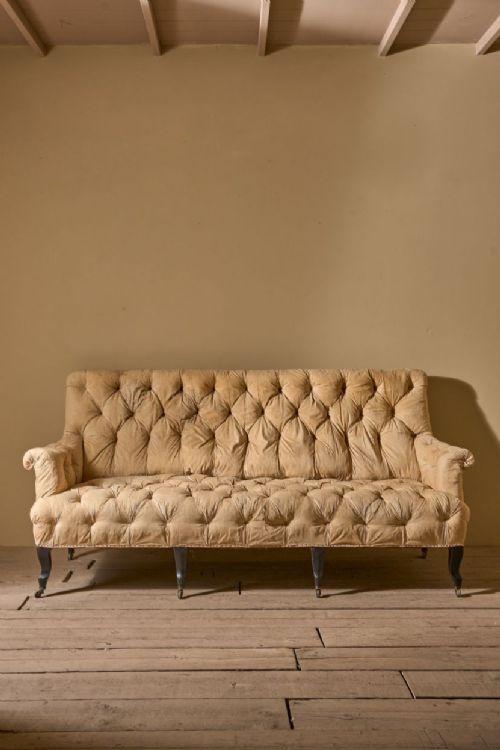
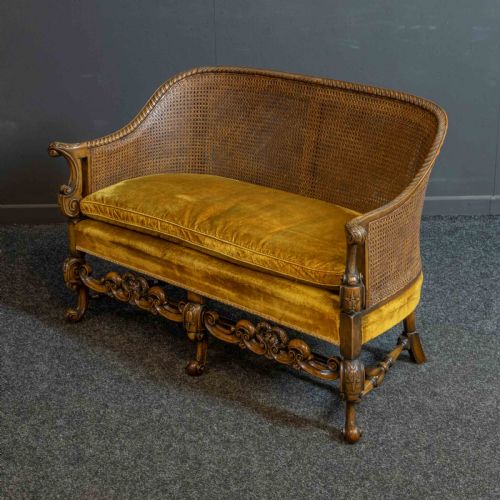
When you search for a gold velvet settee, you are looking at substantial antique seating upholstered in plush pile fabric, most frequently encountered in Victorian, 19th-century, and Edwardian iterations. These pieces range from buttoned Napoleon III frames and carved walnut sofas to shell-shaped Austro-Hungarian designs and French Louis XVI style giltwood settees.
The forms vary widely across the inventory, encompassing double scroll-ended Regency mahogany frames, fruitwood Directoire two-seater sofas, and unusual Moorish conversation seats. Victorian examples often display elaborate woodwork and generous proportions suited to formal reception rooms.
Origin and stylistic lineage dictate the physical presentation, connecting English and continental workshops through shared vocabularies of gilding, carving, and luxurious textile coverings. A buyer will encounter everything from grand revival styles to intimate window seats.
How they were made
Frames are constructed from solid hardwoods such as mahogany, walnut, fruitwood, and timber, often shaped through detailed carving or finished with applied giltwood. Structural integrity relies on traditional joinery methods suited to supporting upholstered frames over centuries of use.
Upholstery combines deep pile velvet with supportive internal stuffing, occasionally complemented by brocade details or intricate buttoning across the back and seat. Brass accents and inlaid elements are applied to enhance the decorative scheme of the wooden chassis.
Gold Velvet Settee Retail Price Guide 2026
Typical asking prices for gold velvet settee among the pieces listed under this phrase on Sellingantiques today, from the lower quarter to the upper quarter. They describe what is for sale here now, not the wider market.
The listings span the 19th century through to 1920, incorporating Victorian, Regency, and Louis XVI styles.
What varies in quality
The standard of the timber carving and the crispness of the giltwood or polished wood finish set pieces apart, distinguishing workshop-produced items from simpler output. Deep buttoning and structural joinery demonstrate the maker's underlying skill.
The preservation of the velvet upholstery and the integrity of the underlying frame determine the overall desirability of each individual sofa.
The Gold Velvet Settee Glossary
- Giltwood
- Wood that has been coated with gold leaf or a gold-coloured finish. This technique highlights carved architectural details on formal seating frames.
- Napoleon III
- A 19th-century eclectic French style known for exuberant buttoned upholstery and curved frames. It often employs rich textiles like velvet.
- Directoire
- A transitional French style preceding the Empire period, characterised by simpler neoclassical lines. Fruitwood frames are typical of this aesthetic.
- Scroll-ended
- A furniture design where the armrests or ends roll outward in a continuous curve. This shape appears frequently on Regency period sofas.
Gold Velvet Settee: Frequently Asked Questions
How do I clean gold velvet?
Velvet requires gentle brushing to maintain the nap and prevent crushing over time. Professional cleaning is recommended for antique textiles to preserve the original fibres.
Avoid using excessive water or harsh chemical detergents on historic fabrics. Spot cleaning should be approached with extreme caution.
Where should I place a settee?
These pieces suit drawing rooms, large bedrooms, or studies where their decorative frames and deep seating can be appreciated. They also function well as conversational seating in central room layouts.
Keep upholstered antique seating away from direct sunlight to prevent the gold velvet from fading. Position them where foot traffic will not constantly brush against the fabric.
How do I date a settee?
Dating relies on identifying the characteristic wood types, carving styles, and structural forms associated with specific periods like the Regency or Victorian era. Comparing the joinery to known period examples provides further clarity.
Upholstery fabrics are often later replacements, so the underlying wooden frame offers the most reliable chronological evidence.
Can I sit on an antique settee?
Most antique settees are structurally sound for normal seating, provided the internal webbing and frame remain stable. Heavier frames like walnut and mahogany offer robust daily support.
Weight distribution should be mindful of the age and delicate nature of antique joinery. Extremely fragile giltwood frames are better suited for lighter use.