
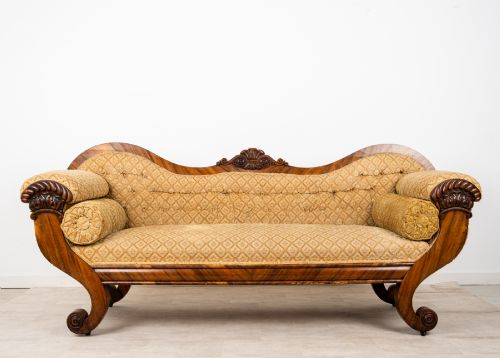


Antique Yellow Settee
An antique yellow settee brings warmth and period character to a room, offering upholstered comfort shaped by centuries of design.
Antique Yellow Settee
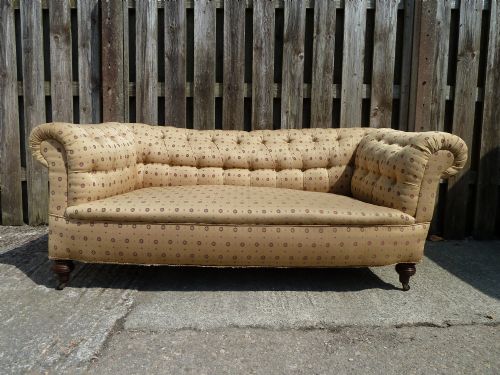
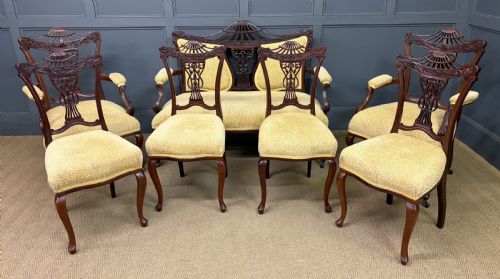
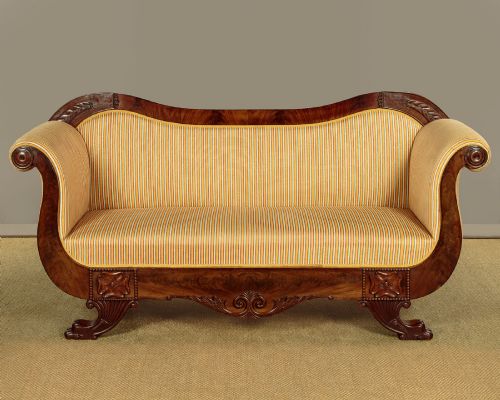
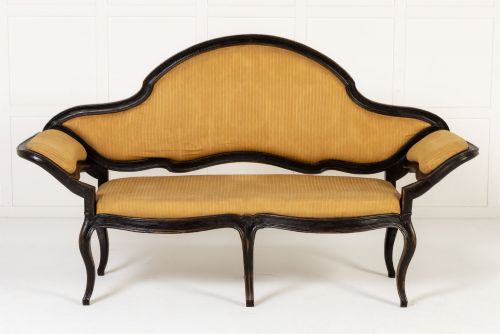
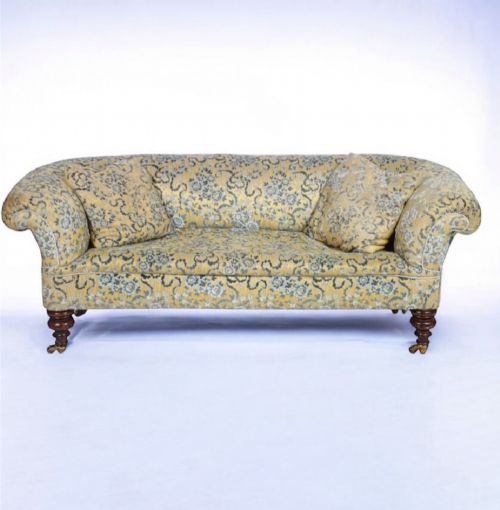
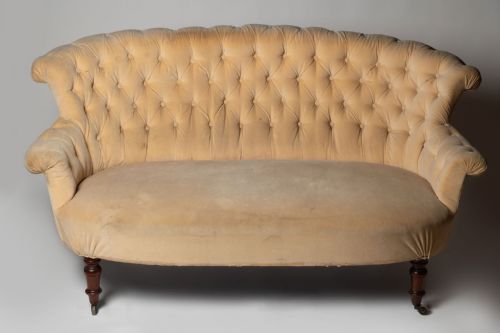
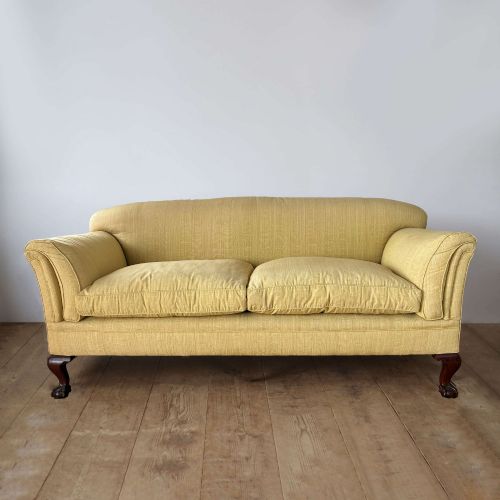
When searching for an antique yellow settee, a buyer encounters a variety of forms including nineteenth-century Chesterfields, salon suites, and scroll-end couches. These seating pieces span periods from Regency through to the Edwardian era, reflecting diverse stylistic influences.
Materials and construction
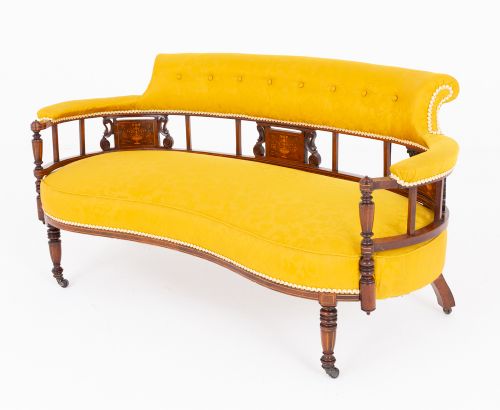
Frames are constructed from timbers such as mahogany, walnut, rosewood, fruitwood, and satinwood, often enhanced with inlay work, gilding, or carved scroll ends and turned legs.
Upholstery relies on traditional textile applications including damask, velvet, and various decorative fabrics, sometimes presented over exposed wooden frameworks or prepared for fresh recovery.
One unfinicky piece waits entirely bare, offering a clean slate for whichever yellow textile takes your fancy next.
Assessing craftsmanship and finish
Quality reveals itself in the crispness of the timber carving, the precision of inlay work, and the structural integrity of the wooden frame. Finer examples display superior timber selection and more elaborate decorative detailing.
The sophistication of the silhouette, whether a camel back, scroll end, or stylistic revival form, separates standard production from exceptional pieces produced by notable makers.
Howard and Sons
The Antique Yellow Settee Glossary
- Settee
- A long upholstered seat for more than one person, typically featuring a back and arms. It serves as a principal seating form in traditional drawing rooms.
- Chesterfield
- A large upholstered sofa characterised by deep buttoning and rolled arms of equal height. This form gained prominence during the Victorian period.
- Salon Suite
- A matched set of seating furniture, often comprising a settee and matching chairs. These groupings were designed for formal entertaining in nineteenth-century interiors.
- Damask
- A reversible figured fabric woven on a jacquard loom, frequently utilised for period upholstery. It provides a subtle pattern through contrasting matte and lustrous threads.
- Scroll End
- A decorative terminal on the arm or side of a couch that curves outward in a spiral scroll. This detail appears frequently on Regency and Victorian designs.
Antique Yellow Settee: Frequently Asked Questions
What is an antique yellow settee?
An antique yellow settee is an upholstered seating piece from periods such as the Victorian or Edwardian eras, featuring yellow textile, damask, or velvet coverings.
These pieces encompass various forms including scroll-end couches, salon suites, and Chesterfield sofas with wooden frames.
How were these settees used historically?
Settees served as principal seating in formal drawing rooms, parlours, and reception spaces for social gatherings and daily repose.
Larger salon suites provided unified seating arrangements for entertaining guests in fashionable nineteenth-century homes.
How do I live with an antique settee?
Placing a settee away from direct sunlight protects delicate silk and damask upholstery fabrics from fading over time.
Regular gentle care of exposed mahogany, walnut, or gilt wood frames preserves the polish and structural integrity of the timber.
How can I tell different periods apart?
Regency pieces often display clean classical lines and scroll ends, while Victorian designs frequently incorporate deep buttoning and rich walnut or mahogany frames.
Edwardian and later pieces tend to feature lighter satinwood framing and more restrained inlay work reflecting changing twentieth-century tastes.